
 TRAVEL



 RECIPES WITH A STORY












 AUSTRIA-VIENNA





 SLOVAKIA-BRATISLAVA




 EVENTS





 INTERVIEWS

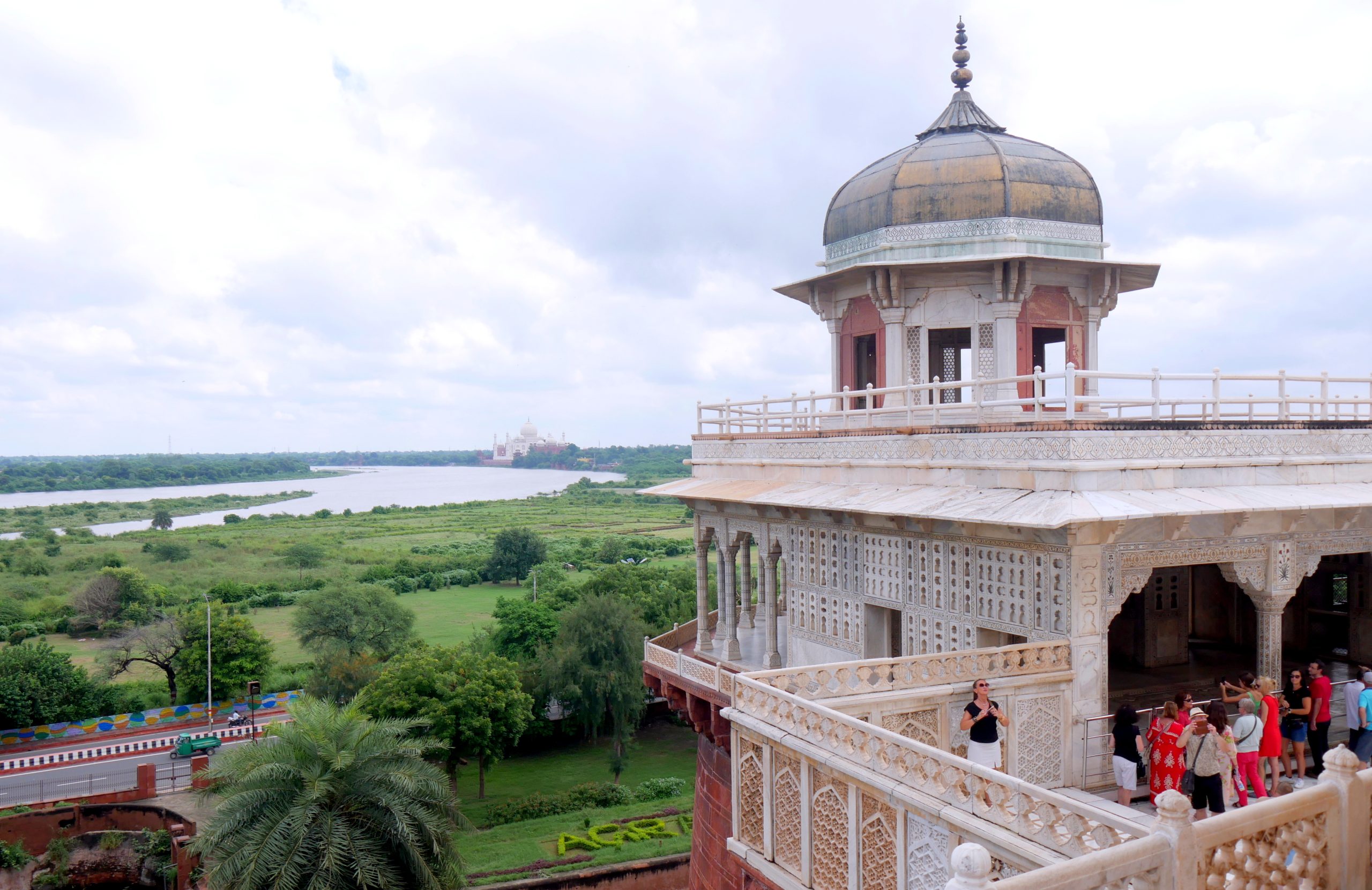
Agra is a city in central India. The main tourist attraction is, of course, the Taj Mahal. However, Agra has more to offer. In the 17th century, the Mughals chose it as the capital of their empire, which covered the territory of present-day Afghanistan, Pakistan, and northern (later all of) India, and at that time was one of the most important world powers. It was ruled by an emperor, the first one was Babur (originally from Uzbekistan, a direct descendant of Timur and Genghis Khan).
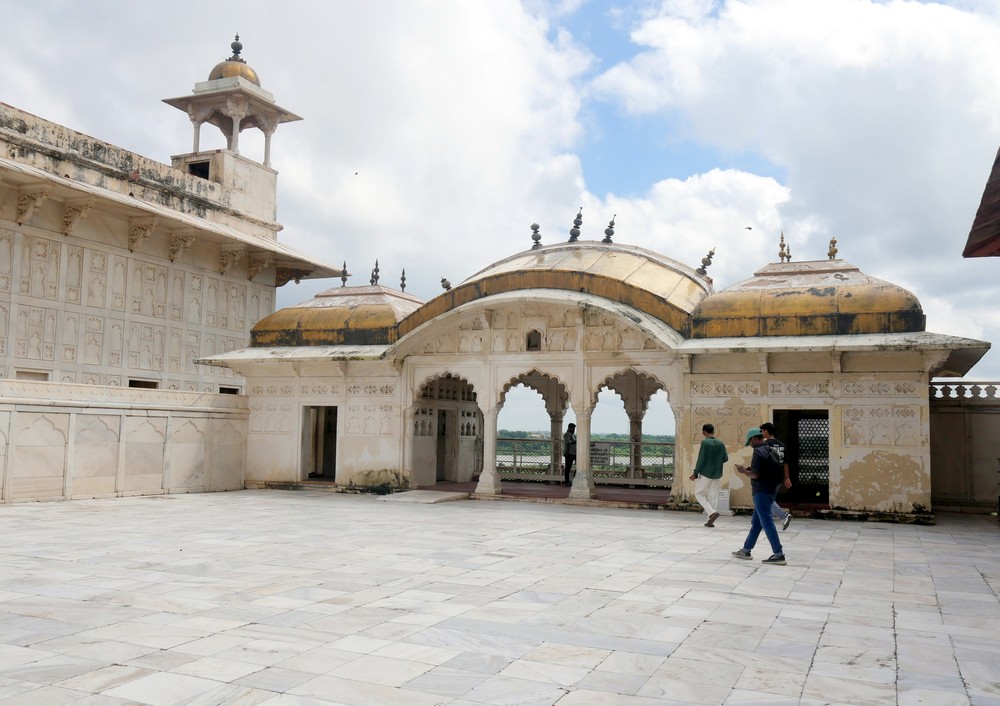
According to my guide Mohsin, Agra is a small city today. Hahaha – ONLY two million people! I tried in vain to explain to him that no city in my country (Slovakia) has even one million inhabitants!
1. Taj Mahal
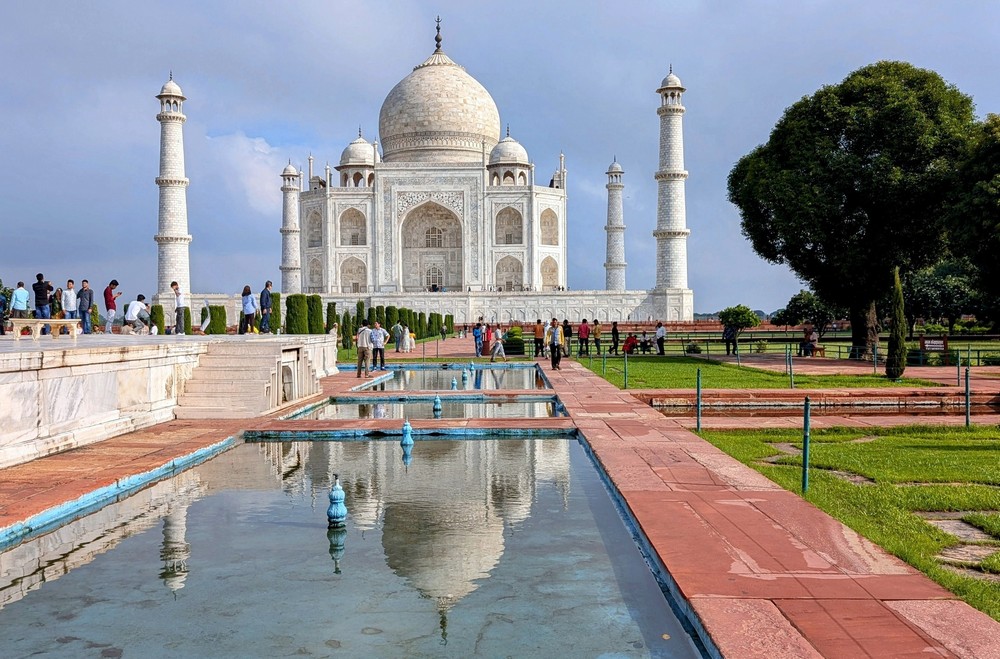
As I mentioned earlier, people travel to Agra to see the famous symbol of great love – the Taj Mahal. My intention was also to see this white marble mausoleum, which was built by the fifth Mughal emperor Shah Jahan for his beloved wife Mumtaz Mahal. I described my visit to this unique monument in a previous article: Taj Mahal
2. Agra Fort
The fort, listed as a UNESCO World Heritage Site, is also called the Red Fort. The reason why is clear at first glance. It was built of red sandstone by the third Mughal emperor, Akbar the Great (Babur’s grandson). Although he ascended the throne when he was not even 14 years old, he became one of the most important rulers of the Mughal Empire. He became famous as a legislator and reformer, promoting religious tolerance and political stability.
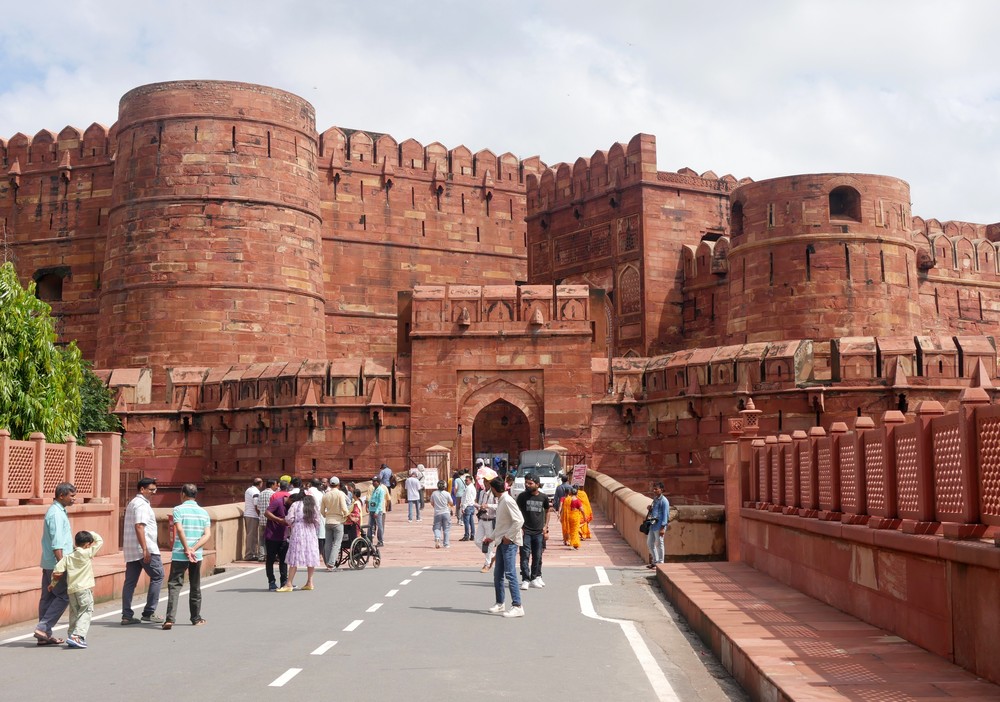
The massive complex was inhabited by three generations of Mughal emperors who presented their power and glory here. Construction on a hill on the banks of the Yamuna River began in 1565 and was completed eight years later. Today, only 30% of the area is open to the public, with the rest belonging to the army.
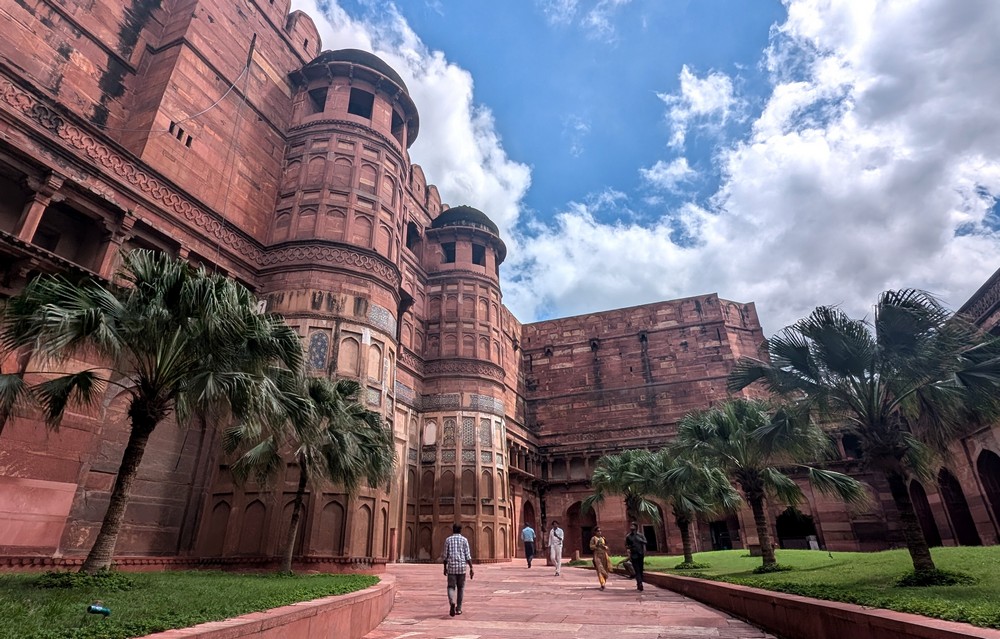
I must say that I was fascinated not only by the color, but also by the massiveness of the structure. The fortress with its imposing bastions with battlements and embrasures has a crescent-shaped floor plan. It is surrounded by a huge wall – 2.5 km long, with walls reaching a height of up to 21 meters!
There is a moat around the perimeter wall, but I would have searched in vain for alligators in the water. In the past, in addition to dangerous animals, the impregnability of this place was ensured by an ingenious defense system: a drawbridge, a zigzag corridor behind the entrance, and a slightly sloping ramp along which large stones could be rolled down on the enemy.
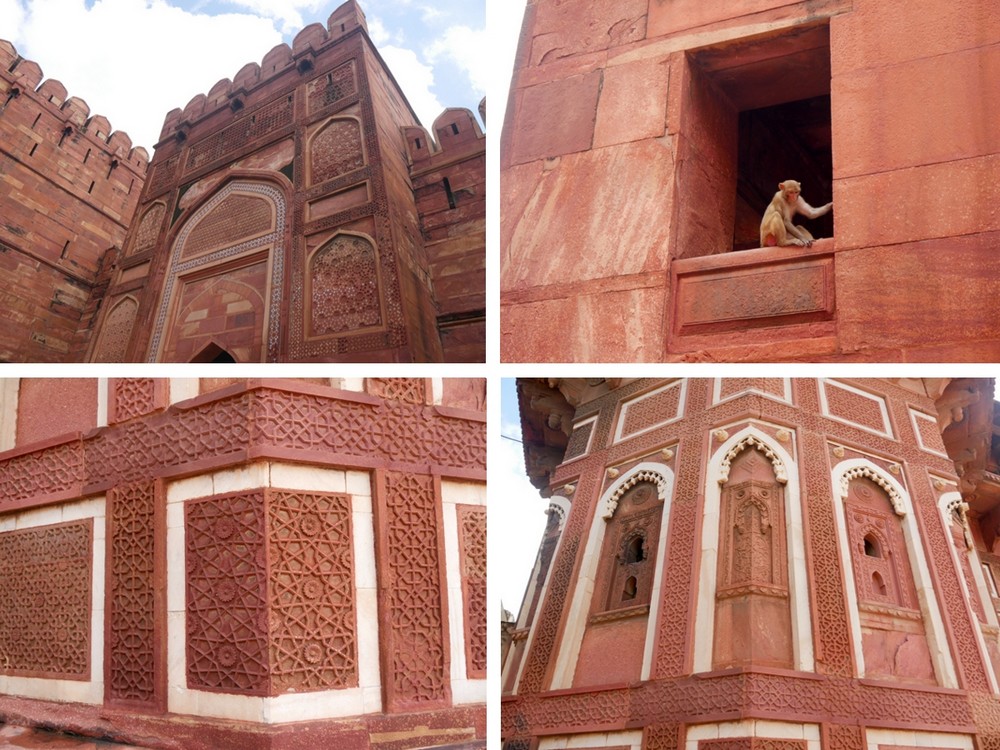
The walls are decorated with carved and inlaid ornaments, a mixture of Islamic and Hindu designs. Some elements reminded me of the decoration of Timurid monuments in Uzbekistan.
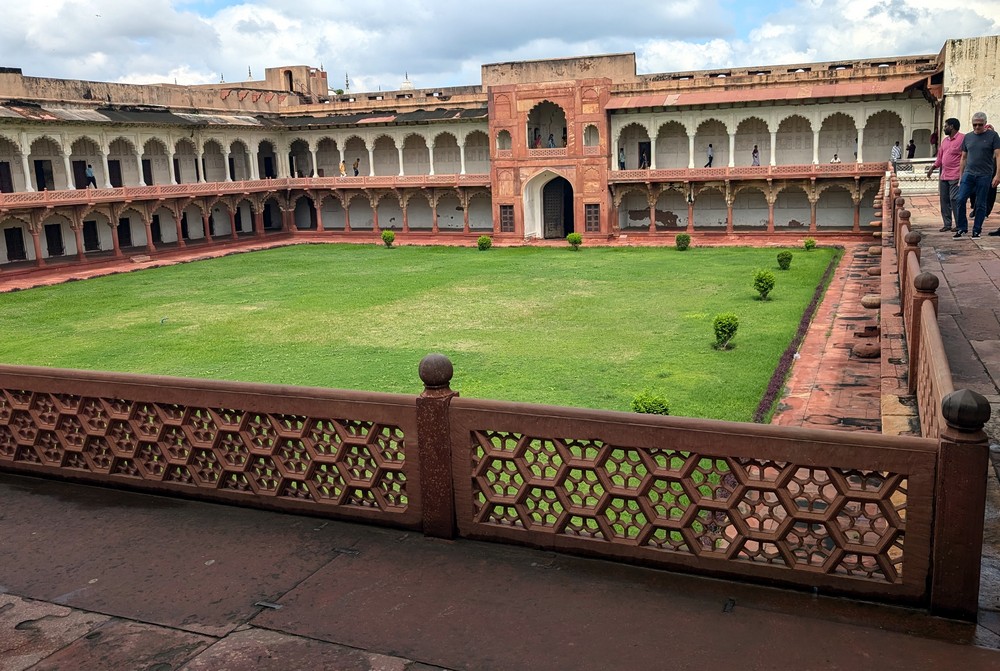
The complex is huge – 380,000 m²! Although the walls are truly massive, inside the fortress, there are beautiful courtyards with arcades.
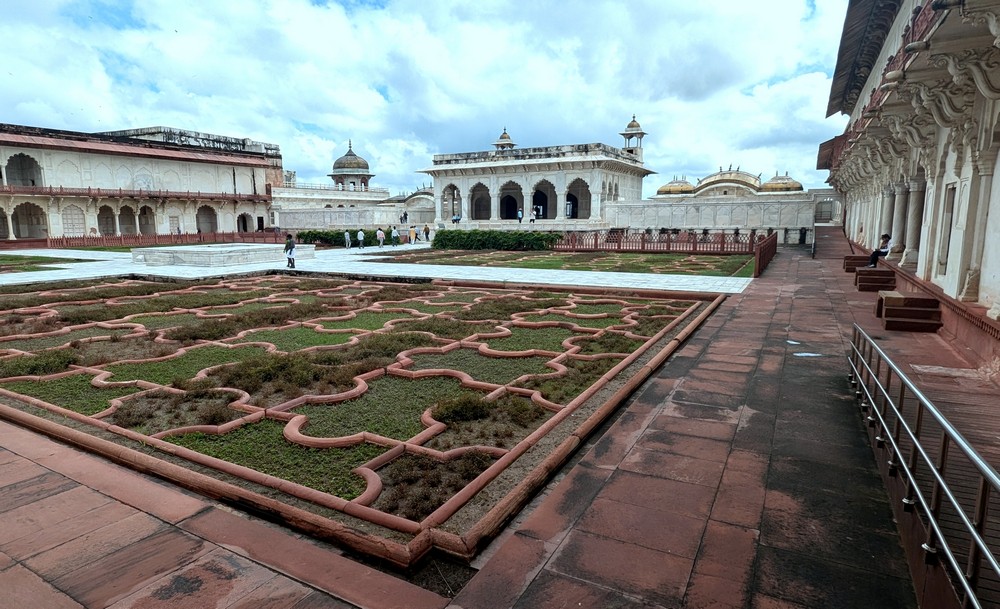
There used to be a vineyard in this courtyard with a pool in the middle. The harem ladies lived in the chambers under the arcades. It doesn’t take much imagination to guess what kind of pleasures the emperor indulged in here.
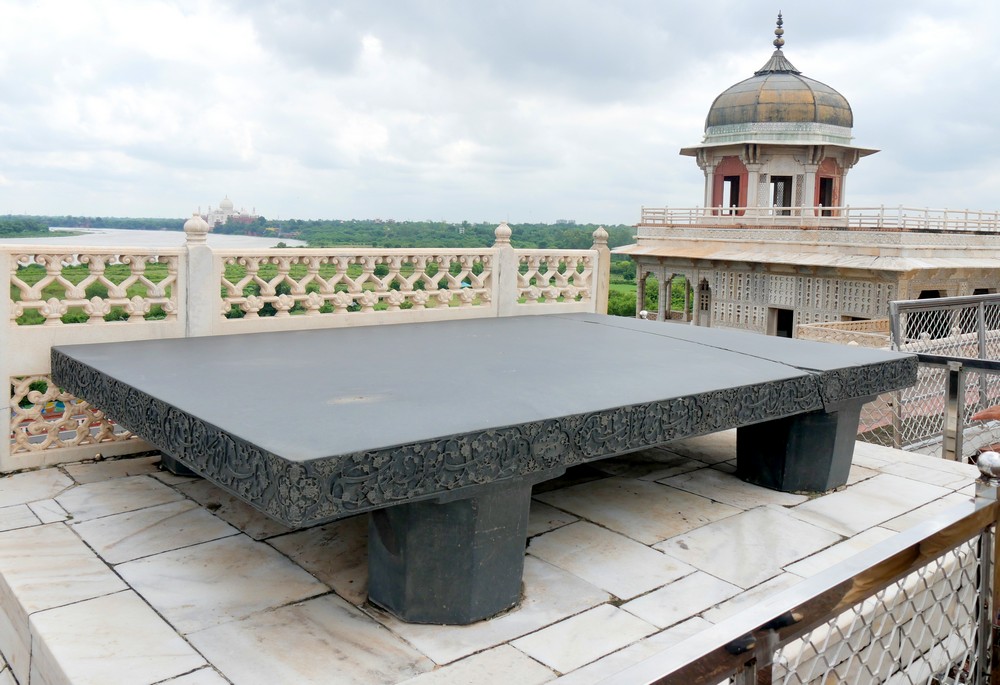
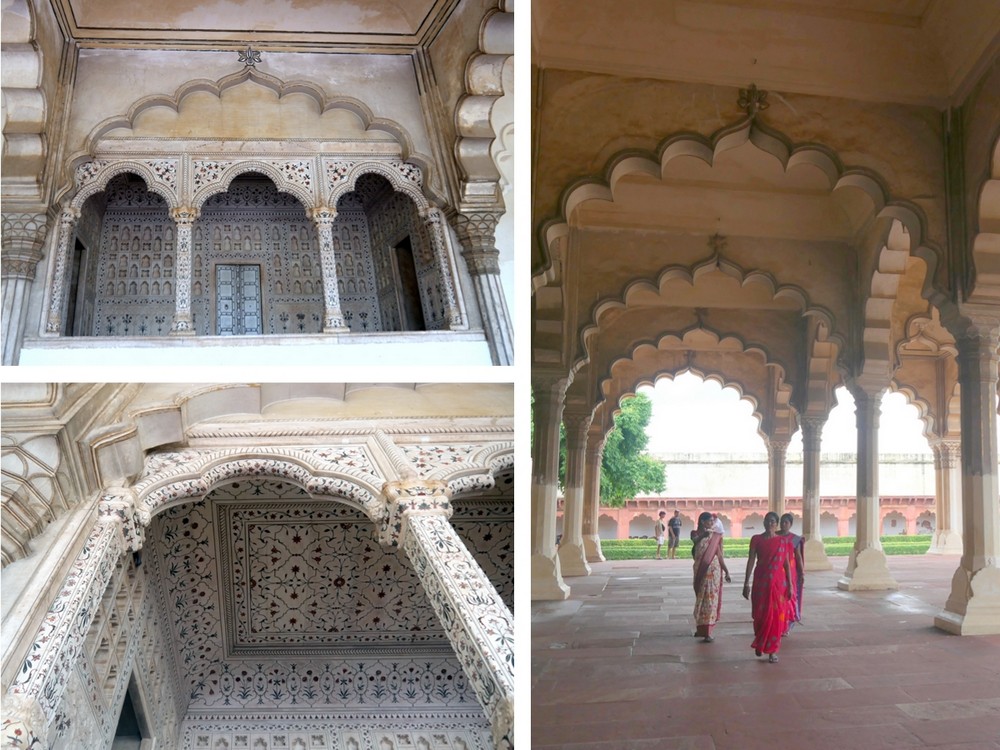
Private audiences and meetings with the government were held in the next courtyard. Ordinary people were not allowed to enter. Two thrones have been preserved – one for the emperor and the other for the prime minister. The walls are decorated with calligraphic inscriptions – Persian poems in the Farsi language.
The most striking features of the Mirror Palace are the mosaics made of mirrors and glass panels that sparkle in the dim interior. The glass was imported from Syria.
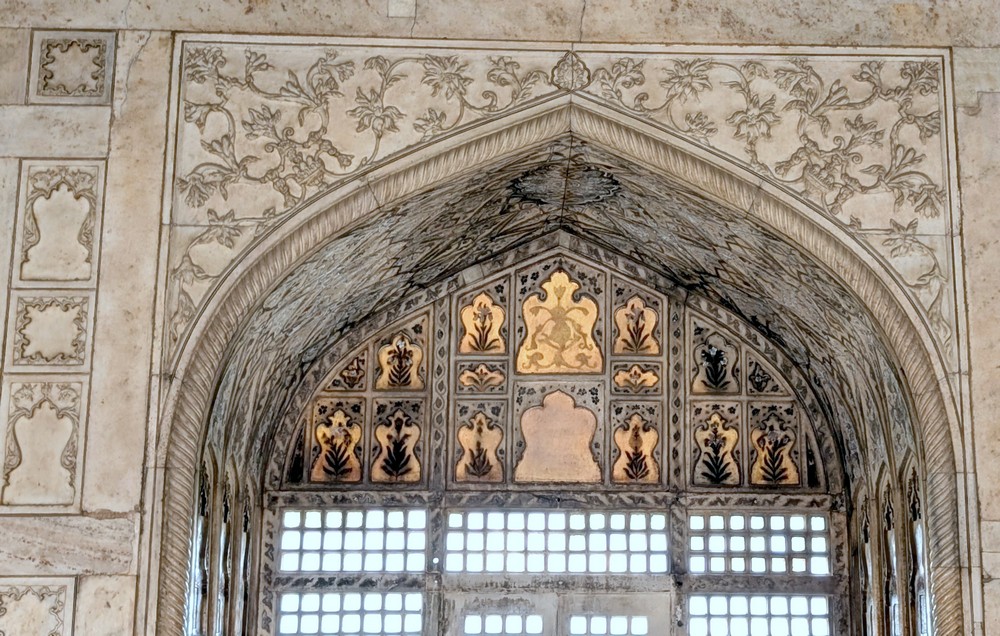
However, the most beautiful part is the Muthamman Burj Palace, originally built by Akbar, but rebuilt by his grandson Shah Jahan, who preferred white marble. The walls have many niches and are decorated with mosaics of semi-precious stones in perfectly coordinated colors. It was from here that the Mughal emperor ruled his entire empire.

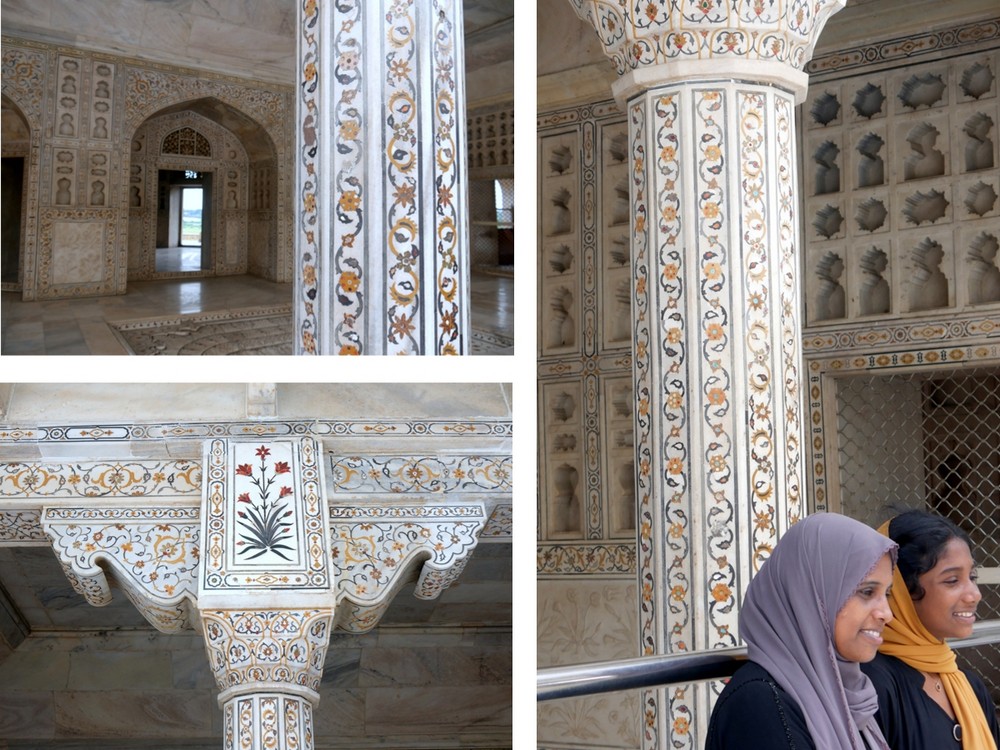
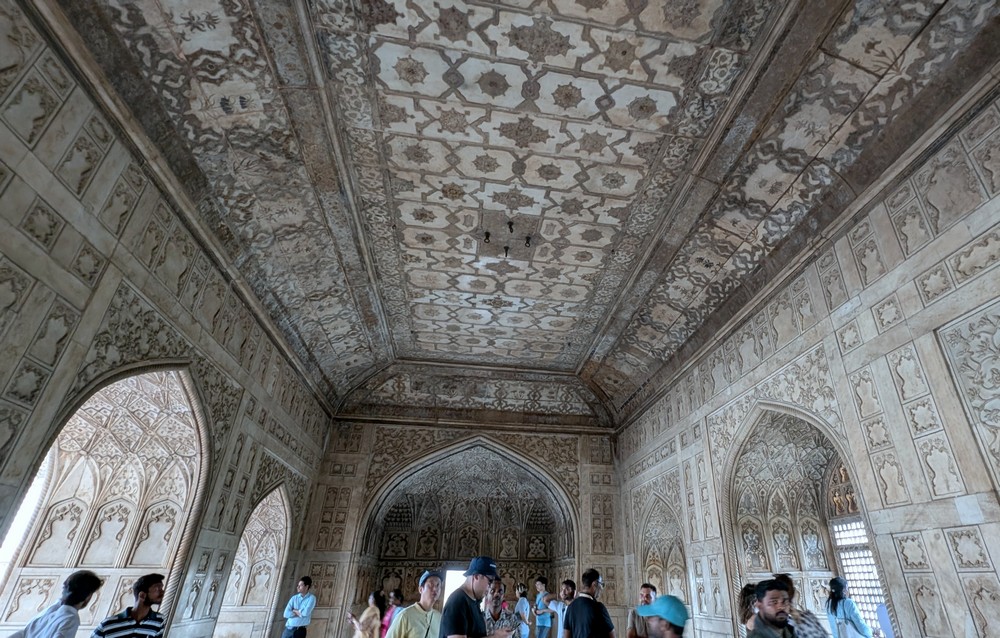
We also took a look at Shah Jahan’s bedroom, where he and Mumtaz Mahal had produced 14 children. It is a pity that very little of the original decoration has been preserved. There used to be carpets and silk curtains here, and there are still hooks for chandeliers on the ceiling and hooks for fans on the walls. Servants were not allowed to enter the bedroom, so they pulled the fans from outside.
When Shah Jahan stayed here, he had no idea that this was where he would later spend the last eight years of his life, but not entirely voluntarily. It is said that Shah Jahan dreamed of building another Taj Mahal – for himself, made of black marble. His son Aurangzeb did not like this idea, as his father had already spent a lot of money from the state treasury. To prevent further squandering, the son seized the throne and placed his father under house arrest.
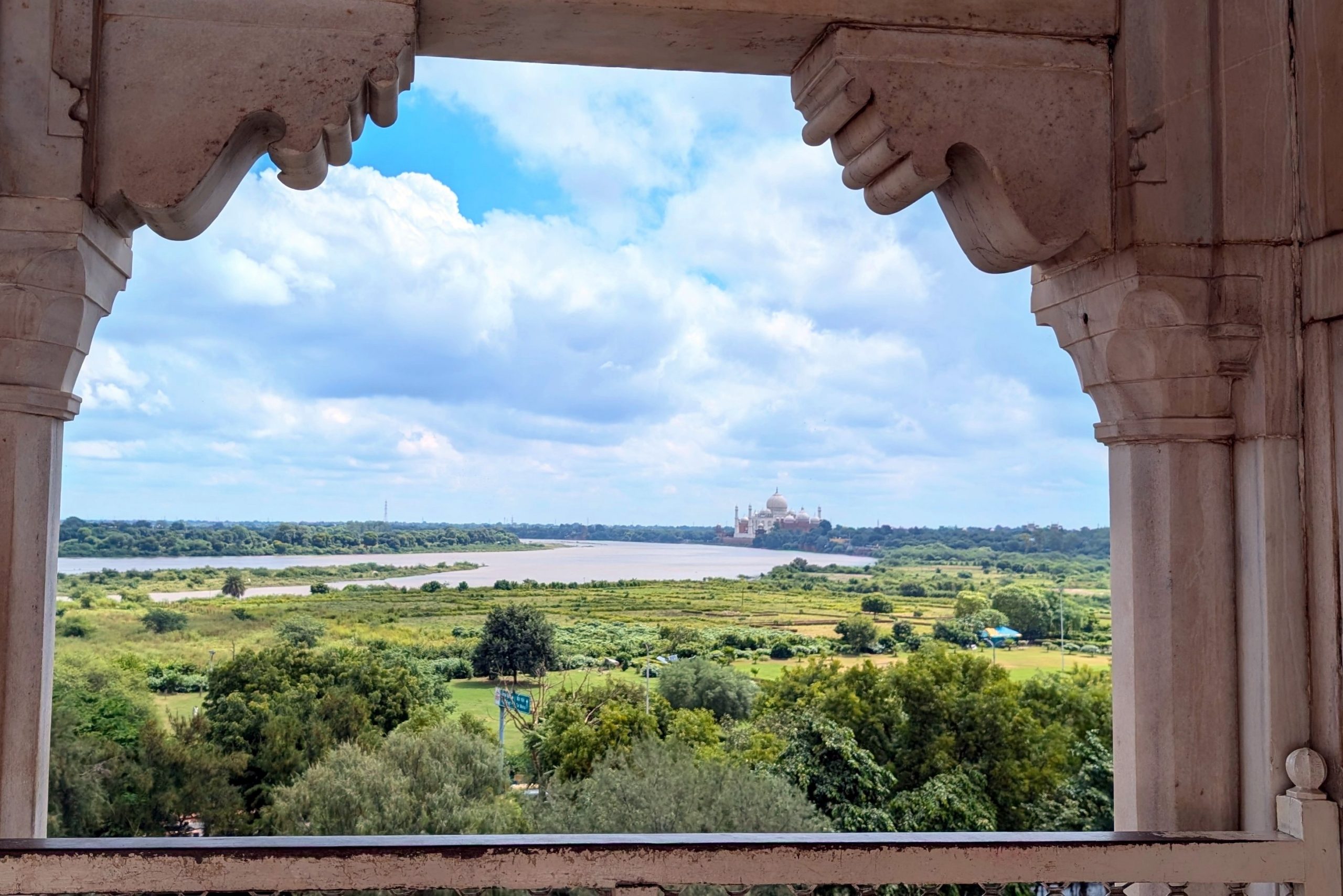
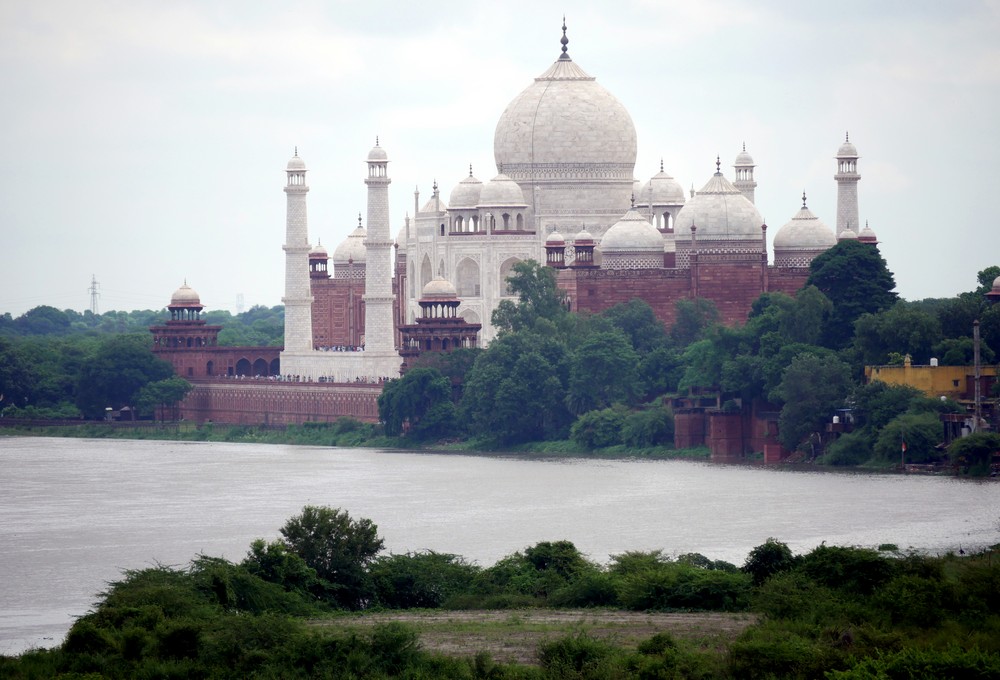
And so, Shah Jahan lived out his days in the Agra Fort, at least enjoying the view of the river and the white Taj Mahal from his beautiful chamber with a balcony. When he died, his body was transported by boat to the mausoleum, where he finally rested next to his beloved Mumtaz Mahal.
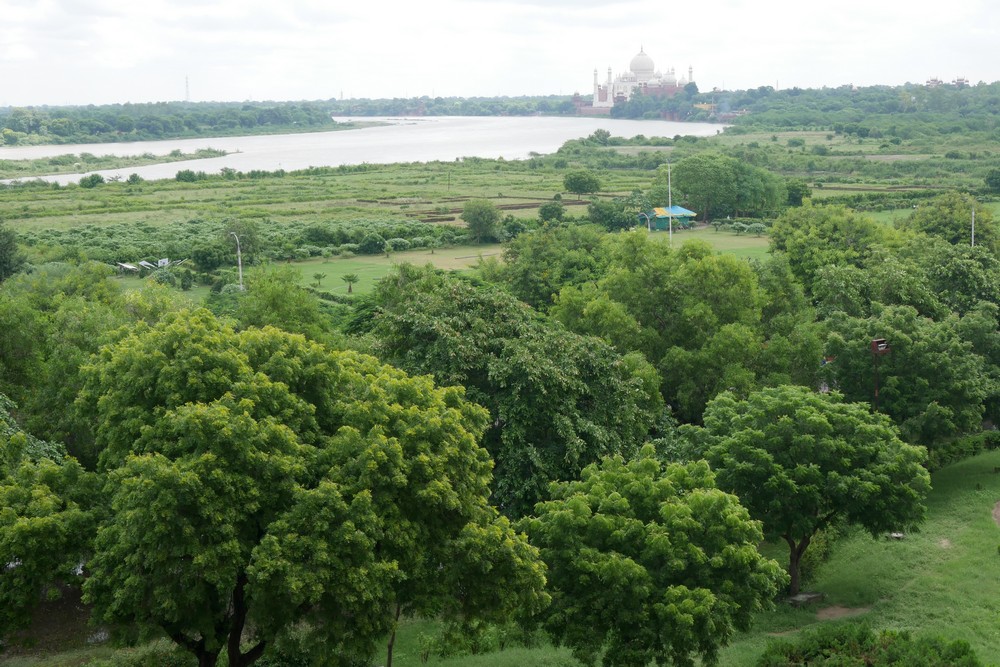
Even today, the view is breathtaking. The lush greenery was even greener after the monsoon rains, the mighty river was even mightier, and in the distance, the famous building stood out above its surroundings like a precious ring on a hand. I don’t know if Shah Jahan had the opportunity to get a closer look at the building (the first telescopes were built during his lifetime), but I did.
At the end of the tour, we passed through the public audience hall. More modest, but also beautiful. Every Wednesday, the emperor sat on his throne to hear petitions from local people and meet with government officials.
Visiting the fort is subject to similar restrictions as visiting the Taj Mahal. More information: Agra Fort
3. Itimad-ud-Daula Mausoleum
Prince Salim (son of Akbar the Great), later known as the 4th Mughal Emperor Jahangir, was a powerful ruler, but he loved women, hunting, opium, and wine. His last (20th!) wife, Mehr-un-Nissa, came from Persia. After the wedding, she was given the title Nur Jahan (Light of the World) and became his main and most beloved wife. Nur Jahan was much more decisive and active than her husband, and in fact, it was she who ruled, especially when the emperor’s health deteriorated. Thanks to her intellect, she was able to defend the empire’s borders, form strategic alliances, resolve disputes and uprisings. She was extremely courageous and loved hunting – it is said that she once shot four tigers, and when her husband was captured on his way to Kashmir, she threw herself into battle on a military elephant. No wonder Jahangir adored her and trusted her so much that he gave her the highest symbol of power – his imperial seal – to confirm various decisions and documents.
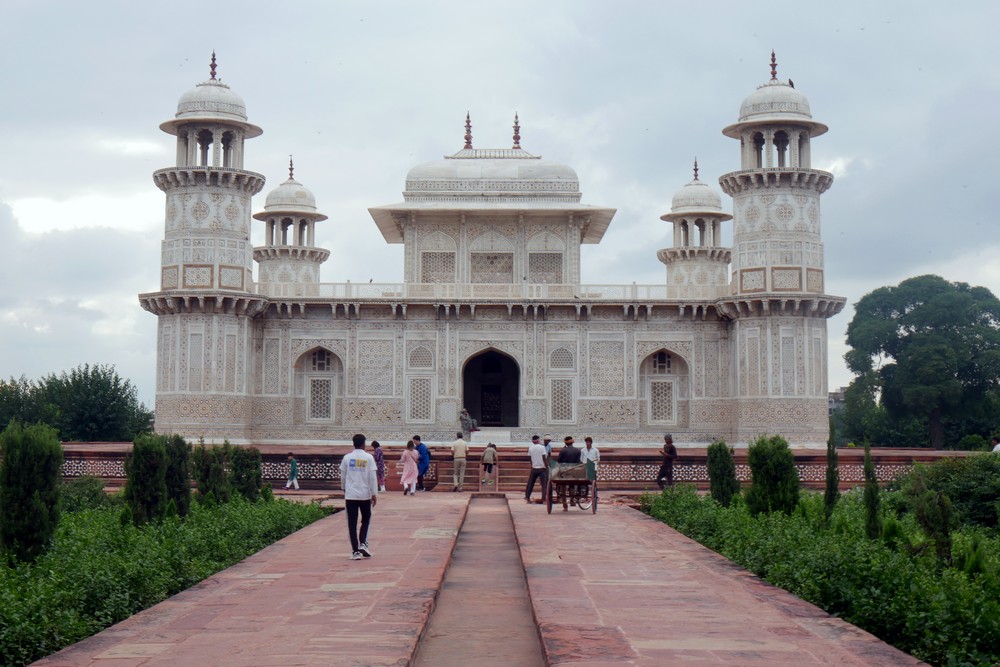
In 1622, her father, who was a high-ranking administrative official, died. Emperor Akbar awarded him the title Itimad-ud-Daul (Pillar of the State). In the same year, Nur Jahan began building a mausoleum for her father on the east bank of the Yamuna River. It took six years to complete the tomb.
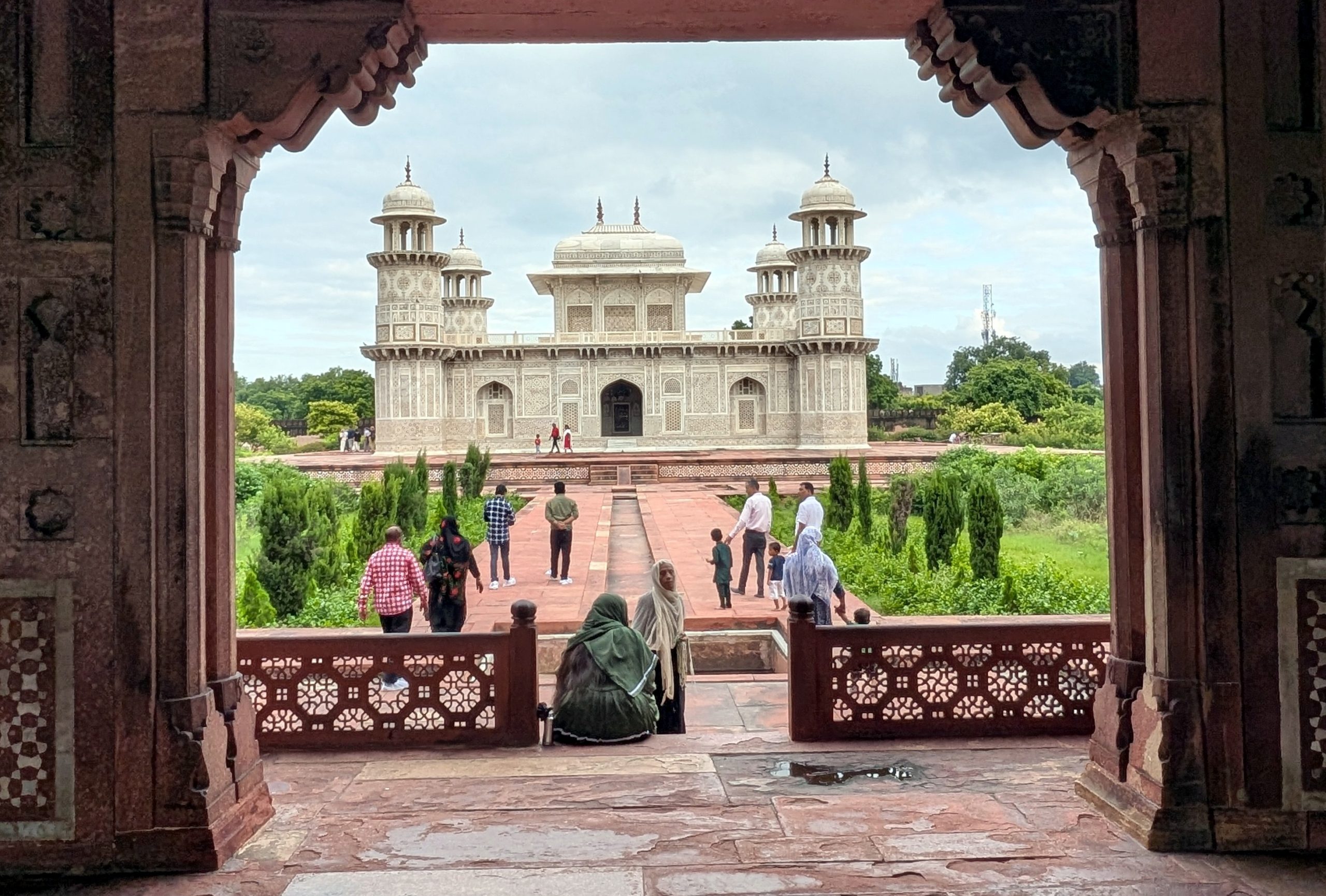
We entered the complex through a red sandstone gate.
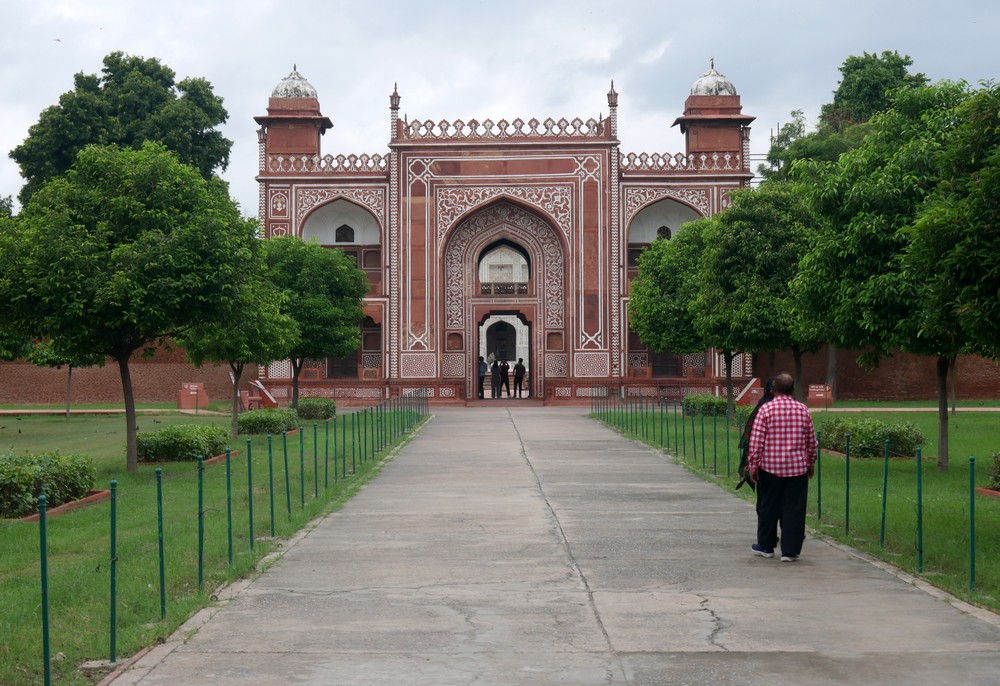
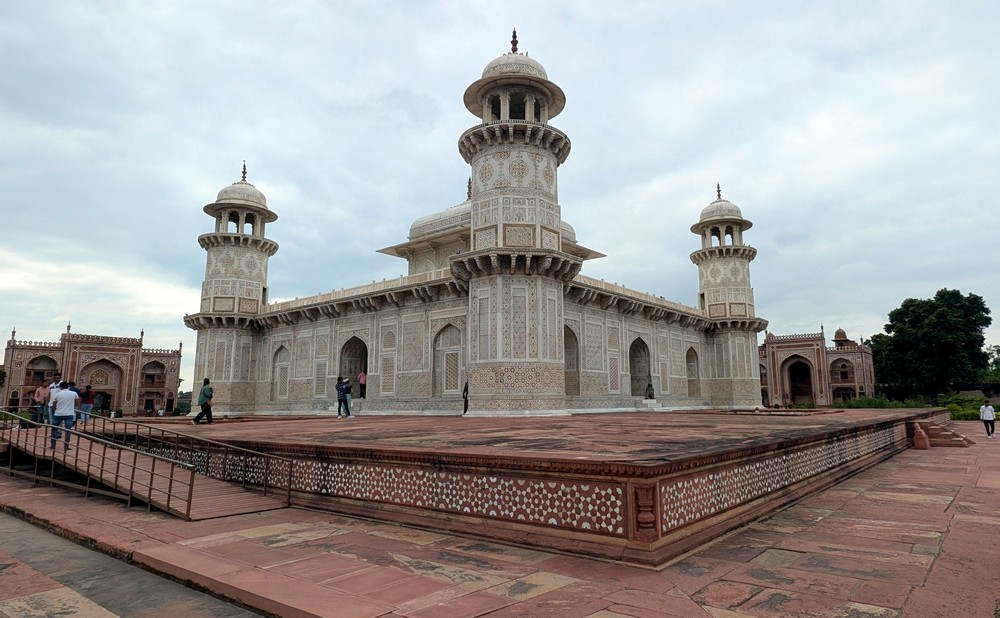
The main tomb, made of white marble, is located in the middle of the garden. The symmetrical mausoleum with four octagonal towers stands on a rectangular platform made of red sandstone, with sides approximately 50 m long.
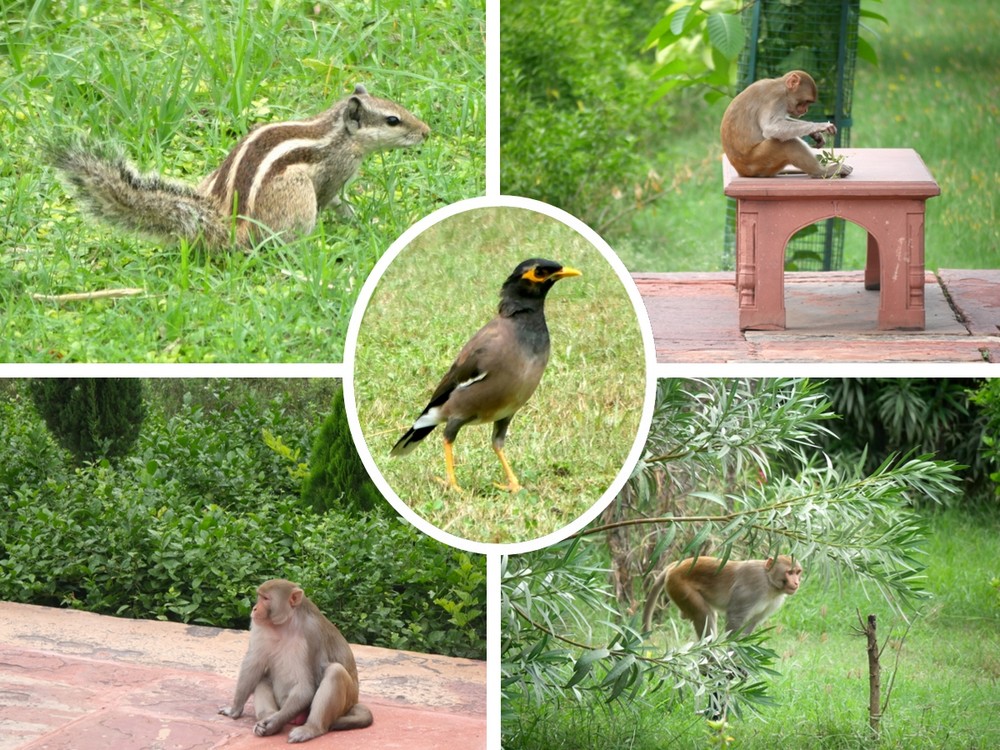
Many monkeys and birds were strolling through the garden, dragonflies flying around, and gray squirrels with white stripes on their back running here and there on the pavement.
Shallow canals divide the Garden of Paradise into four equal parts.
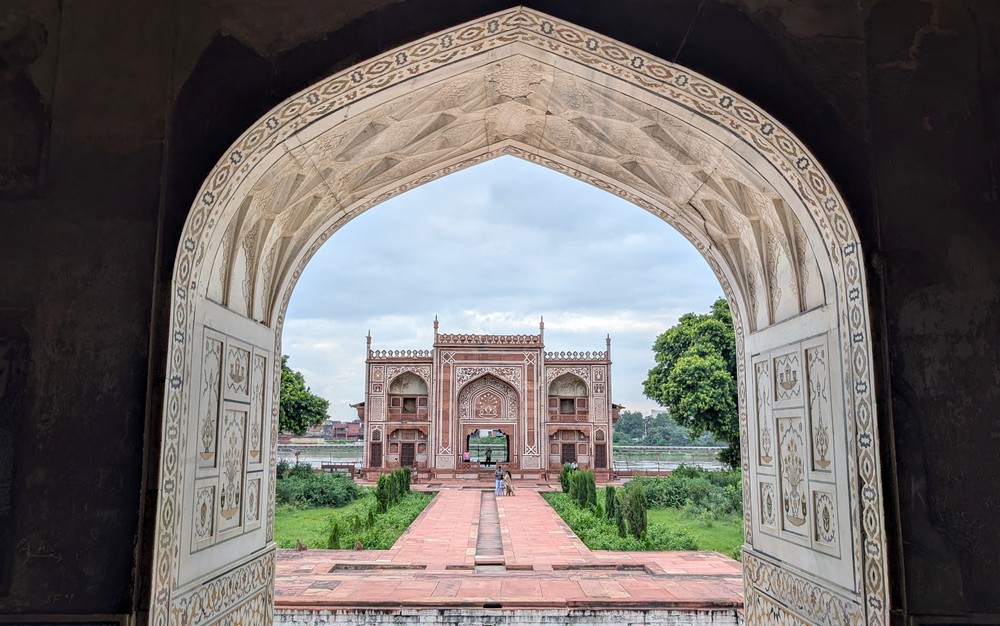
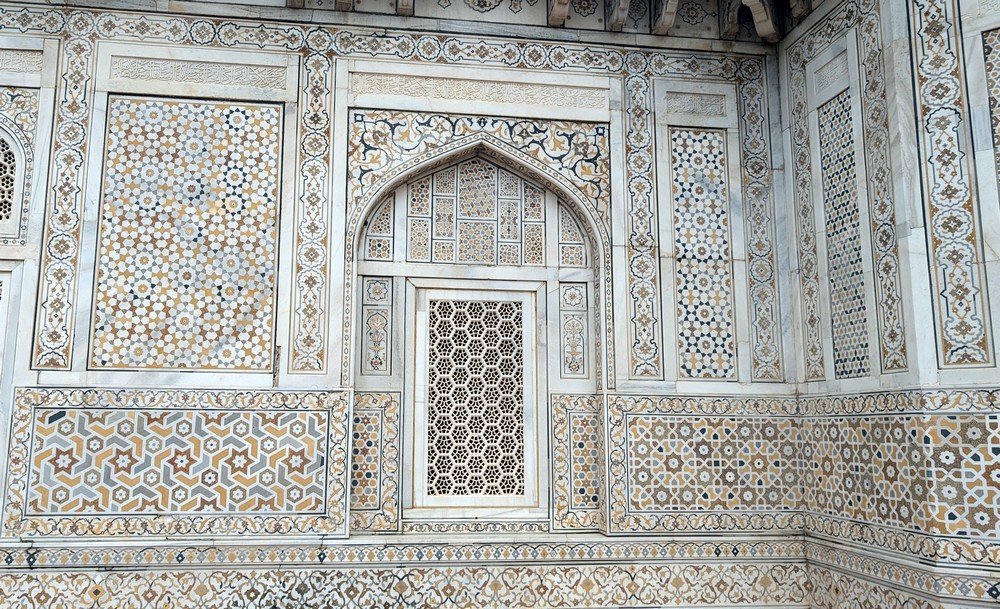
We took off our shoes (in India, you need to wear comfortable shoes that are easy to take off and put back on!) and stepped onto the stone base to take a closer look at this masterpiece, which represents the transition between the first phase of monumental Mughal architecture made of red sandstone with marble decorations and the second phase, when buildings were constructed of white marble and decorated using the pietra dura technique (the creation of inlays from polished colored stones). The mausoleum is one of the oldest authentic examples of this technique in India.
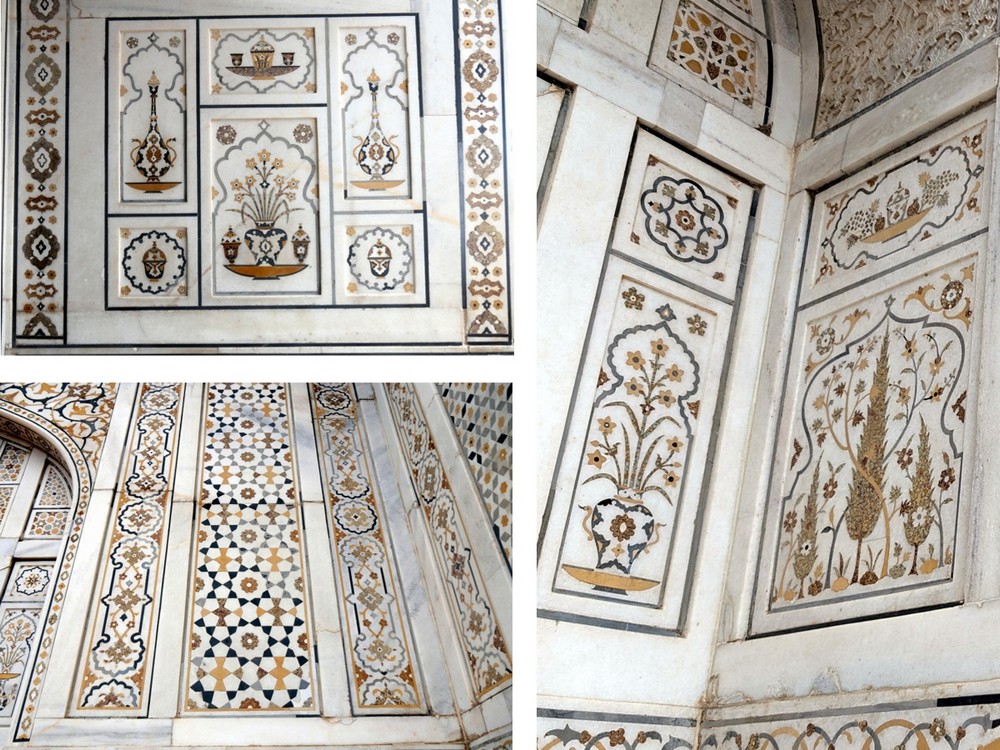
Although the tomb is smaller than the Taj Mahal, it is equally fascinating thanks to its rich decoration. The white marble walls are decorated with mosaics. These include arabesques and elaborate combinations of geometric shapes…
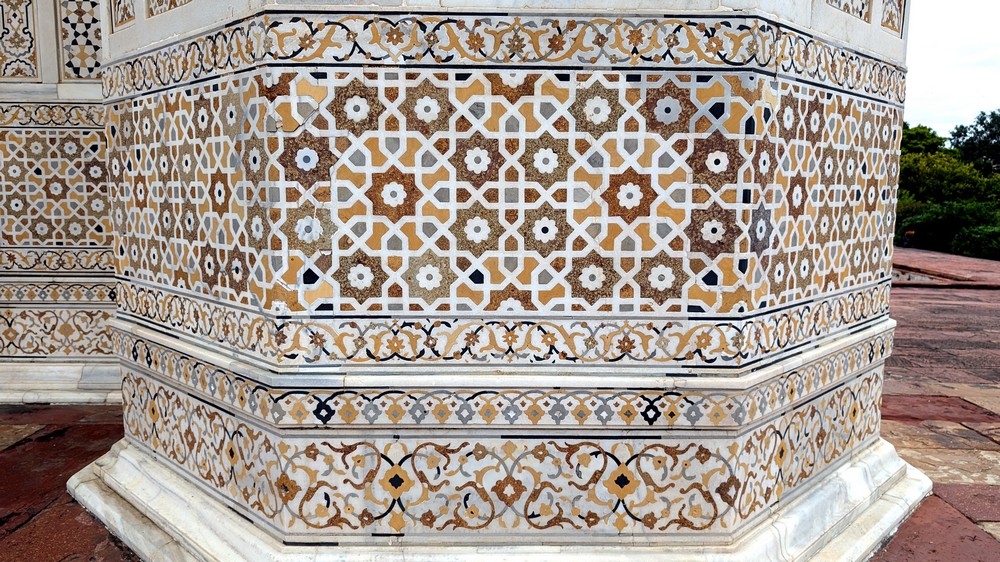
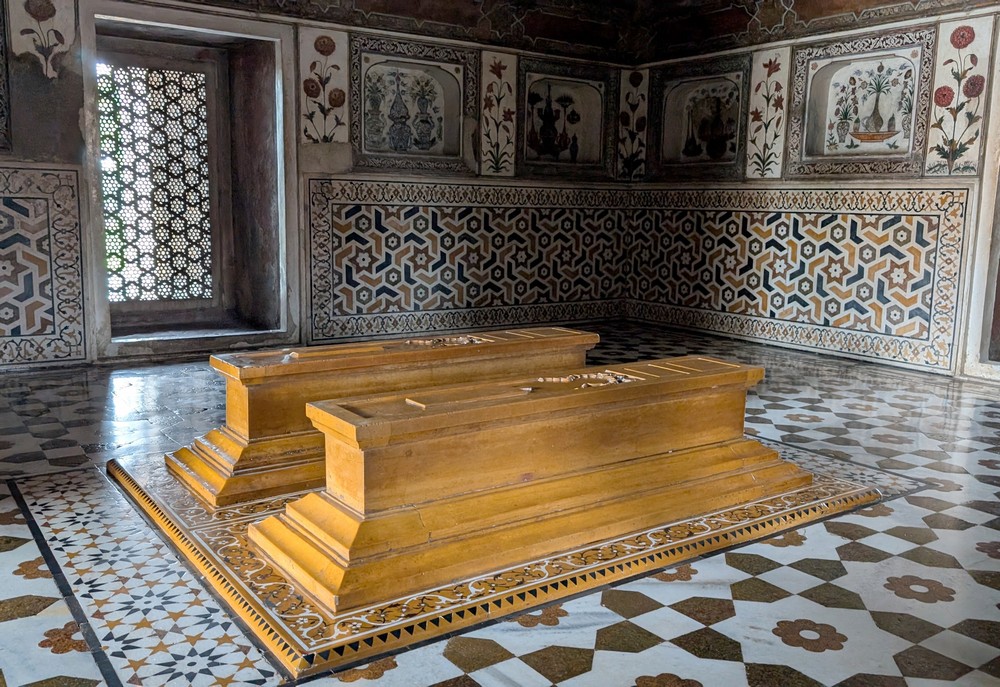
…as well as cypress trees (as a symbol of peace), elegant wine bottles, fruit bowls, vases with bouquets, and more.
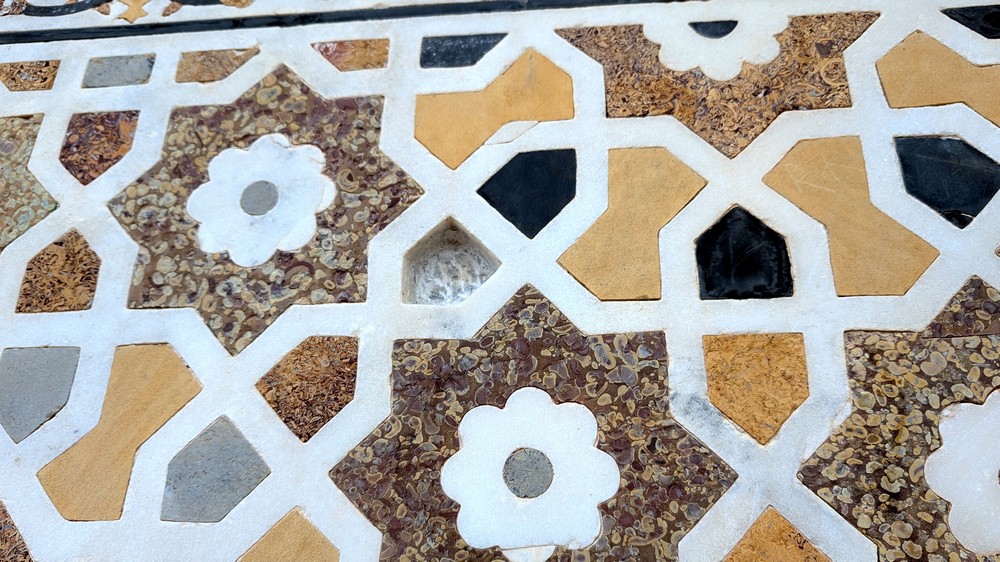
In some places, a piece of the mosaic had fallen out, and I was amazed at how deeply the individual patterns had to be carved.
The delicate screens made of carved marble were also beautiful. I believe that just as this building inspires its visitors today, it must have had an equally strong impact in the past, even on Emperor Shah Jahan, who was inspired by these inlays almost ten years later to decorate the Taj Mahal. This is one of the reasons why this tomb is nicknamed “Baby Taj.”
The mausoleum contains cenotaphs for Nur Jahan’s father and mother, but other family members are buried here as well.
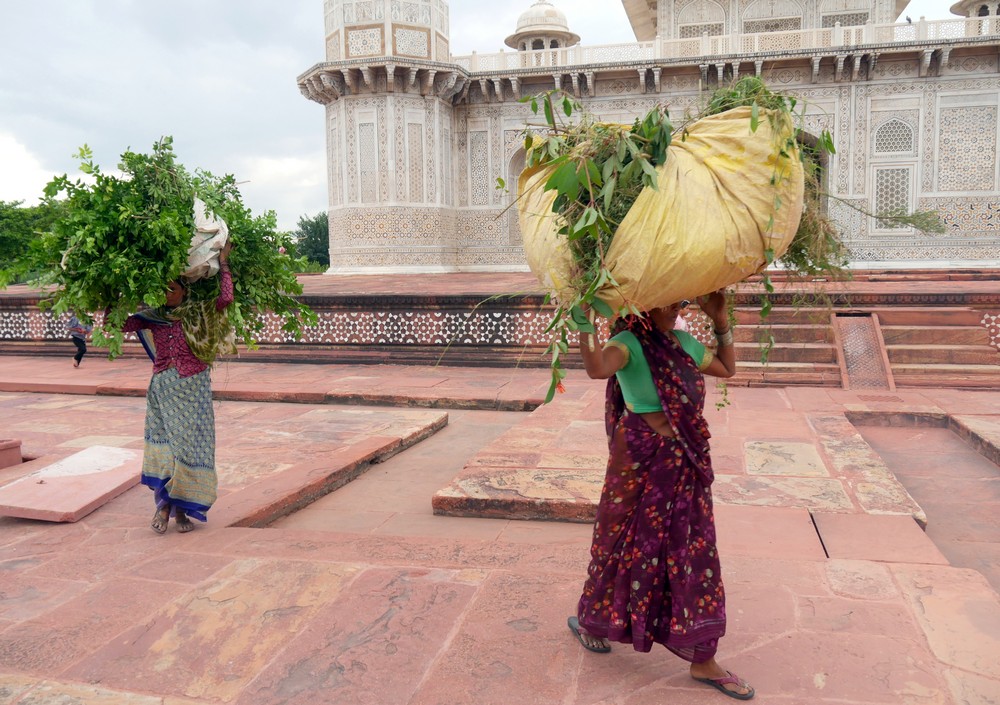
Outside, the atmosphere was peaceful, and several local visitors sat in the shade of the marble walls. There were far fewer people here. Even the workers repairing the sandstone base did not disturb this peace. The men worked in a similar way to their ancient ancestors. Others pruned trees in the garden, and women carried away the cut leaves and branches in large bags on their heads.
Admission information: Itimad-ud-Daula
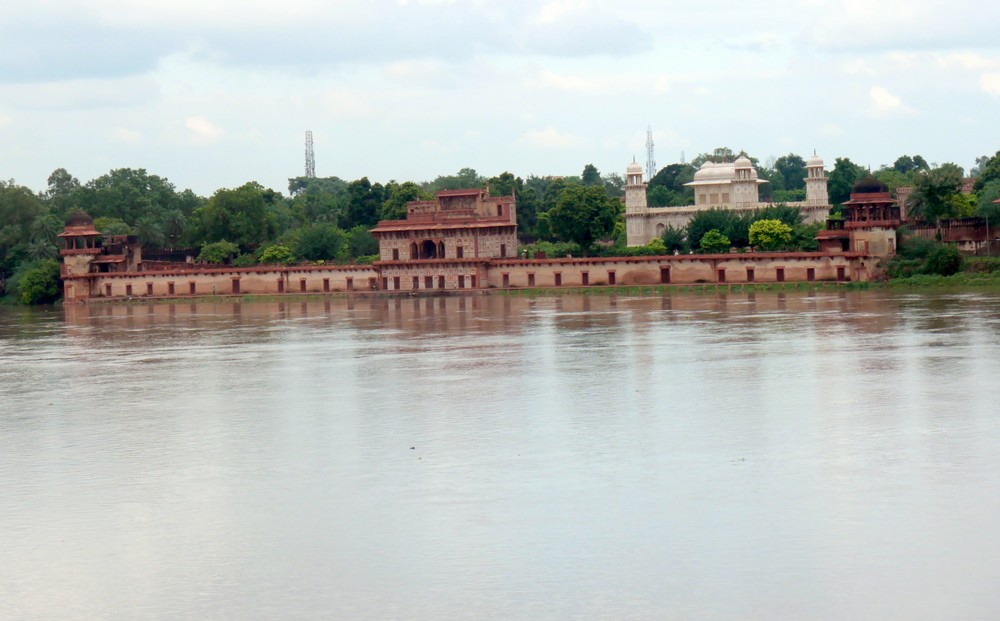
I looked back at the beautiful building from the car on the other side of the river. It seemed to me as if the entire amazing, symmetrical complex was rising directly out of the water…
4. Visit to a mosaic workshop
If you visit Agra through a travel agency or with a hired guide, you will definitely not avoid visiting one of the workshops (production of carpets, pashmina shawls, jewelry, three-dimensional embroidered paintings, etc.). Although watching the production process itself can be interesting, I don’t really like such visits because they always end with the salespeople pushing their products on you, even if you make it clear from the outset that you won’t be buying anything. However, one workshop really caught my attention, even though the scenario of the visit was the same.
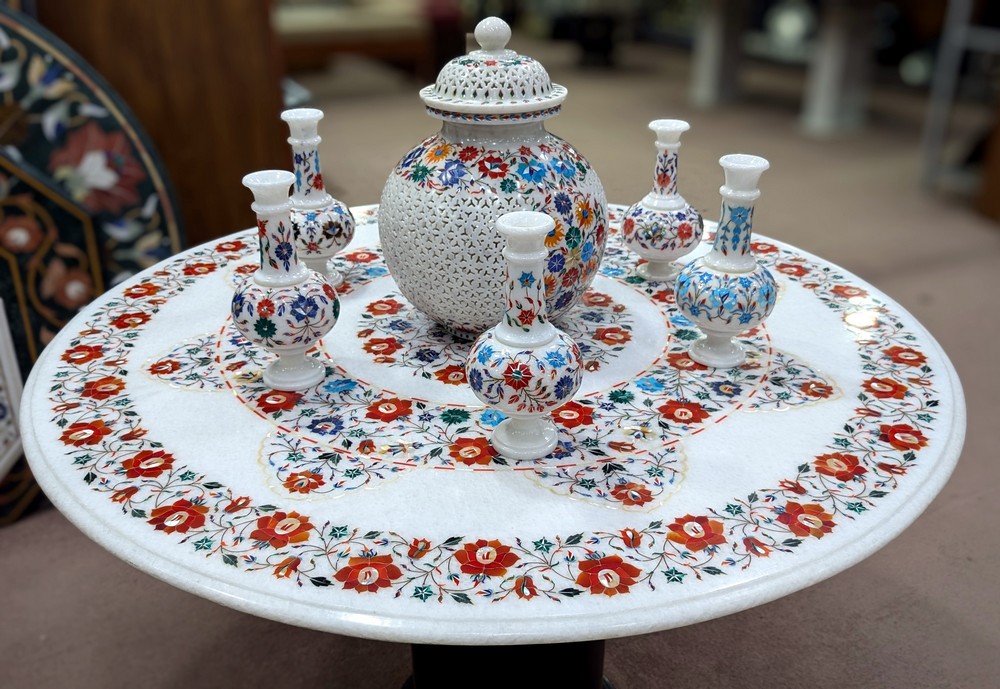
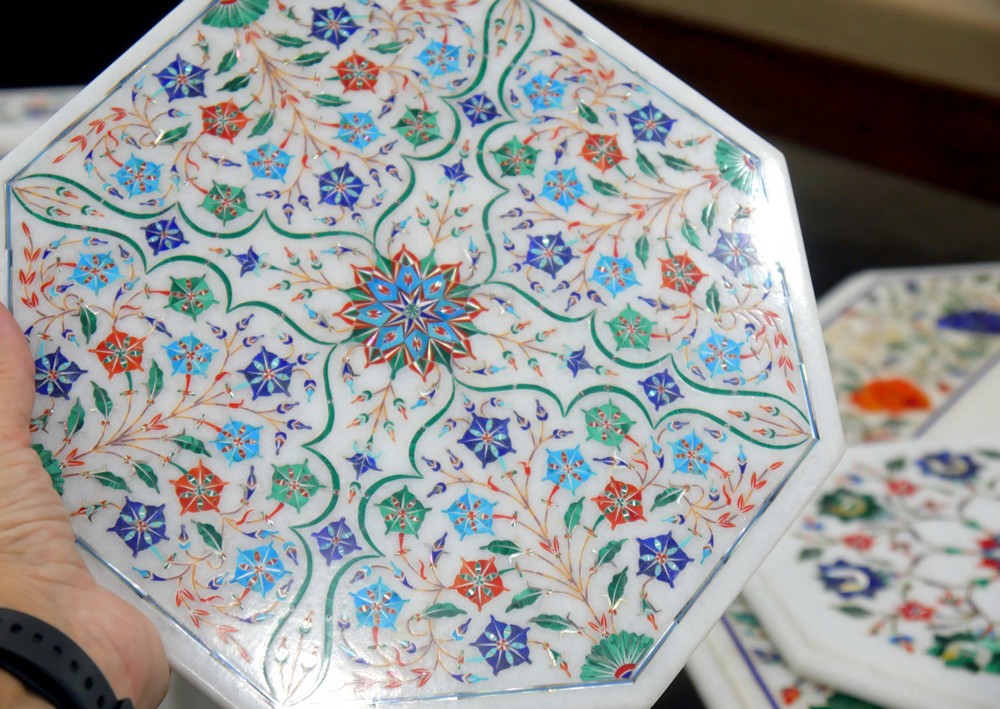
It was a workshop where marble objects (table tops, vases, bowls, plates, tiles, flower pots, etc.) are made and decorated using the pietra dura technique, which I had admired on the monuments I had visited.
As soon as we entered the room, the rhythmic tapping of chisels on marble convinced us that we were in the right place. Several men were working there. This art of intarsia is called “parchin kari” in India and is still alive in Agra. These men live and work in the Taj Ganj district of the city next to the Taj Mahal – in the same place where their ancestors lived, who decorated the famous mausoleum. Many of them are already the 6th or 7th generation.
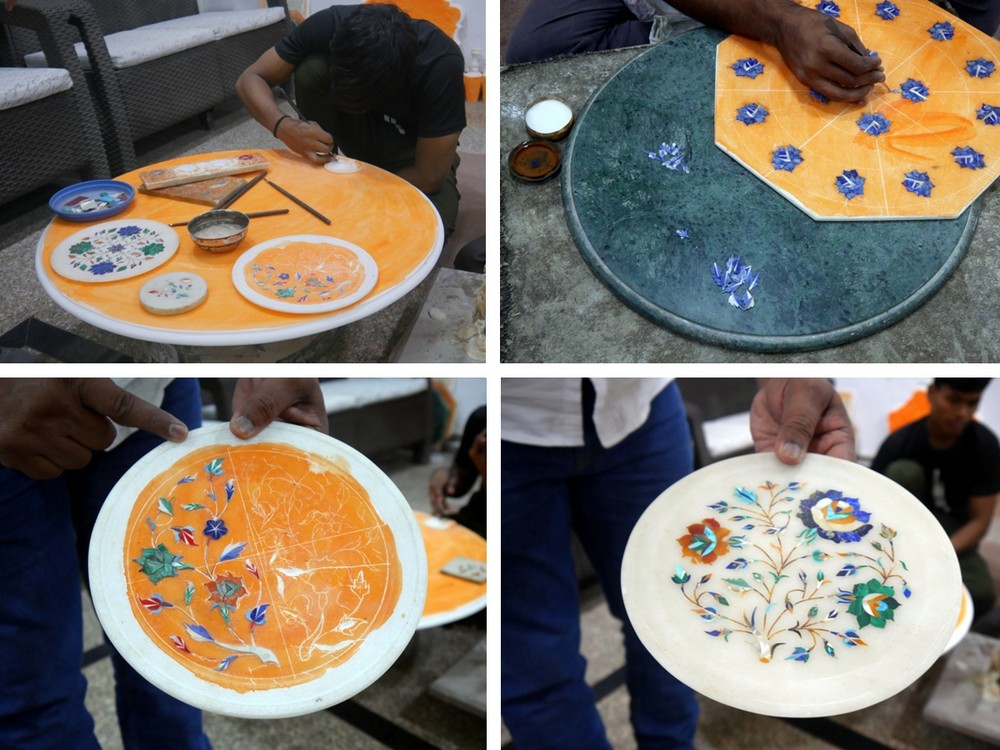
The workshop uses the same marble that was used to build the Taj Mahal – white, dense, very strong marble from Makrana (but the shop also offers products made of black marble). The patterns are created from malachite, onyx, carnelian, lapis lazuli, and other precious and semi-precious stones. To this day, both the marble and the stones are carved and polished by hand. A hand-held roller is still used to soften the edges of the polished stones.
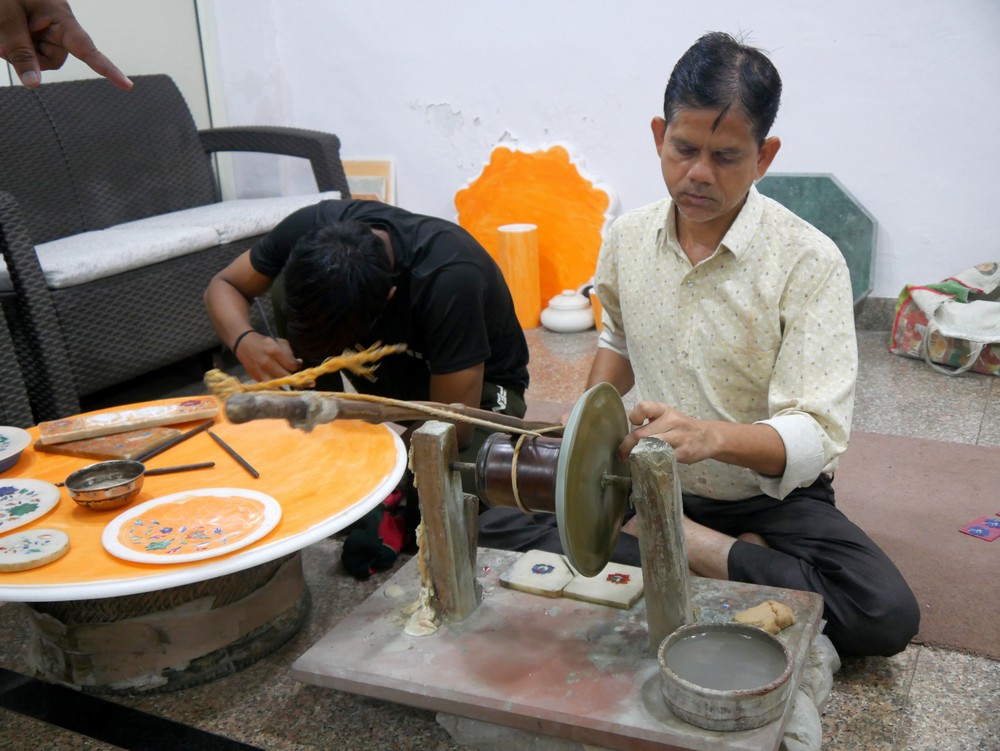
One man carves a pre-drawn pattern into the marble, while another places the cut stones into the patterns. Some pieces are smaller than a fingernail!
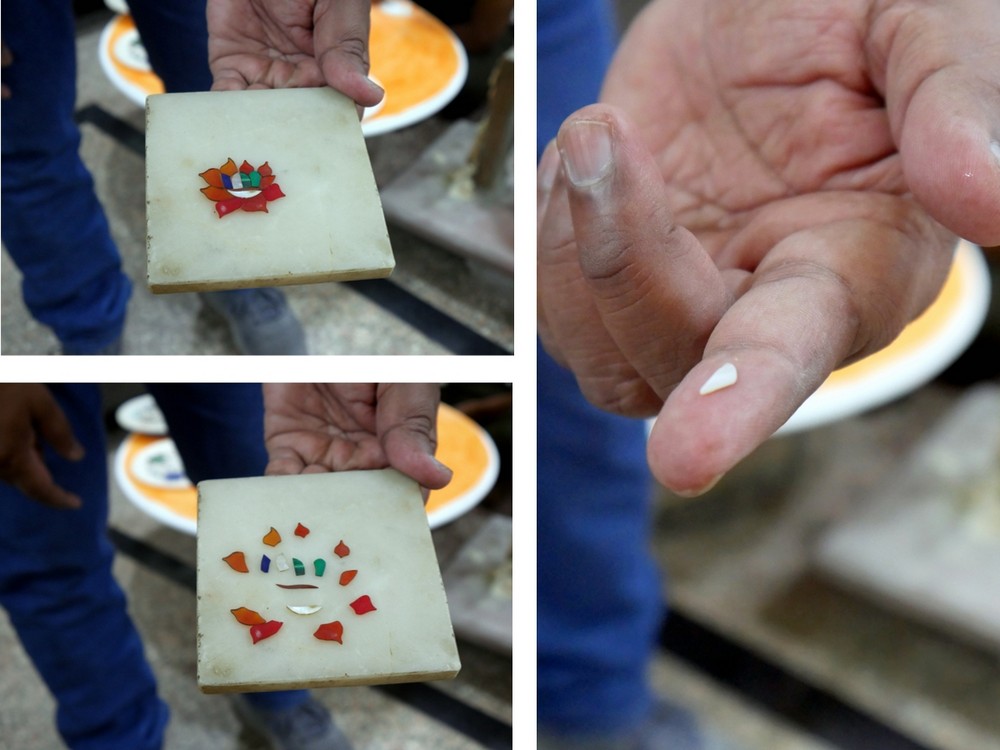
The workshop owner proudly shows off their products, shining a flashlight on some of the patterns and banging one slab on another piece of stone to show how hard Indian marble is. And then he asks me to guess how many pieces of stone are used to create the patterns on various objects. There are thousands of them!
5. Farewell to the Taj Mahal
The last stop on my city tour was a viewpoint on the other bank of the Yamuna River. I stood directly opposite the breathtaking building and was grateful in my heart that I was so lucky that it had stopped raining in the morning.
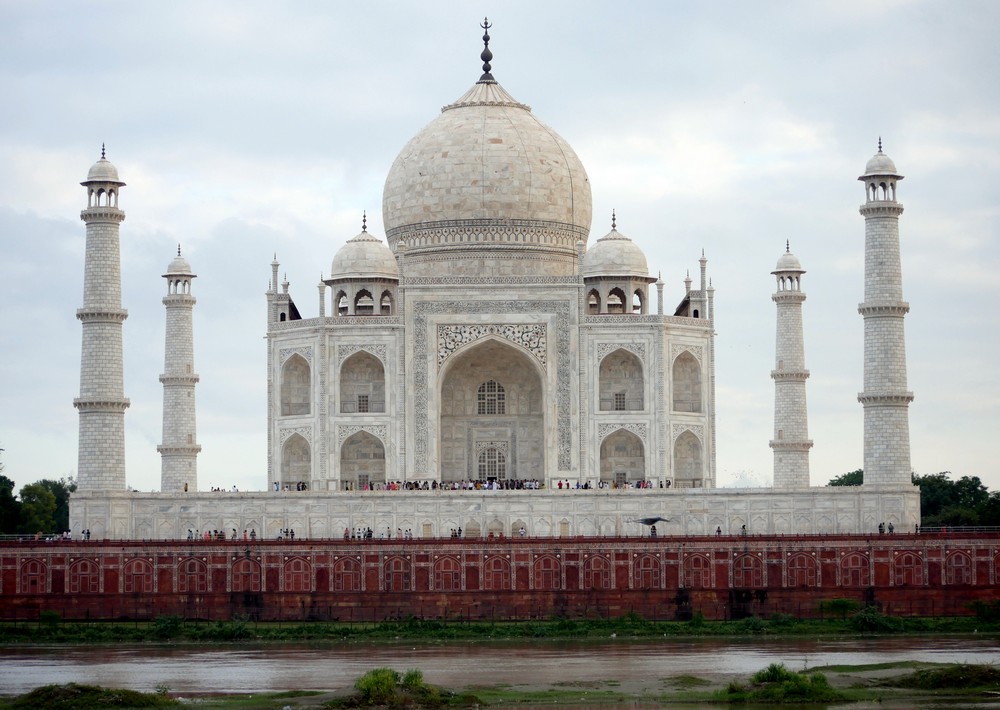
It is said that Shah Jahan had the hands of workers and craftsmen amputated and their eyes gouged out so that they could never build another masterpiece like this one. However, there is no evidence to support this. After all, it contradicts his alleged idea to build the same mausoleum for himself. Now, instead of workers, there were crowds of tourists, but from this distance, they didn’t bother me as much as they had during my morning visit.
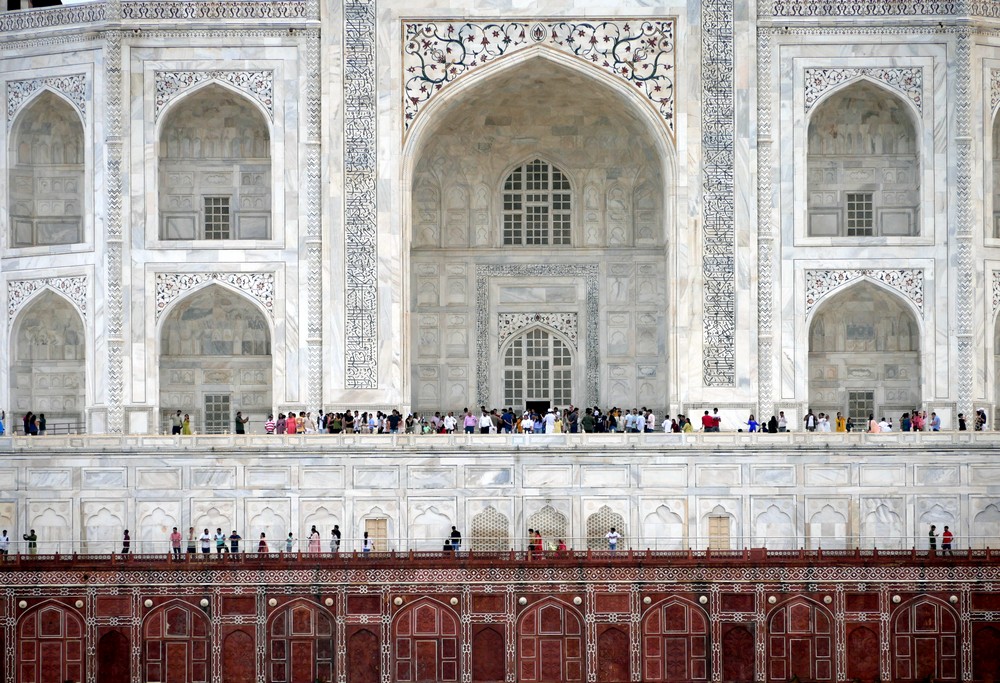
After heavy rains, the river had enough water to reflect the entire complex. The surface was rippled only by the touch of various water birds, of which there were many, each wanting to snatch something for dinner.
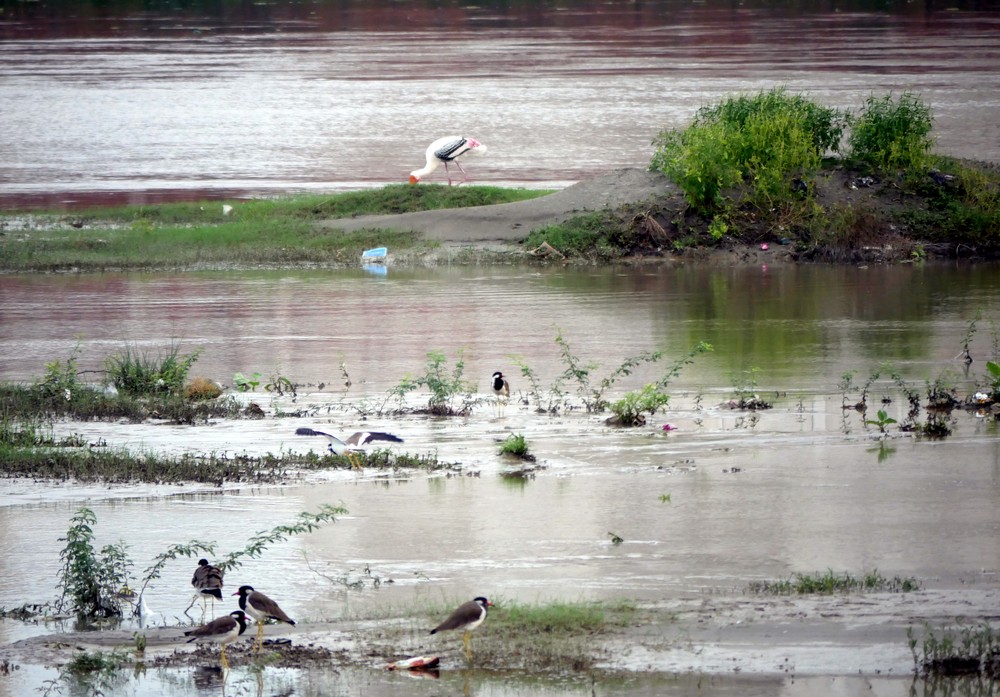
There was an incredible calm everywhere. Some birds landed on the fence and watched us intently, while a stray dog laid down lazily under the bench.
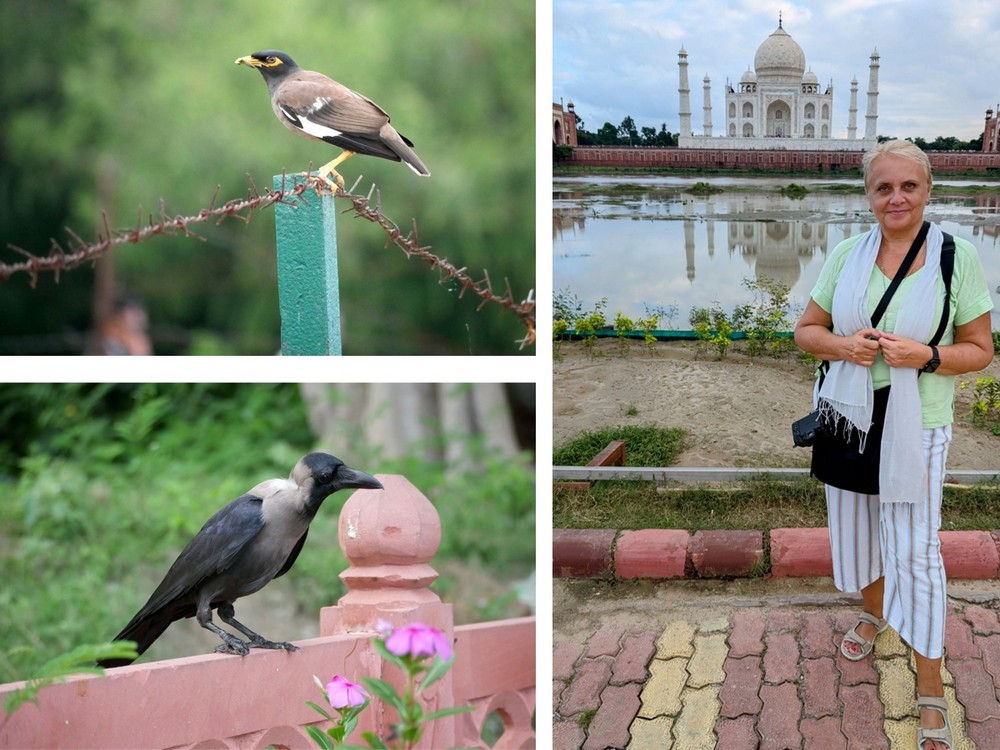
I was overcome with melancholy. The setting sun, despite the clouds, cast its last rays, bathing the dome and minarets in a soft orange hue.
In the thickening twilight, two fires could be seen further to the west – Mohsin explained to me that the cremation of the dead was taking place there. He also said that it was now forbidden to throw these bodies into the river. These deceased will certainly not have any luxurious tombs, but I believe that their loved ones said goodbye to them with at least as much love as Shah Jahan did to his beloved wife. I will carry this image in my mind for a long time to come; for me, these were the most memorable moments of my entire return to India.
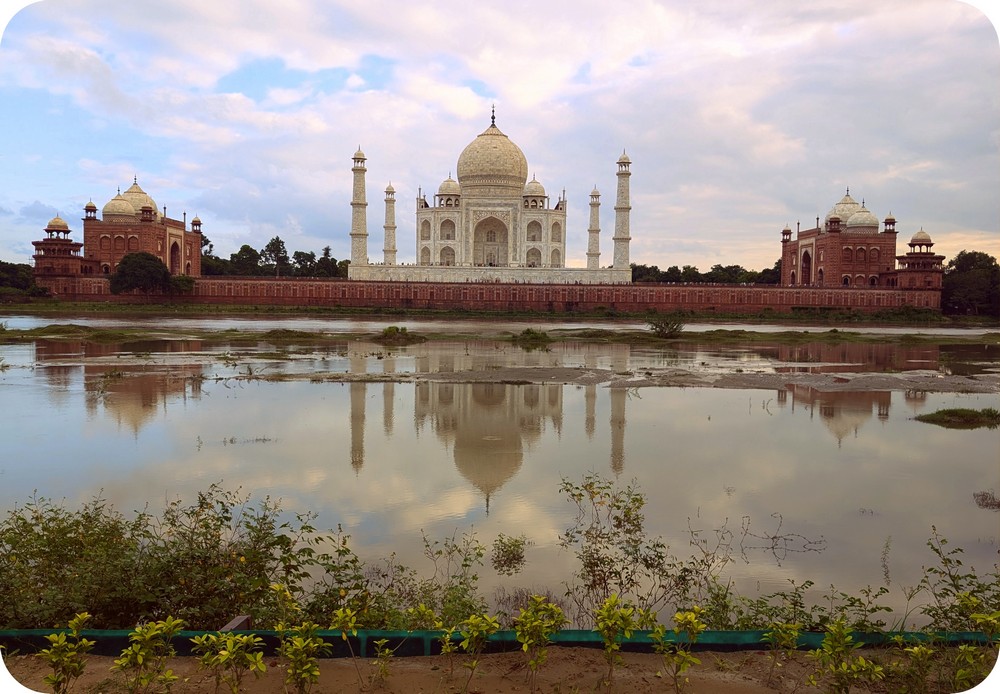
There is a small fee to enter this scenic spot (prices vary depending on what time of day you arrive). As we were leaving, the ticket seller was feeding a large group of those typical Indian squirrels with leftover food. It was time for our dinner too…
6. Dinner
We drove through the streets of Agra. The size of the city is evident not only in the traffic chaos but, unfortunately, also in its pollution and smog. The sight of abandoned, dilapidated houses, inhabited only by colonies of monkeys, was not very appealing either. Agra, once one of the most magnificent cities in the world, lost its importance as a result of the decline of the Mughal Empire and the relocation of the capital to Delhi.
We stopped at a small market. A curious cow peered into the shop windows and stalls selling crisps and lollipops. We entered an alley with street food.
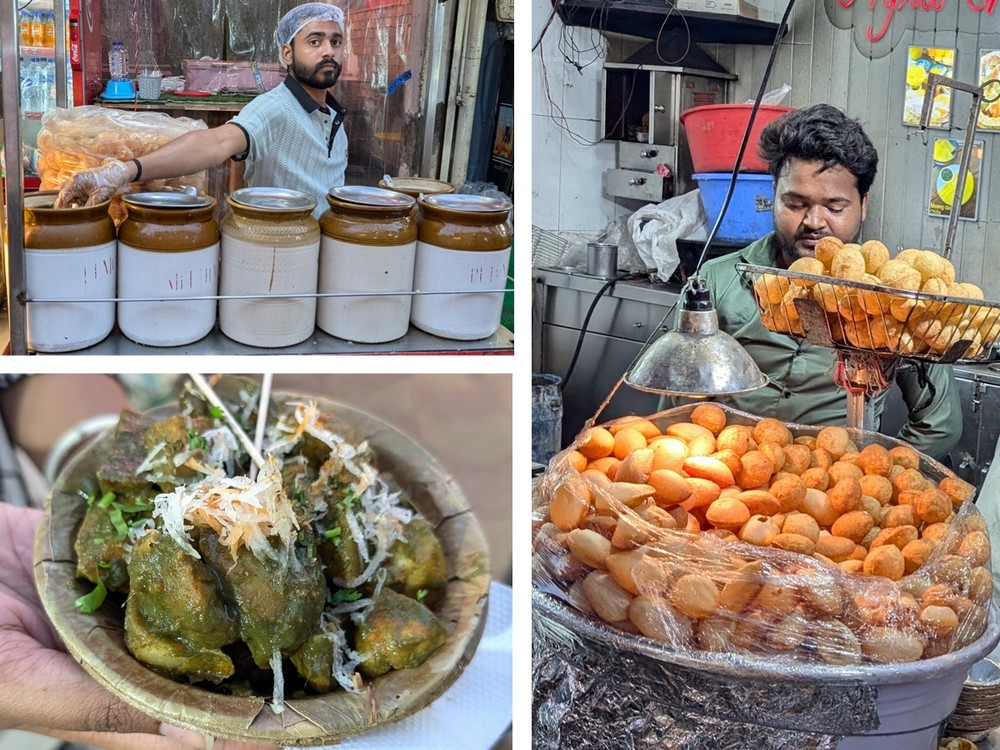
I was most interested in the fried panipuri balls. These are hollow dough shells filled with various mixtures (most often potatoes, onions, and chickpeas).
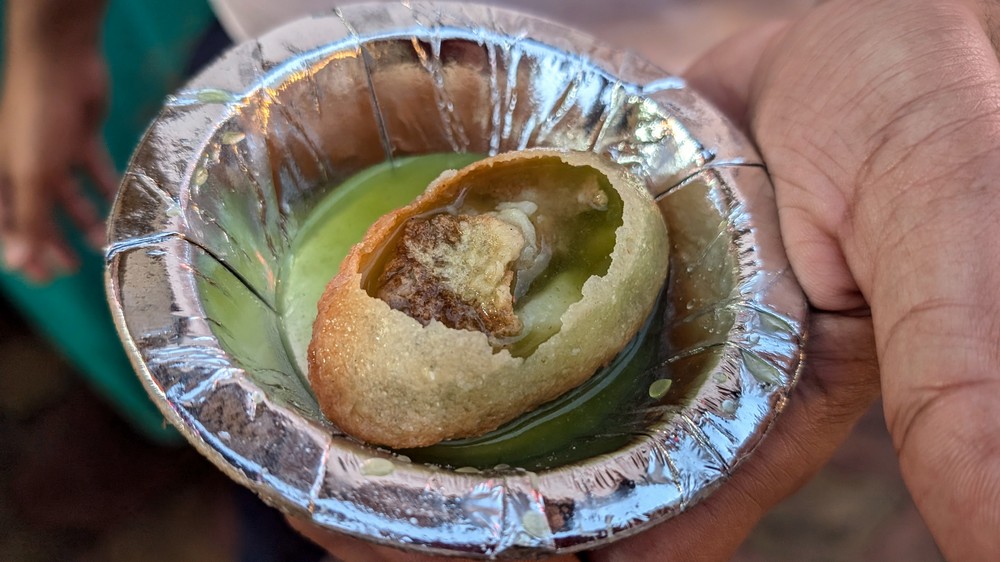
I was fascinated by how Mohsin and the others dipped the balls in spicy green water (mint, coriander, and chilli peppers), then put them in their mouths and puckered their lips comically – I just don’t know if it was to enjoy the dish more or if it was a reaction to the super spicy contents. 🙂
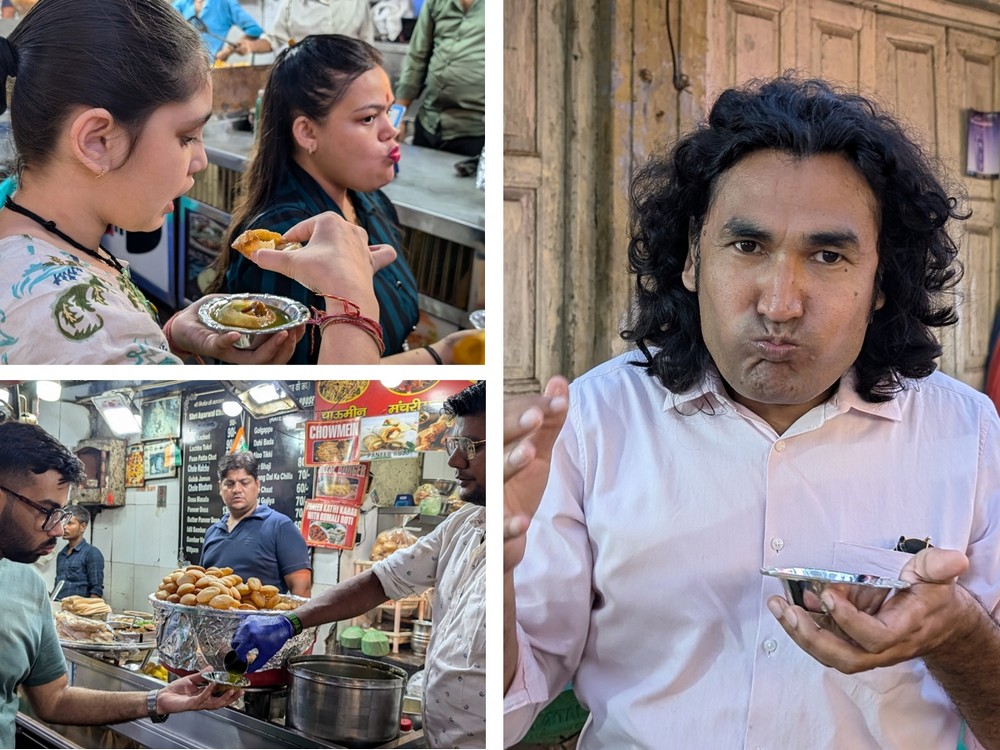
However, I didn’t try this or any other specialty at this place. Not because I don’t like spicy food, but because of the hygienic conditions of Indian street stalls, I didn’t want to risk stomach problems.
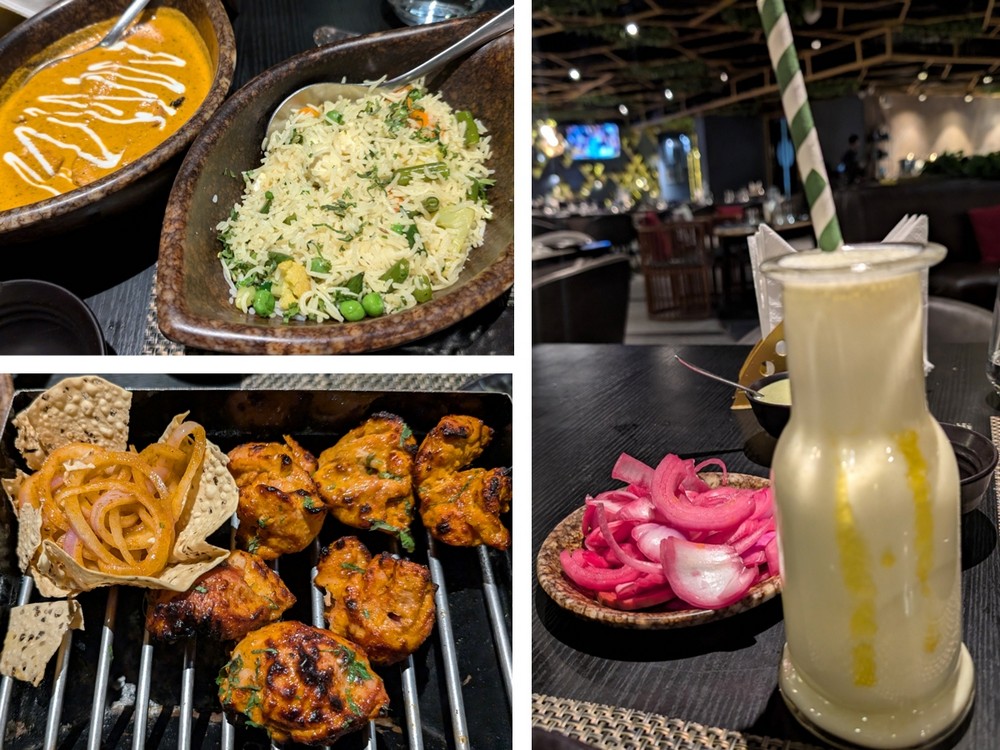
Mohsin and I preferred to visit a pleasant restaurant where I could eat without worry, and all the local dishes were just delicious. And, of course, spicy! This made me enjoy the lassi even more – a yogurt drink that at least slightly reduced the sharp taste of the food.
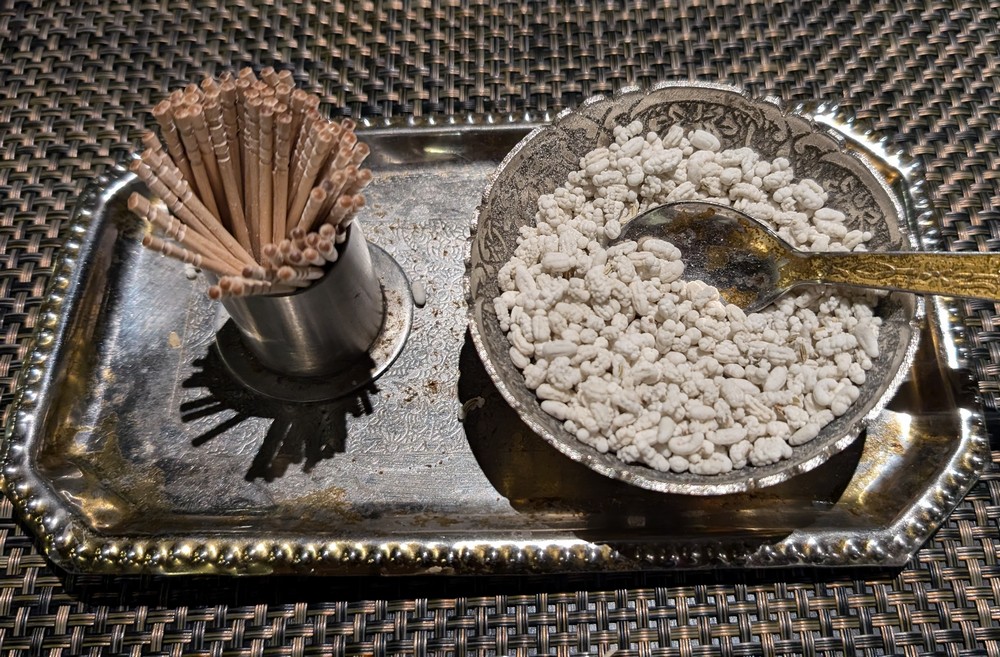
In Indian restaurants, you will often find a bowl of fennel seeds coated with peppermint (diwali kheel) to cleanse your mouth and freshen your breath after a meal.
Restaurant address: The Salt Café, 1C, 3rd Floor, Fatehabad Rd (near the Taj Mahal)
Accommodation: Since I was traveling to India alone, I preferred to stay in a good hotel: Courtyard by Marriott Agra Hotel also has a nice outdoor pool, which I didn’t get a chance to use because it rained at first and then, I had a busy schedule all day.
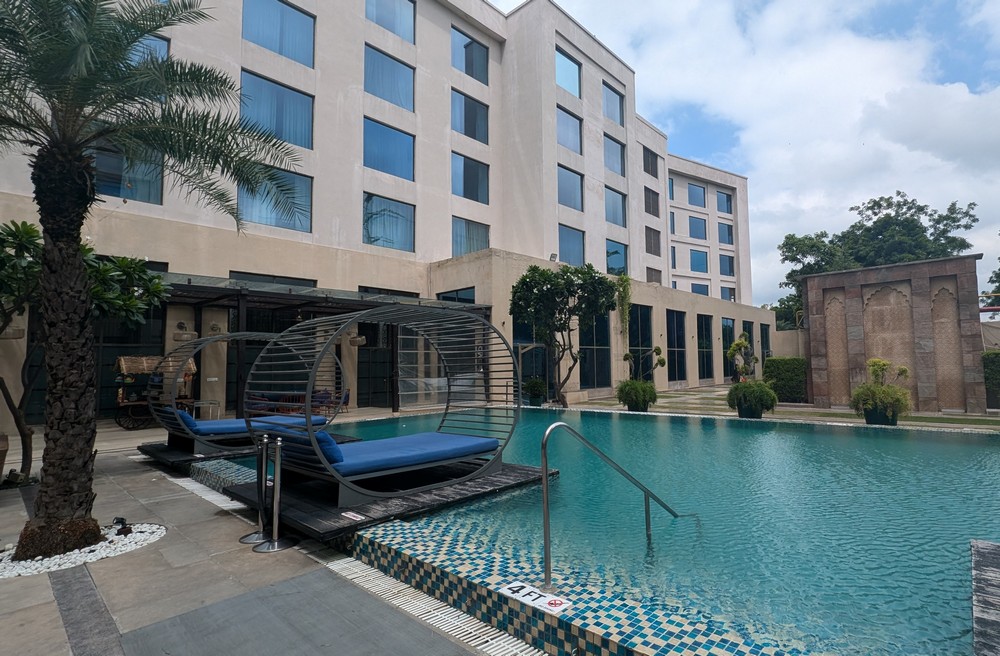
Instead, in the evening (as the only spectator), I watched a performance of traditional puppet theater (kathputli), which originates from Rajasthan. In the past, when there was no radio or television, maharajas used to entertain themselves at parties with this type of theater.
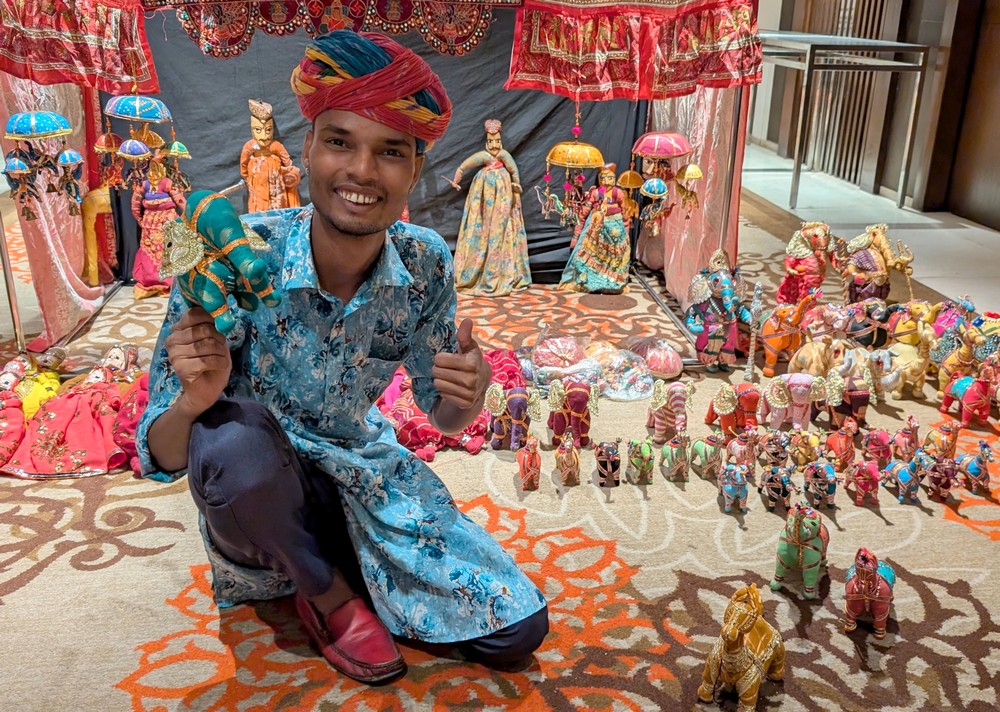
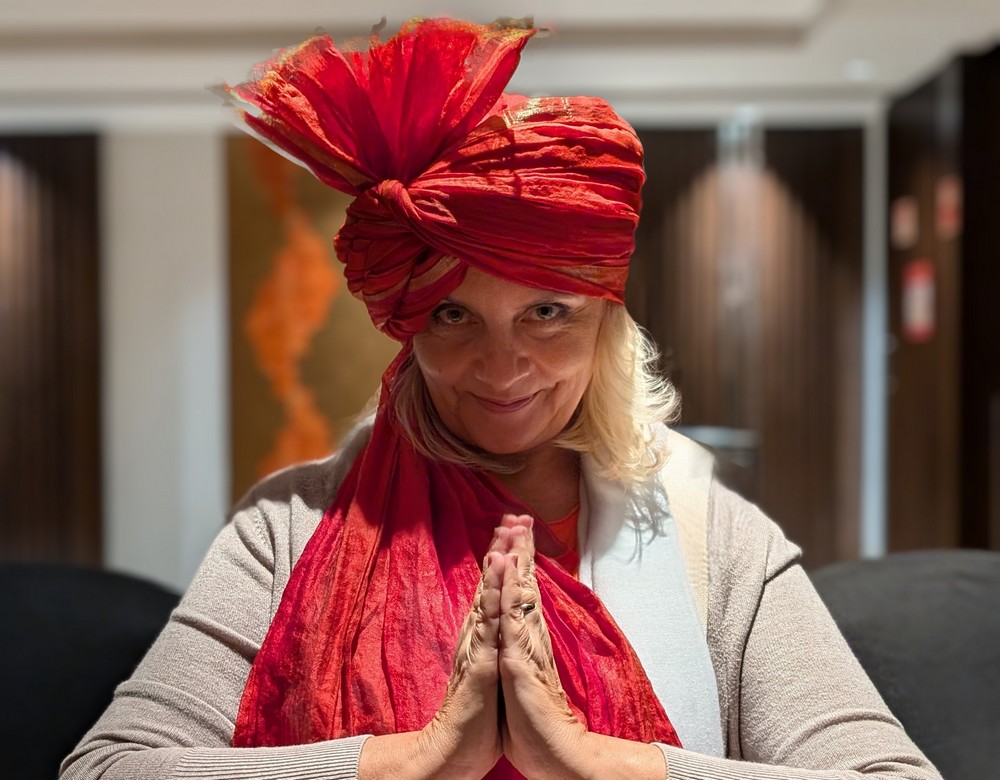
Bobby and his uncle Hemaram performed a short play for me with wooden puppets dressed in colorful clothes. The human characters were complemented by various animals. Bobby explained to me that the camel symbolizes love, the horse means strength, and the elephant symbolizes happiness. If you buy an elephant as a souvenir, remember that a trunk curled upward means morning, a straight trunk means noon, and a trunk curled downward symbolizes evening. At the end, they wrapped an 8-meter-long scarf around my head! The one Bobby had on his head was even a meter longer!
Thank you for reading my article.
You can find more articles about India here: Travel – India
Text: © Copyright Ingrid, Travelpotpourri
Fotos: © Copyright Ingrid, Travelpotpourri