

 TRAVEL





 RECIPES WITH A STORY












 AUSTRIA-VIENNA











 SLOVAKIA-BRATISLAVA







 EVENTS









 INTERVIEWS


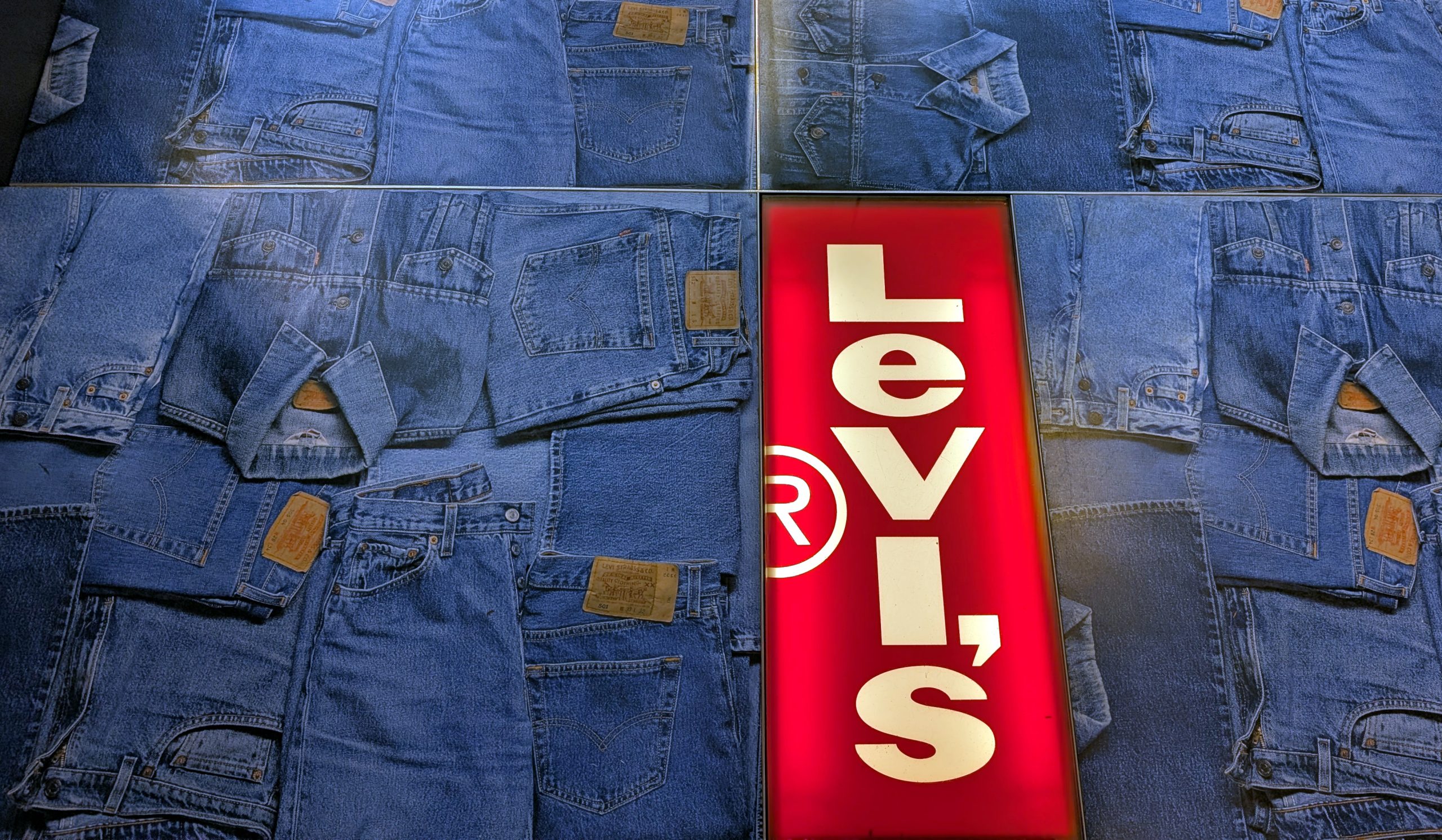
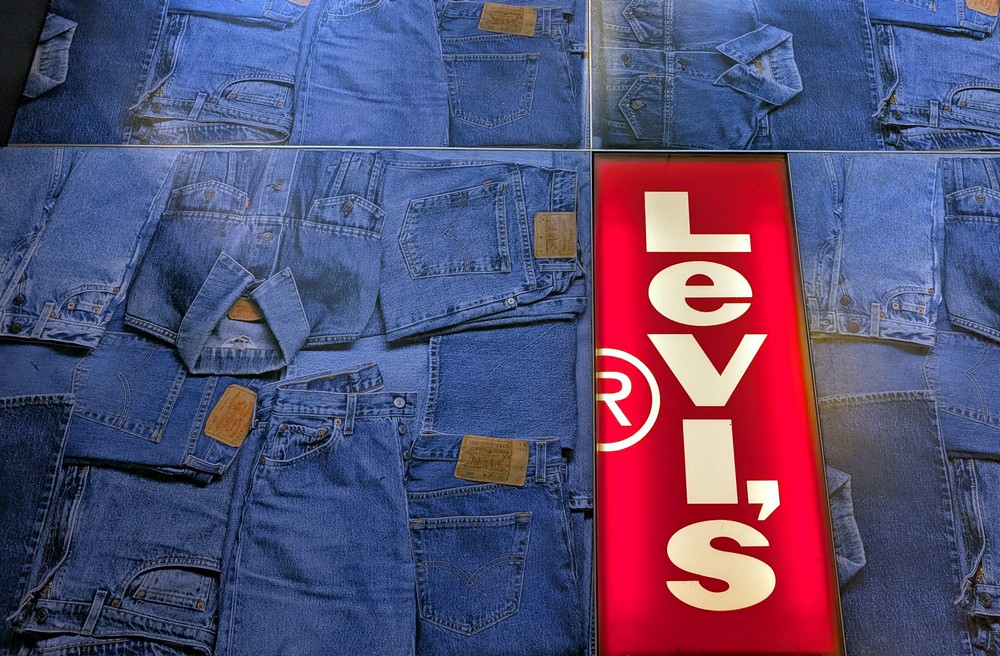
Do you remember your first pair of jeans? I certainly do. Growing up in communist Czechoslovakia, getting genuine Western jeans wasn’t easy. It took me quite a while to convince my parents to spend some of their saved West German marks on the trousers I had been dreaming of. The only place to buy them was Tuzex, a chain of special stores where Western goods could be purchased with foreign currency. My very first jeans were Levi’s.
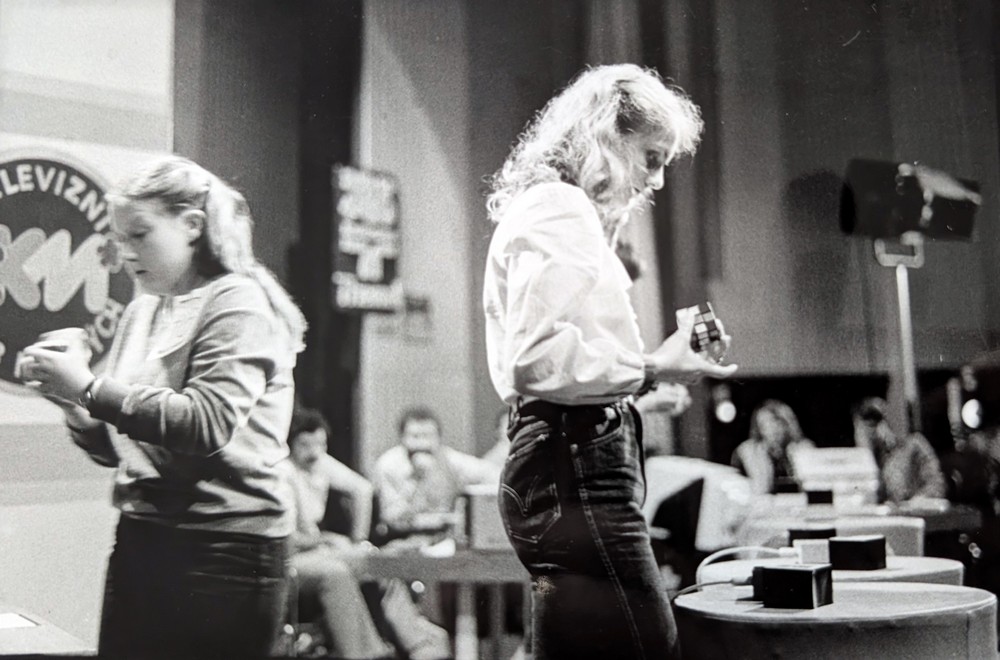
For my generation, jeans were much more than just a piece of clothing. They were a symbolic connection to the unattainable Western world beyond the Iron Curtain. Back then, I could never have imagined that the Iron Curtain would fall one day, that we would be free to travel, and that one day, I would find myself standing in the birthplace of the man whose name was stitched onto my favorite jeans.
If you’re planning a visit to Bamberg or Upper Franconia, make sure to stop in the small town of Buttenheim. This is where Levi Strauss – the man who gave the world its legendary Levi’s jeans – was born. Today, his birthplace houses a modern museum dedicated to the history of the brand and the invention of the world’s most famous denim trousers.
Levi Strauss and Buttenheim
Buttenheim is a small town in Upper Franconia, near Bamberg, with a population of around 3,000. Until the 1980s, hardly anyone there knew that the “father of the world’s most famous blue jeans” had been born in their town. It had long been believed that Levi Strauss was born in Bad Windsheim.
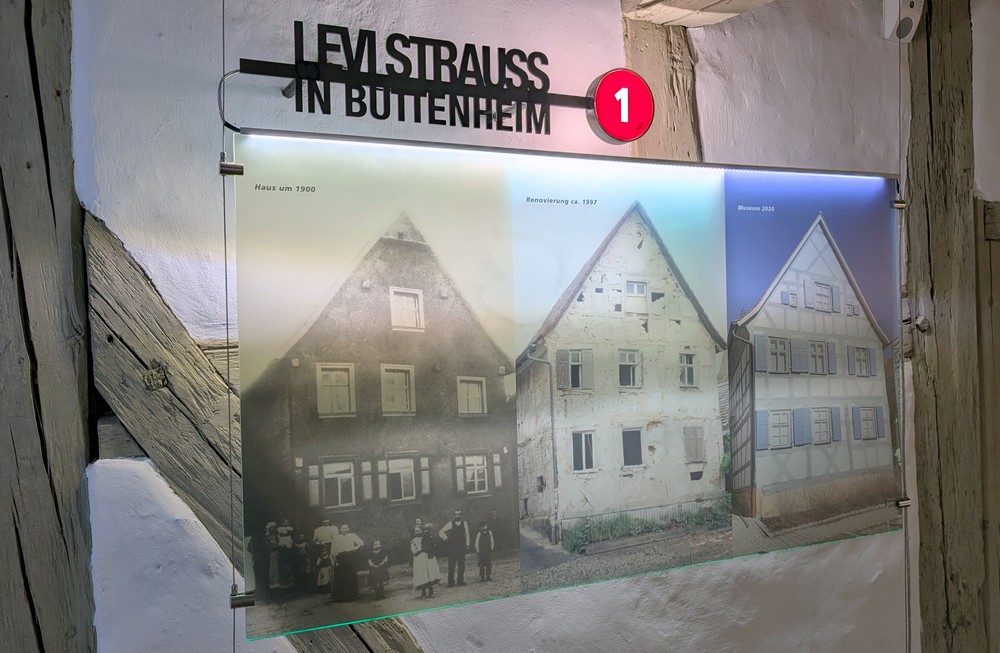
Everything changed in 1983, when the mayor of Buttenheim received a letter from Betty Greenwald of Milwaukee, Wisconsin, who was looking for information about Levi Strauss for a German festival in her hometown. Although many assumed it was simply a mistake, the letter sparked enough curiosity to prompt a search through old archives and parish records. Eventually, an emigration certificate found in the Bamberg State Archives confirmed that the successful businessman had indeed been born in Buttenheim. Even more remarkably, his birthplace at Marktgasse 33 was still standing.
In the 18th century, Buttenheim was home to a thriving Jewish community. Hirsch Strauss earned his living as a traveling peddler selling textiles and haberdashery. After his first wife, with whom he had five children, had died, he remarried. Together with his second wife, Rebecca, he had two more children – a daughter, Vögela (Fanny), and a son, Löb. The eldest daughter, Rösla, married to America. Soon afterwards, two of her brothers followed and opened a textile and dry goods business in New York. When Hirsch Strauss died of tuberculosis in 1847, his youngest son, the eighteen-year-old Löb, packed his bags and set off for America with his mother and sisters. Their journey was far from comfortable. They spent ten days traveling by horse-drawn wagon to Bremen before boarding a ship. The Atlantic crossing took at least four to five weeks. With only the bare essentials, they traveled in steerage, without drinking water, artificial lighting, heating, or ventilation. The family eventually settled in New York’s Little Germany neighborhood. Like his brothers, Löb changed his name to Levi – a name that would later become famous around the world. In January 1853, after a two-year waiting period, he officially became an American citizen.
The Gold Rush and the Birth of Blue Jeans
In the summer of 1848, news of gold discoveries in California reached the East Coast, triggering the famous Gold Rush. For merchants, it represented an extraordinary business opportunity. The Strauss brothers decided to expand their company, and in March 1853 Levi moved to bustling San Francisco. He opened a wholesale business that fourteen years later relocated to 14 & 16 Battery Street, where the company’s headquarters remain to this day. Gold miners needed sturdy trousers with durable pockets to carry their tools and gold nuggets.
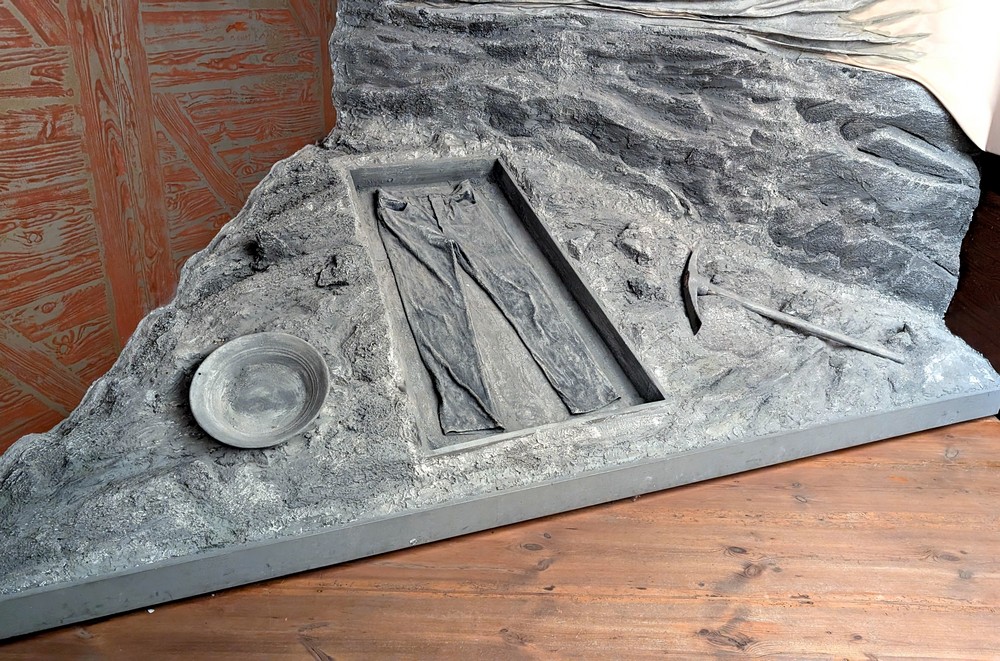
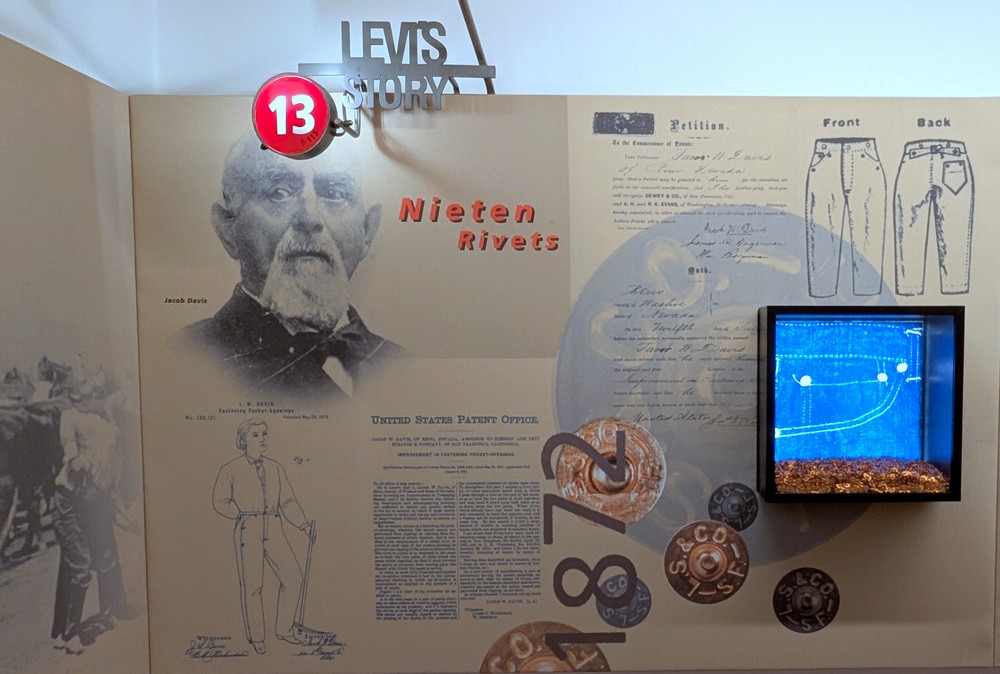
One of Levi’s customers was another Jewish immigrant, Jacob Davis from Riga. Davis came up with the idea of reinforcing the stress points of work pants – the pocket corners and the base of the fly – with copper rivets. He wanted to patent the invention but couldn’t afford the application. Levi immediately recognized the idea’s potential and agreed to finance the patent. It was granted on May 20, 1873, a date now widely regarded as the birth of blue jeans. At the time, however, they were simply called waist overalls. No one expected the invention to become such an enormous success. Demand grew so rapidly that a factory soon had to be opened to keep up with production. Today, the Levi Strauss Museum in Buttenheim tells this remarkable story through historical documents, exhibits, and interactive displays.
The Levi Strauss Museum
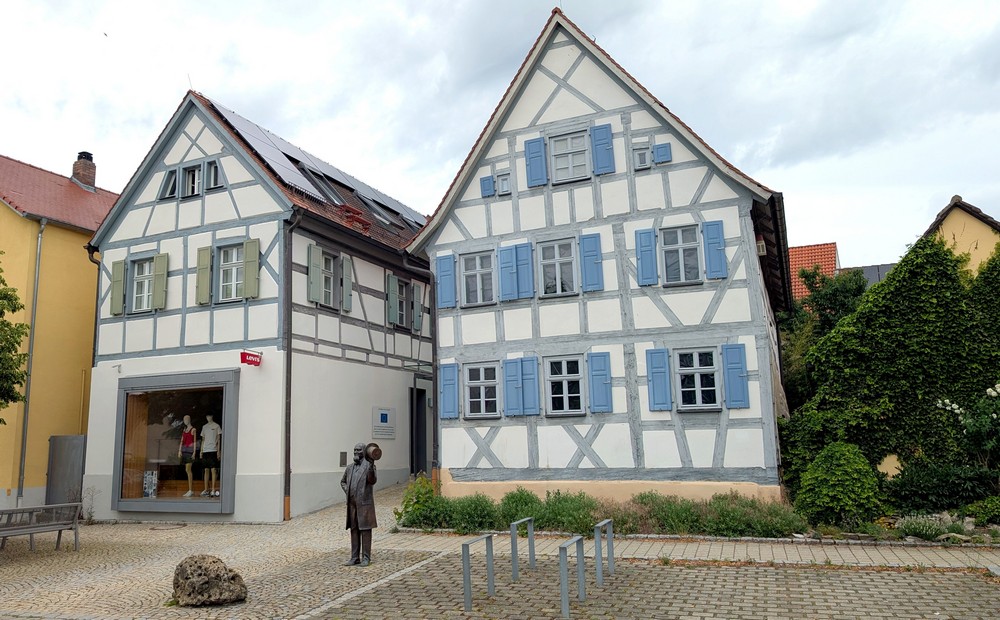
Levi Strauss’s birthplace, dating back to the 17th century, is one of the oldest buildings in Buttenheim. After standing empty and falling into disrepair, it was purchased by the town, carefully restored, and opened as a museum in September 2000. None of the original furniture has survived. Before emigrating, the Strauss family sold all their belongings, and in 1906 – less than four years after Levi’s death – the devastating San Francisco earthquake destroyed both the family home and the company’s headquarters. Levi had no children, so the business was rebuilt by his four nephews. He was, however, a generous philanthropist who supported numerous charitable causes and also took good care of his nieces.
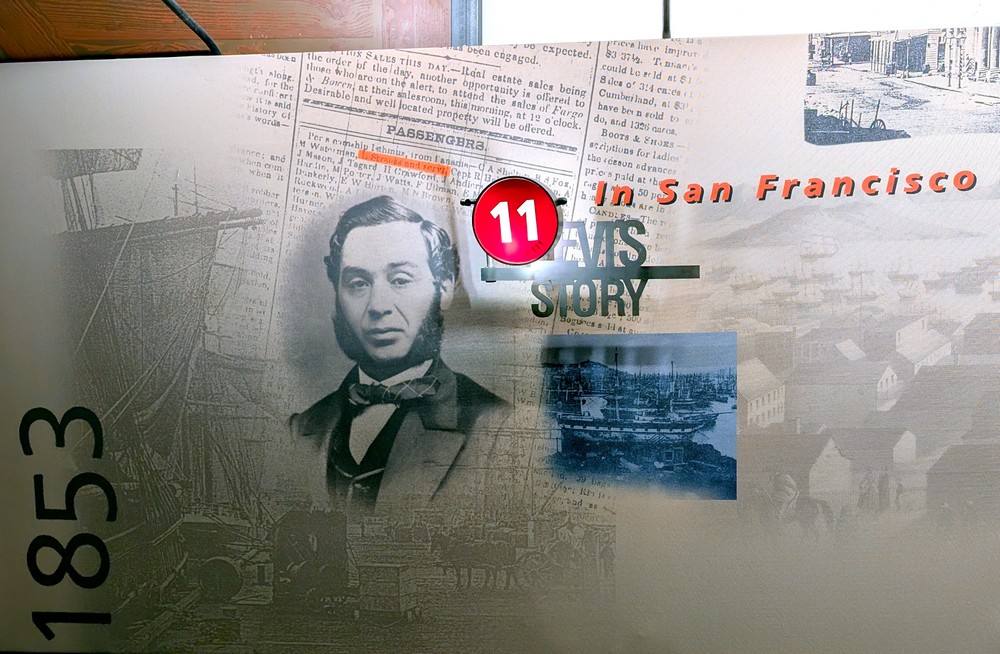
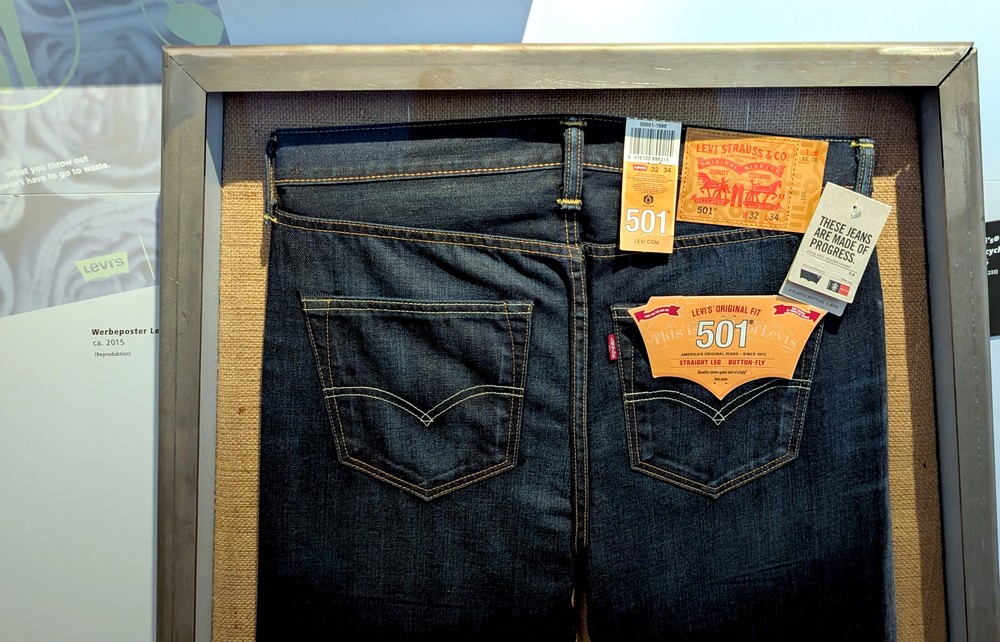
The museum occupies three floors. The ground floor explores the everyday life of Buttenheim’s Jewish community and the story of emigration to America. The second floor is dedicated to the invention of blue jeans. One of the highlights is a copy of the original patent. Interestingly, only a year after it was granted, the first legal actions against counterfeiters had already begun. So how can you recognize a genuine pair of Levi’s? Originally, they featured a fifth pocket for a watch and coins. The buttons and rivets were stamped with the company name. The stitching is sewn with the signature orange-yellow thread. The back pockets feature the iconic double-arched stitching, said to resemble an eagle soaring above the Rocky Mountains. During World War II, when thread had to be rationed, the arches were painted onto the pockets by hand to preserve the trademark design.
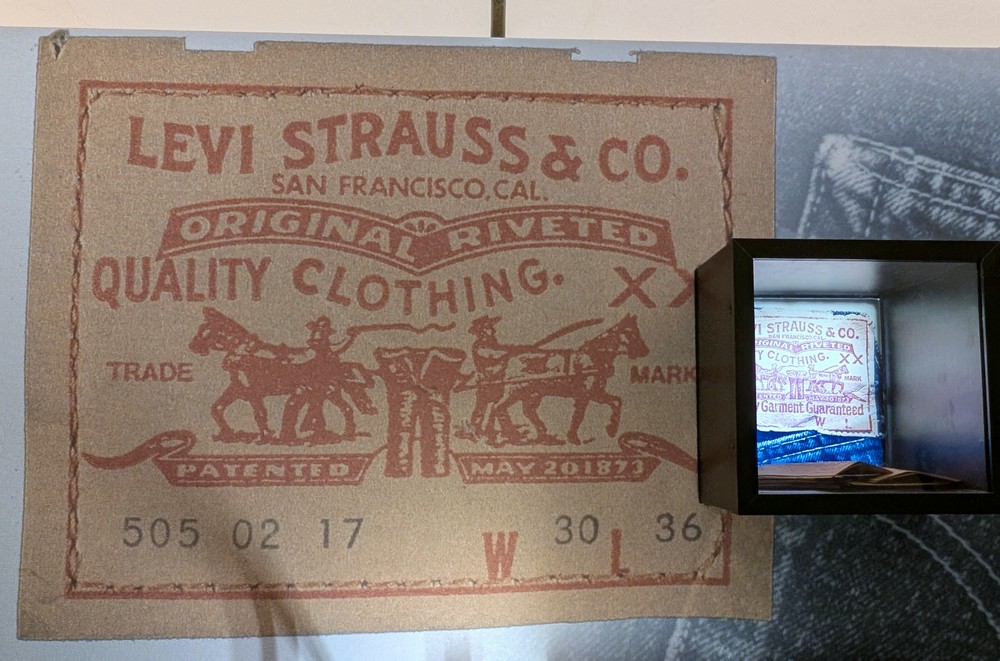
Levi’s jeans also feature the famous leather patch showing two horses unsuccessfully trying to pull a pair of jeans apart. Product numbers beginning with the digit 5 indicate premium quality, which is why the classic model bears the famous number 501. Since 1936, the small Red Tab label has been sewn into the right back pocket, making Levi’s instantly recognizable even when folded.

Jeans as a Symbol of Rebellion
The museum’s third floor explores the cult of jeans. They are far more than just a piece of clothing – they represent an attitude. After World War II, young people embraced jeans as a symbol of rebellion, inspired by movie icons such as Marlon Brando and James Dean.
The exhibition also explains which styles became associated with different youth subcultures. Did you know that the vintage jeans trend actually originated in Japan? For decades, manufacturers tried to make jeans last as long as possible. Later, they had to invent ways of making brand-new denim look faded and well worn. I was fascinated to learn that ripped jeans originally symbolized resistance to consumerism before eventually becoming mainstream fashion. Oversized skateboard jeans, worn low on the hips with a sagging crotch, are believed to have originated from prison uniforms, where inmates wore oversized trousers and belts were prohibited.
Even celebrities embraced denim in unexpected places. Mick Jagger wore jeans while serving as a witness at Catherine Deneuve’s wedding, and Andy Warhol famously wore them to a White House reception.
Another particularly interesting section focuses on jeans in the former East Germany, where obtaining genuine Western denim was even more difficult than it had been in communist Czechoslovakia.
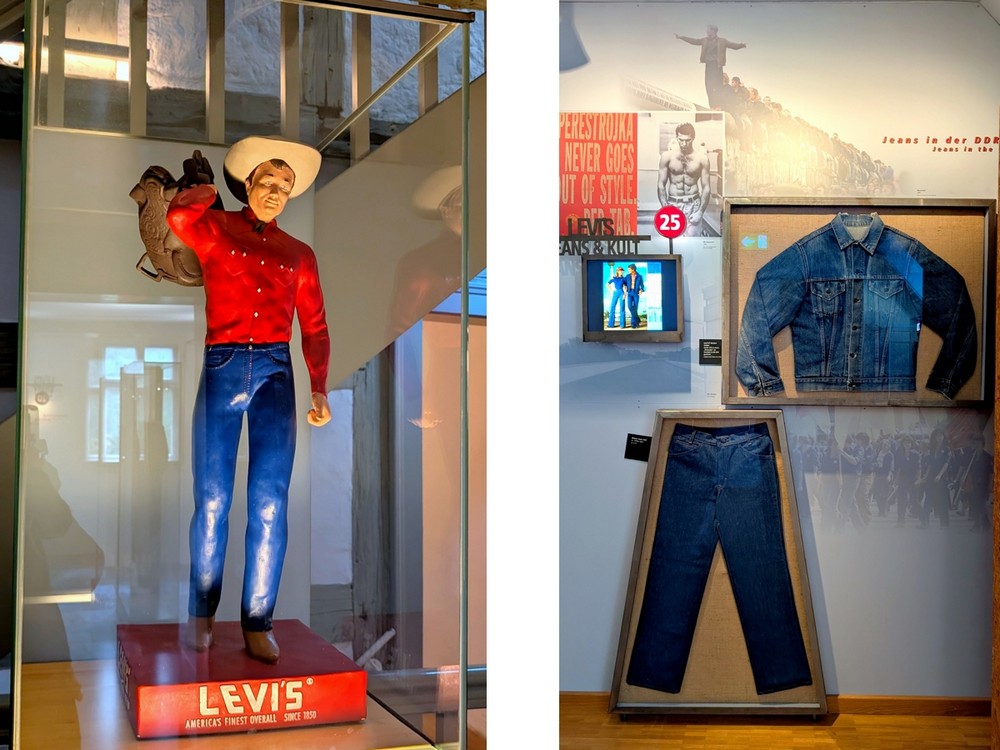
The exhibition also features historic denim garments from the collections of two German collectors. The oldest pair dates back to the 1930s. Originally worn by gold miners and laborers, jeans have since become a timeless fashion staple worn by people across all social groups and remain a symbol of youth, individuality, and a relaxed lifestyle.
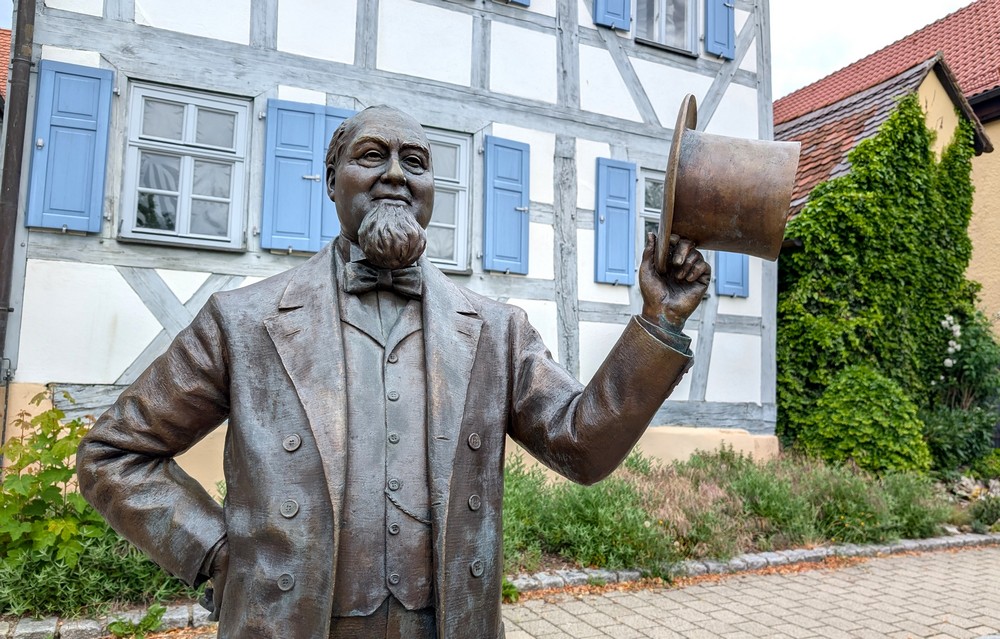
The museum is easy to find. Outside stands a life-sized bronze statue of Levi Strauss by German sculptor Rainer Kurka. Levi greets visitors by raising his hat with his left hand while hiding a small copper rivet behind his back. Don’t forget to touch it – it brings good luck. By the way, since 1937, the rivets on the back pockets have been covered with fabric to prevent scratching of furniture or leather saddles.
In 2011, the museum acquired and restored the neighboring historic building. Today it houses not only a denim shop but also temporary exhibitions. During my visit, the exhibition featured all kinds of denim-related items – from bed linens and toilet seats to rubber boots. The museum even hosts weddings – not only in jeans! The Levi Strauss Museum in Buttenheim is well worth a visit, not only for fashion enthusiasts but for anyone who enjoys discovering the remarkable stories hidden behind everyday objects.
For information about opening hours, admission fees, and current exhibitions, visit the official website: Levi Strauss Museum
Text: © Copyright Ingrid, Travelpotpourri
Fotos: © Copyright Ingrid, Travelpotpourri






The Levi Strauss Museum sounds like a fascinating place for anyone interested in fashion history and the story behind iconic denim jeans. It’s interesting to learn how a simple clothing item became popular worldwide.