

 TRAVEL





 RECIPES WITH A STORY












 AUSTRIA-VIENNA











 SLOVAKIA-BRATISLAVA






 EVENTS









 INTERVIEWS

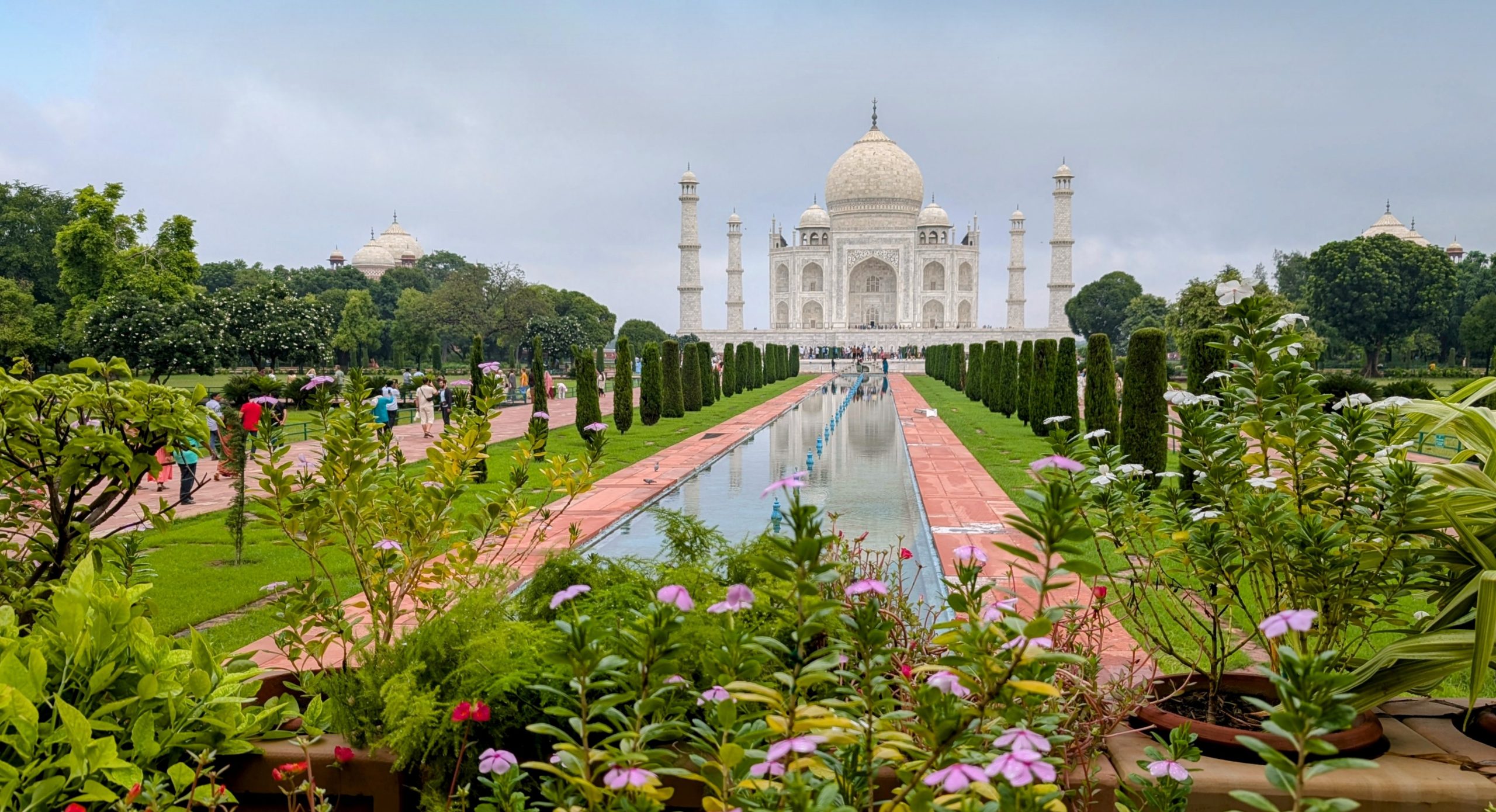
I traveled to India in September. According to reports from my Indian friends, the monsoon season was already ending, and if it rained, it was only briefly.
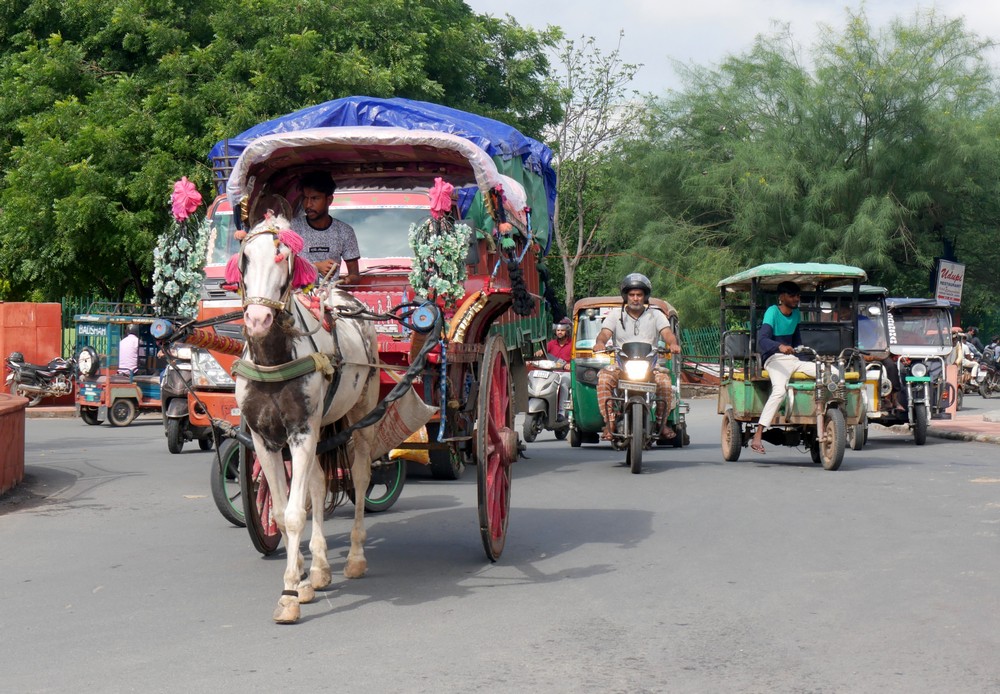
After arriving in Delhi (in sunny weather), we had breakfast together and then they loaded me into a car – heading for Agra. The traffic chaos reminded me of Cairo, where I had lived for four years. Even on Indian city roads, traffic is a spectacle. Colorfully painted trucks have the words “Blow horn!” decoratively painted on their tailgates. There are over 1,600 native languages in India! However, the common language of all Indian drivers, which they permanently use to communicate with each other, is honking.
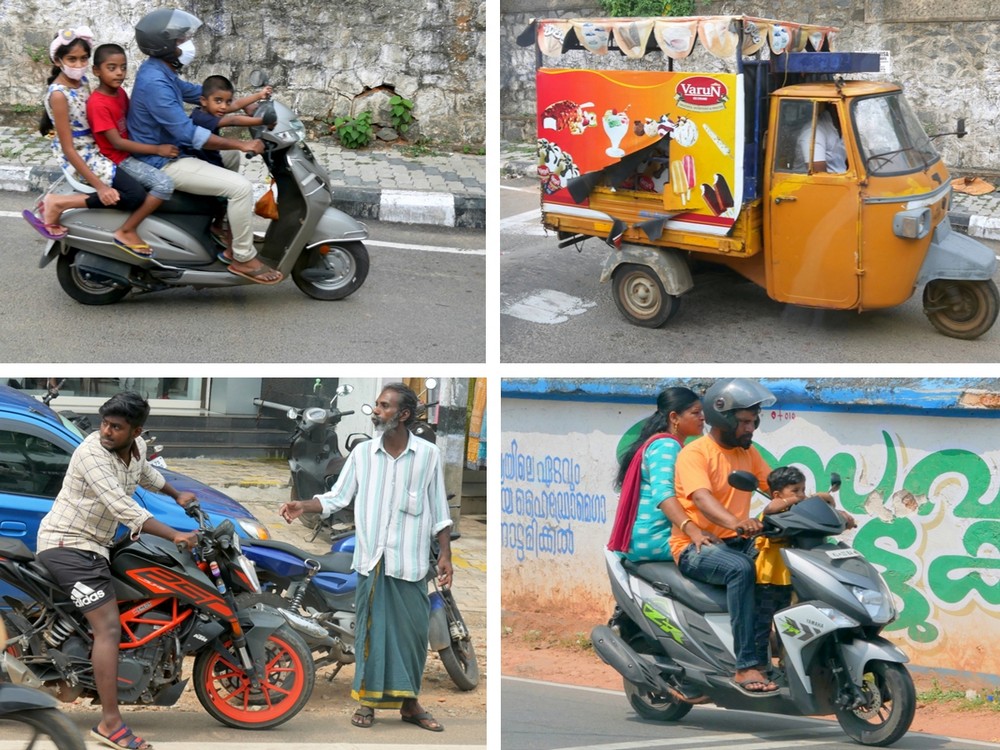
Traffic rules are based more on improvisation, and there are always more lanes than white lines on the road. Motorcycles (often carrying more than two people) and tuk-tuks weave between the cars. At intersections, beggars and vendors selling all sorts of useless items add to the chaos. I really admired my driver’s patience. When we finally got out of this wild traffic and left the city, it started to rain.
On the Way to Agra
The four-lane highway was almost empty. The landscape passing by the car windows did not seem exotic to me at all. No hills, no palm trees or other exotic vegetation, but a lot of corn. Since everyone is crowded into the cities, the countryside was relatively deserted. The rain turned into a downpour and continued for the entire 200 km to Agra. That scared me quite a bit. After all, I had traveled here to see the Taj Mahal, and according to our plan, I was supposed to visit this monument at sunrise…
We arrived in Agra. The main road in front of the hotel had turned into a muddy river, and I had to be very careful when getting out of the car so as not to jump straight into the mud. My guide Mohsin was waiting for me at the hotel. He was very different from the other locals – tall, slim, with wavy hair down to his shoulders and a face that was not Indian but rather Native American. In very clear English (which is also rather unusual), he told me that it had been raining continuously in Agra for 24 hours! It was clear that there would be no sunrise. I spent almost the entire night walking to the window of my hotel room, watching the incessant rain and fog and wondering how I would go to see the Taj Mahal the next day when I had no rubber boots or a third hand for an umbrella…
In the morning, as soon as I opened my eyes, I immediately went to the window. It wasn’t raining! The sky didn’t look very friendly, but it wasn’t raining! I missed the sunrise, but Mohsin and I still set off on our trip early in the morning. The Taj Mahal attracts not only foreigners but also visitors from all over India. That’s why it’s better to get up early, because later, the area fills up with people very quickly.
The Taj Mahal opens 30 minutes before sunrise. Practical information you should know before visiting can be found at the end of this article. Now let’s take a look at this monumental building, one of the new wonders of the world, for which I traveled so far.
The Famous Monument of Love
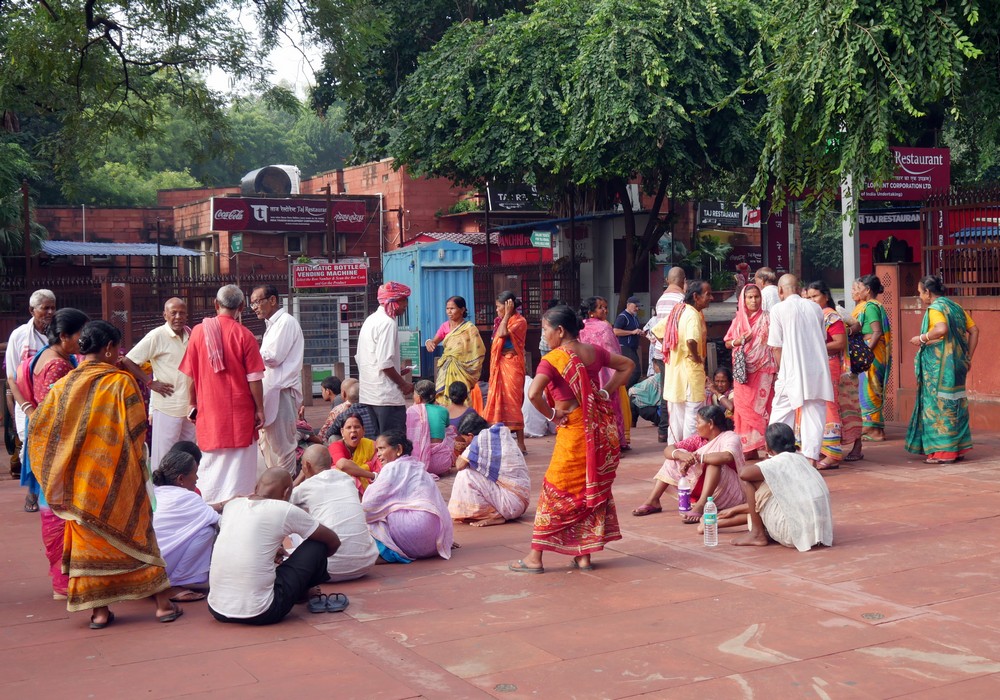
We arrived at a modern (empty) metro station. The pavement glistened after the night rain. We walked along the alley to the west entrance. There was a lot of rubbish everywhere. Monkeys and gray squirrels with three white stripes on their backs ran along the sidewalk, and pigeons perched on the domes were also on the lookout for discarded treats. There were signs everywhere saying that trash belongs in the trash can, but it was useless. At the end of the alley, groups of Indian visitors were standing (or sitting on the ground) — women in saris of all colors, men in white shirts.
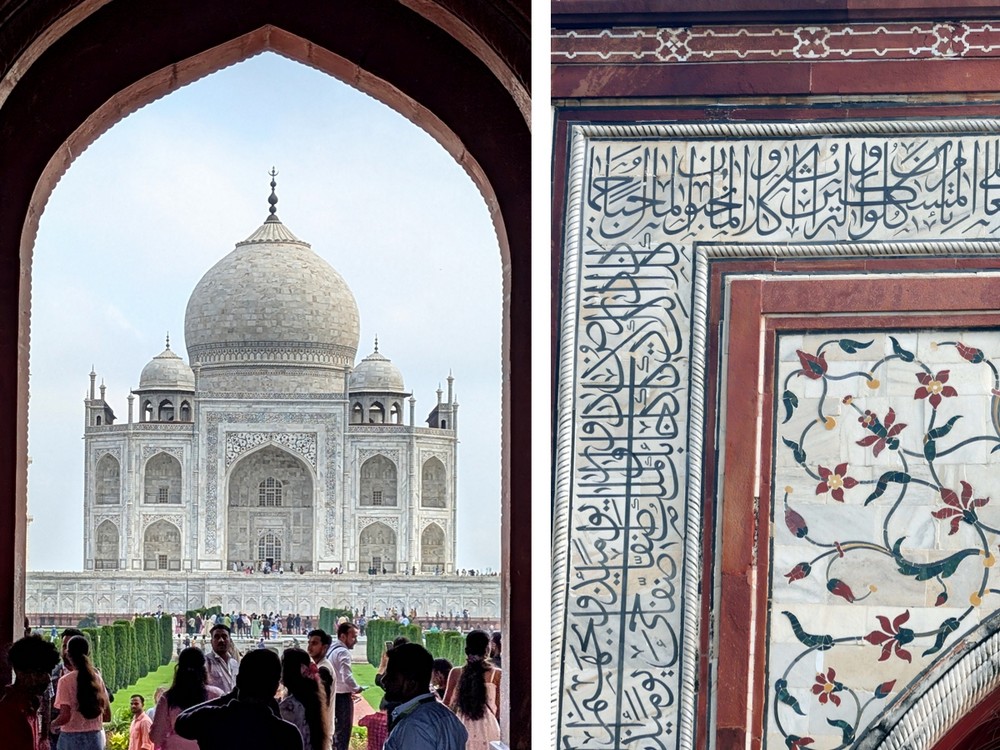
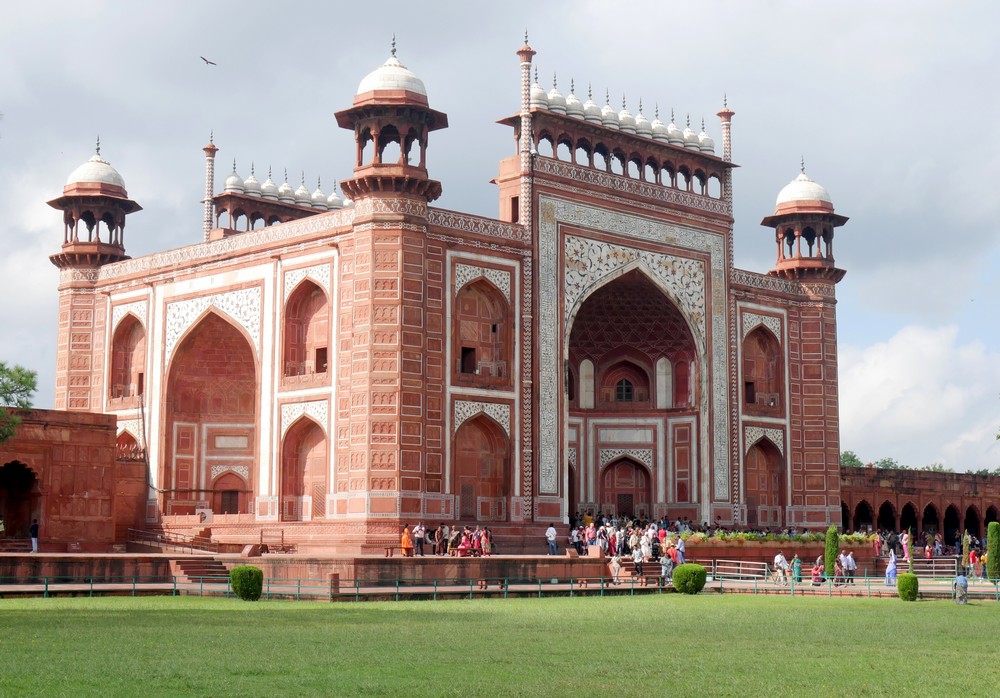
We came to the magnificent Great Gate. Although it wasn’t that crowded yet, the hunt for the best Instagram photos had already begun at this point. Everyone was taking pictures in front of the red and white building, so I had to wait until I could photograph the beautiful details of the decoration.
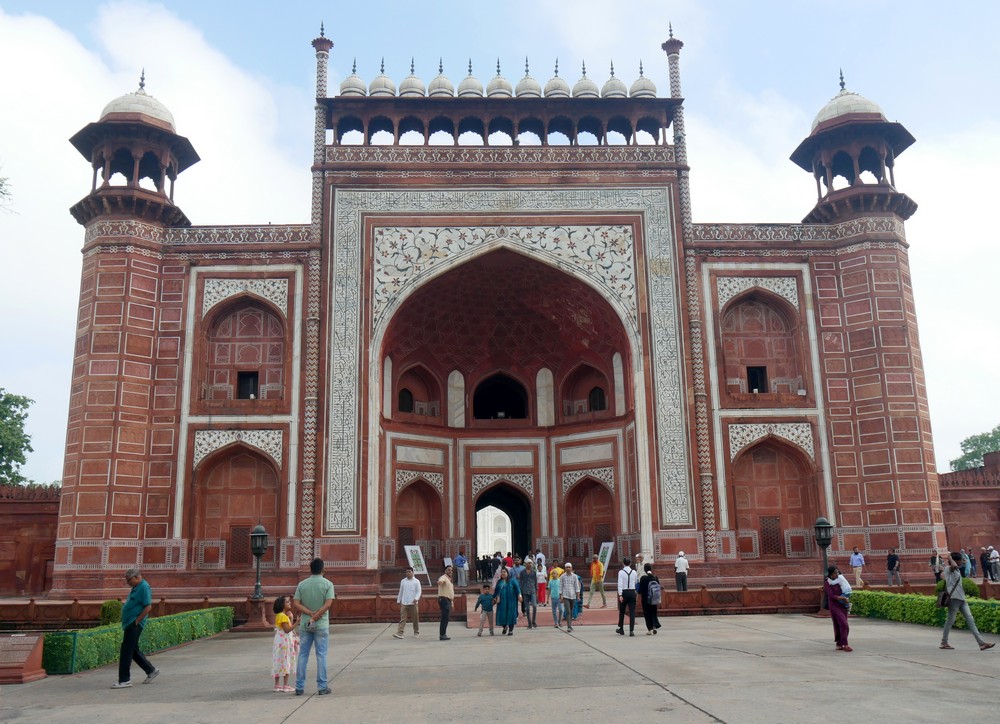
The photo shooting frenzy continued inside the gate. The mausoleum is visible through the arch of the gate, so everyone wants to take an iconic photo here, where the arch creates a dark frame around the Taj Mahal.
We passed through the Great Gate and found ourselves in a “paradise garden”. Four rivers symbolising honey, milk, water, and wine divide the 18-hectare garden into four equal plots. Just beyond the gate, there was the only large flower bed – another photo spot. Families, couples, individuals were taking pictures… And then everyone was surprised when I didn’t take a picture of myself, but of the famous monument!

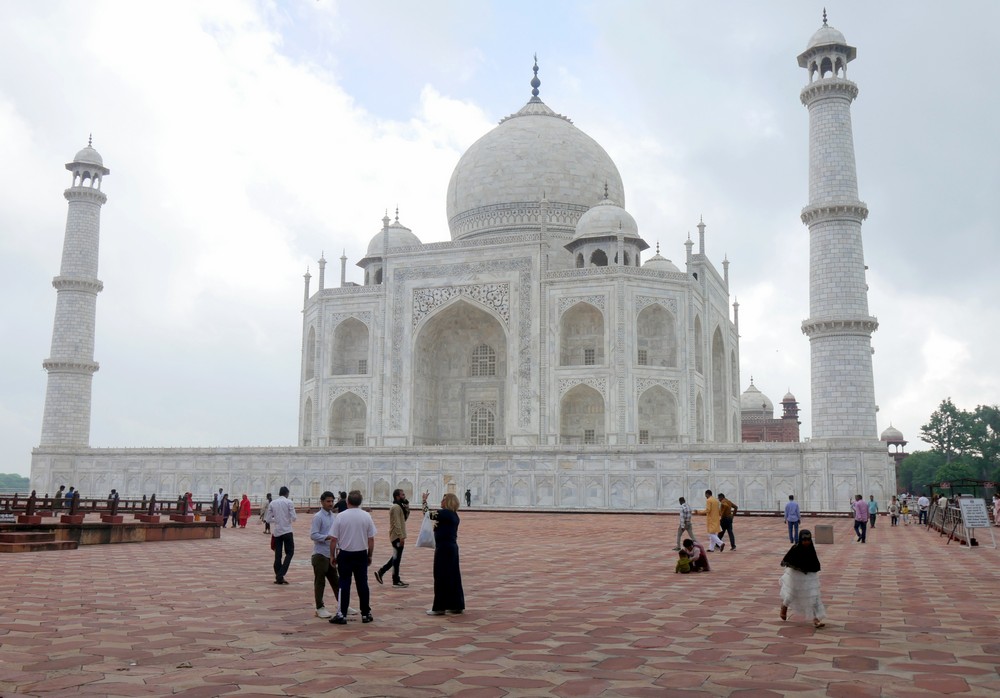
The British had the tall trees cut down and covered the grounds with a minimalist English lawn to better highlight the view of the magnificent building. I must admit that I thought it would be much larger. However, I was more impressed by its perfection and harmony than its size. In 1983, the Taj Mahal was added to the UNESCO World Heritage List.
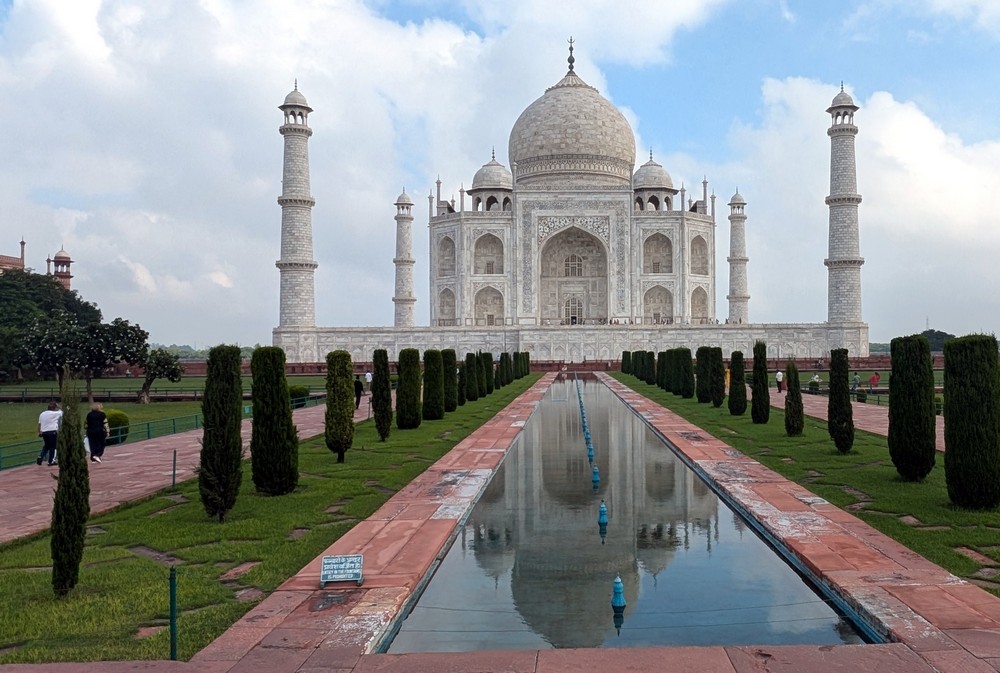
The mausoleum was built by Shah Jahan, ruler of the Mughal Empire, for Mumtaz Mahal, his favorite wife, who sat by his side on official occasions and accompanied him on military campaigns. During one of these expeditions in 1631, complications arose during the birth of their fourteenth child, and Mumtaz died. Shah Jahan declared two years of national mourning, banned celebrations, music, the wearing of jewelry and the use of perfumes, and promised to build a memorial worthy of their great love. Two thousand workers worked on the construction every day, and a thousand elephants carried marble from a distance of 300 kilometers. The construction took 22 years. As proof of their great love, the sun appeared among the clouds for me, too.
A Marble Jewel of Mughal Architecture
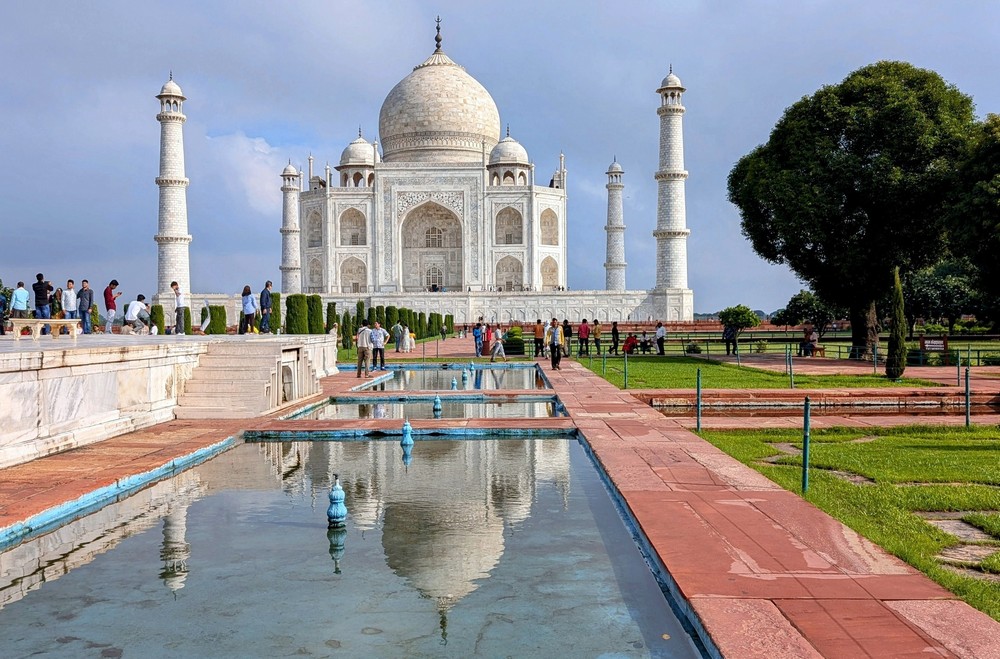
Before we reached the mausoleum, we passed another photo spot: the bench where Princess Diana sat and had her picture taken. However, I was more interested in the mausoleum. What seemed small at first was just an optical illusion. As you approach the mausoleum, your appreciation of its size grows.
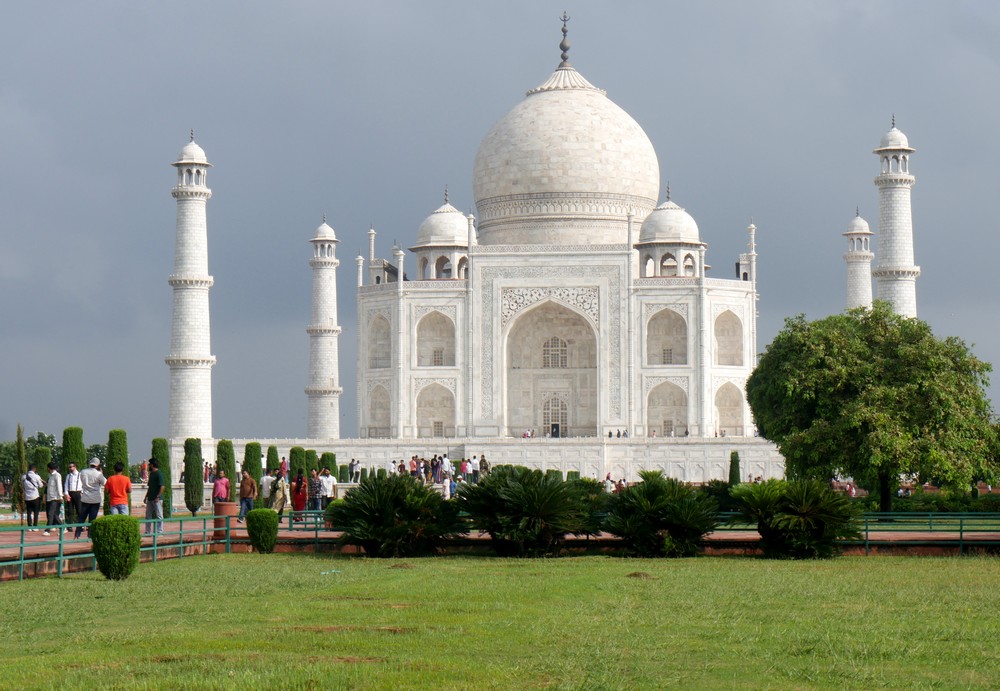
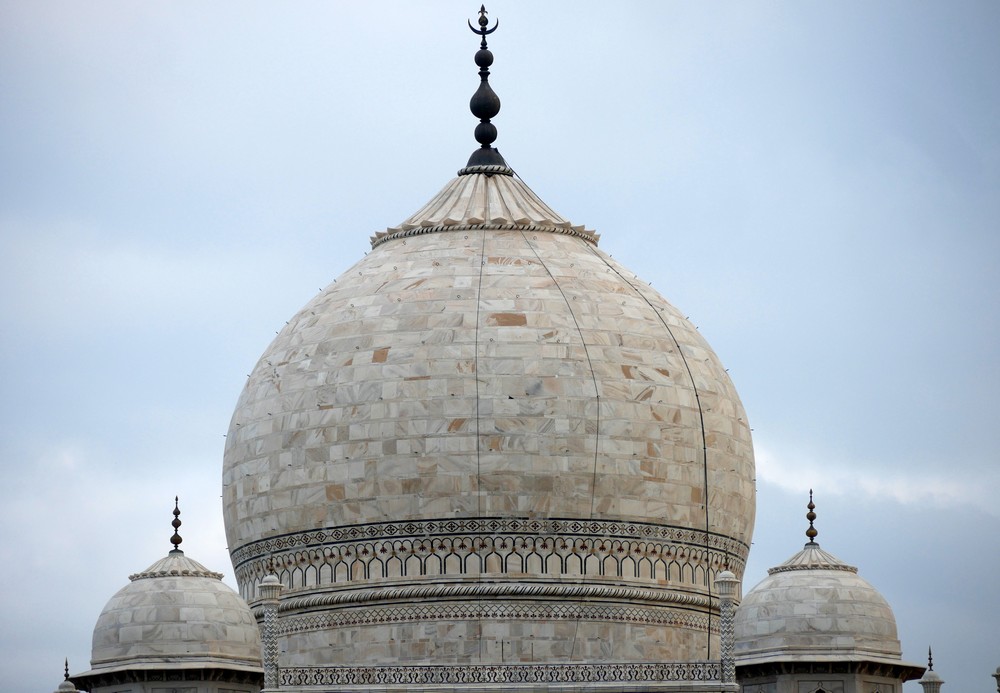
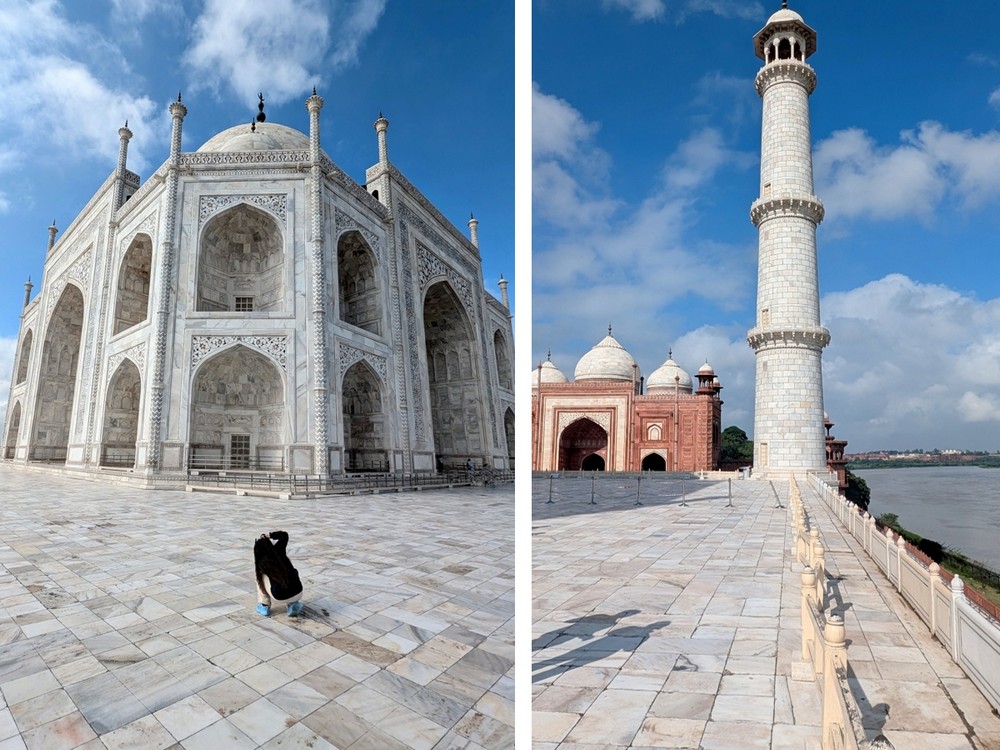
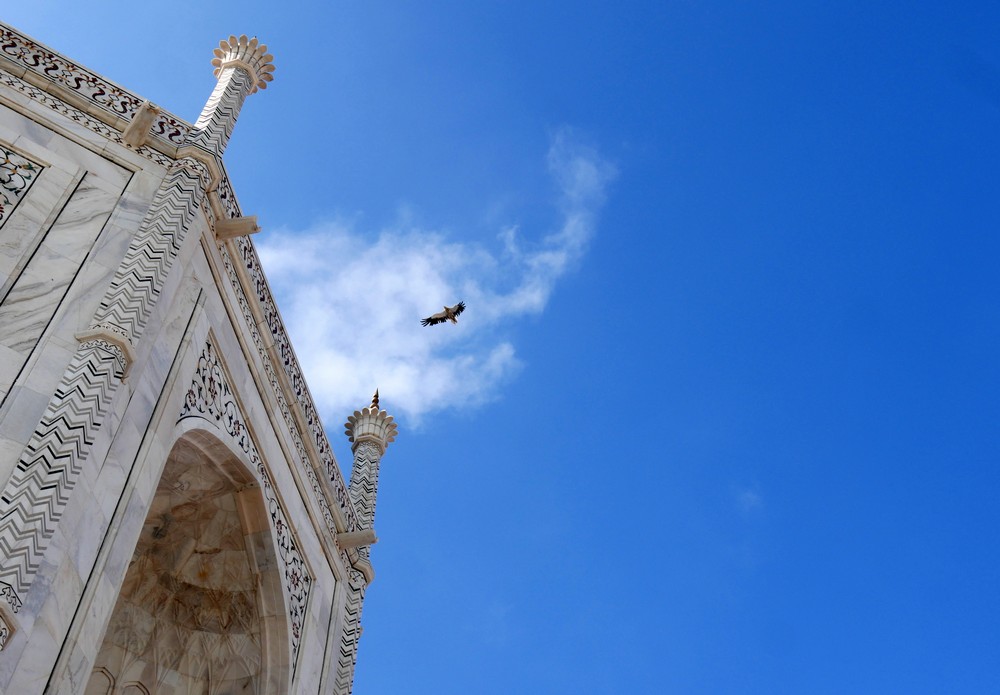
The mausoleum stands on a marble platform 7 meters high, measuring 100 x 100 meters, with a main dome 73 meters high. The structure is the same on all sides. There are four minarets at the corners, which lean slightly outward. If an earthquake occurred, they would not fall on the main building.
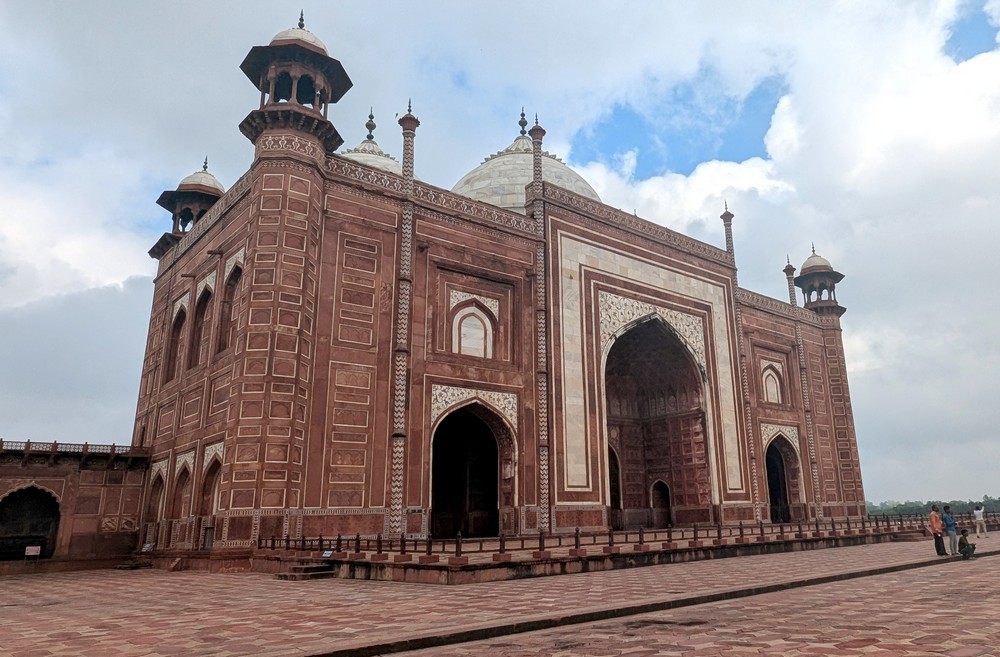
The symmetry of the entire complex is complemented by two side buildings made of red sandstone – a mosque and an inn for guests who came to pay their respects to the deceased. Both buildings contrast in color with the white marble of the mausoleum – an earthly replica of a heavenly abode in paradise.
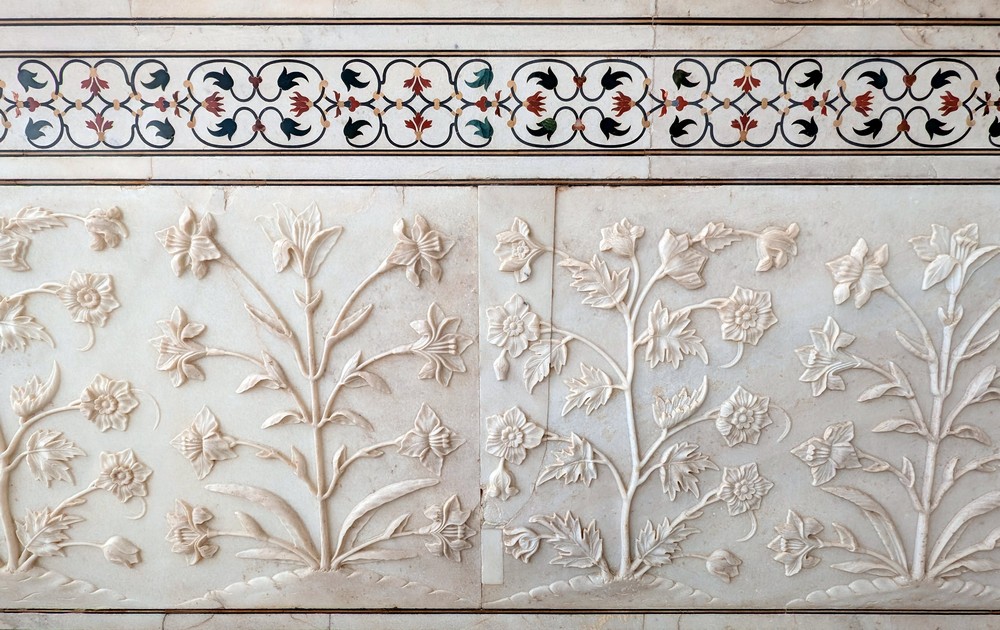
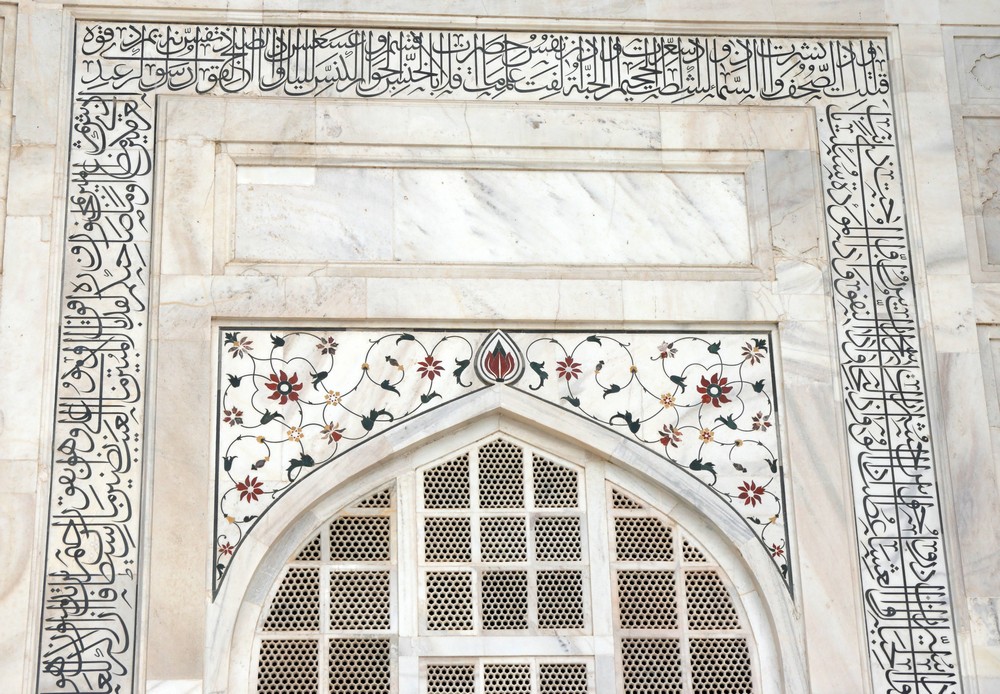
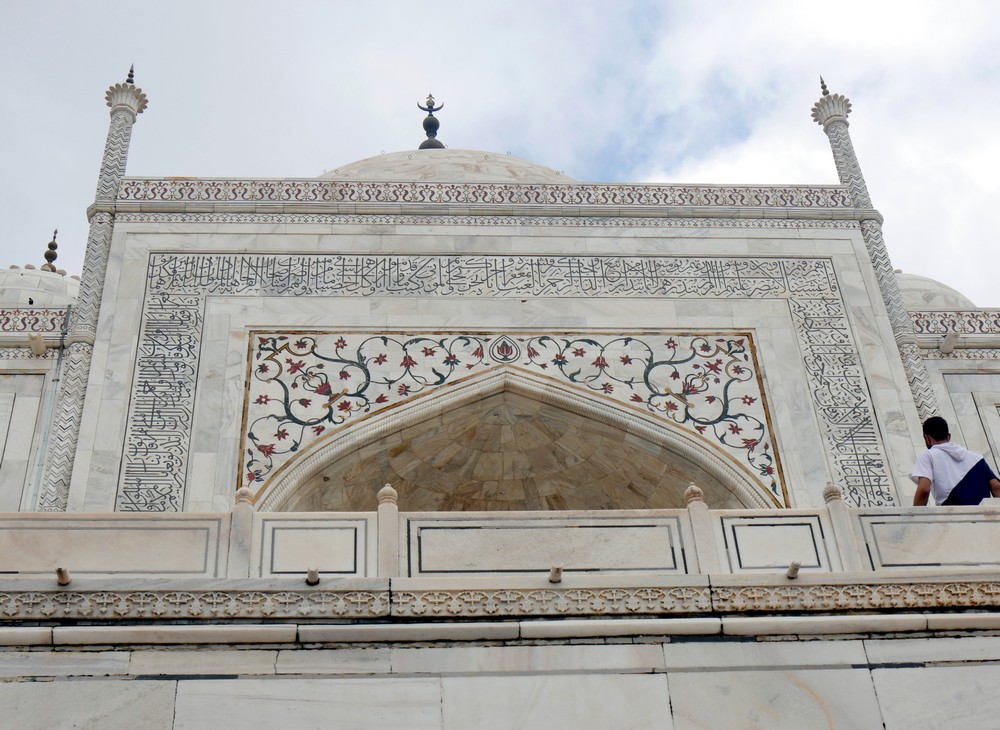
With each approaching step, the decoration on the walls of the mausoleum became clearer. Every piece of wall is a miracle! The marble slabs are carved with reliefs featuring amazingly delicate patterns and beds of beautiful flowers. These are often irises, a plant typical of cemeteries in India.
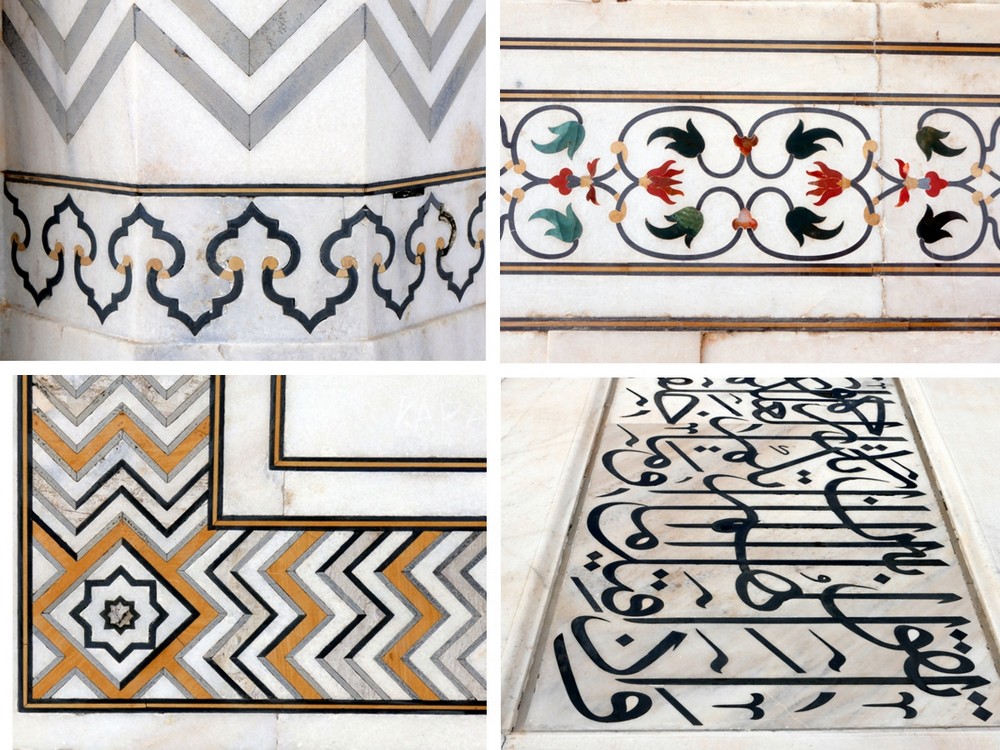
What appeared to me from a distance to be a brush painting is actually a mosaic. Floral and geometric ornaments, calligraphic inscriptions – all of this is composed of thousands of pieces of precious and semi-precious stones. In some places on the walls of the mausoleum, the stones have fallen off, revealing the depth to which the patterns had to be carved.
However, the building is damaged not only by the ravages of time, but also by heavily polluted air. The Taj Mahal must be cleaned every 2-3 years – it is coated with mud, which absorbs the accumulated dirt as it dries. Indian women use a paste based on a similar principle to increase the shine of their skin.
Photography is prohibited inside the mausoleum. The chamber is octagonal in shape and surrounded by a perfect filigree marble screen. It is almost unbelievable how such delicate lace can be created from marble. In the middle is the cenotaph of Mumtaz Mahal. I stood for a moment behind the screen, directly behind the cenotaph. In front of me, the central axis stretched out in its entire length to the Great Gate. Amazing! Shah Jahan’s cenotaph lies west of the central axis, which is perhaps the only disruption to the otherwise perfect symmetry of this monument. Perhaps this is because Shah Jahan was not originally supposed to be buried here. According to tradition, he planned to build an exact replica of the Taj Mahal for himself, but out of black marble. However, this did not happen. In fact, the couple is buried in a chamber below this room, at garden level. What we, the visitors, could see were only replicas.
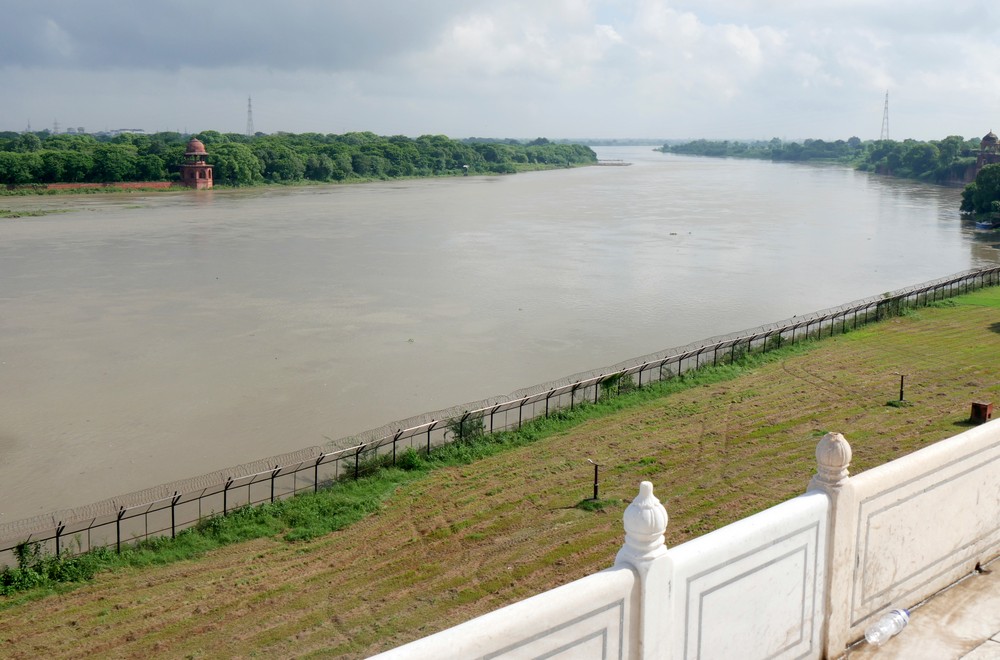
The Yamuna River can also be seen from the marble platform. After heavy rains, it was full, mighty, and muddy. The black mausoleum was supposed to stand on the opposite bank. It was to be connected to the Taj Mahal by a bridge.
Eagles and vultures were circling around the minarets, green parrots were hiding in the treetops, and a peacock was strutting proudly across the grass. The area was filling up with local and foreign visitors, and the selfie craze continued in full swing… It was high time to leave…
We left the complex and got into the vehicle accompanied by a group of Krishna worshipers.
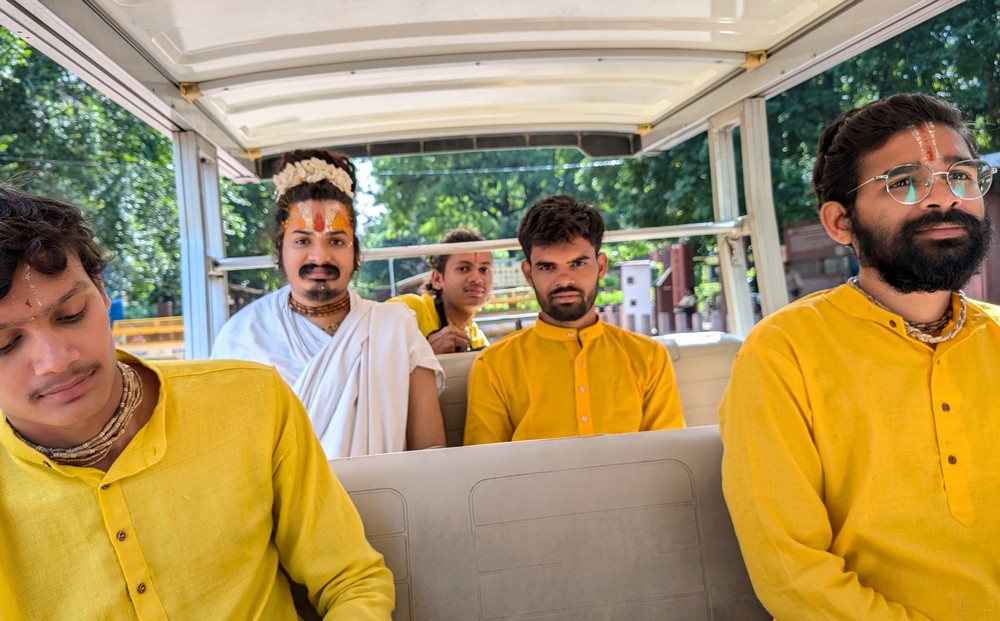
As soon as we reached the end of the entrance alley, we were back in the crazy traffic chaos. But here, in addition to the hustle and bustle, there were horse-drawn rickshaws and persistent souvenir sellers offering their services to foreigners.
What You Should Know before Visiting the Taj Mahal:
* The Taj Mahal is closed on Fridays!!!
* The site opens 30 minutes before sunrise and closes 30 minutes before sunset.
* Tickets can be purchased on-site, but it is recommended to buy them online in advance to avoid waiting in line. The admission price is different for locals and foreign visitors, and there is a separate ticket office for each group.
Tickets can be purchased through this website: https://asi.payumoney.com/#/. You do not need to print your tickets; just have the QR code on your phone.
An additional ticket must be purchased to enter the mausoleum – be sure to buy it!
* Bring only a small bag with essential items. Larger bags or backpacks must be stored in lockers, which wastes valuable time upon arrival and departure.
* Drones are prohibited.
* Water bottles are allowed, but food is not.
* Smoking and alcoholic beverages are prohibited throughout the premises.
* Even small bags must be checked. Do not bring any sharp objects, cigarettes or lighters with you.
* You must wear disposable plastic shoe covers on the platform and in the mausoleum.
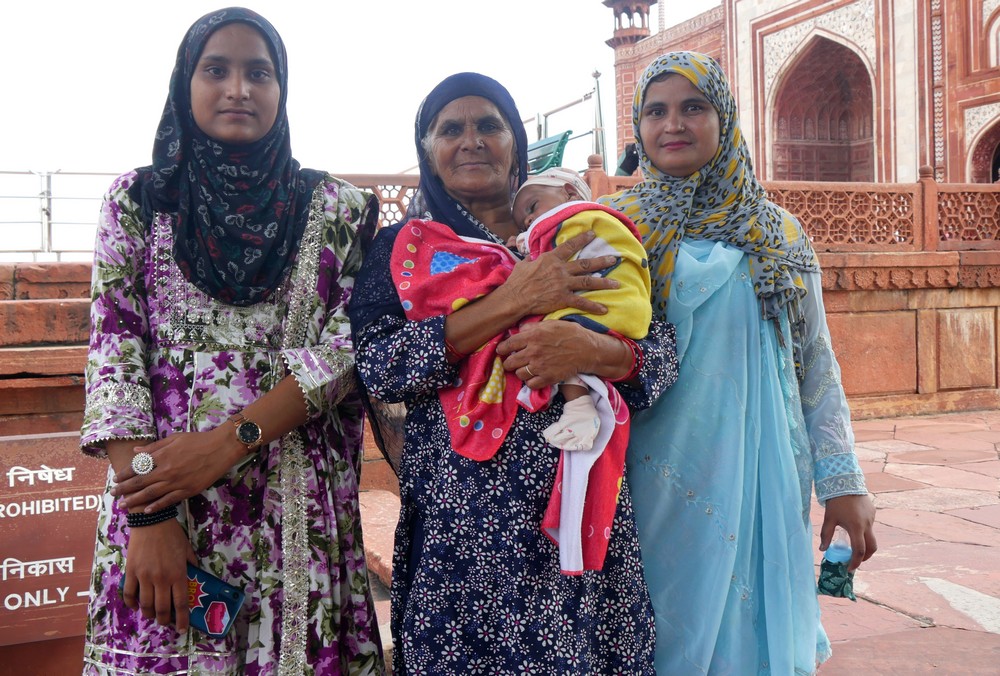
* Here, too, as a foreigner, you may find that local visitors want to take a picture with you. I usually agree, but on the condition that I take their picture as well. That’s how this photo of four generations of women from one Indian family came about. You should know that for Indians, taking a photo with you is a moment they are very proud of. They take a photo with you to show their relatives and friends that they met you somewhere.
* You may also find that someone offers to be your guide. Trust your instincts. I didn’t have this problem because I had already booked a guide in advance. Mohsin is reliable and speaks excellent English. If you would like a guide, you can contact him via WhatsApp: Mohsin Manolo +91 97604 61660.
My trip was organized with the help of this Indian travel agency: Iconic Holidays
* The Taj Mahal is said to be worth visiting in any weather. Even in foggy periods (December, January), you can take interesting photos. When it’s pouring rain, it’s definitely not very pleasant. I was really lucky that it stopped raining. At home and abroad, I use the Norwegian weather forecast website yr.no . According to their forecast, it was supposed to stop raining in Agra, but I admit I didn’t really believe it, especially when I looked out the window during the night. But the website proved itself accurate in India, too!
Thank you for reading the article.
In the next article, we will take a look at other interesting places in Agra and say goodbye to the Taj Mahal.
Best regards from Ingrid and Mohsin! 🙂

#travelpotpourri
Text: © Copyright Ingrid, Travelpotpourri
Fotos: © Copyright Ingrid, Travelpotpourri






“Tourists say the Taj Mahal feels like stepping back in time.”
That´s true. It is a wonderful experience.
“The Taj Mahal is a stunning masterpiece that embodies love, elegance, and architectural brilliance. Its glowing white marble, intricate carvings, and perfect symmetry create an enchanting sight. The tranquil gardens and reflective pools enhance its serene beauty. Every corner tells a story of devotion and craftsmanship. Visiting the Taj Mahal is an unforgettable experience that leaves every visitor inspired.”
I completely agree with you. It was an unforgettable experience for me too.
The Taj Mahal truly stands as a timeless symbol of love and devotion. Its breathtaking architecture and the story behind its creation make it more than just a monument—it’s an emotion carved in marble. A masterpiece that continues to inspire millions around the world ❤️