
 TRAVEL



 RECIPES WITH A STORY












 AUSTRIA-VIENNA




 SLOVAKIA-BRATISLAVA



 EVENTS







 INTERVIEWS

Vienna is home to countless iconic landmarks, imperial palaces and elegant cafés. However, the city also hides lesser-known places that surprise visitors with their beauty. One of them is Amalienbad, a historic public swimming pool in the 10th district of Favoriten, which is considered one of the most fascinating architectural landmarks from the era of Red Vienna.
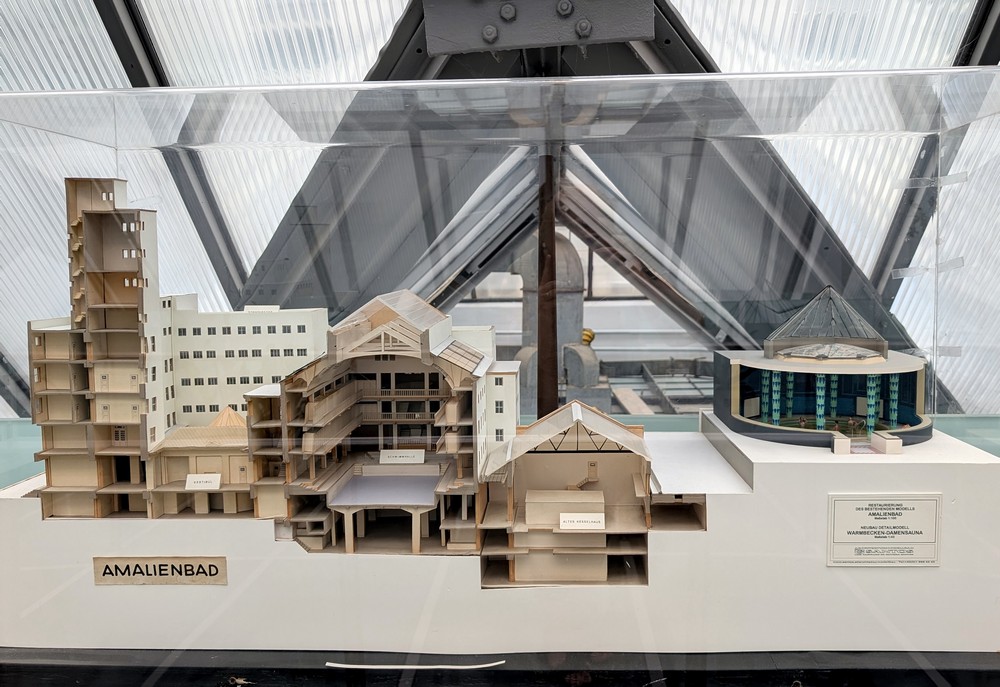
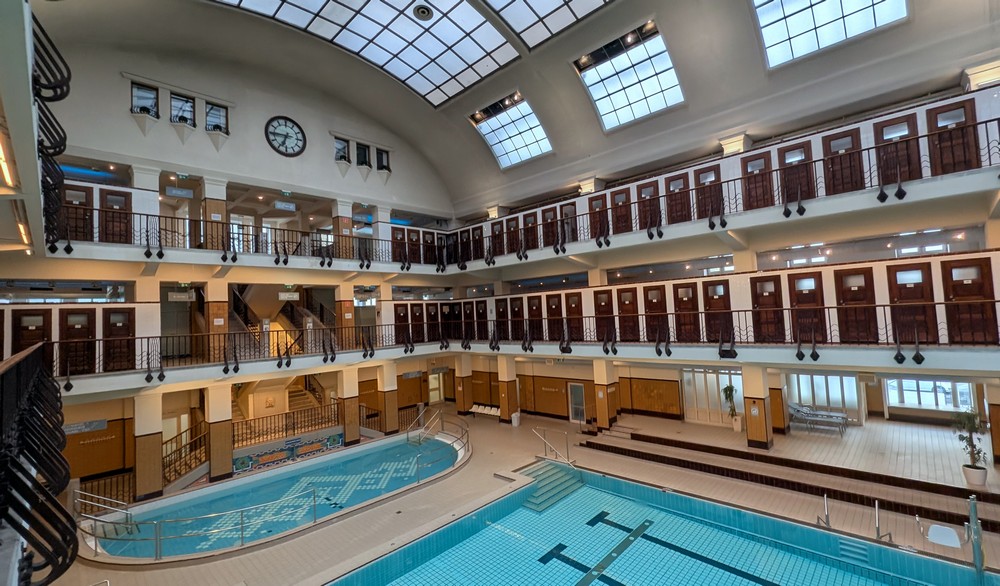
At first glance, this rather unassuming building conceals a magnificent interior featuring elements of late Art Nouveau and Art Deco. But Amalienbad is more than just an architectural gem – it is also a fascinating testament to the social and cultural changes that shaped Vienna in the 1920s.
While at the end of the 19th century Favoriten had a population of around 22,000, by 1910 this figure had risen to as many as 160,000 due to industrialisation and immigration. In this densely populated working-class district, sanitary conditions were extremely poor.
Red Vienna (Rotes Wien) is the name given to the Austrian capital during the years 1919–1934, when the Social Democrats were in power. This period is particularly known for the large-scale construction of social housing for the working class, as well as efforts to improve public health and hygiene, mainly through the development of municipal bathhouses. One of the most iconic buildings from this era is Amalienbad, located on the square named after Jakob Reumann, Vienna’s first Social Democratic mayor.
An Ambitious Architectural Project
The municipal baths at Reumannplatz were built between 1923 and 1926, based on plans by architects Karl Schmalhofer and Otto Nadel.
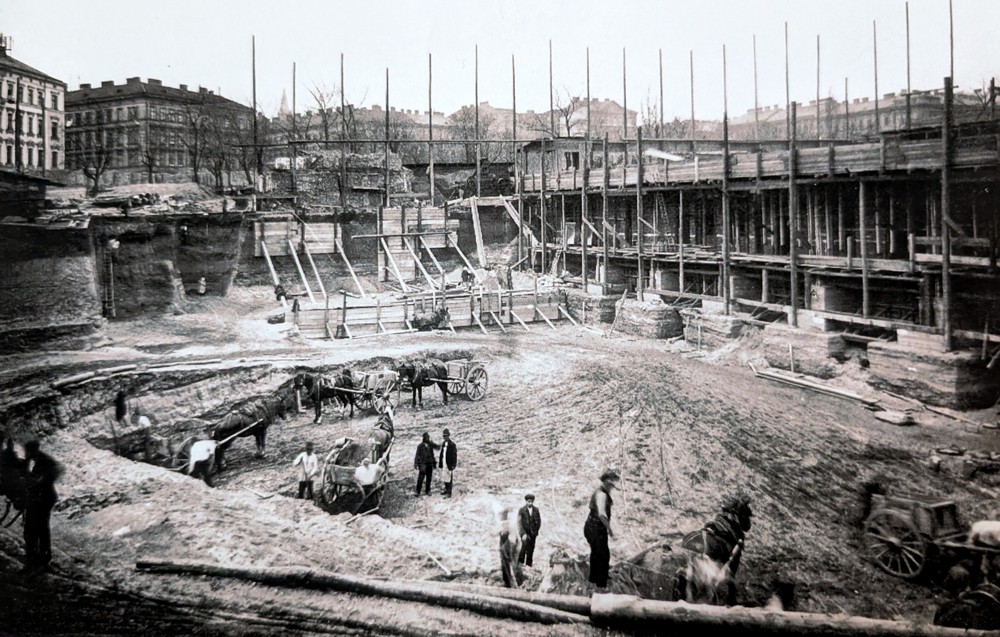
Historical photographs show the rather primitive equipment used to carry out this impressive project. Construction required 430 railway wagons of cement, 2,000 wagons of concrete gravel and 910 wagons of bricks. The foundations, columns and staircases were made of reinforced concrete, while the walls were built of brick masonry.
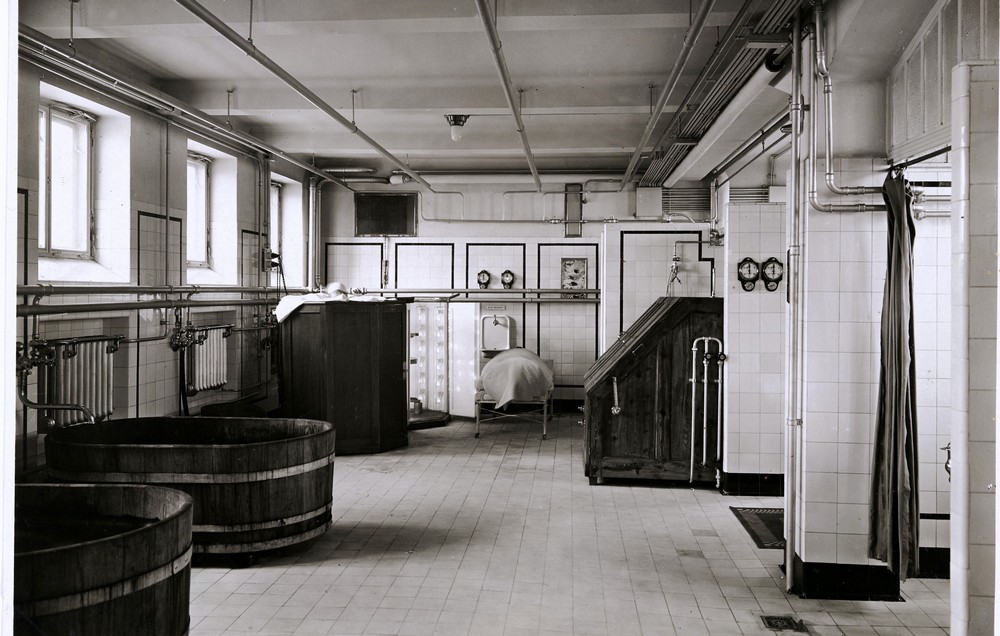
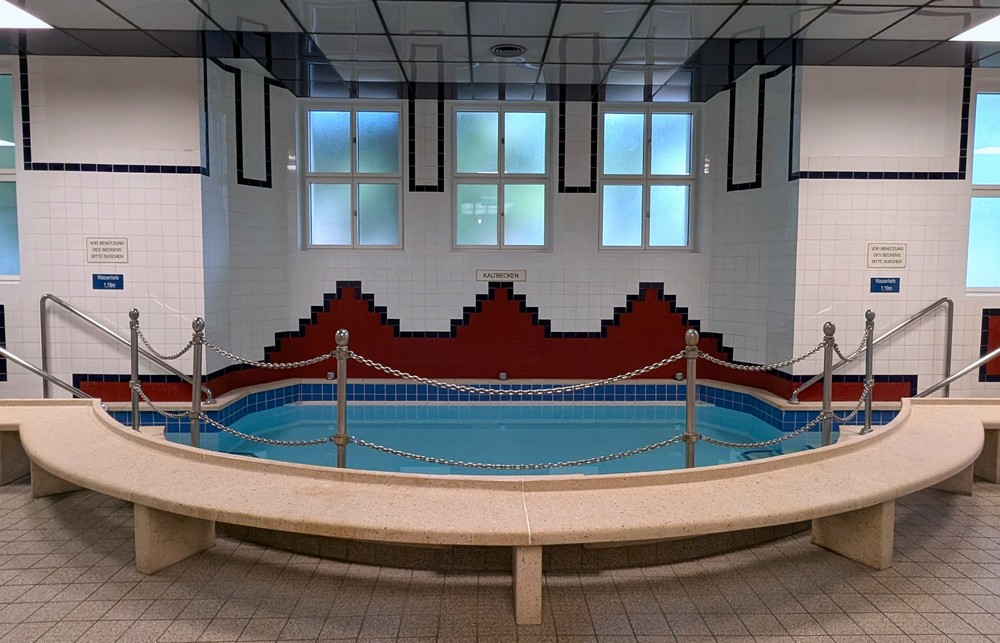
At the time, Amalienbad was a pioneering facility in Europe. It was designed to give the working class access not only to regular personal hygiene but also to physical exercise – swimming – as an alternative to spending time in pubs and consuming alcohol. With 553 changing cubicles and a capacity of up to 1,300 visitors, the facility offered much more than just a swimming pool. There were steam baths, hot-air baths, salt baths, mud baths and other treatments, as well as individual bathtubs and showers. This was particularly important because bathrooms were not yet a standard feature of municipal apartments at the time.
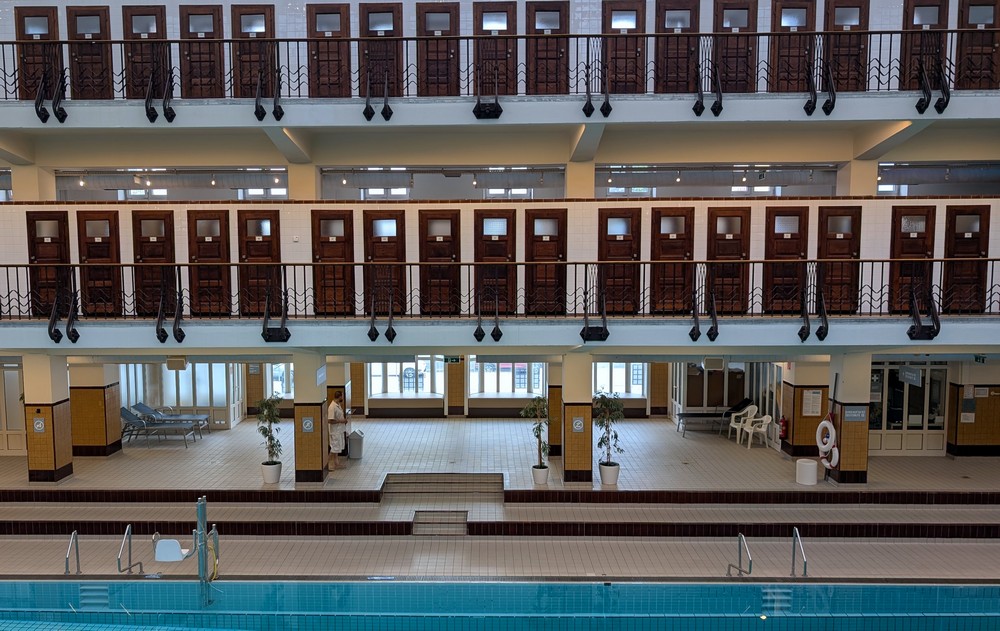
A total of 24,000 m² of walls and 10,000 m² of floors were covered with tiles. The shower area has retained almost its original appearance, although the individual shower cubicles were originally topped with enormous ceramic domes.
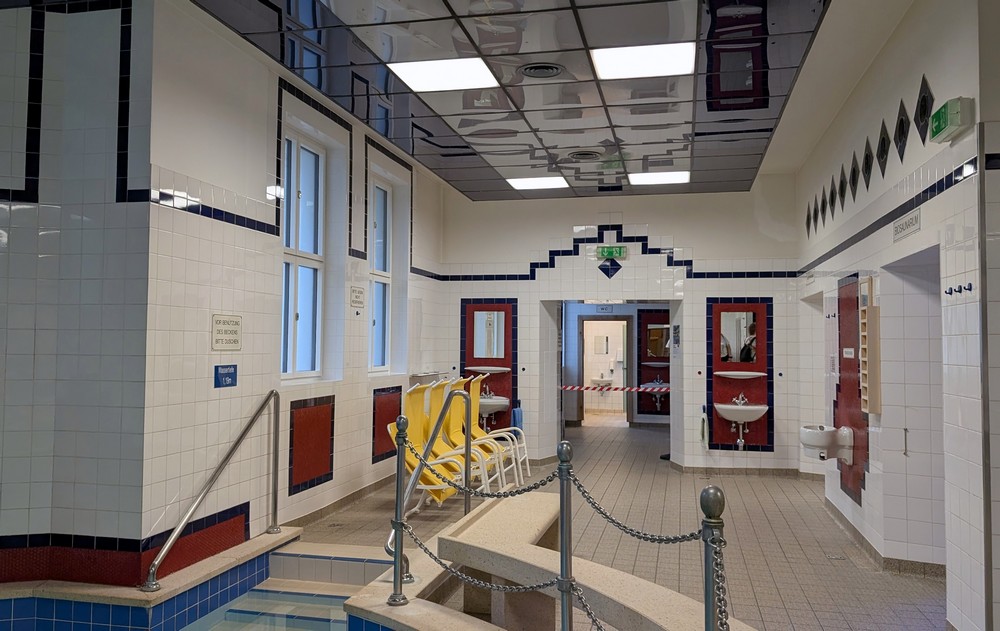
There used to be a buffet here, serving fresh milk and dairy products from Lower Austria.
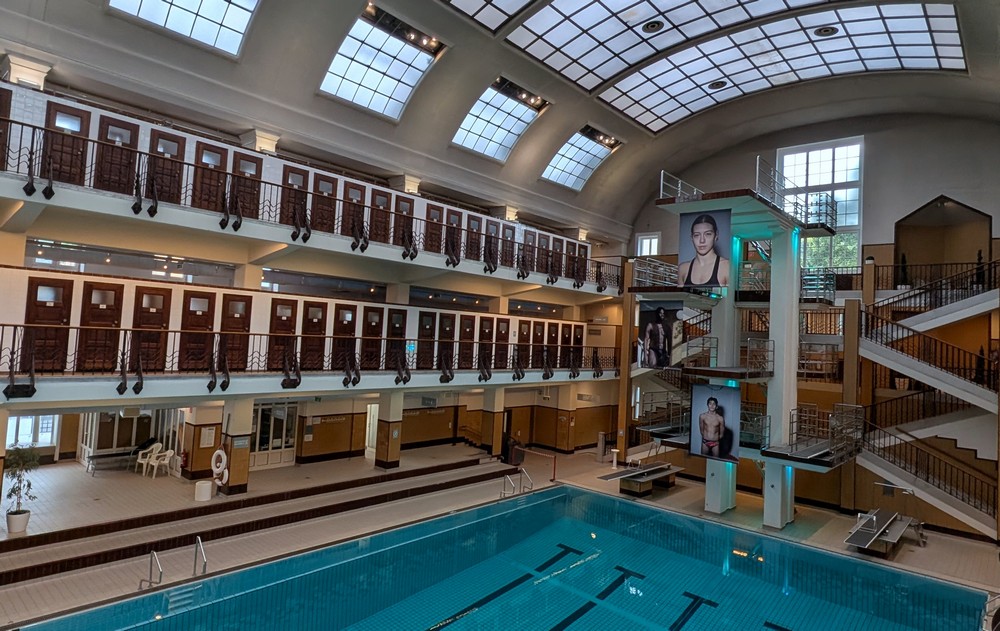
Amalienbad was officially opened on 8 July 1926 as part of the Workers’ Gymnastics and Sports Festival. Julius Tandler, a member of the city council, later remarked that he had never stood on such an unstable surface. All the speakers had to deliver their speeches from a five-metre diving platform, which they had to climb using an almost vertical ladder.
The new baths in the working-class district of Favoriten were named after Amalie Pölzer, a Social Democratic politician and the first woman from Favoriten to be elected to the Vienna City Council.
A Palace of Bathing
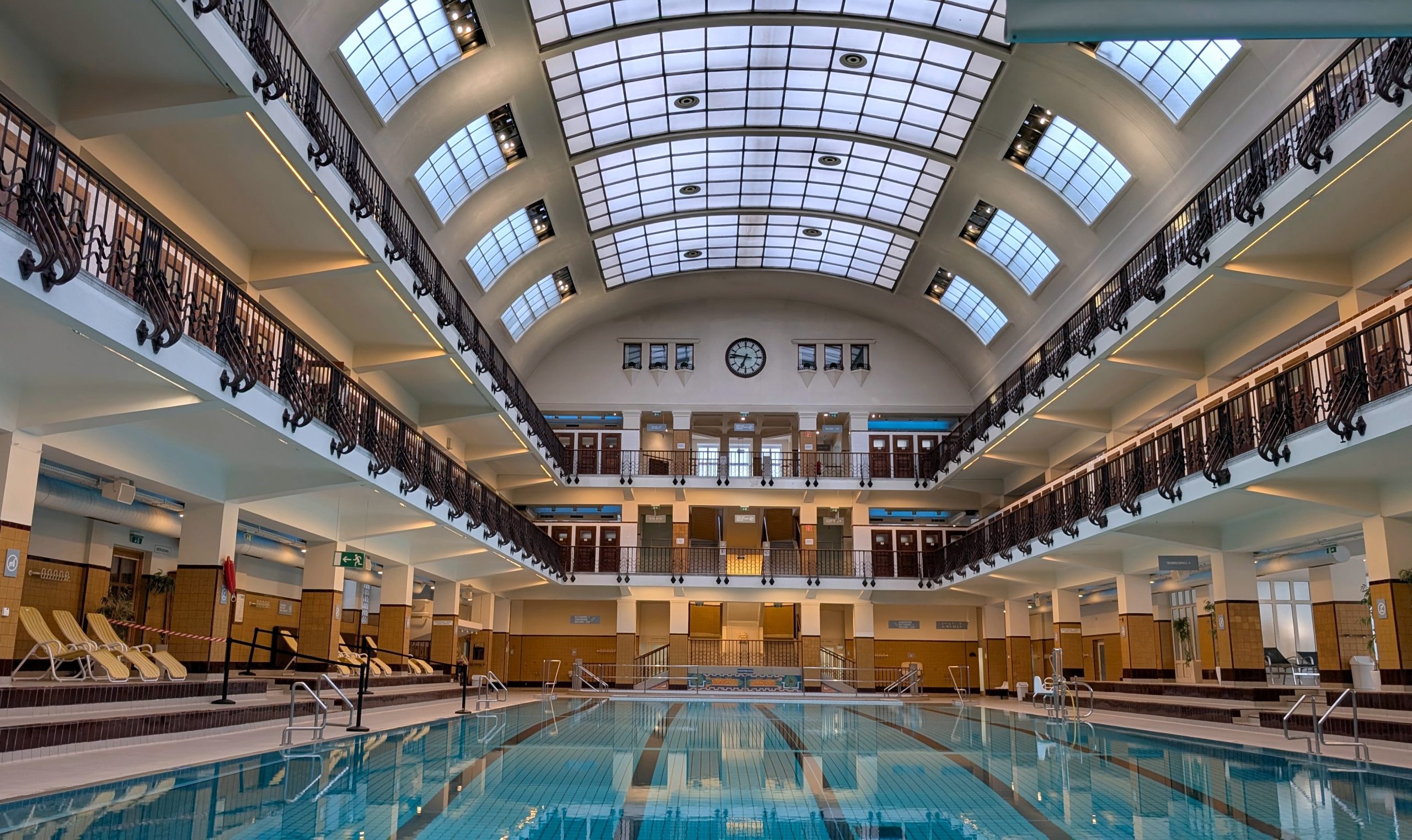
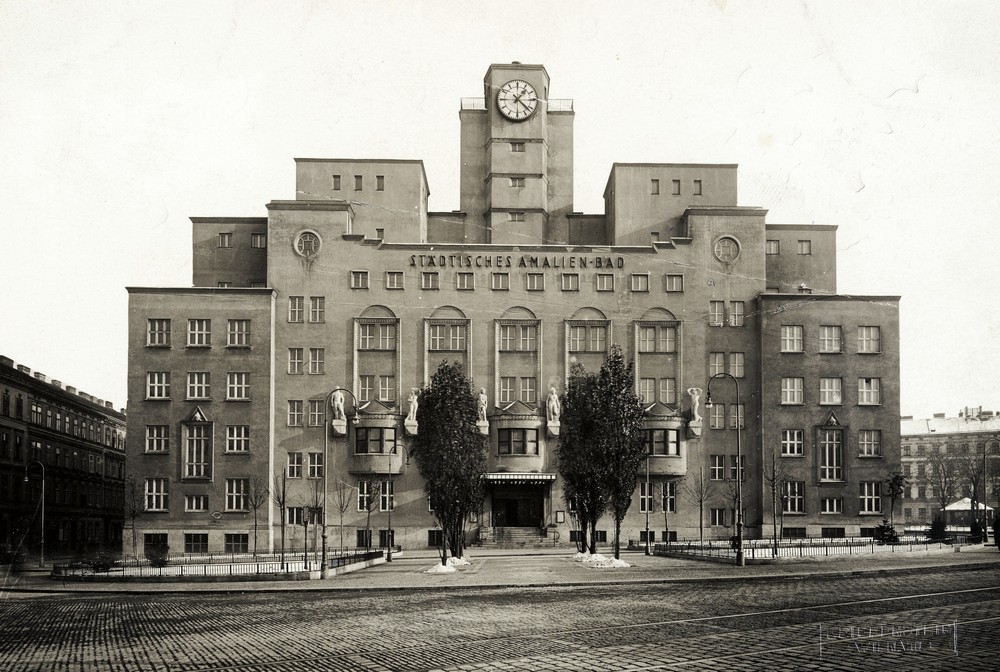
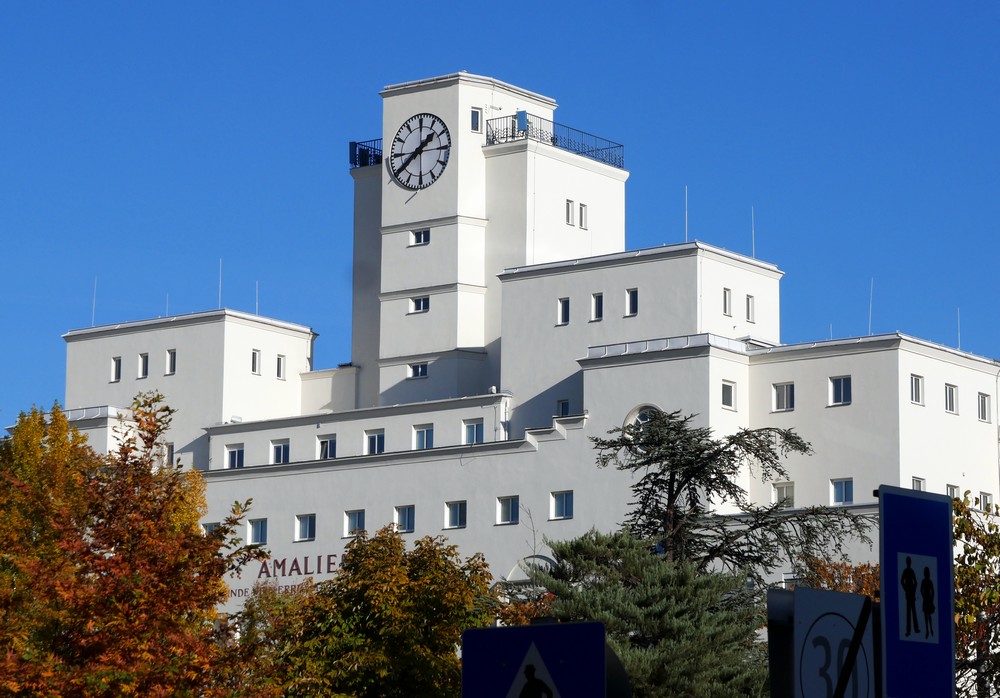
At first glance, Amalienbad does not look like a typical Art Nouveau building. It has nine floors and three basement levels. The top of its clock tower reaches a height of 42 metres, and on a clear day it was reportedly possible to see as far as the borders of former Czechoslovakia. The tower forms the central axis of the building, dividing it into two sections – the men’s section on the left and the women’s section on the right.
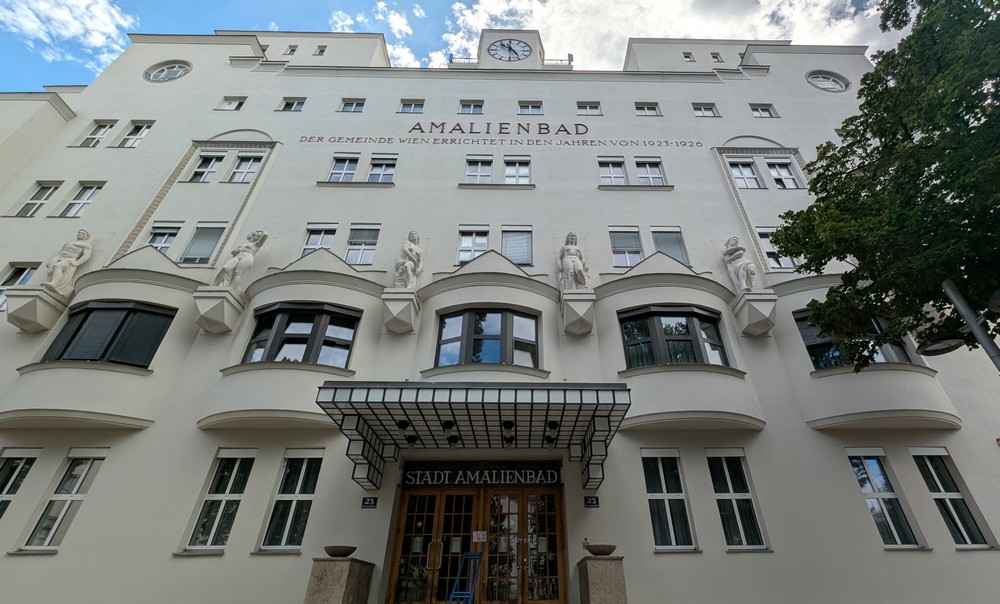
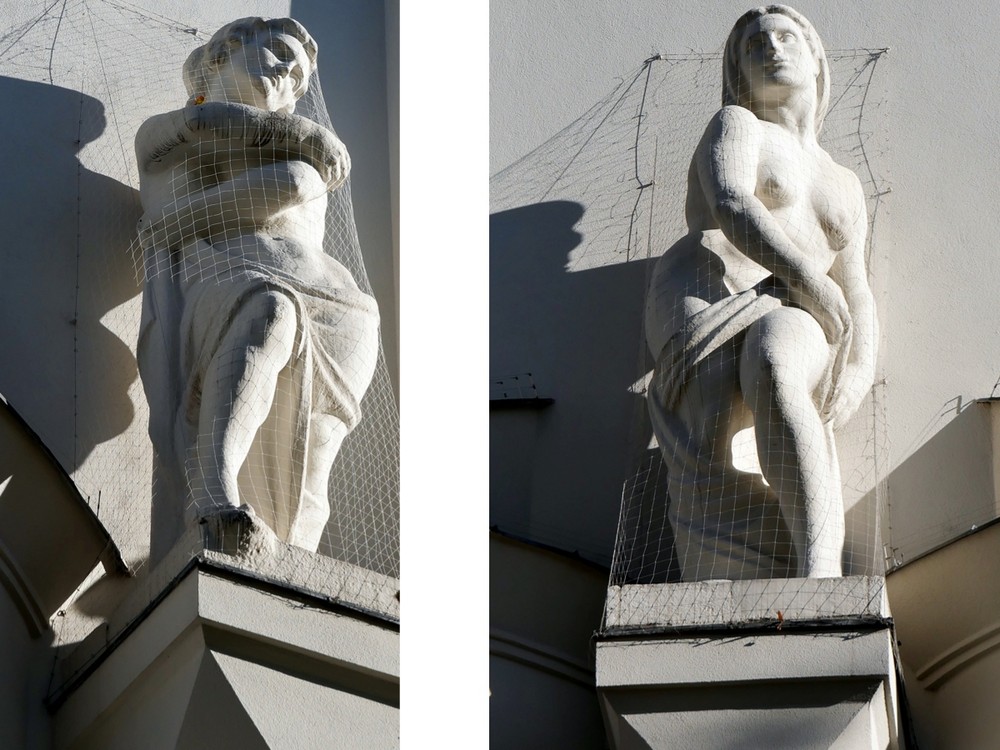
The façade is relatively simple. Above the main entrance, however, you can see six sculptures, each measuring 2.5 metres, made of Mannersdorf sandstone by sculptor Karl Stemolak. The sculptures directly reflect the purpose of the building and the era in which it was constructed. Rather than depicting the human body as a mythological motif, the three female and three male figures are shown performing everyday hygiene activities such as washing and showering.
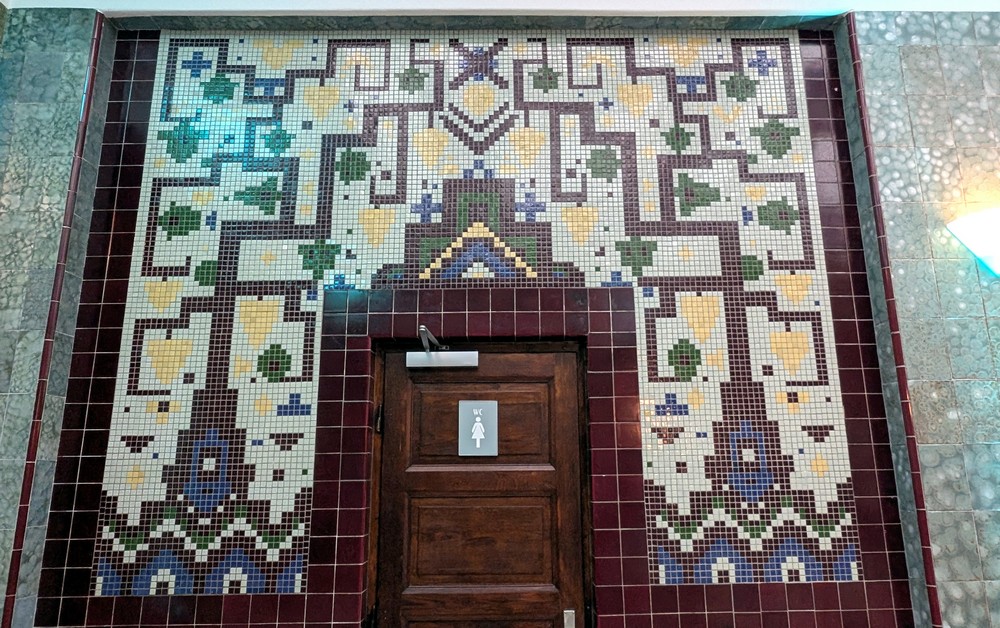
While the exterior is understated, stepping inside reveals a magnificent interior filled with mosaics, decorative ceramics and other elegant details.
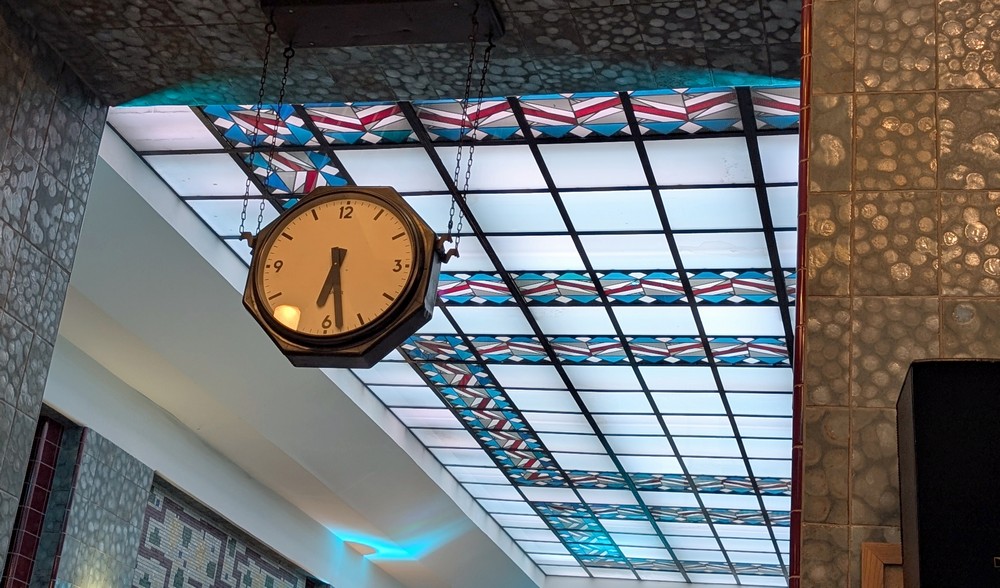
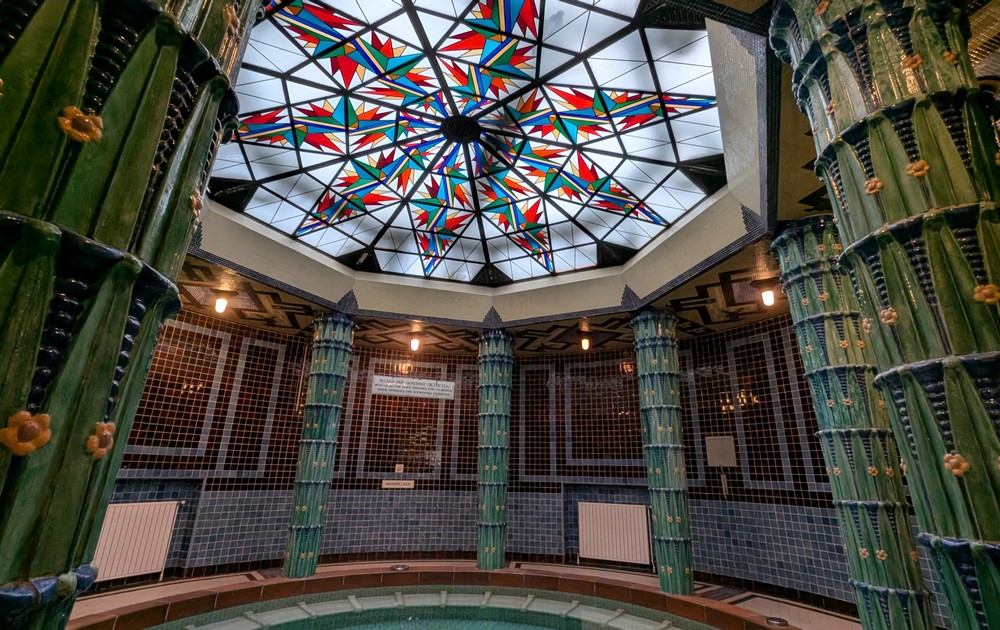
The architecture combines elements of late Art Nouveau, gradually transitioning into Art Deco, with its characteristic geometric patterns and symmetry.
The large swimming hall, with its 33 x 12-metre pool, is still an impressive sight today. The pool originally featured spectator galleries and a glass roof that could be opened in just three minutes. The double roof, measuring 30 x 12 metres, was designed to keep the pool warm even during the winter months.
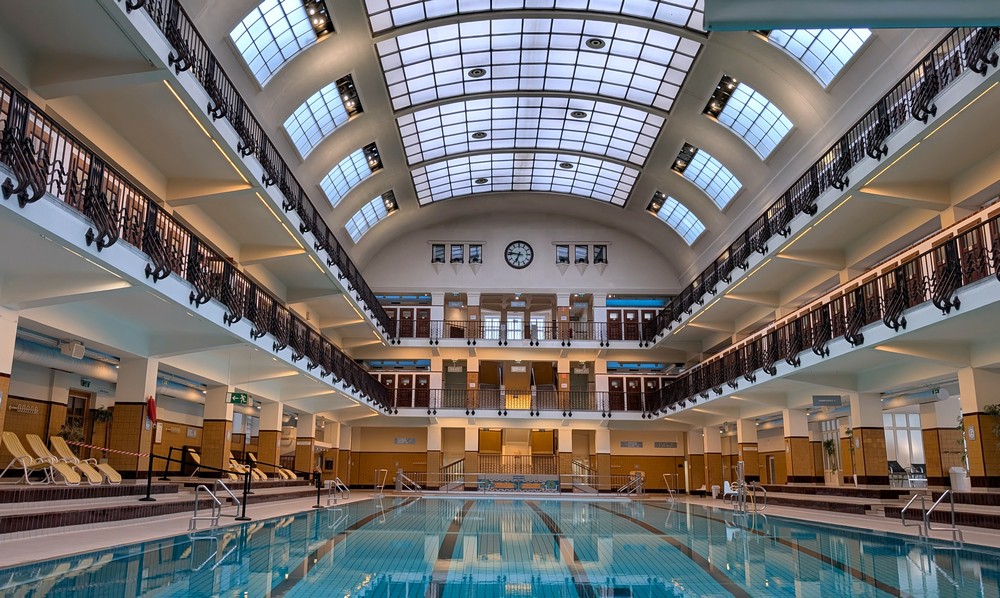
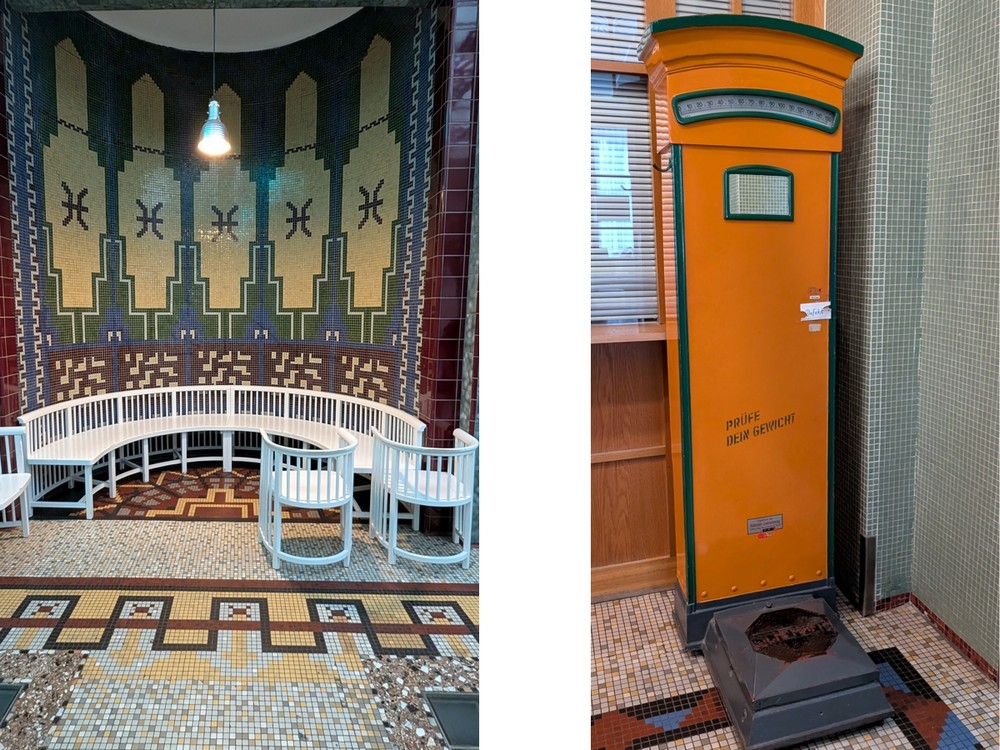
During the Second World War, however, Amalienbad was hit by six bombs, which destroyed three and a half floors of the building. The building was subsequently renovated, but some architectural features were lost, including the retractable roof. Fortunately, the beautiful sauna area and the unique circular warm-water pool with its Art Deco mosaic floor have survived.
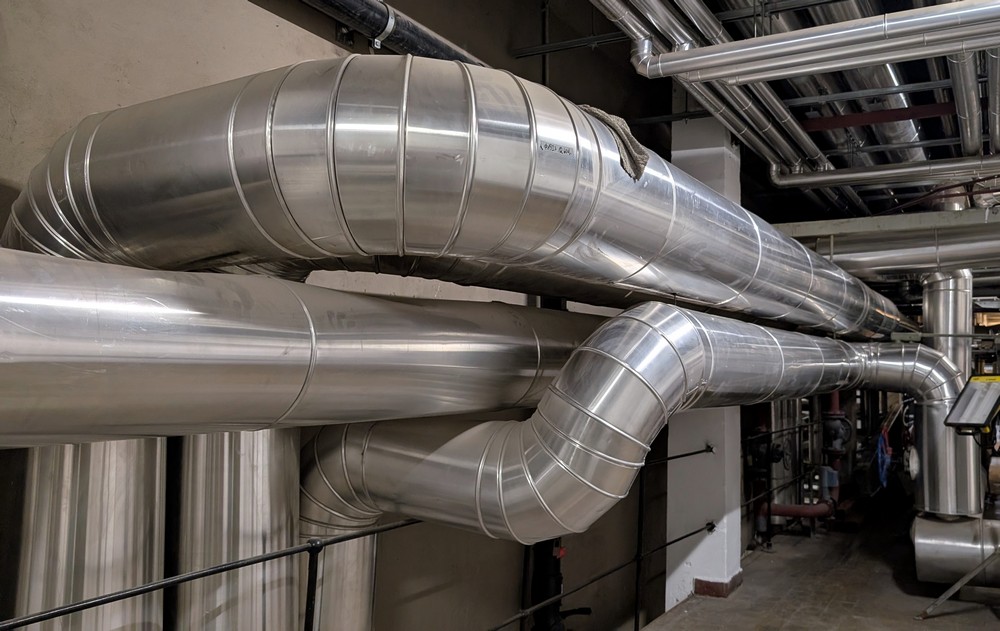
In July 2026, Amalienbad celebrated its centenary with a varied programme of events, including guided tours. We also had the opportunity to explore the technical facilities behind the swimming pool. The network of pipes used for heating, supplying water to the pool and distributing drinking water extends over an impressive 35 kilometres.
Just a few weeks after the baths opened a century ago, the city council introduced compulsory swimming lessons for young people in Vienna. Every child received a swimsuit and a towel from the city. Even today, on almost every working day, you are likely to meet at least one group of schoolchildren arriving for their swimming lessons.
If you would like to add something a little different to your stay in Vienna, why not visit Amalienbad? You can enjoy a swim, relax in the sauna or simply admire its remarkable architecture.
And if you visit between mid-March and the end of September, you can round off your trip to the baths with some delicious ice cream at one of Vienna’s most famous ice cream parlours, on the other side of Reumannplatz. It is called Tichy, and is particularly renowned for its fruit flavours and its original apricot ice cream dumplings (Eismarillenknödel). You can read more about it in my article: Tichy.
For opening hours, admission prices and other practical information about Amalienbad, visit the website: Amalienbad
Text: © Copyright Ingrid, Travelpotpourri
Fotos: © Copyright Ingrid, Travelpotpourri