
 TRAVEL



 RECIPES WITH A STORY












 AUSTRIA-VIENNA









 SLOVAKIA-BRATISLAVA





 EVENTS







 INTERVIEWS


Over a century ago, nobles, even kings and emperors, Nobel laureates and artists strolled along here… Gentlemen in hats and ladies with parasols. Everyone wanted to be seen on the Lungomare seaside promenade (also known as the Franz Joseph I Promenade), which stretches from the resort town of Lovran through Opatija to Volosko. This 12-kilometer-long promenade was built by the local beautification society; the northern section was completed in 1889 and the southern part in 1911. Long walks not only provided an opportunity to see and be seen, but were also considered therapeutic back then.
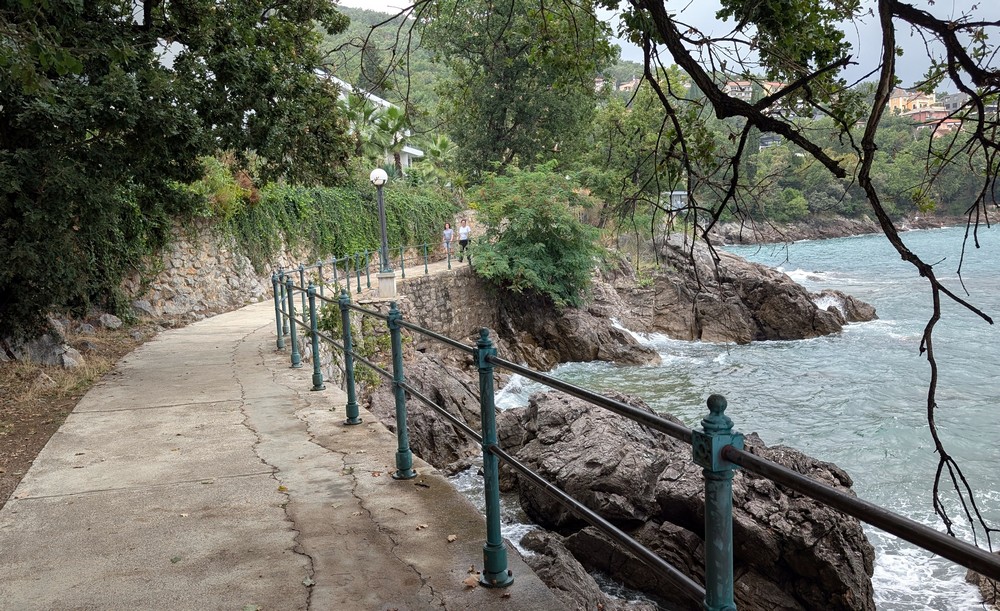
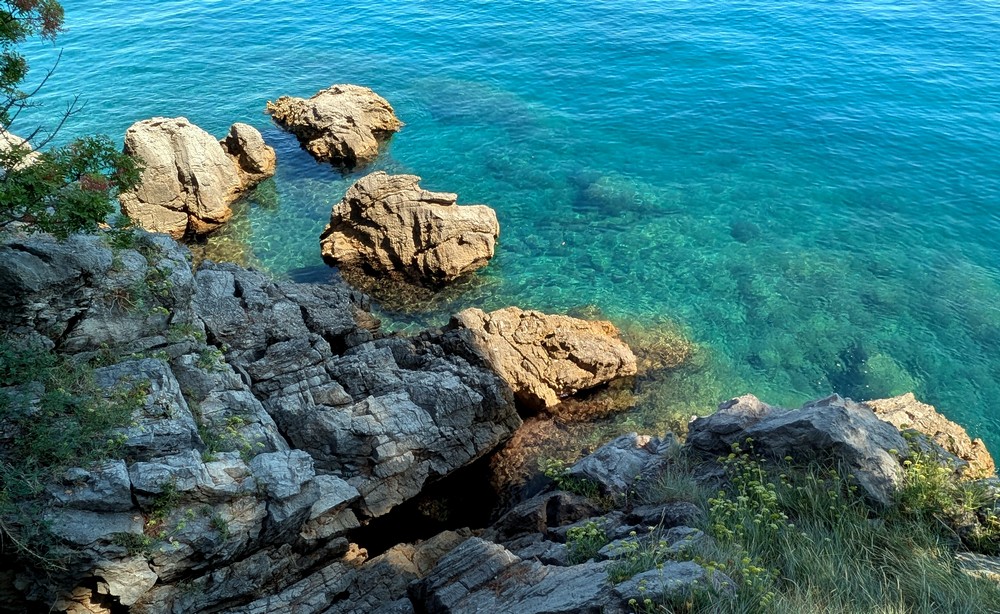
Even today, it is a pleasant walk with beautiful views of the roaring sea on one side and lush greenery on the other, where old villas that would surely have interesting stories to tell lay hidden. The cobblestone path is lined with antique brass railings; tall trees, especially evergreen holly oaks, provide welcome shade even during the hottest summer heat, while lush laurel bushes add a characteristic aroma. By the way, the name of Lovran is derived from the Croatian word lovor (= laurel, bay leaf).

About halfway along the promenade lies the small village of Ičići, where I spent my summer vacation. In the 9th century BC, the Liburni (an ancient Illyrian tribe) built fast ships here that sailed to North Africa and Asia Minor. Even today, it is an important port for yachts.
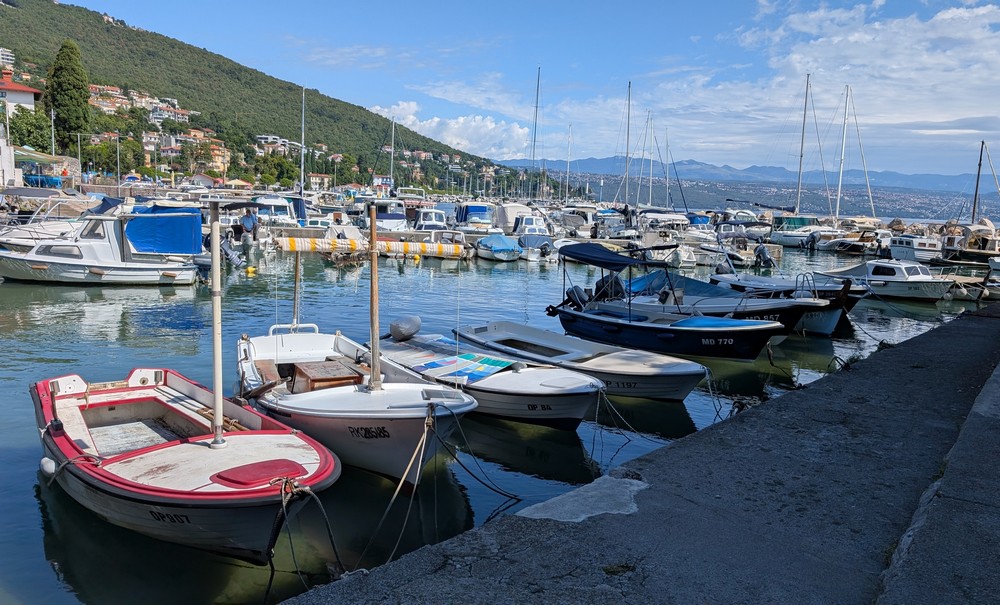
Since I can’t stand spending whole days just lying on the beach, I took a trip to Opatija (about a 40-minute walk along the promenade). You can read more about it in my previous article: Opatija – the Pearl of the Austrian Riviera. I was also very pleased when I received an invitation to dinner at Villa Ariston (a 20-minute walk from Ičići along the Lungomare). Villa Ariston is renowned for its sophisticated dishes, which will satisfy even the most demanding gourmets (though you should also expect pretty high prices). In 2017, it was named the best Mediterranean restaurant and is listed in the Michelin Guides.
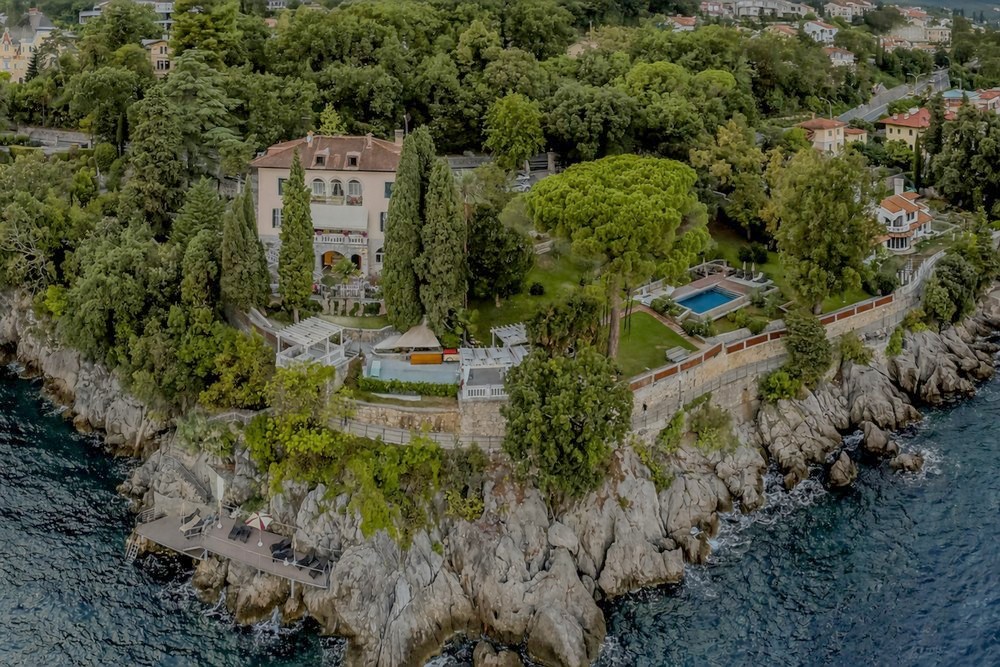
This beautiful historic villa with an English garden boasts an amazing location on a rocky cliff above the sea, as evidenced by this photo I borrowed from their website.
In 1882, the Vienna Southern Railway Company purchased the first plot of land here, began building the first hotels, and thus transformed Opatija (then Abbazia) and its immediate surroundings into a spa town and a fashionable winter resort of the monarchy. In the following years, not only hotels were built, but also new private summer residences, palaces, and villas designed by various architects. Architect Carl Seidl holds a special place among them. Born in Šumperk (now in the Czech Republic), he studied in Zurich and Vienna and found his greatest success precisely in the Austrian Riviera region. Seidl designed, adapted or renovated 31 buildings here (villas, hotels, administrative buildings, and banks).
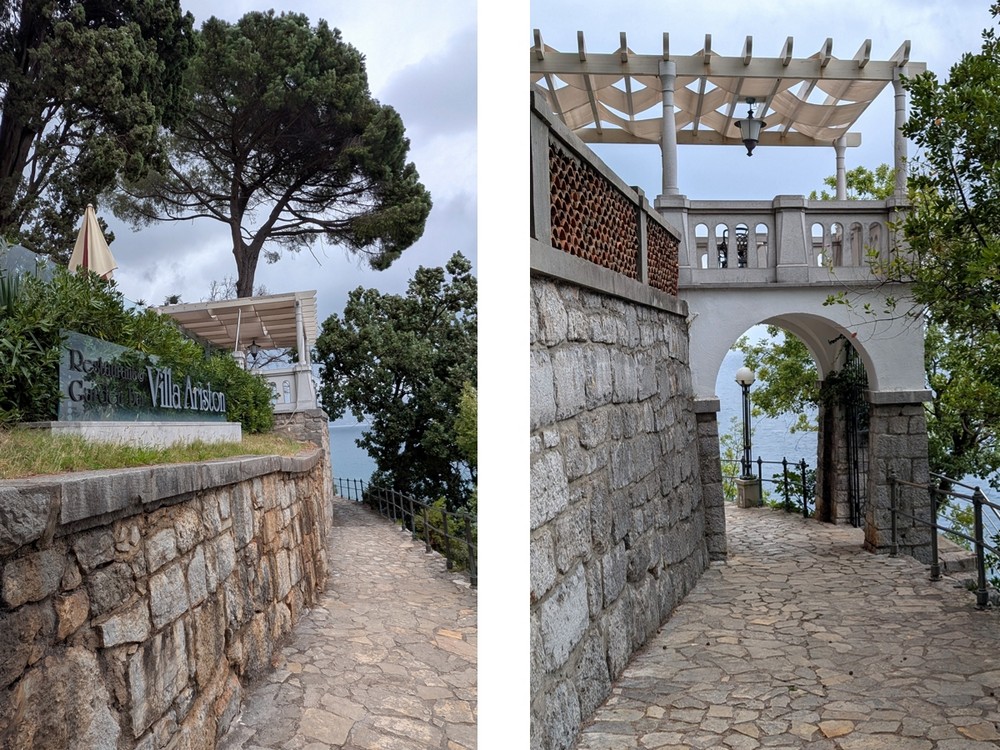
Villa Ariston was designed by architect Oswald Meese for Baroness Hedwig von Haas-Teichen in 1908. It later belonged to the daughter of Julius Glax, a spa physician who played an important role in the development of Abbazia, and subsequently to Italian Prince Andrea Boncompagni. The villa’s current appearance is the work of the famous architect Seidl, who renovated it between 1915 and 1924.
As with his other buildings, Seidl drew inspiration from Renaissance villas in Tuscany and 19th-century English villas. Typical features of his buildings include towers, external staircases, terraces, verandas, and loggias. The main façade faces the sea. At the entrance, you can see a copy of the ancient statue of the Charioteer of Delphi (Auriga).
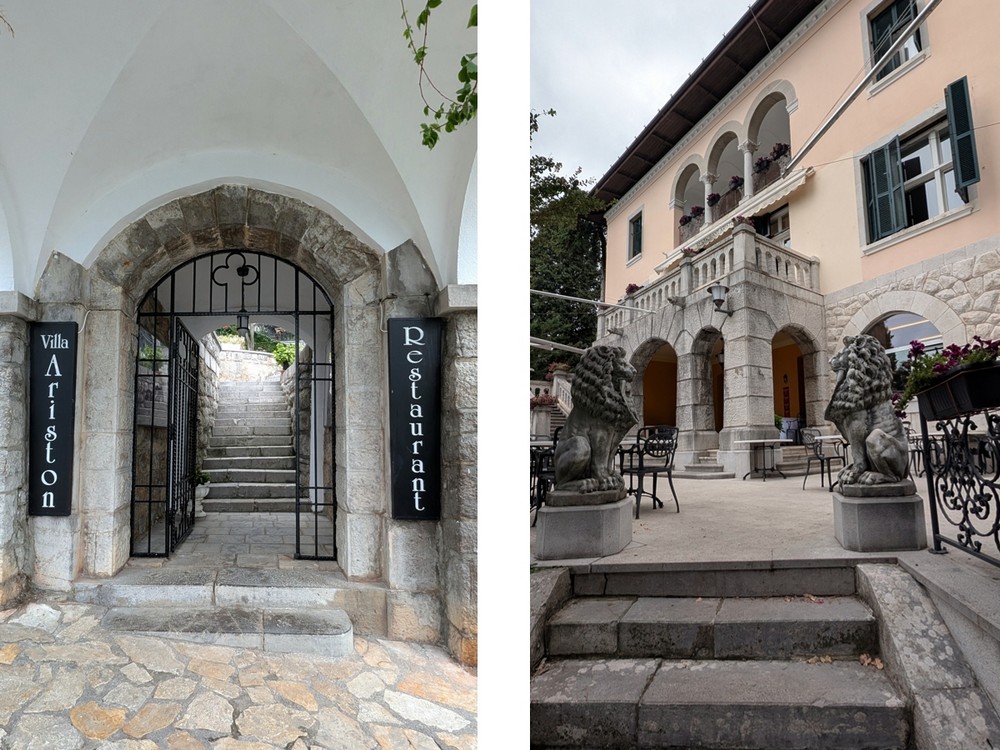
The villa’s interior has been preserved in nearly its original condition. Works by 17th-century Dutch masters hang on the walls. Throughout its rich history, the villa has welcomed numerous members of royal families (including the Habsburgs), statesmen (the Kennedys), and other notable figures (Coco Chanel).
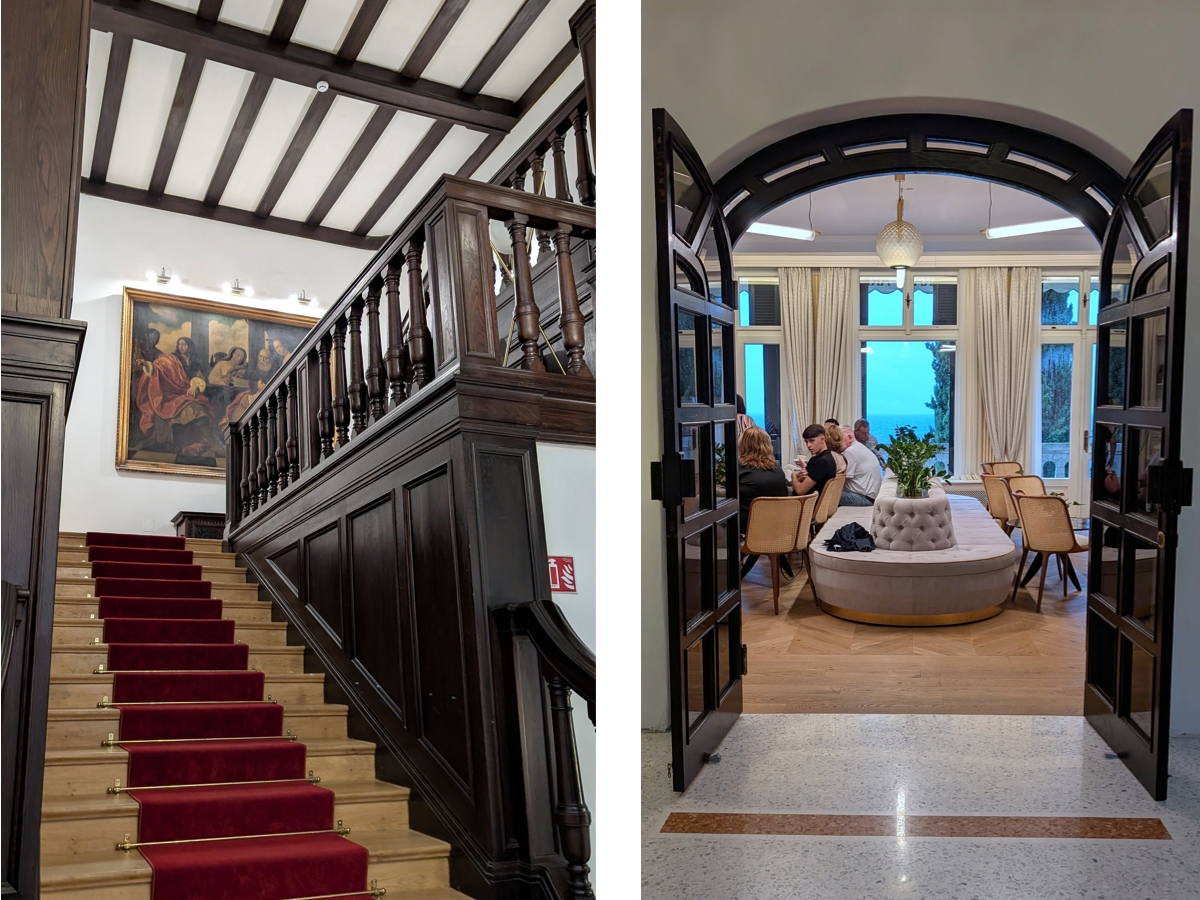
Many consider this historic gem to be one of the most beautiful hotels on the Opatija Riviera. It is one of the most sought-after locations for romantic weddings. Sometimes as many as four weddings take place here in a single week! Most often, these are couples from Germany, Austria, and the USA.
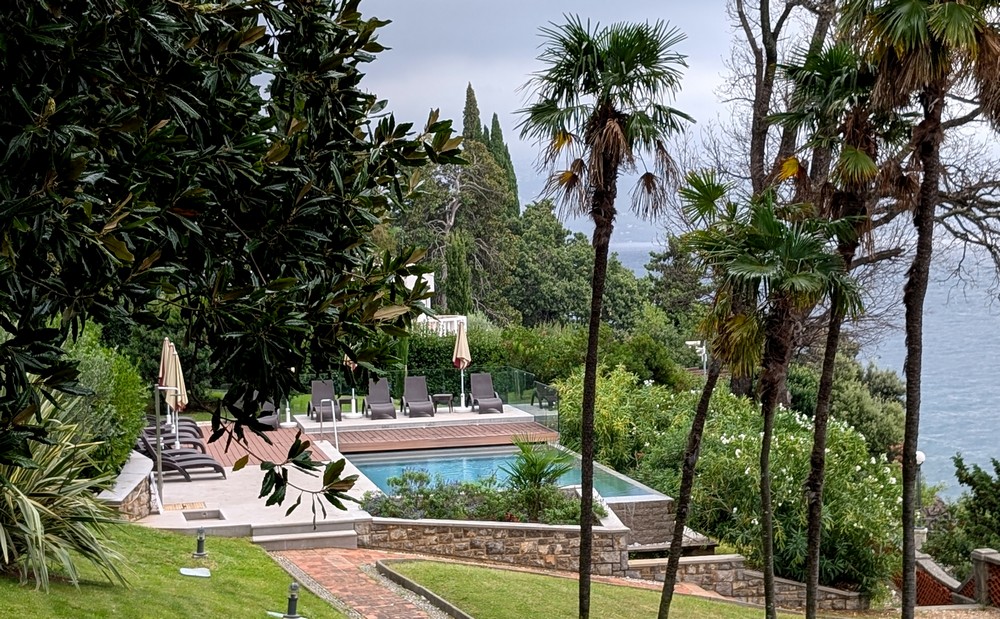
As soon as I arrived at the villa, dark clouds covered the sky, and a heavy summer storm soon began. So, unfortunately, I couldn’t explore the garden, pool and surroundings of the villa any further, but I enjoyed my culinary experience all the more.
The kitchen at Villa Ariston offers a blend of tradition and modern creativity. Specialties include a variety of fish dishes, paired with high-quality regional wines. The dishes are complemented by handmade breads and pastries.
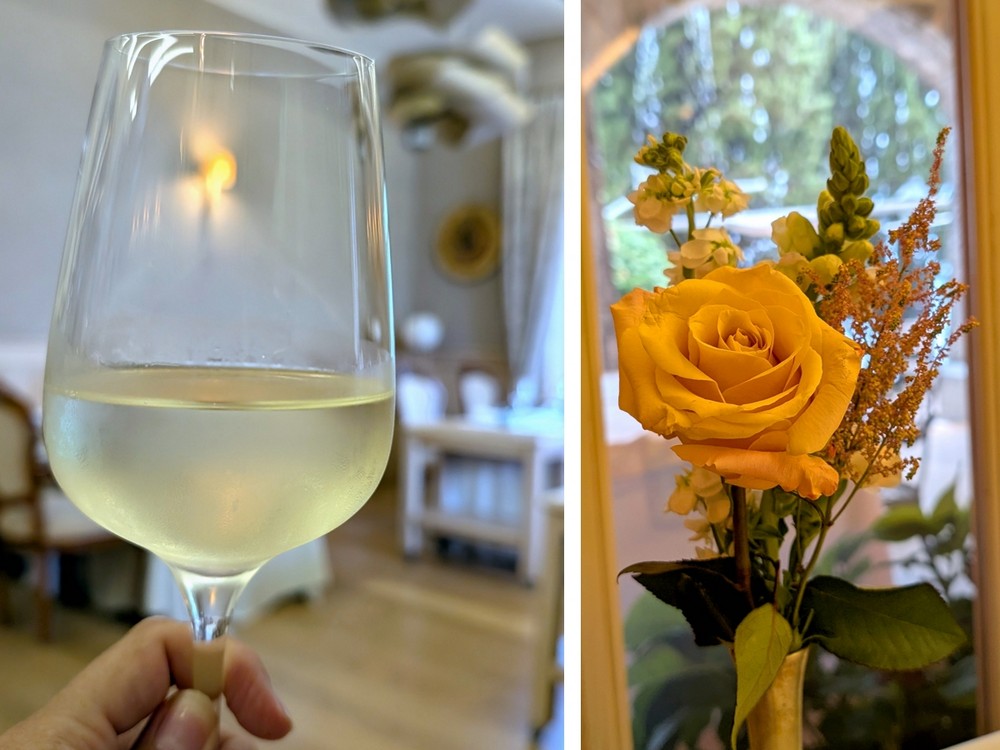
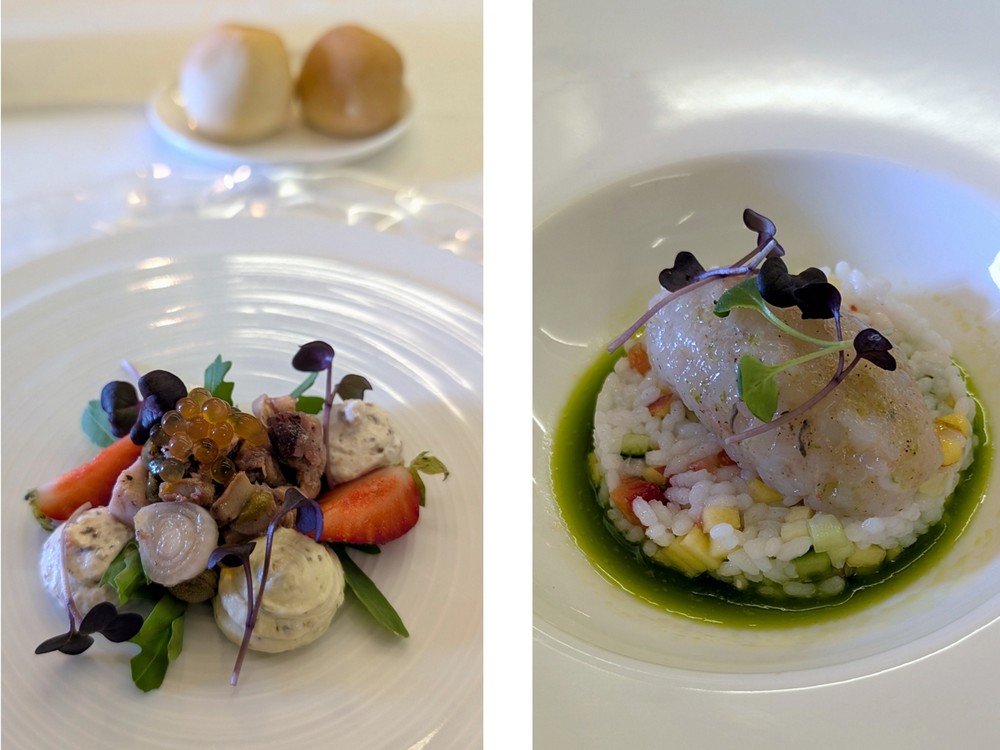
What did I taste?
Octopus salad with truffles, strawberries, cheese, and pesto
Kvarner shrimp (scampi) – a specialty from the Kvarner Bay – they have thin shells and tasty meat with a delicate, sweet flavor. Side dish: rice with pieces of peach and cucumber in spring onion oil.
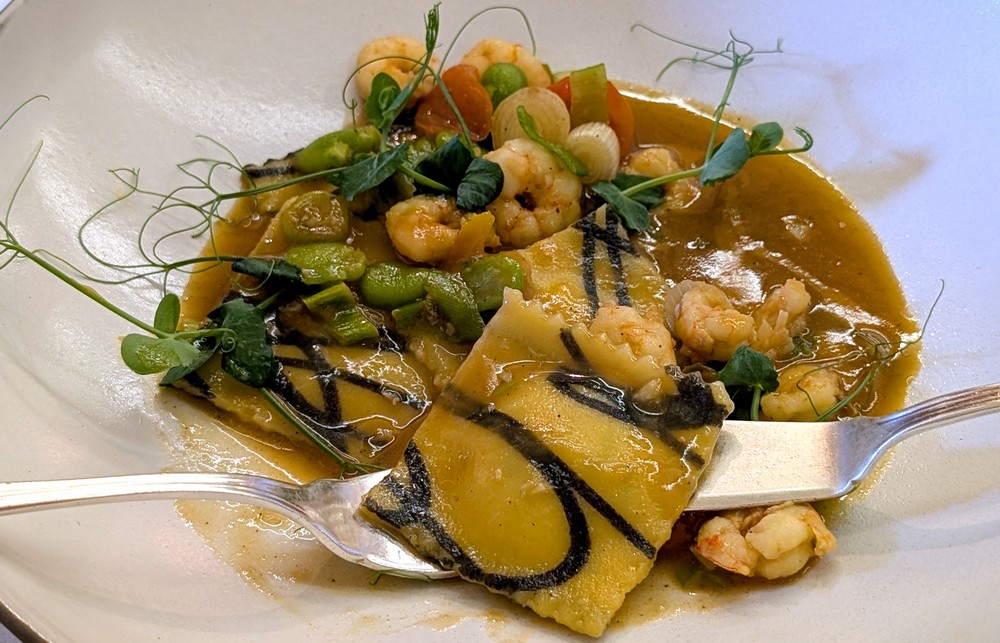
Homemade ravioli with an interesting black-and-white pattern, stuffed with crab and ricotta, with shrimp and baby scallops in scampi bisque
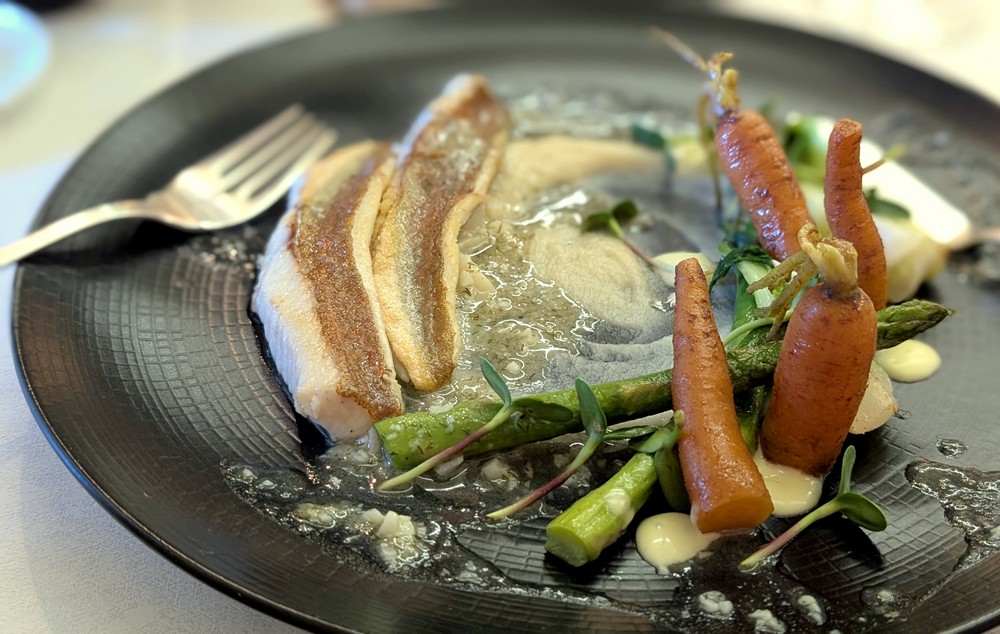
Piper gurnard fish – side dish: celery purée, asparagus, carrots and fennel, with a sauce made from Malvazija white wine from the Kvarner region
If you want to visit the restaurant, you don’t have to get married here. You can come just as a guest, but reservations are recommended.
Dobrodoshli and dobar tek! (Welcome and enjoy your meal!)
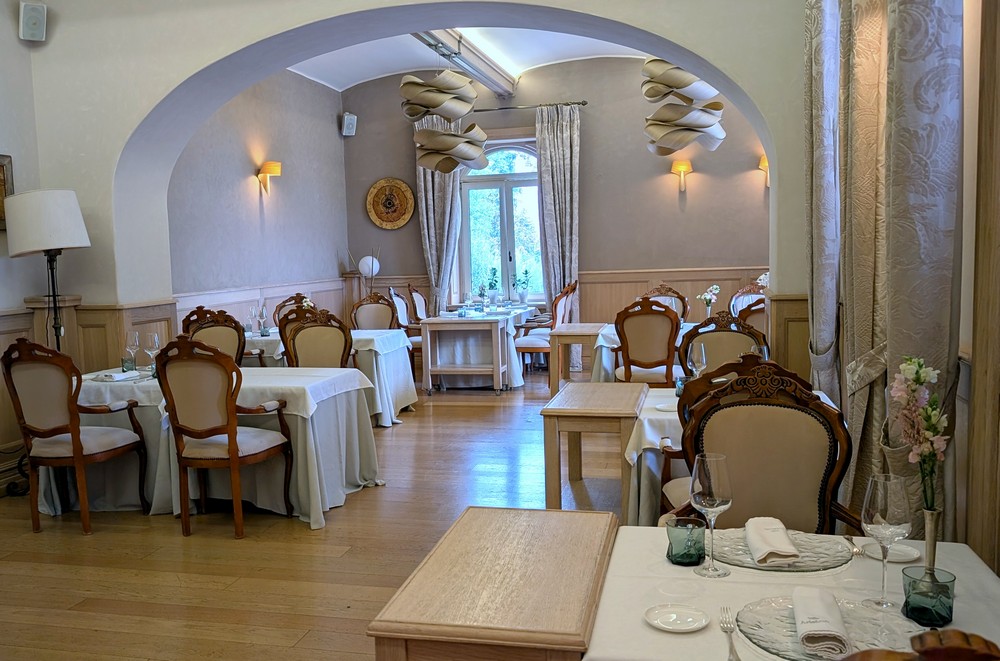
Address: Marshal Tito Street 179, Opatija
More information: Vila Ariston
My big thanks to Cynthia, the manager at Villa Ariston, for the invitation.
Text: © Copyright Ingrid, Travelpotpourri
Fotos: © Copyright Ingrid, Travelpotpourri