

 TRAVEL





 RECIPES WITH A STORY







 AUSTRIA-VIENNA











 SLOVAKIA-BRATISLAVA






 EVENTS








 INTERVIEWS


If you are wondering what to taste in Kerala, I have prepared a selection of 21 traditional dishes. Kerala cuisine is one of the most diverse in India and is renowned for its generous use of coconut, rice, spices and fresh ingredients. Nature has blessed Kerala with its best, and almost everything that grows here eventually finds its way into local cooking pots. Kerala cuisine is predominantly vegetarian, although fish, seafood, poultry and meat also hold an important place in the local gastronomy.
Local cuisine has been shaped by the influence of Greeks, Romans, Jews, as well as Arab, Portuguese, Dutch and Chinese traders. Although much has changed since those times, Kerala´s culinary traditions continue to preserve not only traditional ingredients and cooking utensils but also time-honoured methods of preparation and serving. In Kerala, food is still cooked slowly, with little to no use of artificial additives. Dishes are flavoured with curry leaves and freshly ground spices.
Why Kerala is known as the Land of Spices
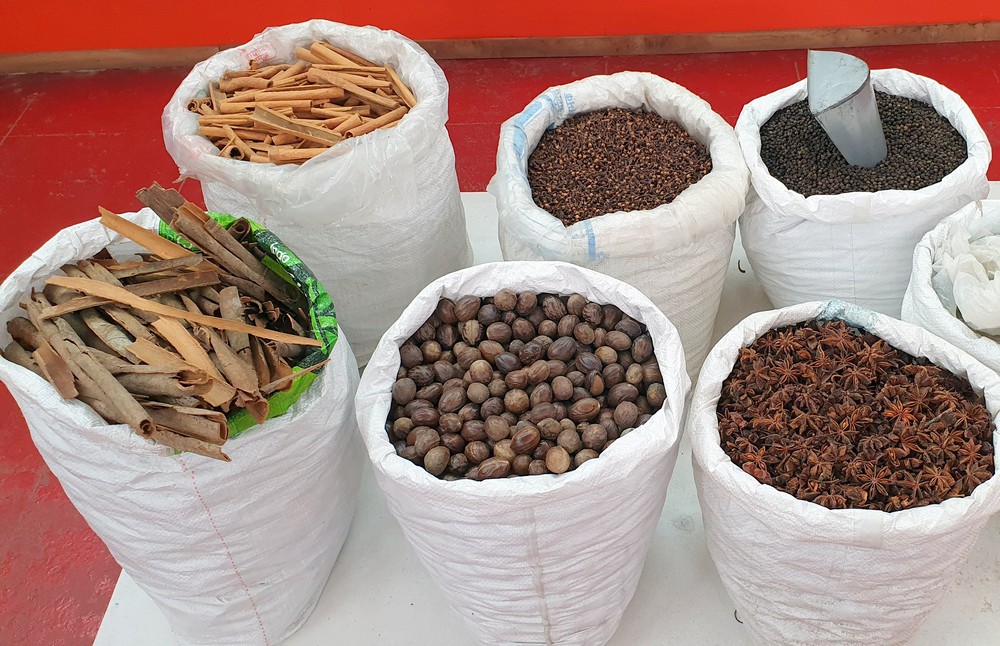
Not only at local markets but also in supermarkets, spices are not sold in small packets as we are used to seeing in our shops in Europe. Instead, they are sold by weight and stored in large sacks. After all, even in ancient times, Roman ships arrived at Kerala´s shores carrying gold to exchange for black pepper. Later, when Portuguese explorer Vasco da Gama landed here in 1498, he also purchased valuable spices, especially black pepper and cinnamon, in exchange for imported goods. Kerala is also home to the cultivation of cardamom, nutmeg, cloves, ginger, turmeric and many other spices.
Kerala cuisine is fiery and full of flavour. It is often said that the further south you travel in India, the more chilli you will find in the food and the more rice you will find served. Rice forms the foundation of traditional Kerala breakfast, while steamed rice is an essential part of most lunches and dinners. Kerala cuisine is traditionally prepared with coconut oil, and there is hardly a dish that is not enriched with coconut milk or freshly grated coconut.
How Food Is Served in Kerala
In Kerala, traditional food is served on fresh banana leaves, which not only add a delicate aroma to the dishes but also represent a very eco-friendly way of dining. There is no need for water to wash plates, and the used banana leaves decompose quickly.
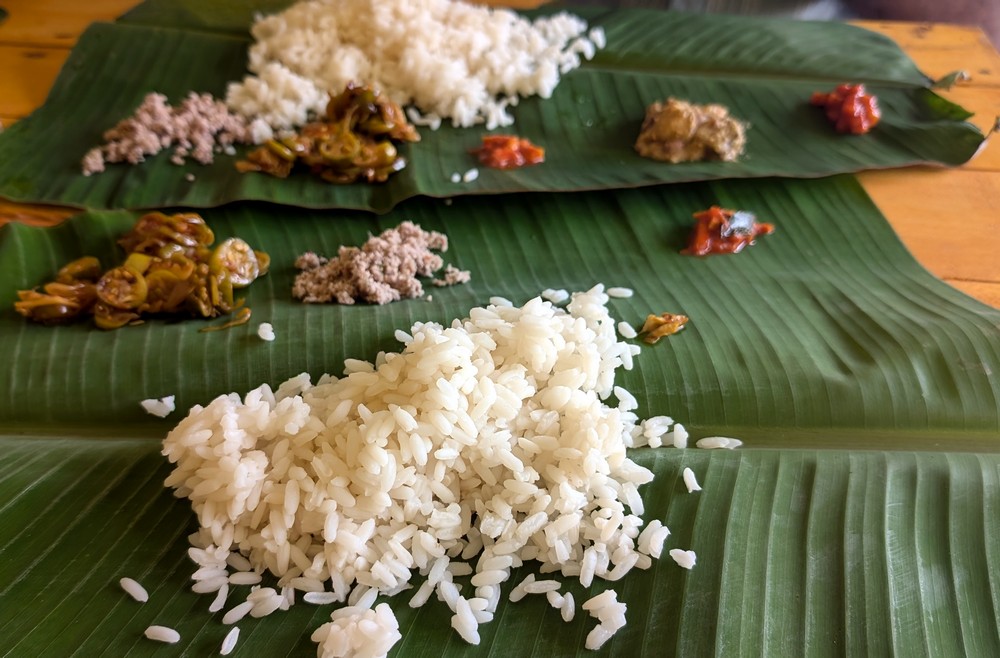
Food in Kerala is traditionally eaten with the hands. This did not bother me at all. However, there was one thing I could not quite understand. When my meal was beautifully arranged on a banana leaf, with small portions of different traditional Kerala dishes, I naturally wanted to taste them one by one – to discover which flavours I liked the most and which dish was the spiciest. My Indian friends, however, mixed everything into one big mash, which, to my eyes, looked strange, to say the least! 🙂
Why Do Indians Eat With Their Hands?
According to traditional Indian philosophy, all senses should be involved while eating. Touching food with the fingers allows one to feel its temperature, consistency, and texture. According to Ayurveda, each finger represents one of the five elements of nature: the thumb represents fire, the index finger air, the middle finger space, the ring finger earth and the little finger water.
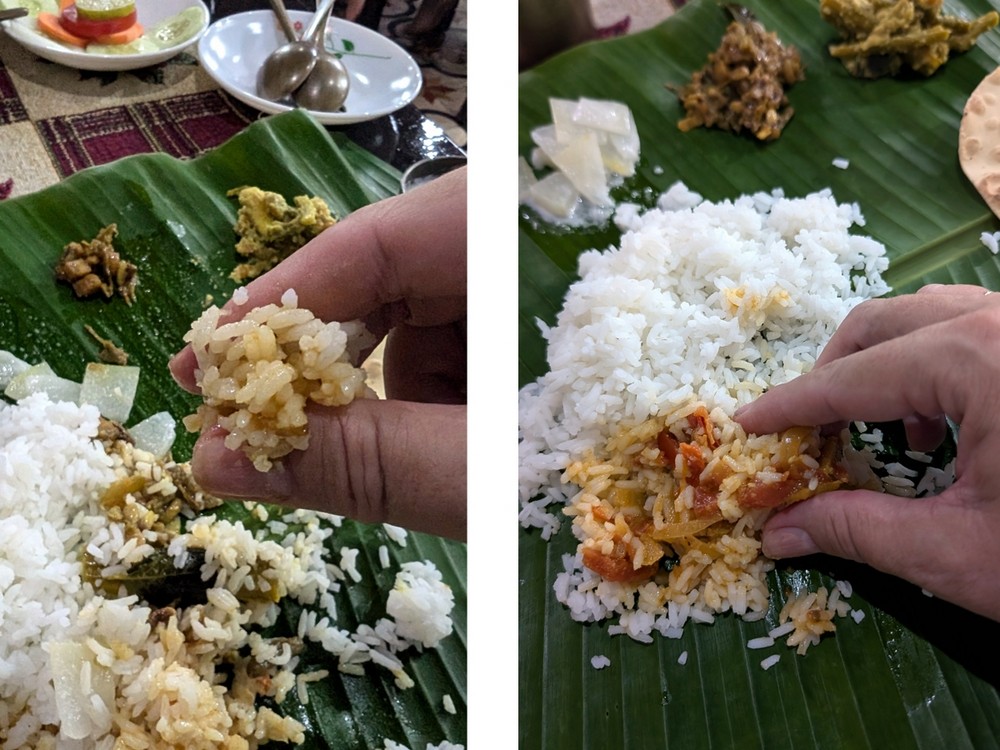
When picking up a bite of food, all fingers come together, creating a small natural spoon. The use of all fingers together is believed to support balance and harmony within the body. Traditionally, only the right hand is used for eating. The left hand is considered impure and is not used for eating or even for shaking hands.
What to Eat in Kerala?
Kerala offers an incredible variety of dishes that are now enjoyed throughout South India. For example, almost everywhere in Kerala, you will find masala dosa served for breakfast. This iconic speciality is traditionally associated with the southern part of India. Its origins are most often linked to the neighbouring state of Karnataka. You can read more about this dish in my article: Masala Dosa
In this article, I have decided to focus mainly on the traditional Kerala food and authentic dishes whose roots are deeply connected with Kerala´s culinary heritage:
1. Sadya (Sadhya)
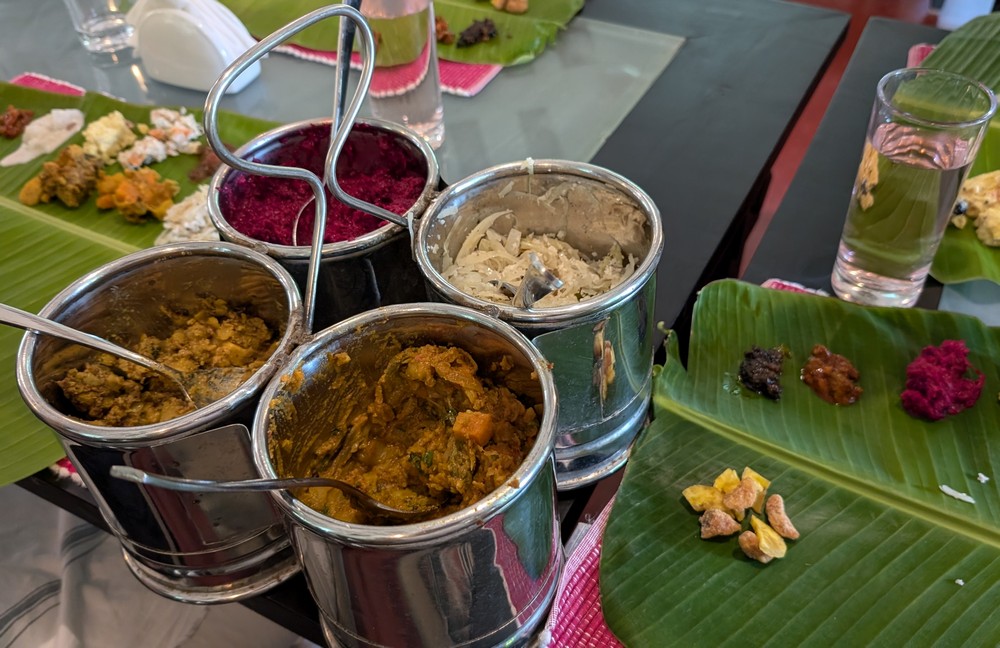
Sadya consists of various vegetarian dishes served on a banana leaf. There may be 20-30 dishes, or even more during the Hindu festival of Onam. These include various curry mixtures, fried and pickled vegetables, bananas, chutneys, and so on. The banana leaf should be placed in front of you with the tip pointing to the left, and each dish has its precise place on it.

For example, pickled vegetables are served in the upper left corner and the banana in the lower left corner. The lower part of the leaf is reserved for rice. Kerala red rice is usually served. It is a traditional variety of rice with a reddish husk and a subtle nutty flavour. Unlike white rice, it has a more pronounced texture and contains more fibre.
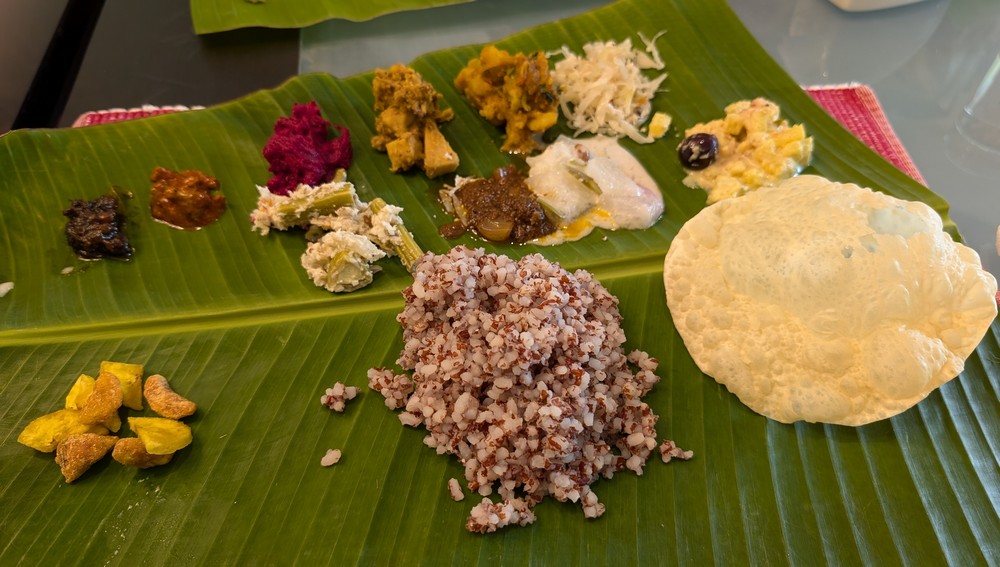
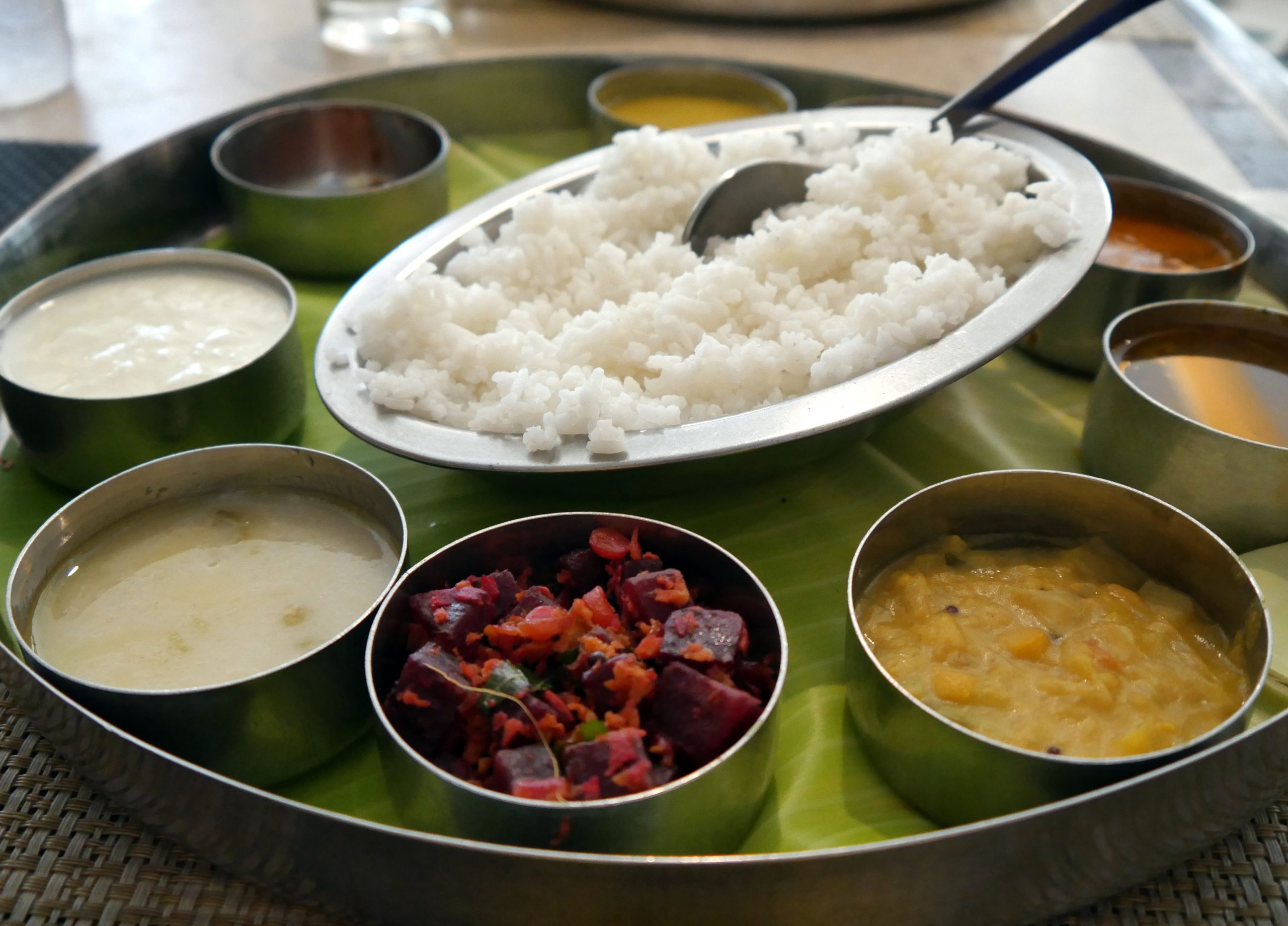
After the meal, the banana leaf is folded and closed. In some restaurants, sadya is served on a metal tray lined with a banana leaf. The individual dishes are served in small metal bowls.
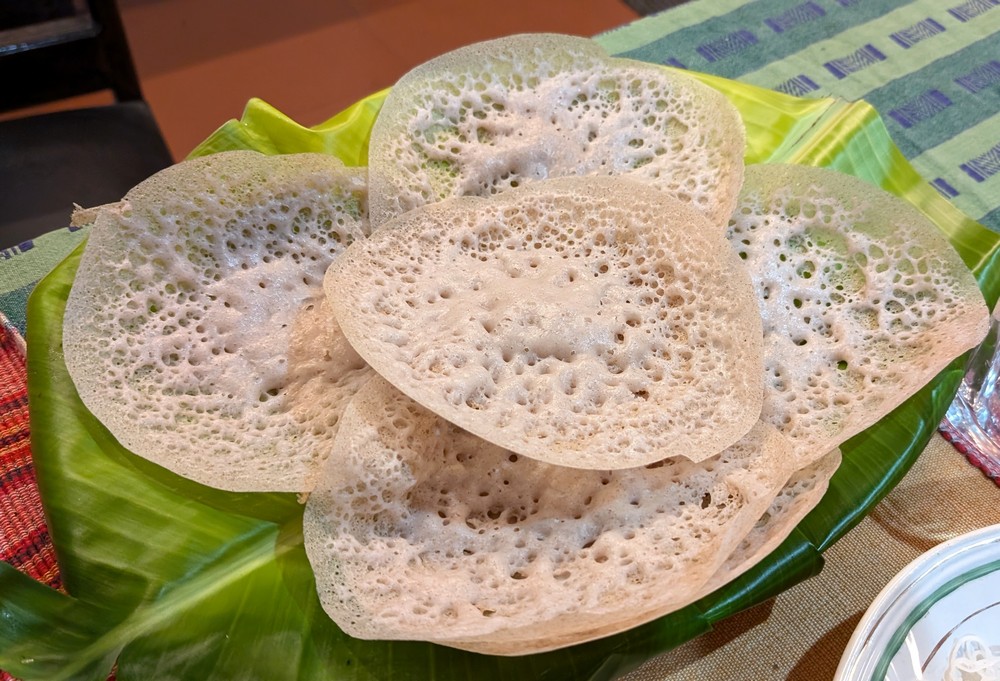
2. Appam
These are fluffy, fermented rice pancakes with a crispy edge, while the centre is soft and fluffy. This dish is one of the most popular breakfasts in Kerala, but it´s also served for dinner. I´ve described the preparation method in detail in the article mentioned above: Masala dosa
Other flatbreads you´ll find served as a side dish in Kerala:
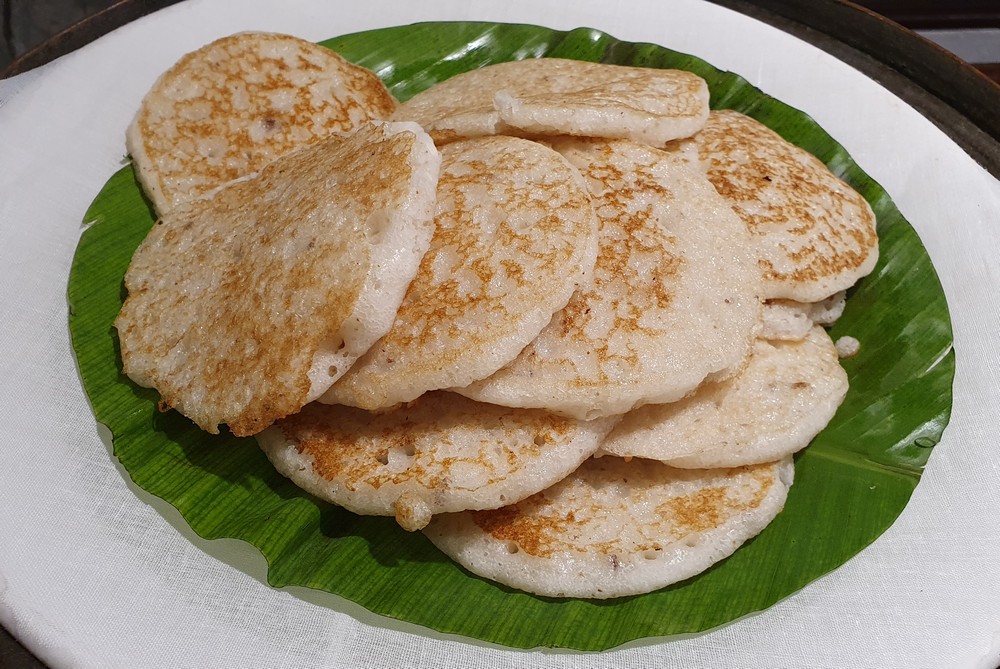
Kallappam – a soft, slightly sweet rice flatbread made from rice, coconut and fermented dough. Traditionally, kallu palm wine was used for fermentation (now replaced by yeast), which is where the flatbread gets its name.
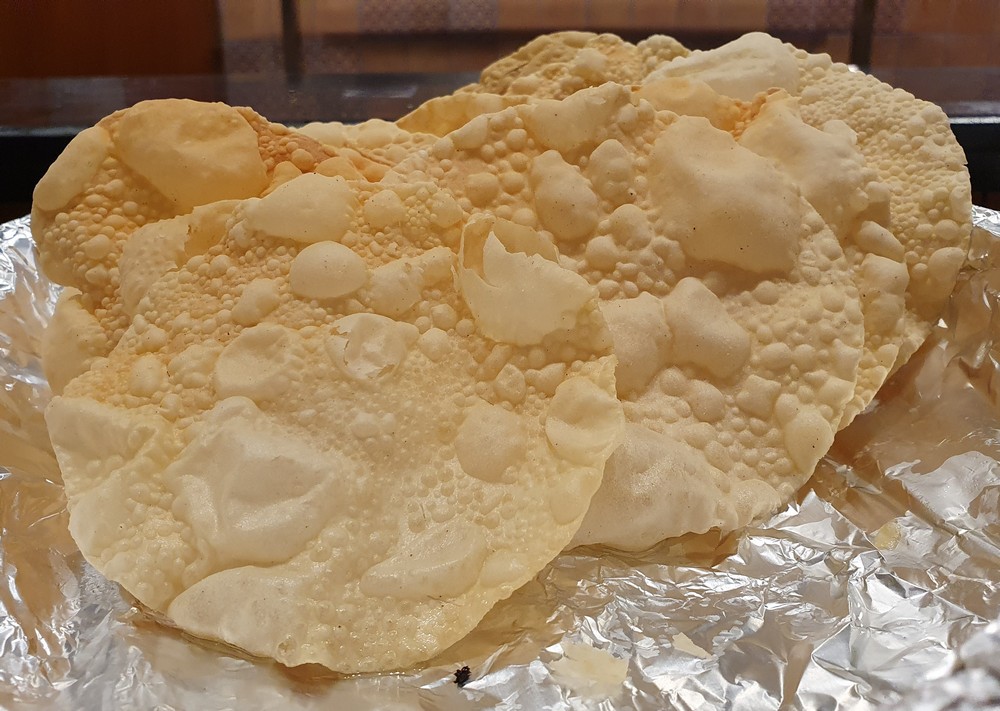
Pappad (Pappadam) – a thin, crispy flatbread made from black urad flour (a type of bean), salt and spices. In Kerala, it is deep-fried in oil, giving it a bubbly texture and distinctive crispiness. It is an integral part of a sadya.
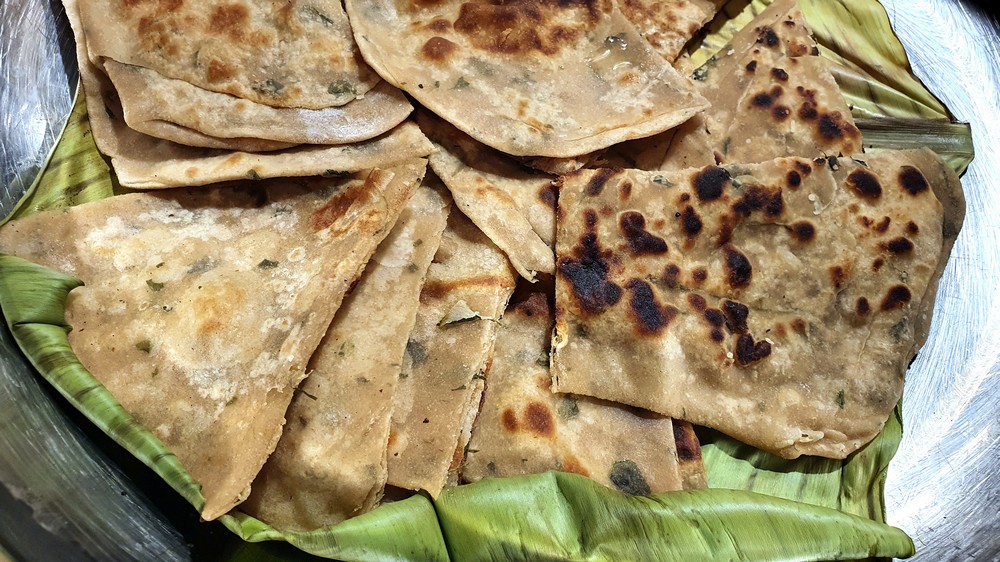
Keralan Parotta – a layered, soft and delicately crispy flatbread made from wheat flour, oil and water. The dough is repeatedly stretched, folded and rolled, creating its characteristic thin layers.
3. Karimeen Pollichathu
Karimeen – the striped spotted mullet (Etroplus suratensis) – is a very nutritious fish, high in protein and low in fat. It lives in freshwater lagoons. After marinating, the fish is wrapped together with spices and vegetables in a banana leaf, which imparts a delicate herbal aroma during baking and keeps it juicy.
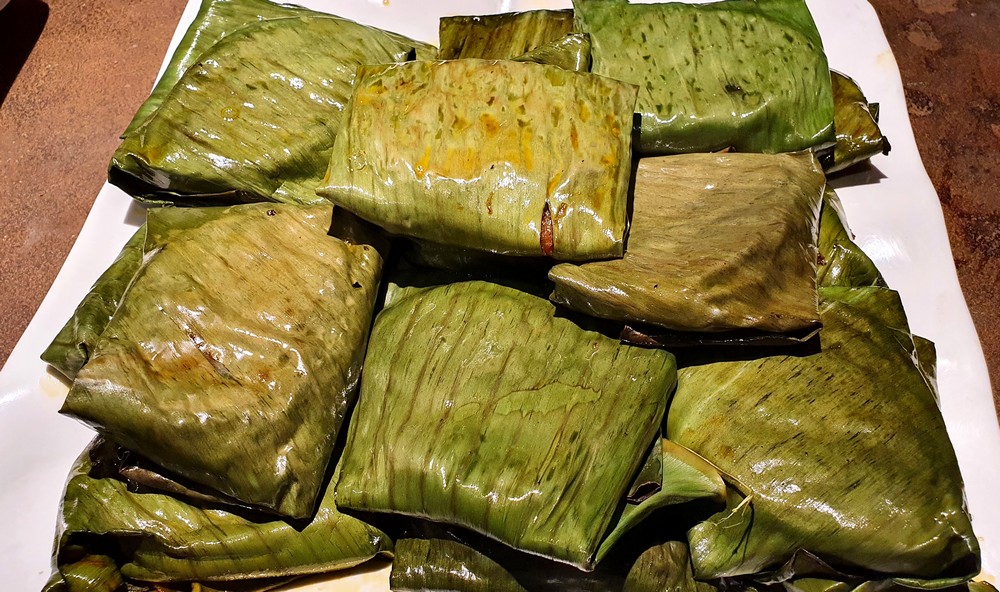
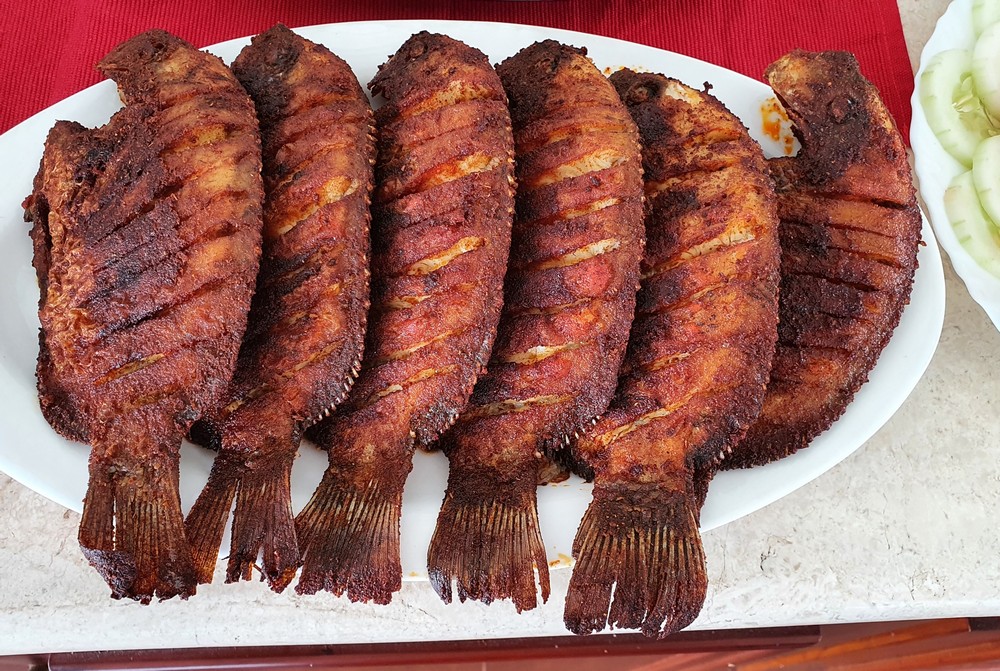
The green parcels also look very attractive on the plate. Unfortunately, I didn´t know the parcel was supposed to be unwrapped, so I cut it open. This dish is a symbol of Kerala cuisine in the Backwaters region. There, I also had the chance to try this fish fried, with a delicious, crispy, slightly spicy coating.
4. Malabar Chicken Biryani
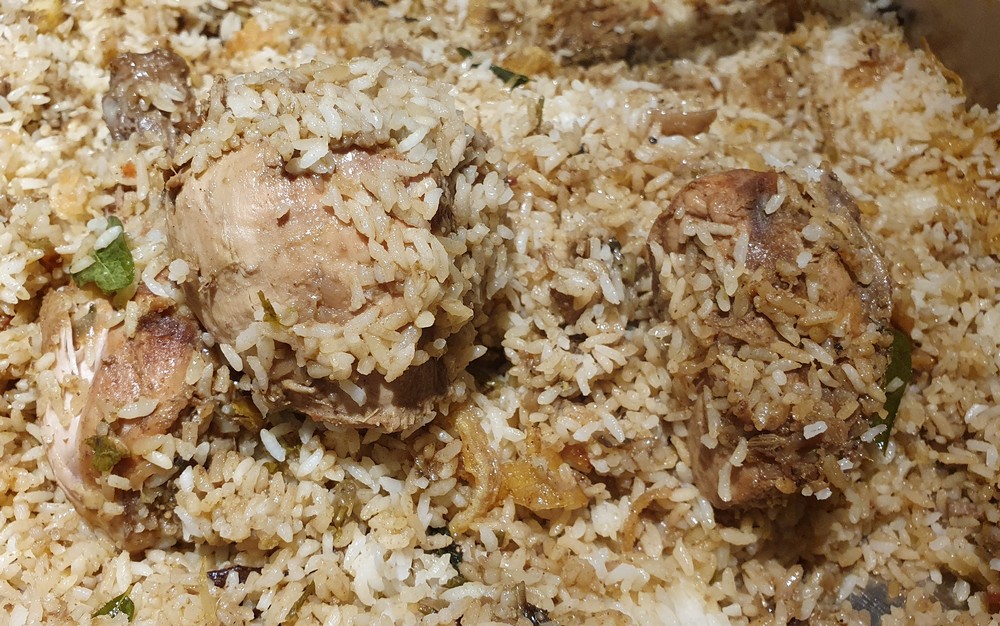
This dish from northern Kerala differs from other biryanis in that it´s prepared with a smaller, aromatic variety of rice called jeerakasala. This recipe was influenced by Arab traders who came to the Malabar Coast for spices for centuries. I tried it with chicken, but it´s also prepared with fish or lamb.
5. Puttu
Puttu are steamed rice rolls. They are prepared by steaming rice flour and grated coconut in a special cylindrical steamer. They are mainly served for breakfast with black chickpea curry.
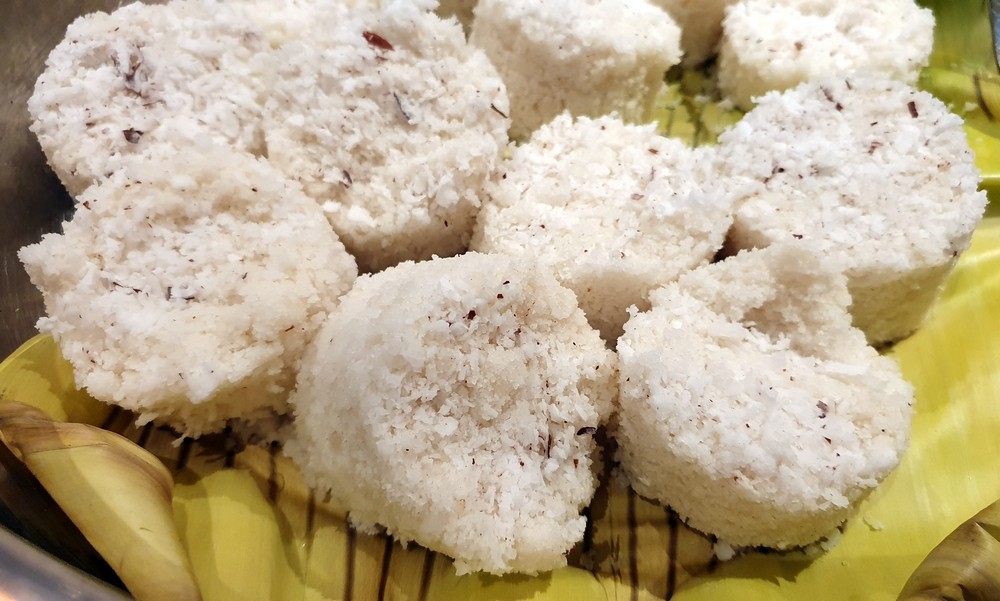
Another rice speciality is Idli – small, fluffy steamed cakes made from rice and black lentils. Although they are a traditional and everyday food in Kerala, including for breakfast, there is still debate today about where they originated.

6. Meen Curry – Kerala Fish Curry
Kerala boasts 650 km of coastline, 44 rivers and 900 km of backwaters – no wonder fish is a staple of Kerala cuisine.
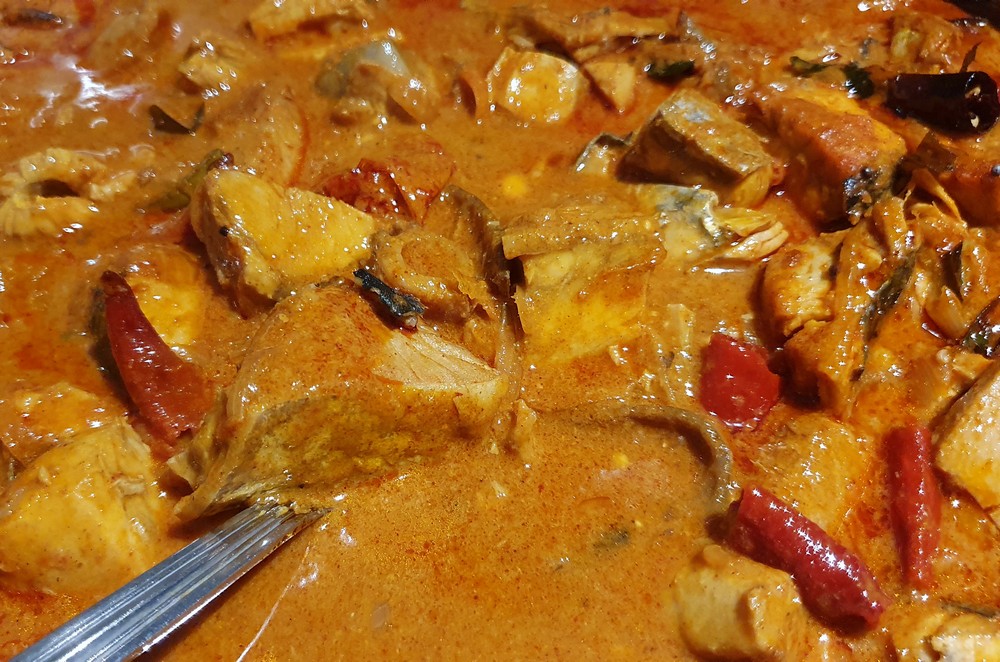
Kerala fish curry is most often prepared with local saltwater fish, coconut milk, onions, ginger, garlic, curry leaves and turmeric. Instead of a large amount of chilli, the heat is mellowed by the generous use of coconut milk, which is why this dish is recommended as the first Indian curry for those who aren´t used to very spicy foods. In Kerala, every family has its own recipe.
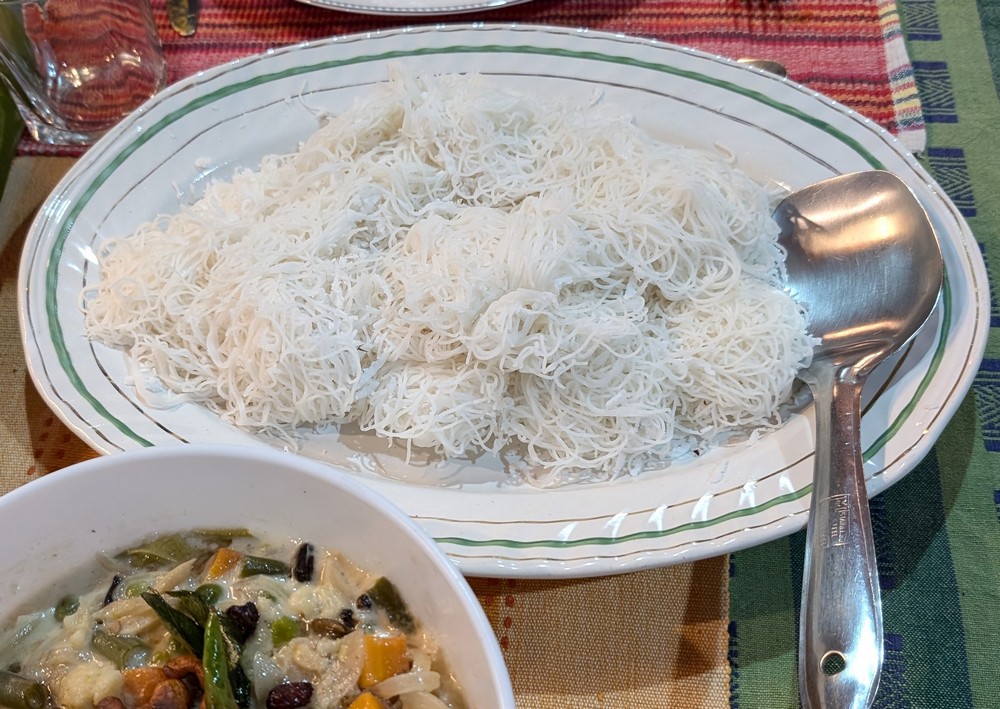
7. Idiyappam
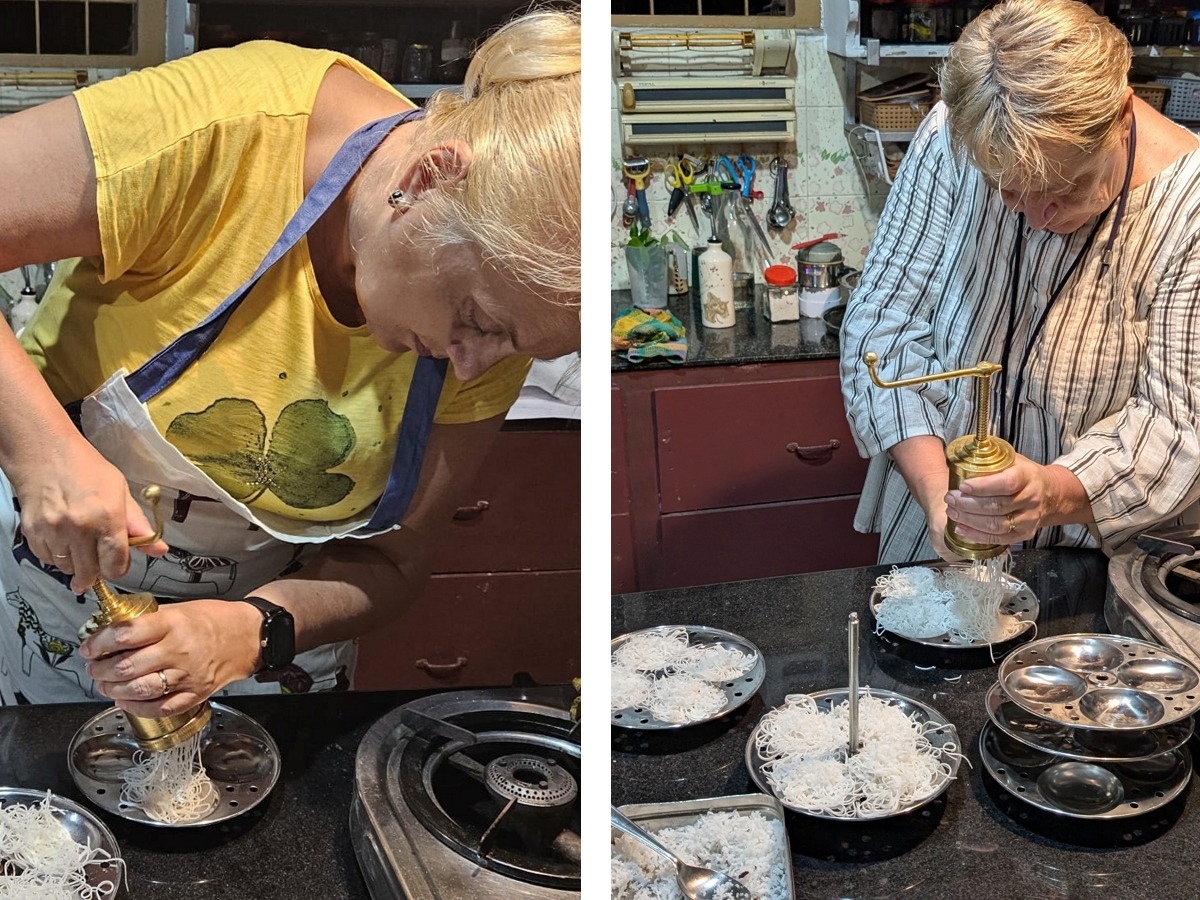
Idiyappam are delicate rice noodles. They are “ground” in a special grinder, placed in metal bowls, which are then stacked on top of one another and placed in a pot, where the noodles are steamed. I even got to try making these noodles myself!
The noodles are popular for breakfast or as a side dish with curry for a lighter dinner.
8. Beef Fry
Although beef is not eaten in many parts of India, in Kerala it is a staple of the local cuisine. Pieces of meat are usually cooked in a pressure cooker to tenderise them, and then slowly sautéed in coconut oil with curry leaves.

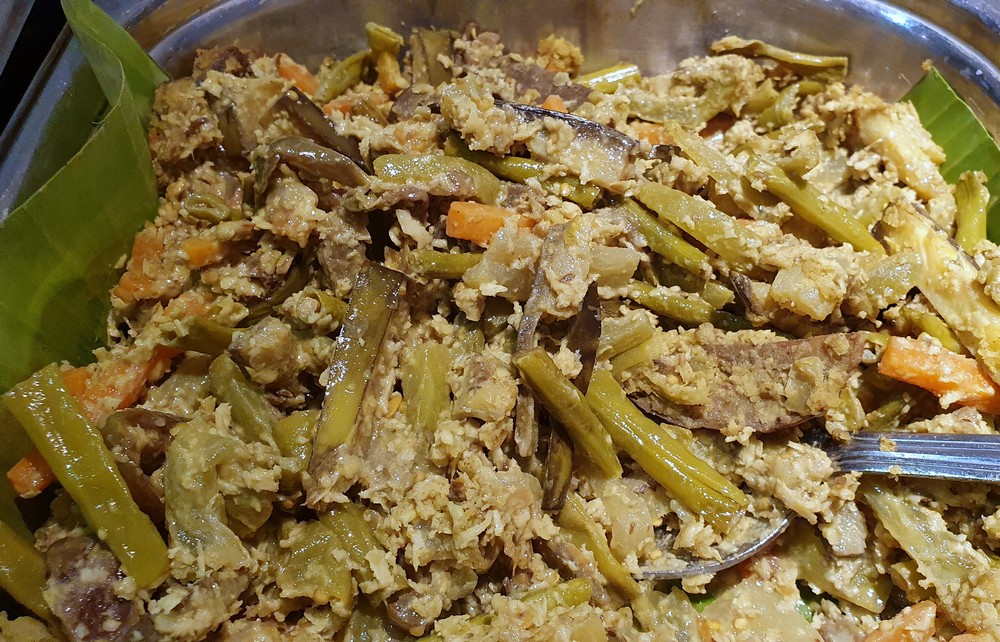
9. Avial
Avial is a traditional vegetable curry made with more than ten kinds of seasonal vegetables, coconut and yoghurt. It´s also served as part of a sadya. It is one of the healthiest dishes in Kerala cuisine.
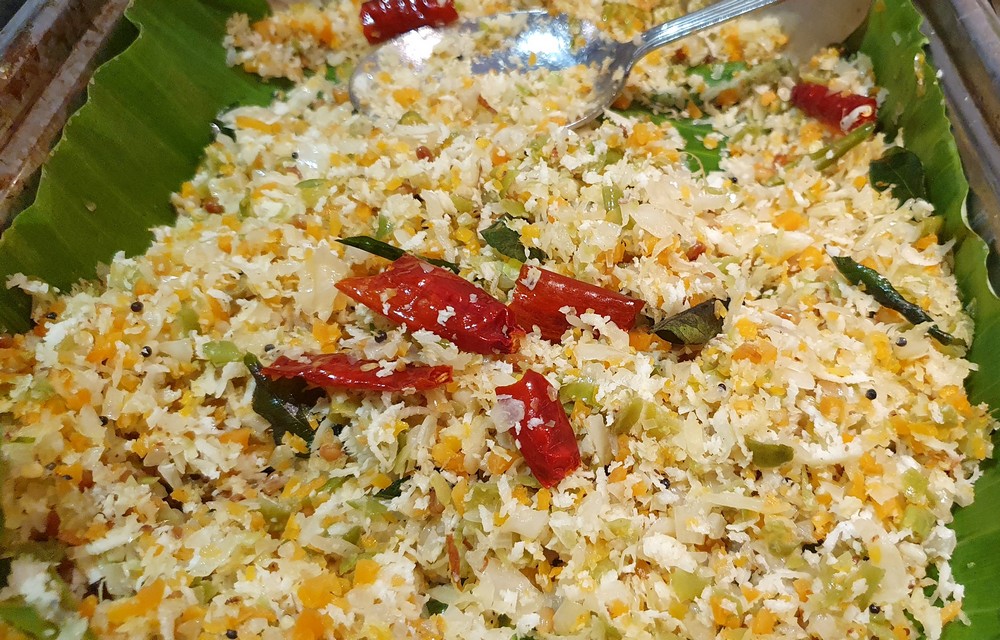
10. Thoran
Thoran is a side dish made from finely chopped vegetables briefly sautéed with fresh coconut, mustard seeds and curry leaves. Thanks to the quick preparation, the vegetables retain their freshness and colour. Depending on the season, it is prepared with ingredients such as spinach, cabbage, carrots, green beans or beets. Thoran is one of the staple side dishes of a sadya.
11. Fried Kerala Shrimp
Fried shrimp are among the most popular specialities at restaurants along the coast. I, too, had the chance to try this dish at one of the local resorts. They even served us wine with it. But as if the dish weren´t spicy enough, they also dropped a chilli pepper into the wine glass.
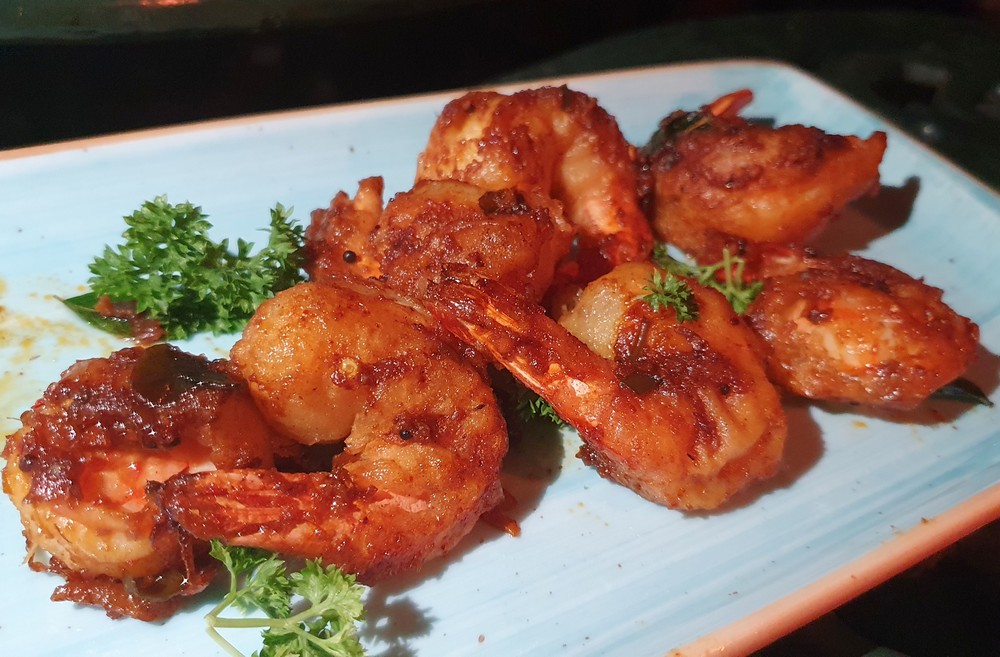
The shrimp are marinated in a mixture of black pepper, chilli, turmeric and other spices, then pan-fried with onions and curry leaves. The result is an intensely aromatic dish with a delicately caramelised sauce.
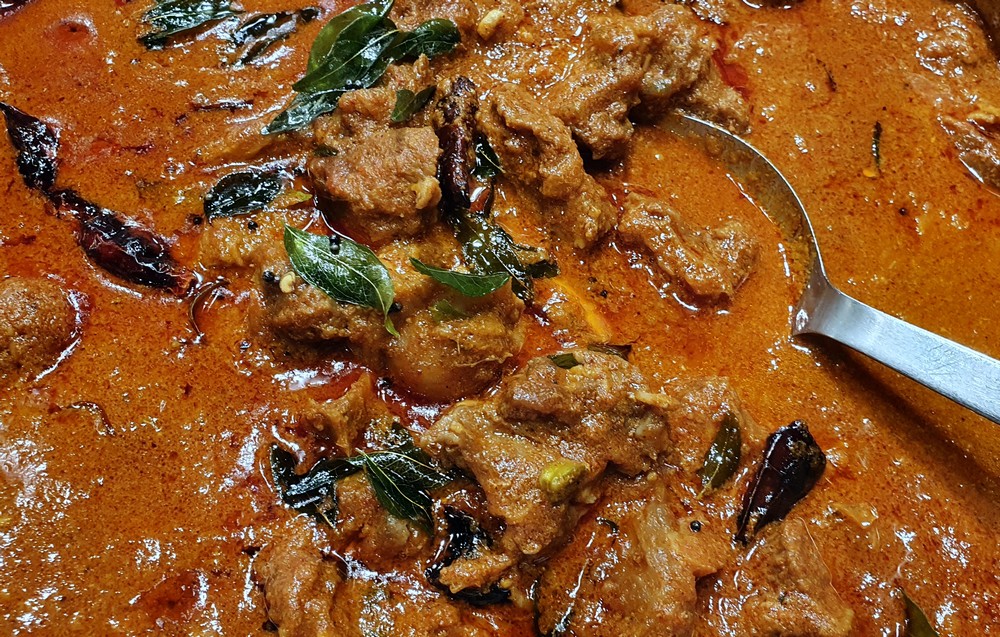
12. Mutton Curry
Mutton Curry is made from pieces of lamb that are slowly simmered with onions, tomatoes, ginger, garlic and a blend of spices. Curry leaves, black pepper and coconut give it its characteristic flavour. Almost every region in Kerala has its own version of this dish.
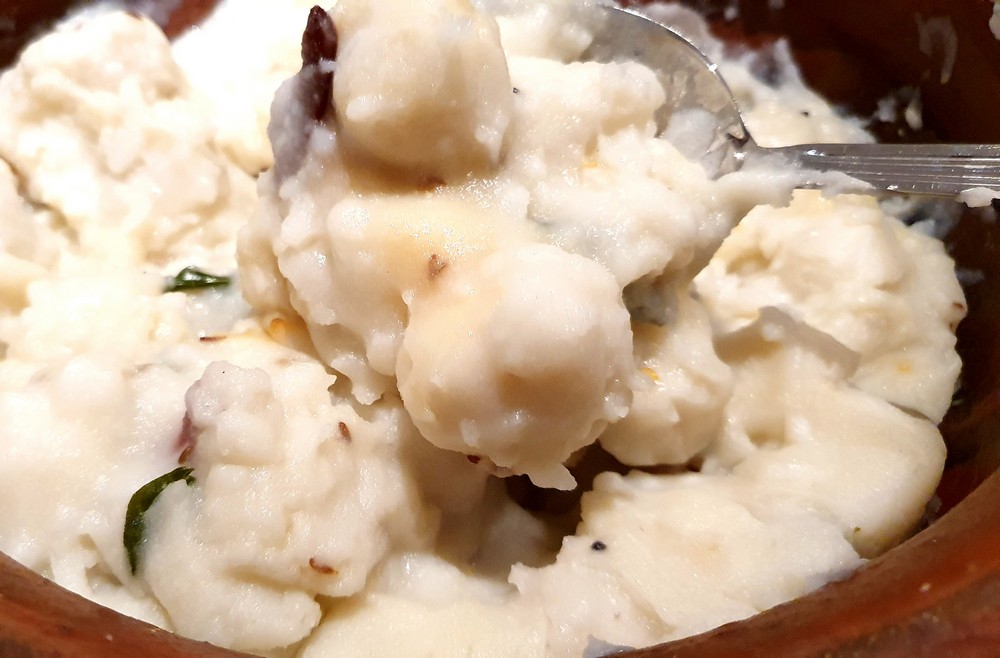
13. Pidi
Pidi are small balls of rice dough that are cooked in coconut milk until soft. They are served with chicken or beef curry, very often during Christian holidays and family celebrations.
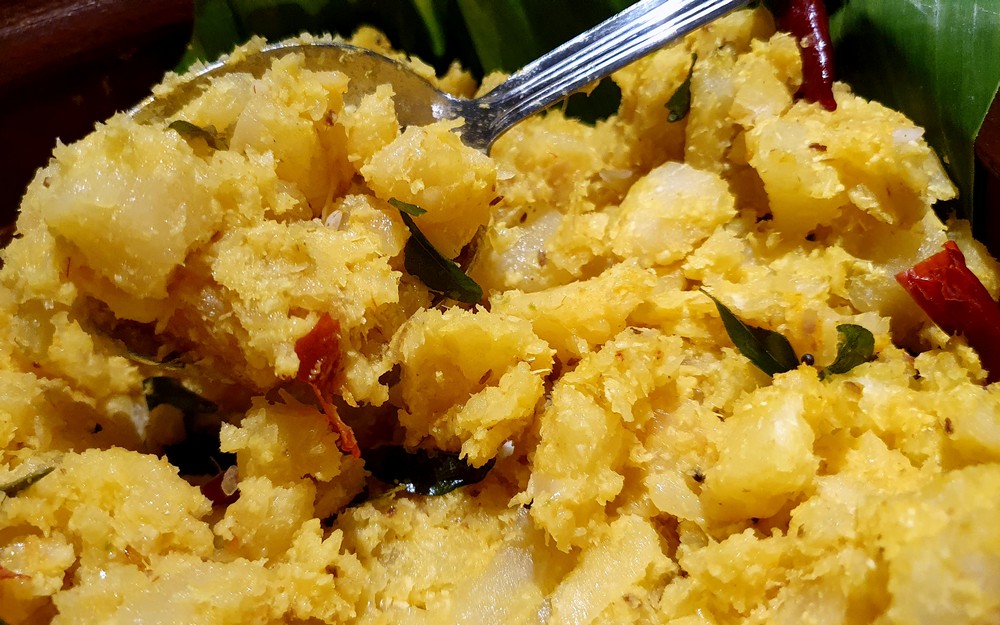
14. Kappa (Kappa Puzhukku)
Kappa is one of the most traditional dishes in Kerala. It is made from boiled tapioca, which, like rice, is a staple food in Kerala. Especially in the past, when rice was scarce, tapioca was a cheap source of carbohydrates. The cooked pieces are mixed with coconut, green chilli peppers, curry leaves, turmeric and black pepper.
15. Kerala Chicken Masala
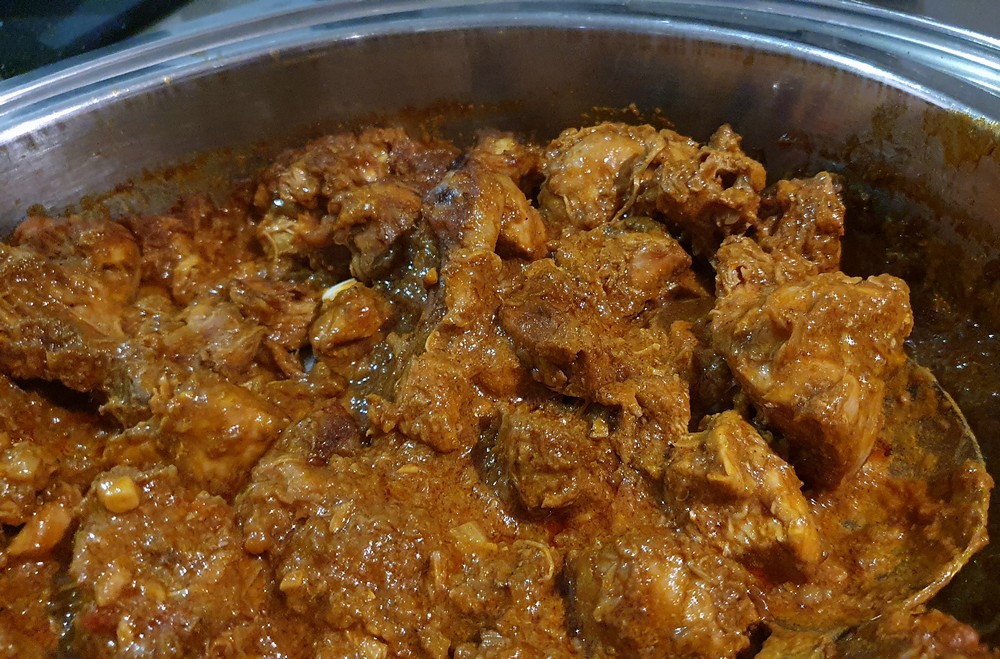
Kerala Chicken Masala is made with pieces of chicken slowly simmered with onions, tomatoes, ginger, and garlic. The Kerala version is spicy, with curry leaves, chilli peppers, black pepper, turmeric and coconut giving it its distinctive flavour.
16. Mezhukkupuratti
Mezhukkupuratti is eaten as a classic vegetable side dish (also part of a sadya). The name is composed of two words: mezhukku – to shine, to rub with oil, and puratti – to mix/roast. The vegetables – green bean pods, unripe bananas, sweet potatoes and yams – are briefly sautéed in coconut oil with mustard seeds, curry leaves, chilli and turmeric.
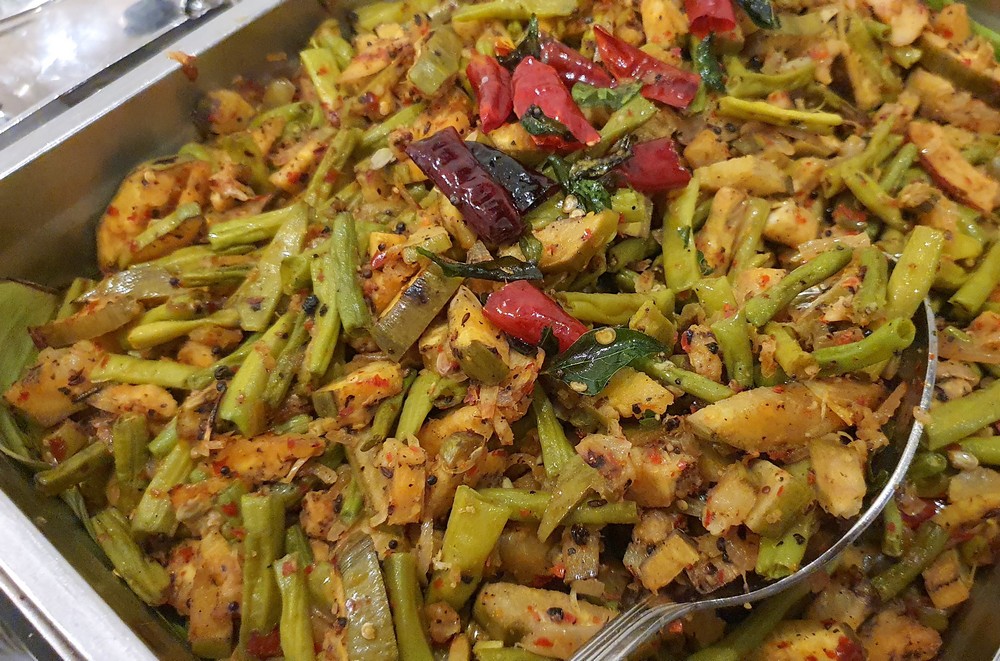
Unlike other dishes, the vegetables do not swim in sauce, but are coated with a thin layer of spiced coconut oil, giving them a pleasant aroma and a glossy appearance.
17. Kozhukatta
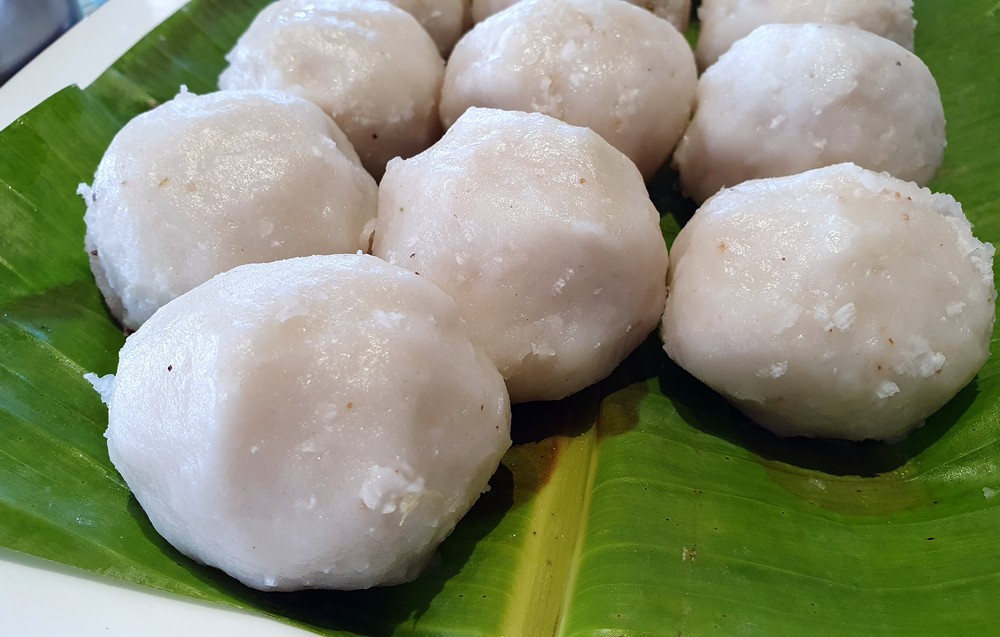
Kozhukatta is a dessert popular mainly among the Christian community, typically served on Palm Sunday. These are small dumplings made from rice dough, filled with a mixture of palm sugar (jaggery) and shredded coconut. They are often flavoured with cardamom. They are prepared by steaming.
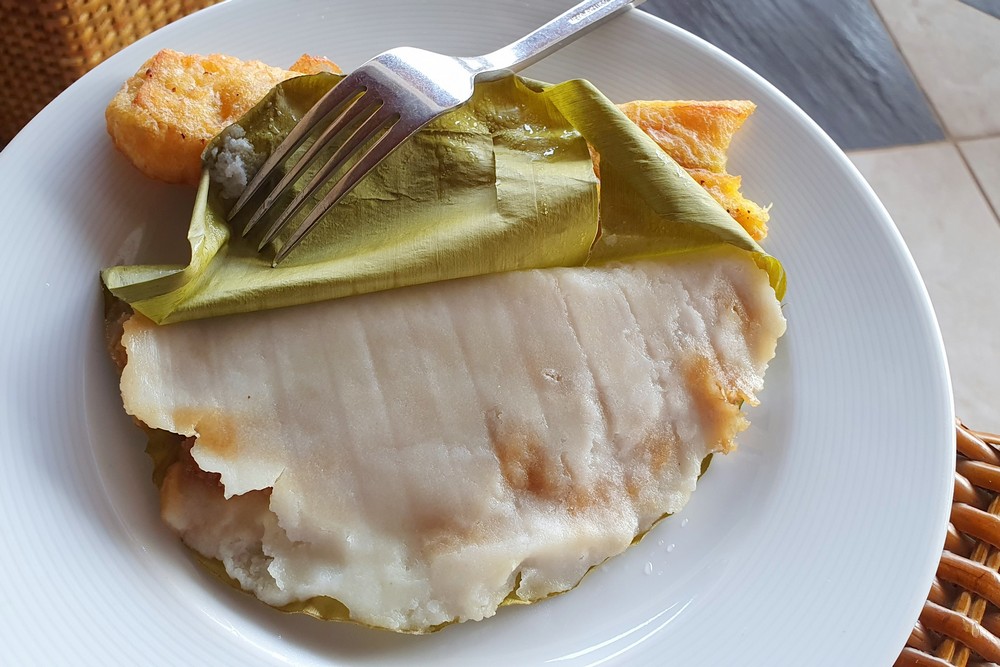
18. Ela Ada
Ela Ada is prepared similarly – rice dough is filled with shredded coconut and palm sugar (jaggery). It is wrapped in a banana leaf and steamed while still wrapped.
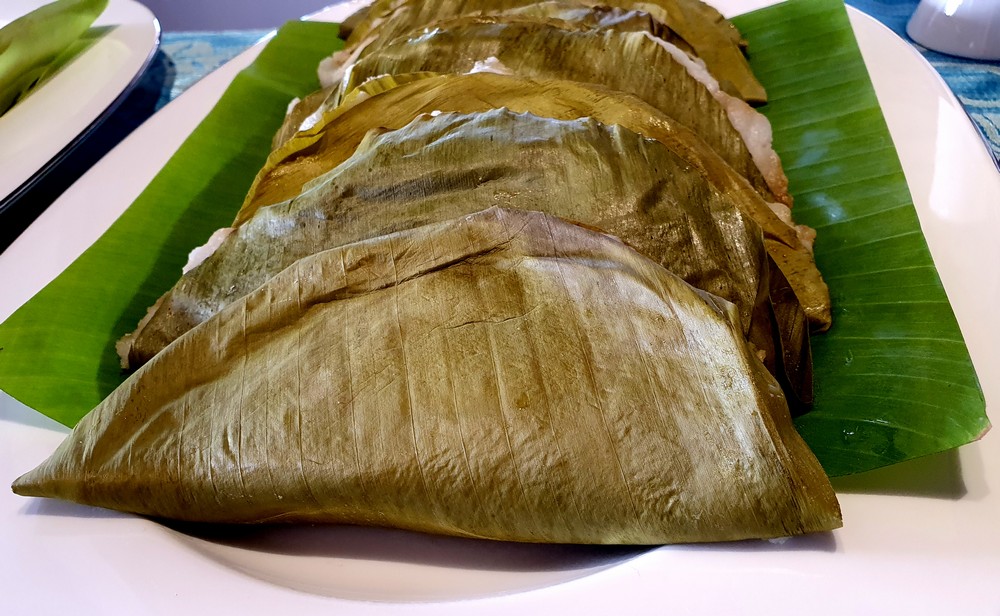
This is what this popular homemade treat looks like inside the leaf.
19. Pazham Pori – Fried Bananas
Pazham pori is a delicious treat that you can enjoy not only at the hotel restaurant but also on the street. Ripe Nendran bananas are sliced lengthwise into thin strips, coated in a mixture of all-purpose and rice flour (turmeric powder is added for colour and cardamom powder for flavour) and then deep-fried in hot coconut oil. They should be beautifully crispy on the outside and pleasantly soft on the inside. They are mainly served with tea.
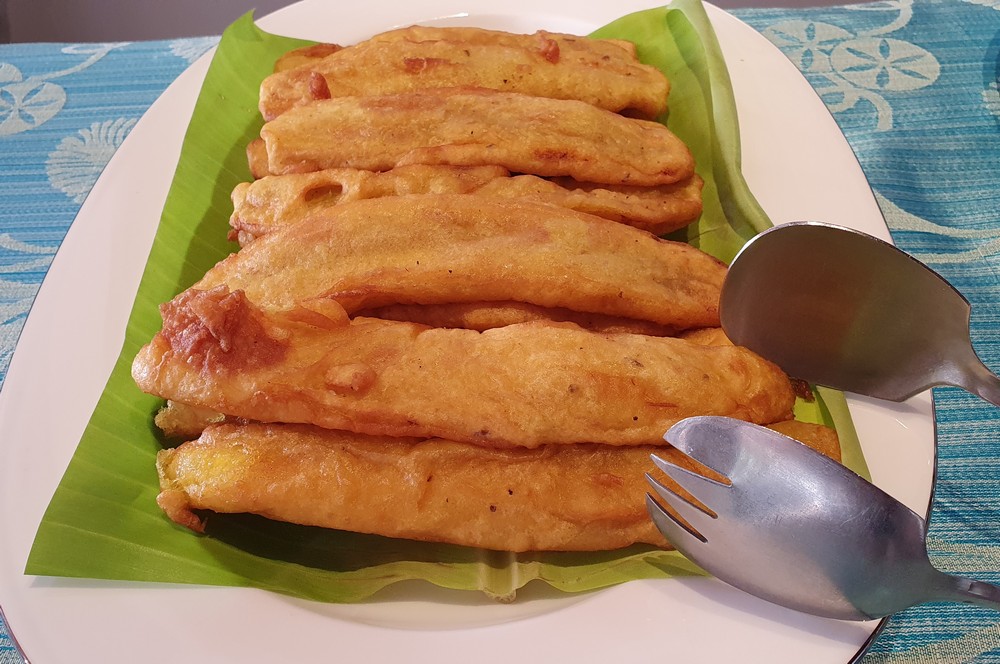
You can read more about banana specialities in Kerala in my article: Kerala Bananas
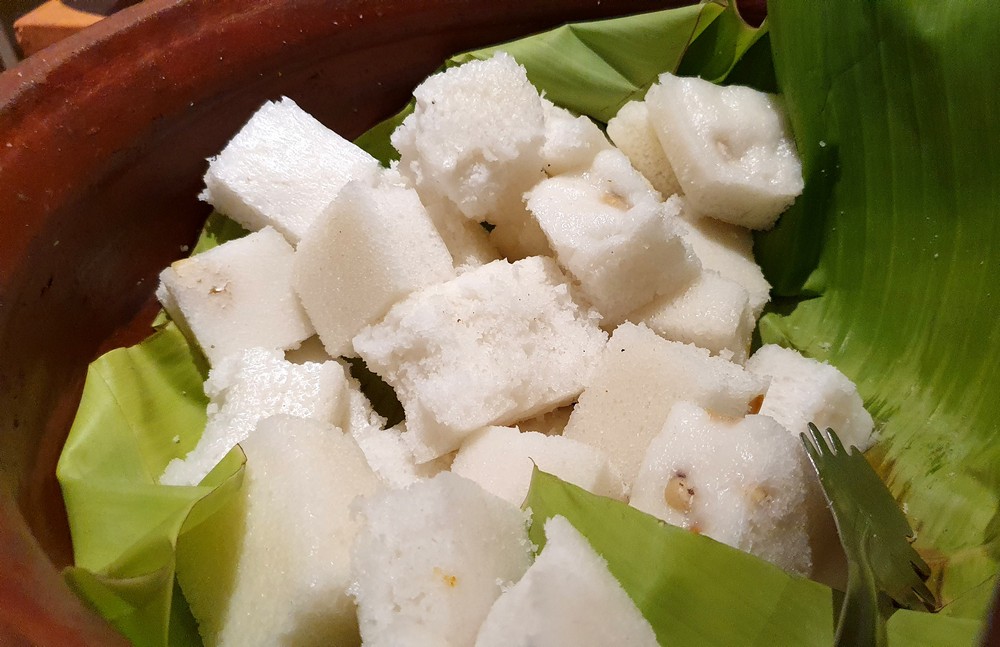
20. Vattayappam
Vattayappam is also a traditional tea-time dish. It is a soft, fluffy rice cake with a light colour and a delicate, porous texture. It is made from a batter of rice, coconut, sugar and yeast (or naturally fermented dough), which is allowed to rise and then steamed until tender and soft.
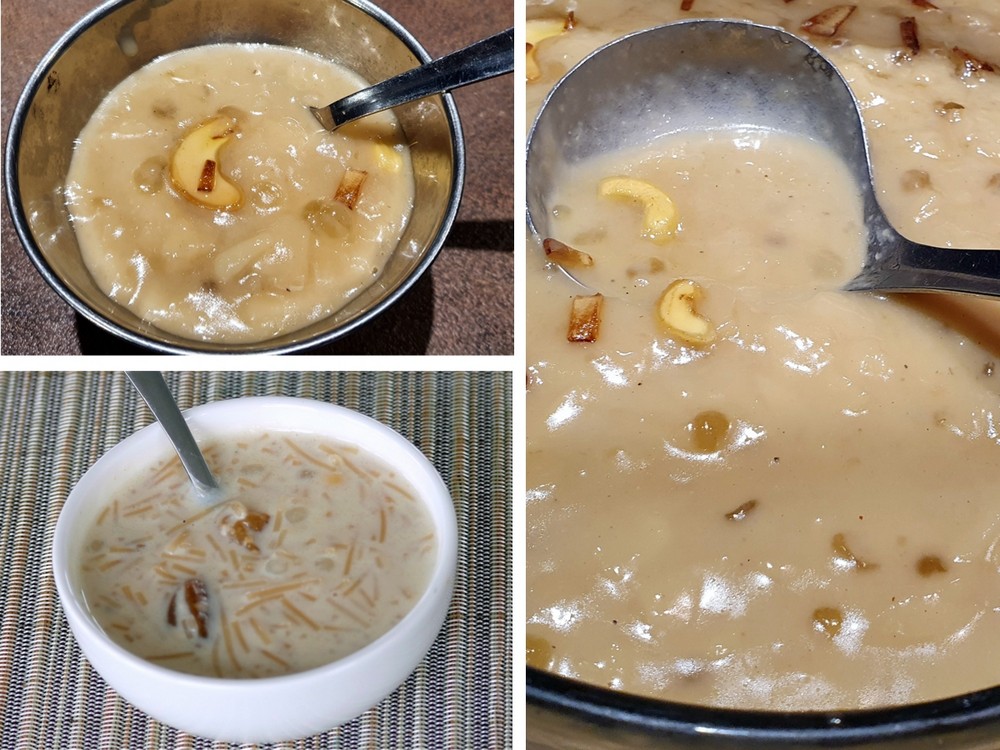
21. Payasam
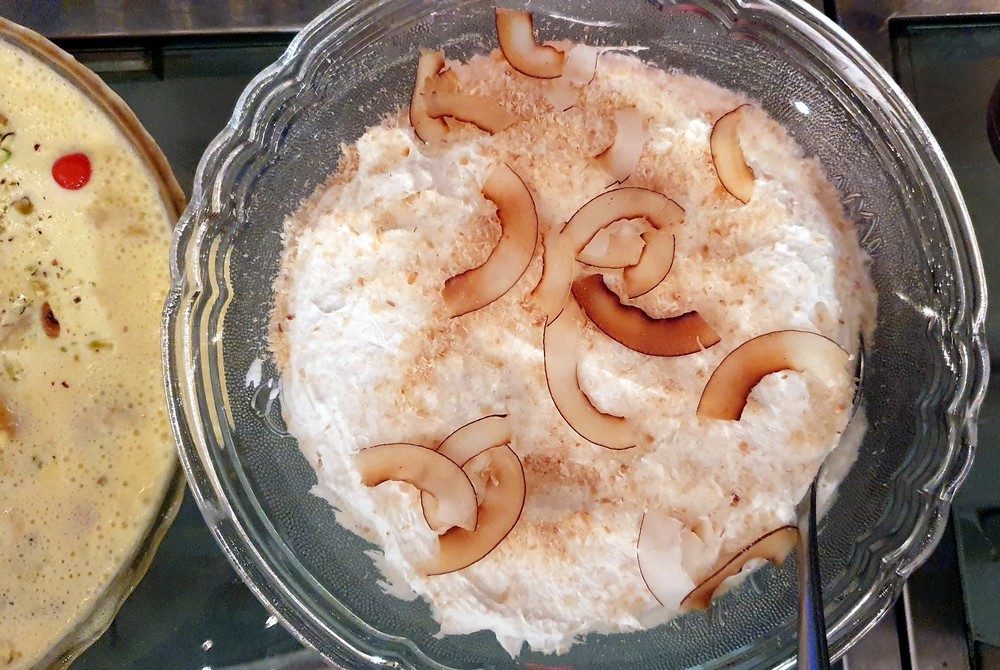
Payasam is a traditional dessert somewhat similar to our sweet rice porridge. This symbol of hospitality is prepared with coconut milk, jaggery and nuts. However, it doesn´t have to be made only with rice. In Kerala, there are many variations – with noodles, lentils or even other vegetables. It is flavoured with cardamom, cashews and raisins toasted in ghee.
Kerala´s cuisine is incredibly diverse and colourful. If you´re planning a trip to Kerala, don´t limit yourself to just curry and rice. Be sure to sample as many local specialities as possible – the food is one of the greatest highlights of travelling through this South Indian state.
More information about Kerala: visit Kerala
Every two years, Kerala hosts the KTM – Kerala Travel Mart. It is India´s largest tourism and hospitality trade show, focused on promoting the unique Indian state of Kerala. Thanks to this event, I had the opportunity to sample many of the specialities mentioned above, and I am really looking forward to my next visit to Kerala and its excellent cuisine.
If Kerala cuisine has caught your interest and you are planning to visit this part of India, you can even try preparing some of the dishes yourself in Jacob´s Indian kitchen. I and my fried Carmen from Romania had the opportunity to give it a try too. It was a wonderful experience, and the food was absolutely delicious. You can read more about my cooking lesson in the article: The Pimenta Spice Garden
Text: © Copyright Ingrid, Travelpotpourri
Fotos: © Copyright Ingrid, Travelpotpourri






Kerala’s traditional cuisine offers a wonderful variety of flavours, from coconut-based curries to delicious rice dishes and local snacks. This guide is a great resource for travellers who want to experience authentic Kerala food beyond the usual favourites.