travelpotpourri
No Result
View All Result
  • Slovenčina
Monday, November 9, 2026
  • TRAVEL
    • All
    • Belgium
    • Bosna and Herzegovina
    • Bulgaria
    • Croatia
    • Czech Republic
    • Finland
    • France
    • Germany
    • Iceland
    • India
    • Iran
    • Italy
    • Kyrgyzstan
    • Malaysia
    • Malta
    • Moldova
    • Netherlands
    • Norway
    • Oman
    • Poland
    • Portugal
    • Romania
    • Spain
    • Sri Lanka
    • Uzbekistan

    What to See and Eat in Schweinfurt?

    6 Unforgettable Experiences at Lake Chiemsee

    Tradičné jedlá Kerala

    21 Traditional Kerala Foods You Must Try

    Birthplace of Levi Strauss in Germany

    The Levi Strauss Museum in Buttenheim – The Story Behind the World’s Most Famous Jeans

    Langkawi – The Island That Took Me by Surprise

    Langkawi and Its Natural Beauty

    Langkawi – Batik and Other Crafts

    Langkawi – An Island Where You’ll Never Be Bored

    Fuggerei

    13 Surprising Facts About the Fuggerei in Augsburg

    Tasting Local Specialties in the Village of Medveja in Kvarner Bay

    (c) Villa Ariston

    Villa Ariston – A Hidden Gem on the Lungomare Promenade

    Opatija – the Pearl of the “Austrian Riviera”

  • RECIPES WITH A STORY
    Sweet Rails
    Christmas Baking

    Plum Cake with Hazelnuts and Chocolate

    Summer Pasta Salad with Salmon

    Cholent – A Traditional Slow Cooked Dish

    Dumplings with Wild Garlic

    Meat Pâté with Mushrooms

    Original Ischler Törtchen from Zauner
    Christmas Baking

    The Ayurvedic Wellness Cookbook – Recipes for Regaining Your Inner Balance

    Cinnamon Stars
    Christmas baking

    Green Asparagus Quiche

    Christmas Carp Soup

    Hussars’ Buttons
    Christmas Baking

  • AUSTRIA-VIENNA
    • All
    • Austria
    • Vienna

    Amalienbad in Vienna: A Hidden Gem of Art Nouveau Architecture

    One Mosaic – Many Stories – Interesting Bits about Vienna 16

    Marchegg – A Place where Storks Return Every Year

    My Top 9 Objects in the Imperial Treasury in Vienna

    Berggasse 19 – One of the Most Famous Addresses in Vienna

    The Spa Town of Baden near Vienna – a UNESCO World Heritage Site

    At the Lettering Workshop

    3 Ways to Visit the Austrian Parliament

    11 Beautiful Nativity Scenes in the Most Beautiful Churches in the Historic Center of Vienna

    Asparagus – “White Gold” from Marchfeld

    Sisi´s Mystery Dress

    Heidi Horten Collection – A Museum that Always Surprises You!

  • SLOVAKIA-BRATISLAVA
    • All
    • Bratislava
    • Slovakia

    Mini Slovakia – An Inspiration for Your Next Trips

    Vivat Rex! – Coronation Festivities in Bratislava Then and Now

    Banská Štiavnica – Rush of Romance and Nostalgia

    Pečená hus

    Roasted Goose
    An Honour or a Punishment?

    In the Kingdom of Geese

    Čunovo

    Čunovo – Oasis of Art and White Water

    Veselú Veľkú noc

    Happy Easter!
    Traditional Art of Decorating Eggs in Slovakia

    Hrad v Trenčíne

    A Winter Day in Trenčín

  • EVENTS

    At the Festival of Waiters, Baristas, Bartenders and Restaurants in Split

    Plovdiv – European Capital of Culture 2019

    Baden bei Wien – A Walk between Roses and Photographs

    PF 2018

    PF 2018

    Pokojné vianoce

    Merry Christmas!

    Večný cisár František Jozef I.

    The Eternal Emperor Was a Romantic

    batika

    How to Make Indonesian Batik

    Happy New Year

    Happy New Year!

    Veselé Vianoce

    Merry Christmas!

  • INTERVIEWS
    Kláštor sv. Kataríny na Sinaji

    Saint Catherine’s Monastery
    Interview with the Librarian Father Justin

    So spisovateľkou Adrianou Macháčovou

    Adriana Macháčová – Interview

  • TRAVEL
    • All
    • Belgium
    • Bosna and Herzegovina
    • Bulgaria
    • Croatia
    • Czech Republic
    • Finland
    • France
    • Germany
    • Iceland
    • India
    • Iran
    • Italy
    • Kyrgyzstan
    • Malaysia
    • Malta
    • Moldova
    • Netherlands
    • Norway
    • Oman
    • Poland
    • Portugal
    • Romania
    • Spain
    • Sri Lanka
    • Uzbekistan

    What to See and Eat in Schweinfurt?

    6 Unforgettable Experiences at Lake Chiemsee

    Tradičné jedlá Kerala

    21 Traditional Kerala Foods You Must Try

    Birthplace of Levi Strauss in Germany

    The Levi Strauss Museum in Buttenheim – The Story Behind the World’s Most Famous Jeans

    Langkawi – The Island That Took Me by Surprise

    Langkawi and Its Natural Beauty

    Langkawi – Batik and Other Crafts

    Langkawi – An Island Where You’ll Never Be Bored

    Fuggerei

    13 Surprising Facts About the Fuggerei in Augsburg

    Tasting Local Specialties in the Village of Medveja in Kvarner Bay

    (c) Villa Ariston

    Villa Ariston – A Hidden Gem on the Lungomare Promenade

    Opatija – the Pearl of the “Austrian Riviera”

  • RECIPES WITH A STORY
    Sweet Rails
    Christmas Baking

    Plum Cake with Hazelnuts and Chocolate

    Summer Pasta Salad with Salmon

    Cholent – A Traditional Slow Cooked Dish

    Dumplings with Wild Garlic

    Meat Pâté with Mushrooms

    Original Ischler Törtchen from Zauner
    Christmas Baking

    The Ayurvedic Wellness Cookbook – Recipes for Regaining Your Inner Balance

    Cinnamon Stars
    Christmas baking

    Green Asparagus Quiche

    Christmas Carp Soup

    Hussars’ Buttons
    Christmas Baking

  • AUSTRIA-VIENNA
    • All
    • Austria
    • Vienna

    Amalienbad in Vienna: A Hidden Gem of Art Nouveau Architecture

    One Mosaic – Many Stories – Interesting Bits about Vienna 16

    Marchegg – A Place where Storks Return Every Year

    My Top 9 Objects in the Imperial Treasury in Vienna

    Berggasse 19 – One of the Most Famous Addresses in Vienna

    The Spa Town of Baden near Vienna – a UNESCO World Heritage Site

    At the Lettering Workshop

    3 Ways to Visit the Austrian Parliament

    11 Beautiful Nativity Scenes in the Most Beautiful Churches in the Historic Center of Vienna

    Asparagus – “White Gold” from Marchfeld

    Sisi´s Mystery Dress

    Heidi Horten Collection – A Museum that Always Surprises You!

  • SLOVAKIA-BRATISLAVA
    • All
    • Bratislava
    • Slovakia

    Mini Slovakia – An Inspiration for Your Next Trips

    Vivat Rex! – Coronation Festivities in Bratislava Then and Now

    Banská Štiavnica – Rush of Romance and Nostalgia

    Pečená hus

    Roasted Goose
    An Honour or a Punishment?

    In the Kingdom of Geese

    Čunovo

    Čunovo – Oasis of Art and White Water

    Veselú Veľkú noc

    Happy Easter!
    Traditional Art of Decorating Eggs in Slovakia

    Hrad v Trenčíne

    A Winter Day in Trenčín

  • EVENTS

    At the Festival of Waiters, Baristas, Bartenders and Restaurants in Split

    Plovdiv – European Capital of Culture 2019

    Baden bei Wien – A Walk between Roses and Photographs

    PF 2018

    PF 2018

    Pokojné vianoce

    Merry Christmas!

    Večný cisár František Jozef I.

    The Eternal Emperor Was a Romantic

    batika

    How to Make Indonesian Batik

    Happy New Year

    Happy New Year!

    Veselé Vianoce

    Merry Christmas!

  • INTERVIEWS
    Kláštor sv. Kataríny na Sinaji

    Saint Catherine’s Monastery
    Interview with the Librarian Father Justin

    So spisovateľkou Adrianou Macháčovou

    Adriana Macháčová – Interview

travelpotpourri
No Result
View All Result
Home AUSTRIA-VIENNA

One Mosaic – Many Stories – Interesting Bits about Vienna 16

by Ingrid
22.05.2026
in AUSTRIA-VIENNA, Vienna
0
0
SHARES
FacebookTwitterPinterestLinkedinEmail

Art has a long tradition in Vienna’s housing construction. Even during the difficult years following World War II, the city decided that 1–2% of the total construction costs for new residential complexes would be allocated to art. This greatly helped artists who had found themselves practically destitute in the postwar period. This led to the creation of hundreds of works which are known in Vienna as Kunst am Bau (Art in Architecture). These include various sgraffito, frescoes, sculptures, reliefs, but mainly mosaics. I have been mapping and photographing these mosaics for quite some time.
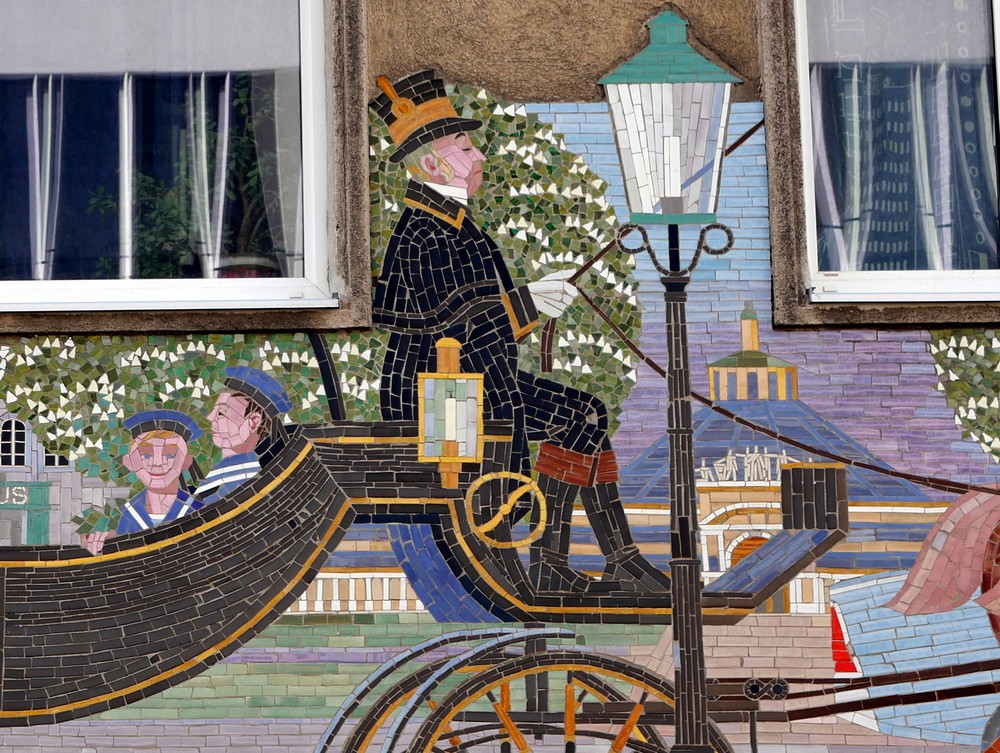
The motifs on the mosaics vary; sometimes they are related to the location where they are found. Such is the case with the mosaic I have chosen for this article.


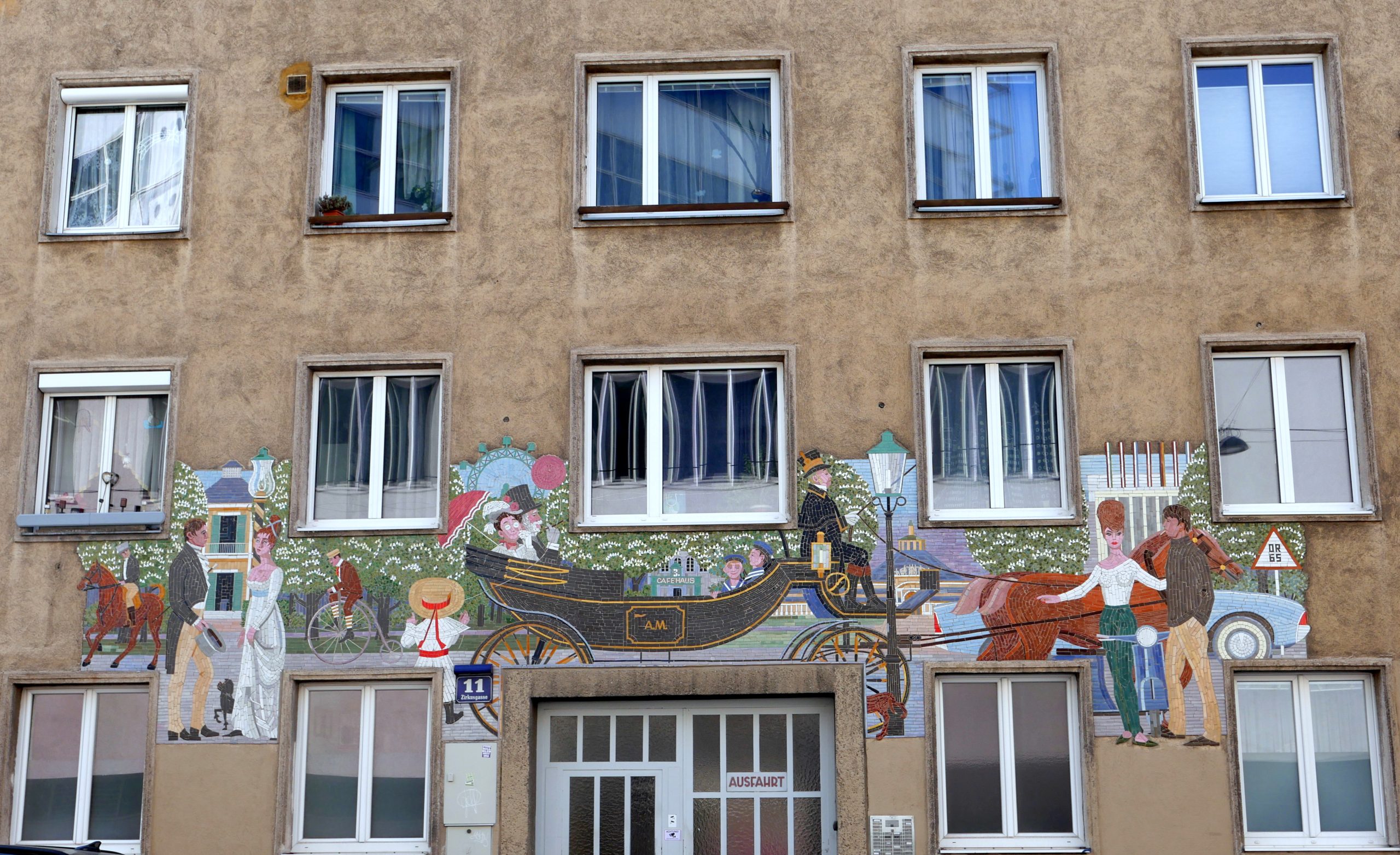
The mosaic adorns a post-war building on Zirkusgasse in Vienna’s 2nd district, where the Prater is also located. Many visitors to Vienna associate this name only with the amusement park, but for the Viennese, it is primarily a large recreational park.
In the past, this area was reserved exclusively for the monarch and his court for hunting. Later, Maria Theresa granted access to select members of the nobility as well. It was her son, Emperor Joseph II, who declared the Prater a public space in April 1766, intended for people to ride in carriages, play skittles, ball games, and engage in other permitted forms of entertainment. Since then, the Prater has become a popular place for people from all social classes to spend their free time, especially on Sundays and holidays.

Carriage Ride
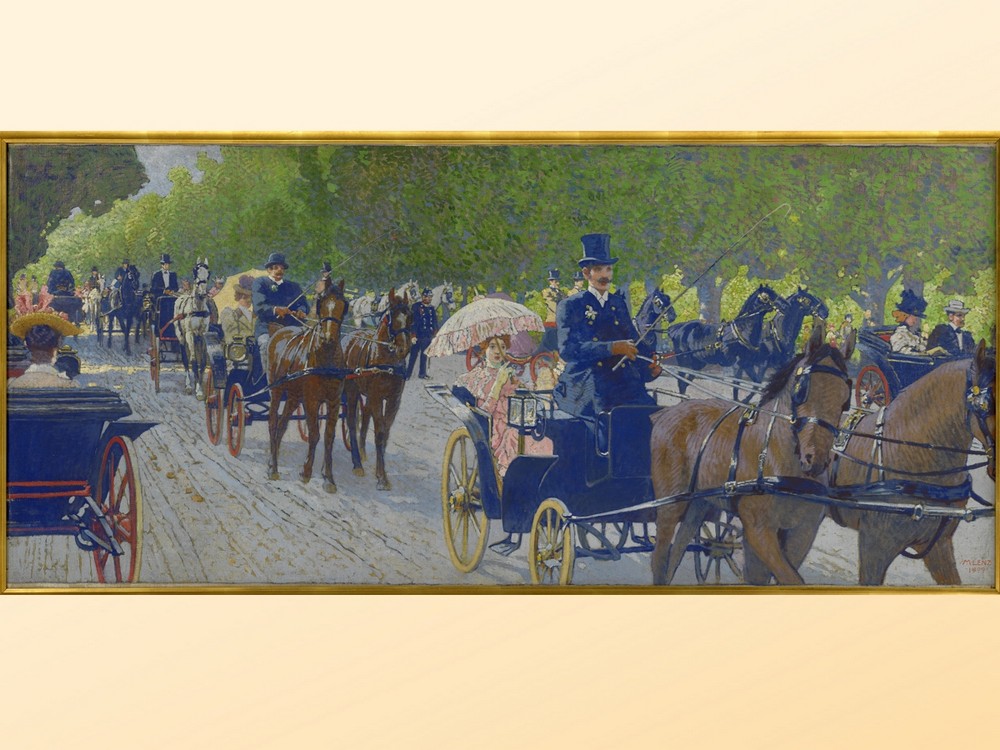
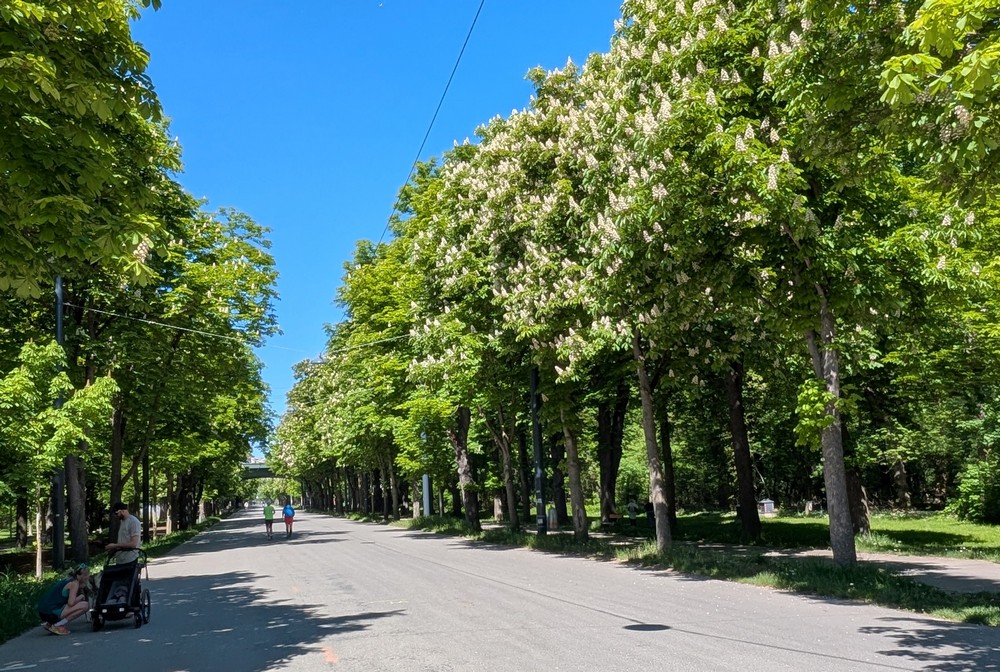
The Hauptallee – a perfectly straight, 4.4-kilometer-long main avenue – became the main thoroughfare in the Prater. At times, as many as 1,200 carriages passed through it in a single day. When they returned to the city center, this caused traffic jams.

© Wien Museum Online Sammlung

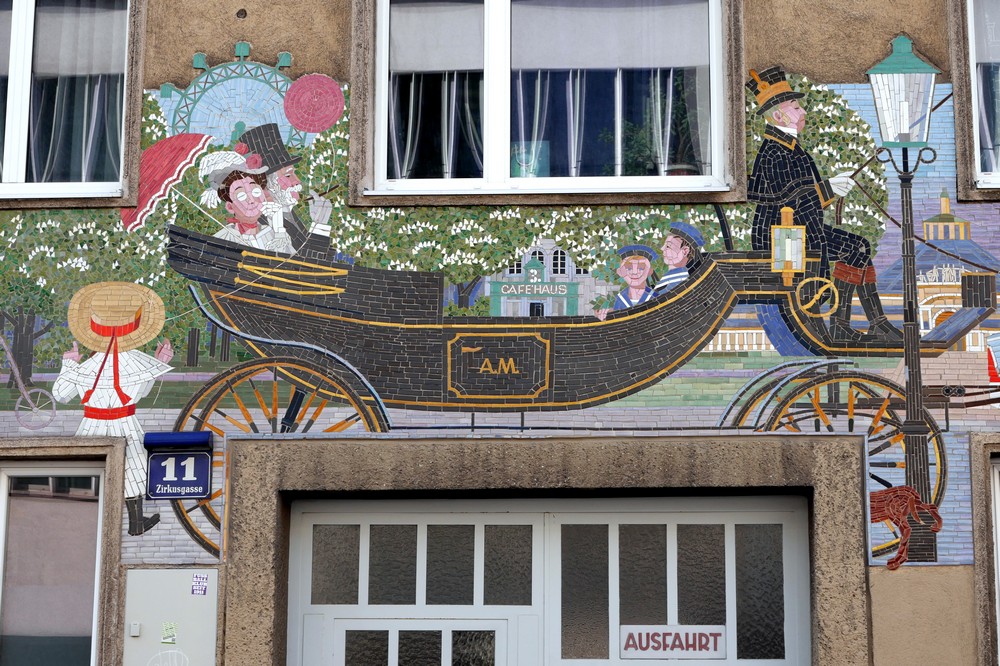
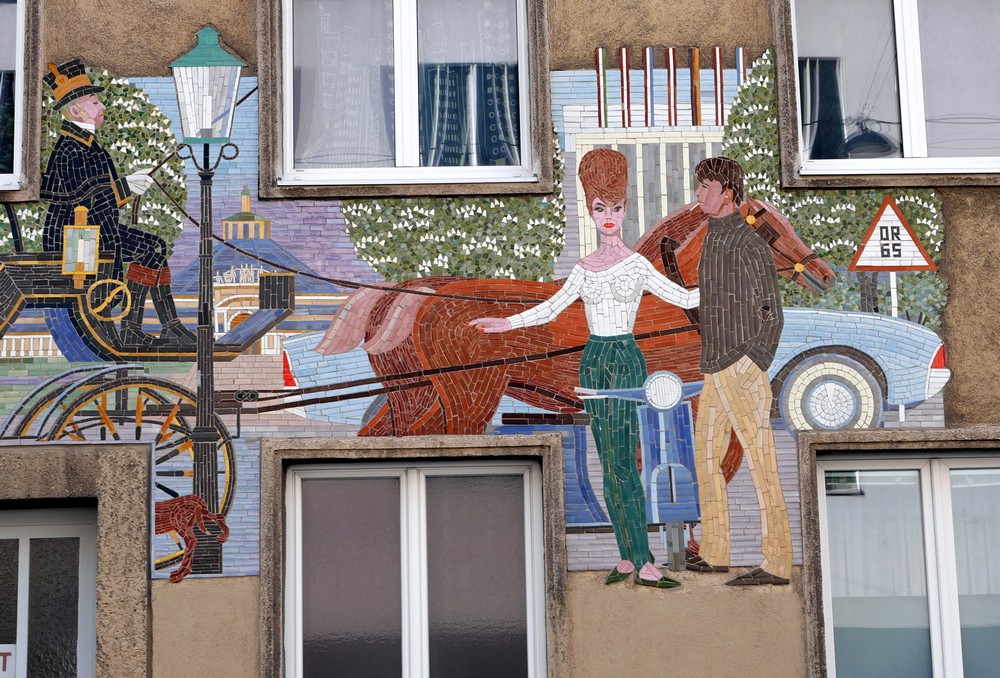
In the mosaic, we see a family who has gone on a carriage ride to the Prater; two boys are sitting in the carriage, and a little girl with a red balloon is watching them. The gentleman in the top hat is smoking, and the lady is looking at the world around her through an elegant lorgnette. The scene is certainly set in May (blooming chestnut trees). At this time, the so-called Maifahrten (May rides) of wealthy townspeople took place here.


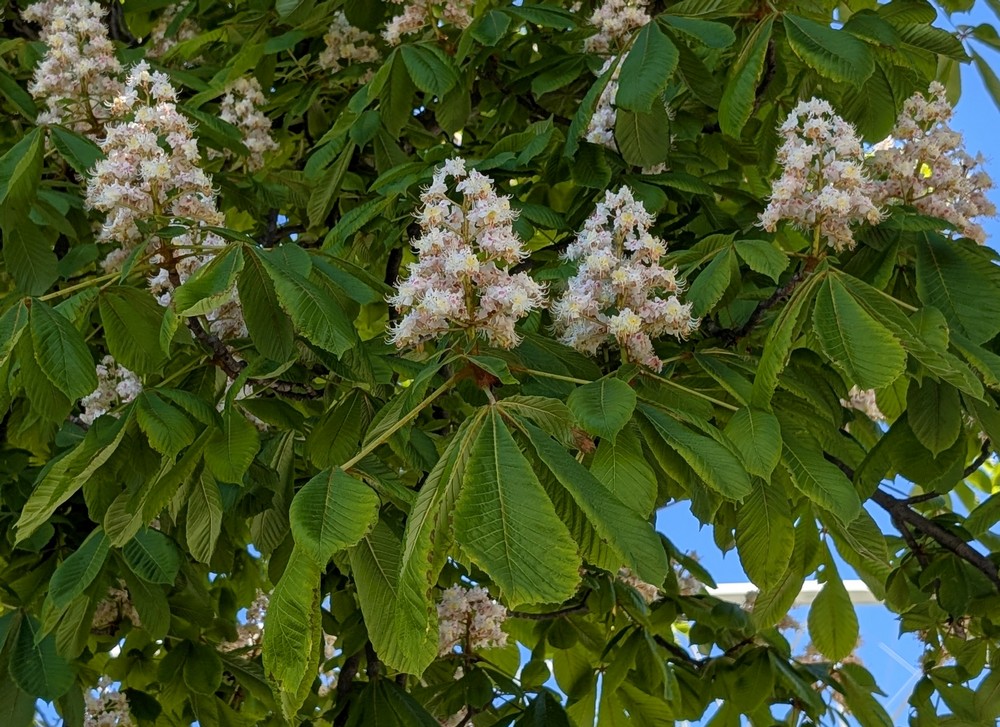
Even today, when you visit the Prater in May, massive chestnut trees bloom along the entire avenue. There are as many as 6,329 trees! in four, and in some places up to six, rows. Some of them are already 200 years old.


In 1886, the Flower Parade (Wiener Blumenkorso) took place on Hauptallee; it was the idea of Princess Pauline Metternich. The carriages were lavishly decorated with flowers, as were the ladies’ hats.

Horses and Bicycles
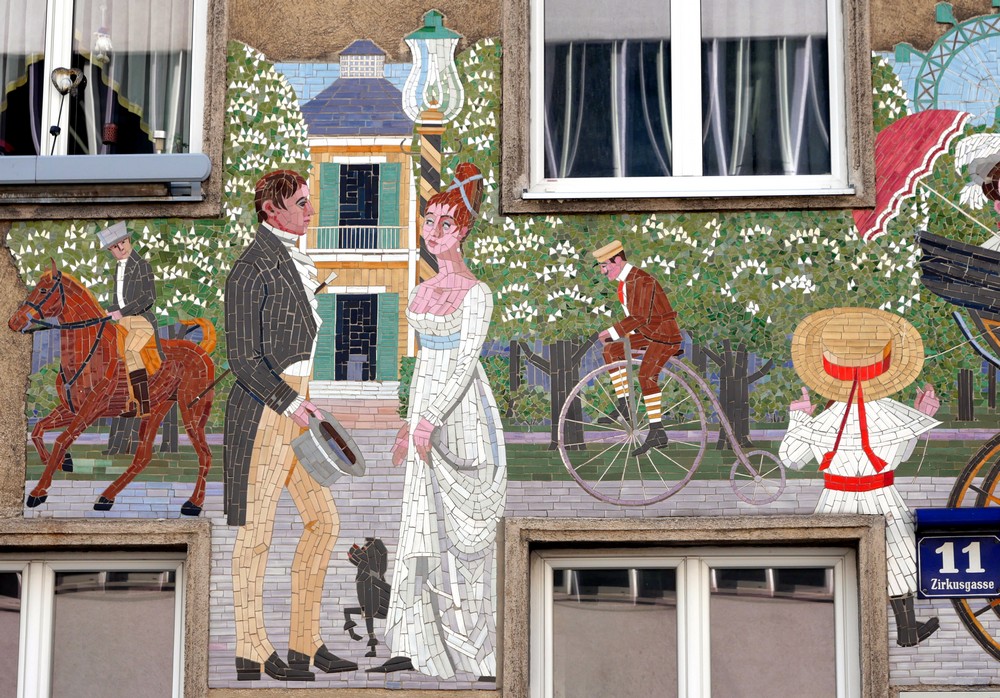
In 1897, even the first flower parade on bicycles took place here. Yes, bicycles were already popular back then. The mosaic on Zirkusgasse actually presents local history through fashion and modes of transportation. On the left side of the mosaic, you can see not only an elegant couple in historical attire and a horseman, but also a man on a high-wheel bicycle. It is a type of velocipede with a large front wheel and a much smaller rear wheel. It was the first vehicle called a bicycle and was extremely popular in the 1870s and 1880s.


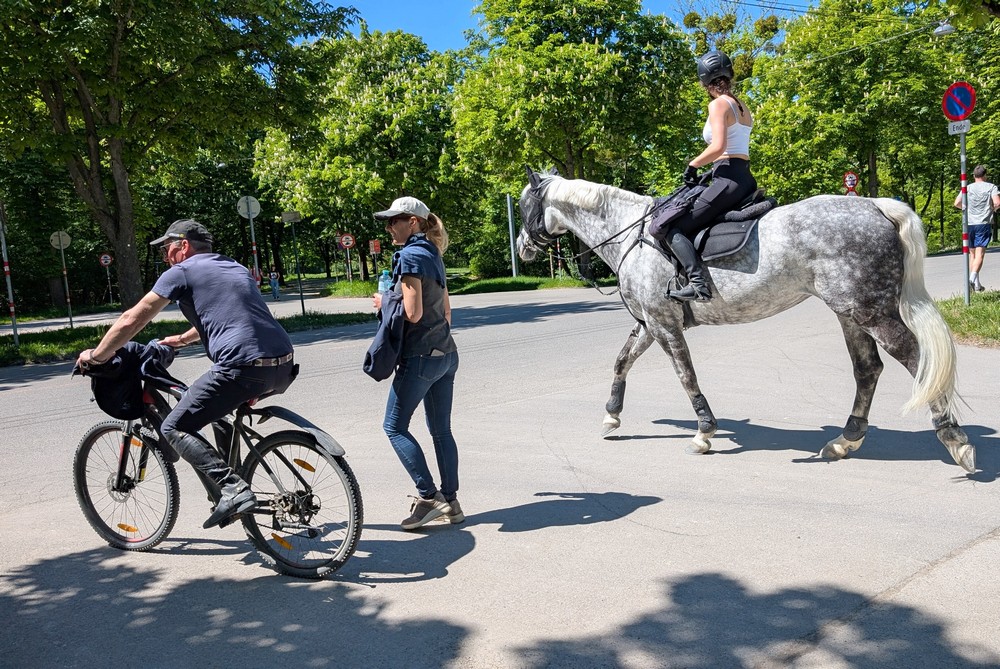
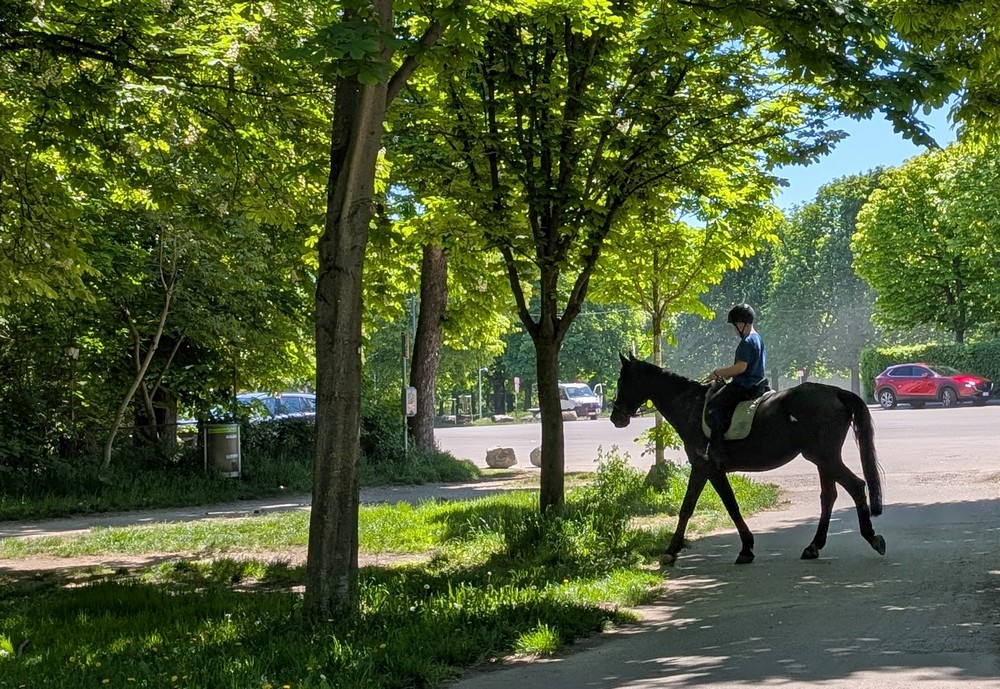
Even today, the Prater is a favorite spot for cyclists and horseback riders alike. There are various ways to experience horses here – riding schools, therapeutic rides, and a riding arena for children in the amusement park.


Every day, whether it’s summer or winter, you can encounter runners here. Recreational runners, but also those training for a marathon. The avenue is part of the annual Vienna Marathon.
Running competitions were held here as early as the 18th century, but participants wore armor and boots, had helmets on their heads, and carried swords in their hands. When carriages passed through here, servants had to run ahead of the carriage to warn passersby to clear the way, or in the evening, they would light the way for their masters with torches or lanterns. The master’s runners in livery also had their own races in Prater – on May 1st, spectators could bet on their favorite. The winner received a hearty breakfast, but the glory went to his master, who then boasted that his servant was the fastest. It wasn’t until 1848 that the profession of master’s runners was abolished.

Modern Times
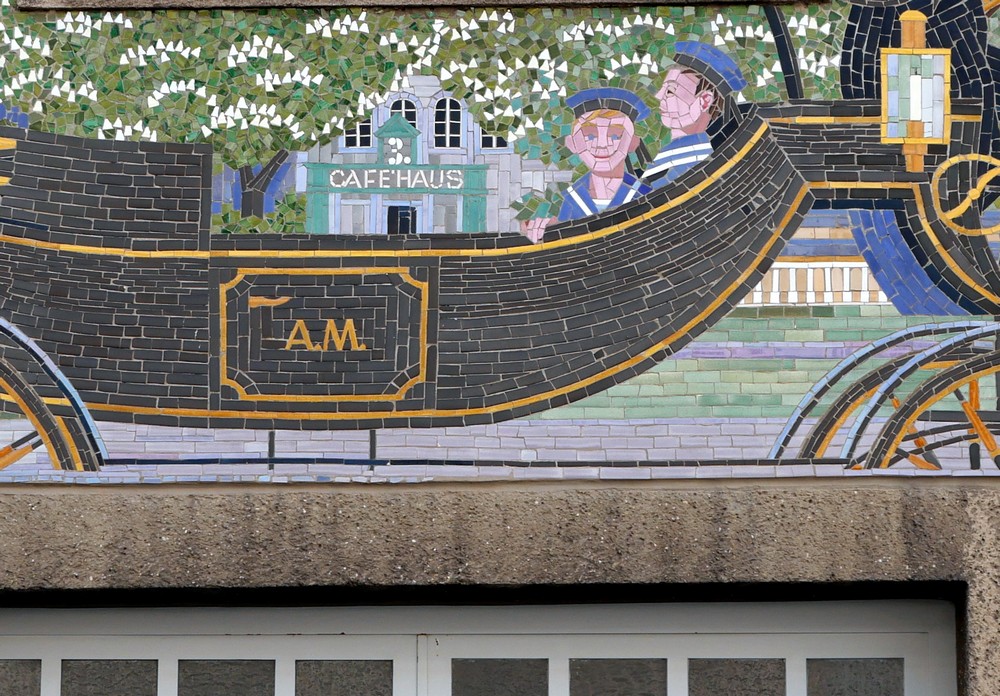
Now let’s look at the right side of the mosaic. The mosaic was created either in the late 1950s or during the 1960s. Unfortunately, neither the date nor the artist’s name is known. Although the initials A.M. appear on the carriage and there are letters on the traffic sign, neither of them reveals anything to us. The scene on the right is definitely from those years, meaning it actually depicts the present day as seen then.

The couple is wearing casual clothing typical of that era. The woman reminds me very much of my elementary school teacher, who wore this hairstyle her whole life.
We can also see a Ford Taunus here – this was the name given to all of Ford’s mid-range German models from the end of World War II until 1967. The Vespa scooter was popular in Austria in the 1950s as a symbol of individuality and freedom. Both modes of transportation symbolize the economic success of that era. The modern building in the background also alludes to this. Unfortunately, I was unable to identify it. However, I think it might be some kind of exhibition pavilion (EXPO 1956?), as the flags of Austria and other Western European countries are hanging on the building.


All the other buildings in the mosaic are well-known – from left to right:

Lusthaus
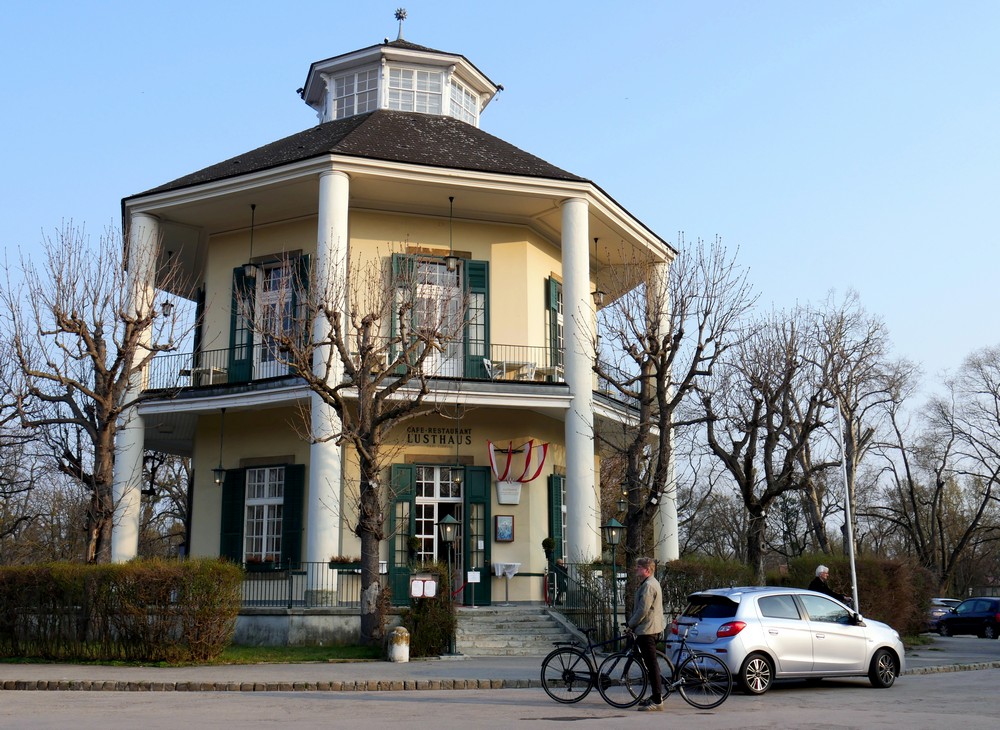
This “House of Entertainment” is located at the southeastern end of Main Avenue. It was first mentioned as early as 1560 as Casa Verde (Green House). It served as a hunting lodge in the days when the Prater was a hunting ground. When the Prater opened to the public, the house was rebuilt according to plans by Austrian architect Isidor Canevale, so that large celebrations could be held there, such as the imperial celebration of the first anniversary of Napoleon’s defeat at the Battle of Leipzig.


In the 19th century, like the entire Prater, it was a popular gathering place for the nobility and the bourgeoisie. In the interwar period, it served as a bar with live music where the general public came to dance. During World War II, it was almost completely destroyed by bombing, but the city later restored it to its 18th-century appearance. Today, it houses a restaurant and a café.

The Giant Ferris Wheel
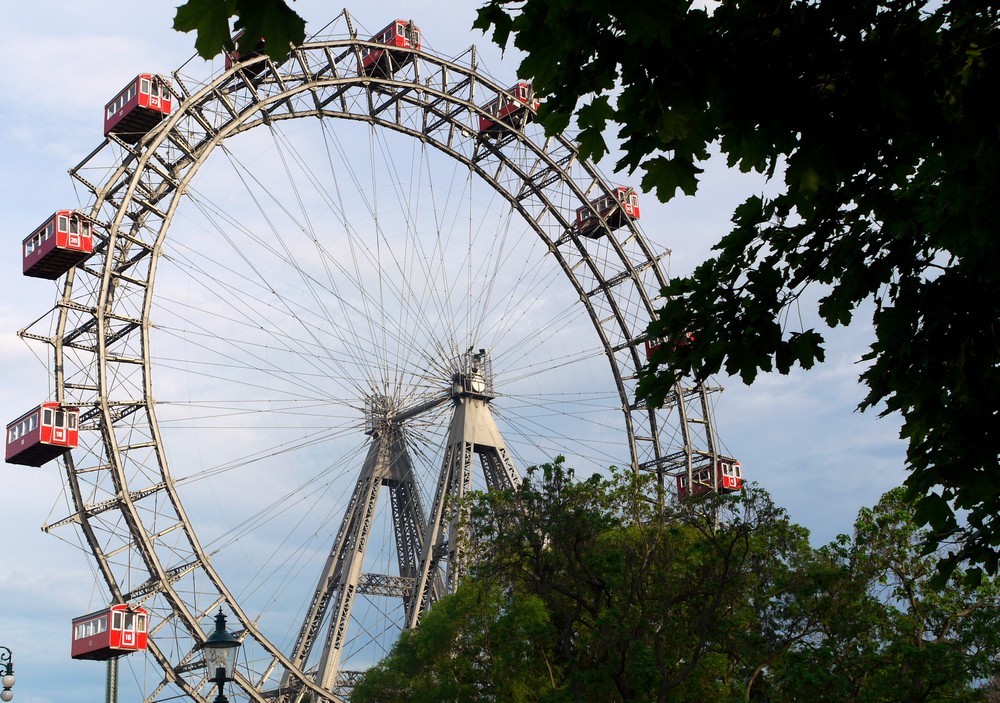
Behind the couple in the carriage, we can see Vienna’s Giant Ferris Wheel, which has been turning here since 1897. It was built to mark the golden jubilee of Emperor Franz Joseph I.


It is one of the city’s most famous landmarks. Standing nearly 65 meters tall, it still offers a unique view of Vienna’s rooftops.


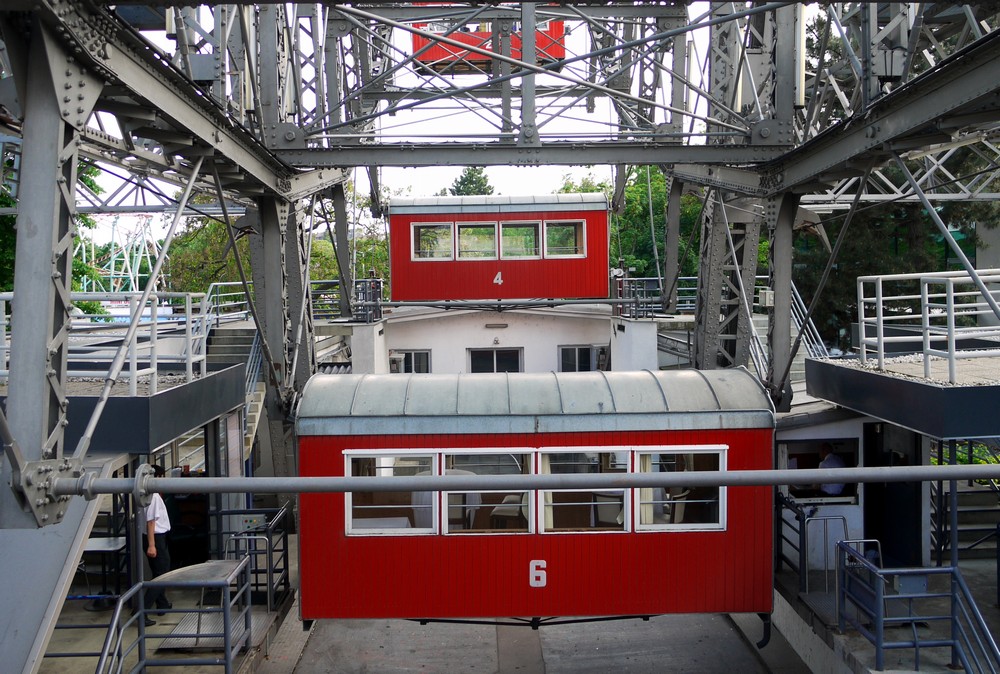
The Ferris Wheel dominates the amusement park known as the Wurstelprater (named after Hanswurst, a cheerful character from folk theater), located in the northwestern part of the Prater. During the Battle of Vienna in April 1944, nearly the entire amusement park was destroyed, including the Ferris wheel. After extensive reconstruction, the number of cabins was reduced from 30 to 15.

The Third Café
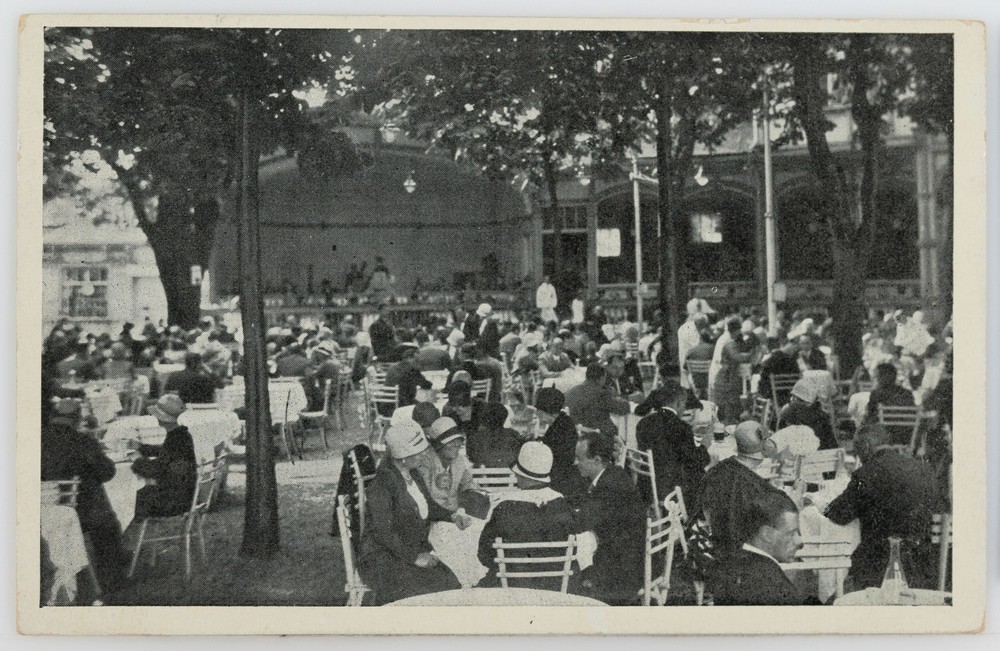
This café (depicted in the mosaic directly behind the carriage) was the last of three cafés located on the Main Avenue leading toward the Lusthaus. These cafés were just as popular, as they offered a good view of the activity on the avenue.


According to one legend, Emperor Joseph II once found a man lying motionless in the snow, and the owner of this café came to help. This was supposedly the reason why this café was the only one permitted to remain open in winter. In reality, it was built three years after Joseph II’s death, in 1793. The owner was Karl Zimmer, and he was granted the right to operate in winter because his establishment was equipped with a more efficient heating system. It was also a venue for balls and concerts.

© Wien Museum Online Sammlung

In January 1920, the café burned down, but it was rebuilt and continued to enjoy great popularity. It was the only one of the three cafés to survive 1945 and remained in operation until 1962. A hockey stadium was then built on the site.

Rotunda
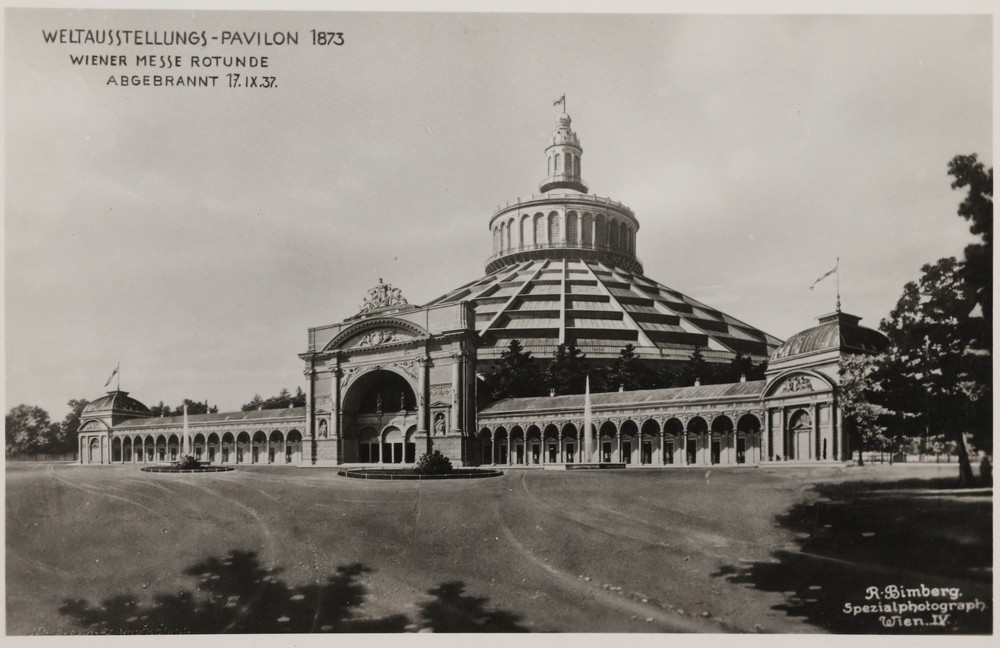
In the background behind the lamp (don’t forget to notice the dog under the lamp!), we can see a building with a large dome. It is the Rotunda – the central building of the 1873 Vienna World’s Fair, constructed of wood, plaster, sheet metal, and iron. It stood 84 meters tall and, at the time of its construction, was the largest dome in the world – with a diameter of 108 meters, it was significantly larger than the Pantheon in Rome.

After the World’s Fair ended, there was no funding to dismantle the Rotunda, so all sorts of other exhibitions were held here, even circus performances. In 1891, Czech physician and traveler Emil Holub organized his South African Exhibition here and even lived in the Rotunda during the last years of his life.

© Wien Museum Online Sammlung

At the Vienna International Fair in 1925, 7,000 companies from 16 countries presented their products in the Rotunda. In September 1937, however, it was completely destroyed by fire. More than 250 firefighters battled the blaze. The dome alone contained 400 tons of wood. The ambitious structure took 1.5 years to build and was reduced to rubble in a single hour. The cause of the fire remains unclear to this day. On the site of the former Rotunda now stand a parking garage and the buildings of the newly constructed campus of the University of Economics.

Hauptallee, Katastralgemeinde Leopoldstadt, Leopoldstadt, Viedeň, 1020, Rakúsko

Text: © Copyright Ingrid, Travelpotpourri
Fotos: © Copyright Ingrid, Travelpotpourri

Tags: artinterestingKunst am BaumosaicPraterVienna
ShareTweetPinShareSend
Previous Post

13 Surprising Facts About the Fuggerei in Augsburg

Next Post

Langkawi – An Island Where You’ll Never Be Bored

Ingrid

Next Post

Langkawi – An Island Where You’ll Never Be Bored

Leave a Comment Cancel reply

Your email address will not be published. Required fields are marked *

This site uses Akismet to reduce spam. Learn how your comment data is processed.

About me

onas
It was a spontaneous idea to create this blog. I named it “potpourri” because it is a mixture into which – instead of dried blossoms, leaves, spices and wood chops – I have mixed my impressions from my trips, adding the aroma of exotic places and the recipes with interesting stories. I also consider travelling to be the spice of life and hope that this blend of travelpotpourri will inspire you too to travel and discover the world…

Follow us on Facebook

Loading...

Follow us on Instagram

travelpotpourri

Vienna preparing for Christmas #vienna #viennanow Vienna preparing for Christmas 
#vienna #viennanow #travelpotpourri #christmas #christmasspirit
This was a really nice surprise during our dinner This was a really nice surprise during our dinner in Tokyo/Toto bolo naozaj milé prekvapenie počas našej večere v Tokiu.
#sushi #travelpotpourri #fuji #japan #dinner
Shibuya Crossing in Tokyo - the world's busiest pe Shibuya Crossing in Tokyo - the world's busiest pedestrian intersection 
#japan #travelpotpourri #shibuya #tokyo
Floating Flower Garden, teamLab Planets, Tokyo - c Floating Flower Garden, teamLab Planets, Tokyo
- created from hundreds of beautiful flowers. As you approach them, they gently begin to float upwards.
- záhrada zo stoviek nádherných kvetov. Keď sa k nim priblížite, nežne sa začnú vznášať nahor.
#tokyo #teamlab #travelpotpourri #garden #orchid
One more memory of the amazing fish market #tokyo One more memory of the amazing fish market
#tokyo #travelpotpourri #fishmarket #tsukiji #seafood
A wide selection at the Tsukiji Fish Market in Tok A wide selection at the Tsukiji Fish Market in Tokyo 
#fishmarket #travelpotpourri #tokyo #tsukiji
Straw-grilled bonito - the most famous bonito dish Straw-grilled bonito - the most famous bonito dish in Japan
@sushidokoro_isaribi_ueno 
#japan #travelpotpourri #sushi #tokyo
#shinkansen #travelpotpourri #train #japantravelph #shinkansen #travelpotpourri #train #japantravelphoto
#keralatravelmart #travelpotpourri #keralagodsownc #keralatravelmart #travelpotpourri #keralagodsowncountry #incredibleindia
Follow on Instagram

Tags

architecture art Austria baking Bulgaria cake Cantabria castle Christmas Christmas baking church city holiday city tour city walk cooking cuisine culture Czechia Czech Republic emperor food history holiday in Austria holiday in Czechia homemade India interesting Kerala museum nature recipe recipes Salzburg sights sightseeing soup tips for trips tips for visit tradition travel UNESCO vegetarian Vienna visit Austria wine

Most popular

  • Jatayu Earth's Center – The Largest Bird Sculpture in the World
  • What to See and Eat in Schweinfurt?
  • 21 Traditional Kerala Foods You Must Try
  • Amalienbad in Vienna: A Hidden Gem of Art Nouveau Architecture
  • Quince-Orange Jam
  • Kathakali - Great Stories with Fascinating Costumes

Subscribe to our Newsletter

This way you will receive emails with our latest posts. We do not spam.

Contact

Any questions or suggestions?
Contact us: info@travelpotpourri.net

Partnership

Our Partners

Reddy Book
Official Lotus365 Platform
  • TRAVEL
  • RECIPES WITH A STORY
  • AUSTRIA-VIENNA
  • SLOVAKIA-BRATISLAVA
  • EVENTS
  • INTERVIEWS

COPYRIGHTS © 2026 ALL RIGHTS RESERVED BY TRAVELPOTPOURRI | Ochrana osobných údajov | Privacy Policy

No Result
View All Result
  • Slovenčina
  • TRAVEL
    • Belgium
    • Bosna and Herzegovina
    • Bulgaria
    • Croatia
    • Czech Republic
    • Finland
    • France
    • Germany
    • India
    • Iran
    • Iceland
    • Italy
    • Kyrgyzstan
    • Malta
    • Moldova
    • Netherlands
    • Norway
    • Oman
    • Poland
    • Portugal
    • Romania
    • Spain
    • Sri Lanka
    • Uzbekistan
  • AUSTRIA-VIENNA
    • Austria
    • Vienna
  • SLOVAKIA-BRATISLAVA
    • Slovakia
    • Bratislava
  • RECIPES WITH A STORY
  • INTERVIEWS
  • EVENTS

COPYRIGHTS © 2026 ALL RIGHTS RESERVED BY TRAVELPOTPOURRI | Ochrana osobných údajov | Privacy Policy

Loading Comments...

Our website uses cookies. Do you agree with this? / Naša stránka používa cookie. Súhlasíte s tým? Info

The cookie settings on this website are set to "allow cookies" to give you the best browsing experience possible. If you continue to use this website without changing your cookie settings or you click "Accept" below then you are consenting to this.

Close