
 TRAVEL


 RECIPES WITH A STORY







 AUSTRIA-VIENNA







 SLOVAKIA-BRATISLAVA


 EVENTS







 INTERVIEWS

Some trips are planned well in advance. However, some trips come about spontaneously, and suddenly you find yourself in a place you hadn’t even heard of just a few months ago. That’s exactly how my trip to Langkawi Island came about.
We flew to Langkawi in the morning from Kuala Lumpur, the capital of Malaysia, with Malaysia Airlines. The flight took about an hour. We took a taxi from the airport and were very lucky. Our driver was a friendly young man, extremely modest and helpful, so he became our driver and guide for the entire duration of our stay on Langkawi.

A Former Pirate Stronghold
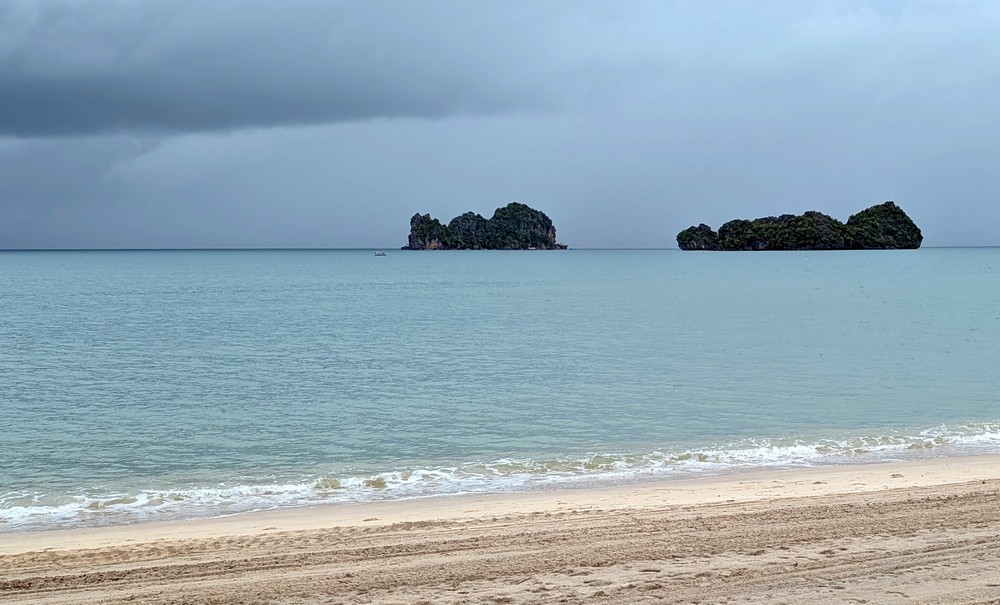
Langkawi is not an isolated island, but an archipelago of 99 densely forested tropical islands in the Andaman Sea. It is located closer to Thailand (only 15 km) than to mainland Malaysia (30 km). Politically, it belongs to the Malaysian sultanate of Kedah, and its official name translates to “the jewel of Kedah.”

Langkawi, the largest island, covers an area of nearly 480 km²; you could drive all the way around it in two hours. It is a place shrouded in various mythical legends. For centuries, pirates hid here, whether in secluded coves or dense green tropical jungles. The majestic limestone cliffs also provided them with suitable hideouts. Langkawi held a significant strategic position between China and India, so pirates had plenty of opportunities to raid merchant ships sailing through the area.
Since the late 1980s, tourism has experienced rapid growth. This was certainly aided by the fact that the curse cast by Princess Mahsuri had finally been lifted. The princess was accused of infidelity. Before her execution, she cursed the island for seven generations. When she was executed, white blood began to flow from her wounds as a sign of her innocence.
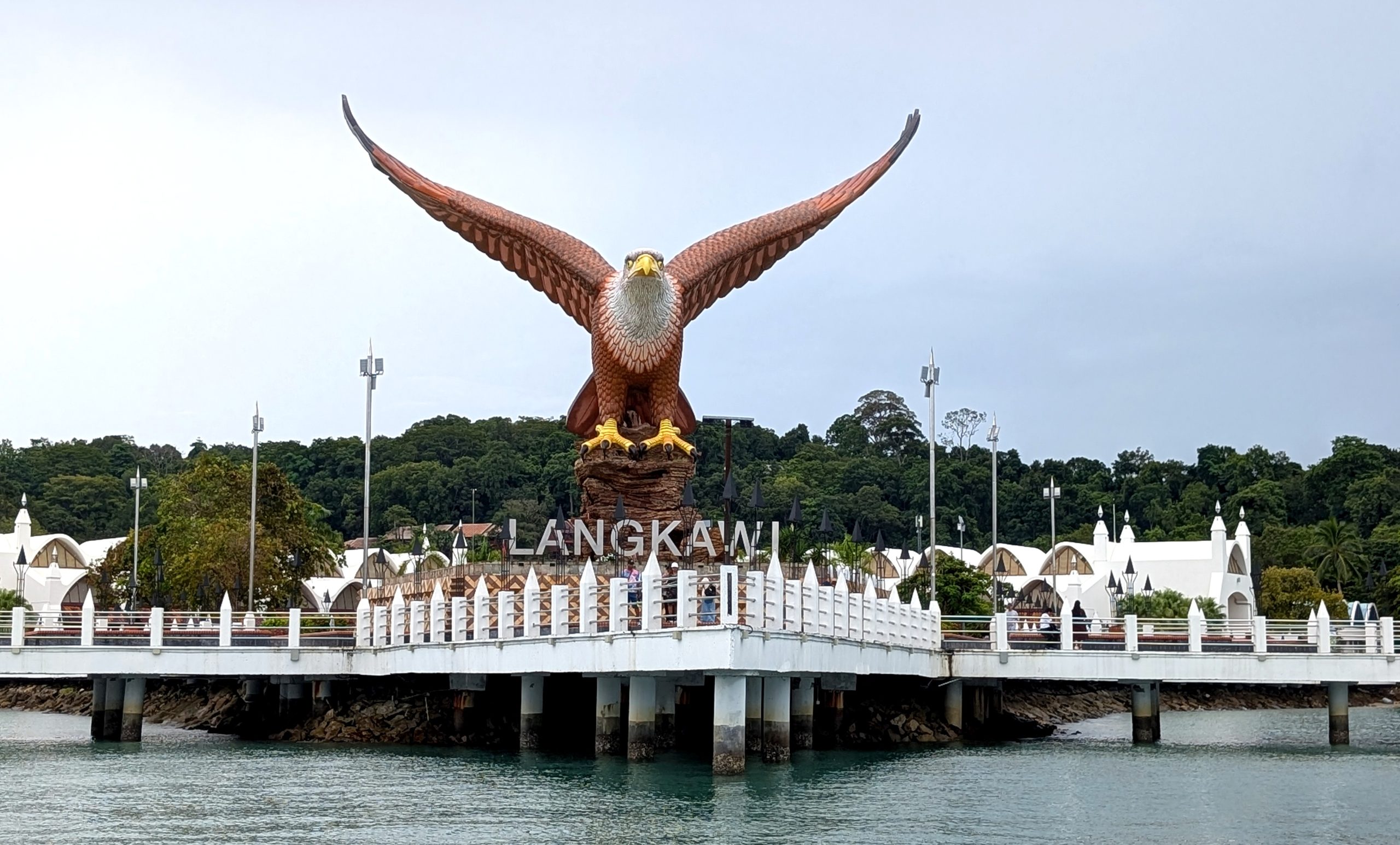
The island has a population of about 65,000, and its capital is Kuah. The city’s main attraction is a 12-meter-tall statue of an eagle in Eagle Square (Dataran Lang).
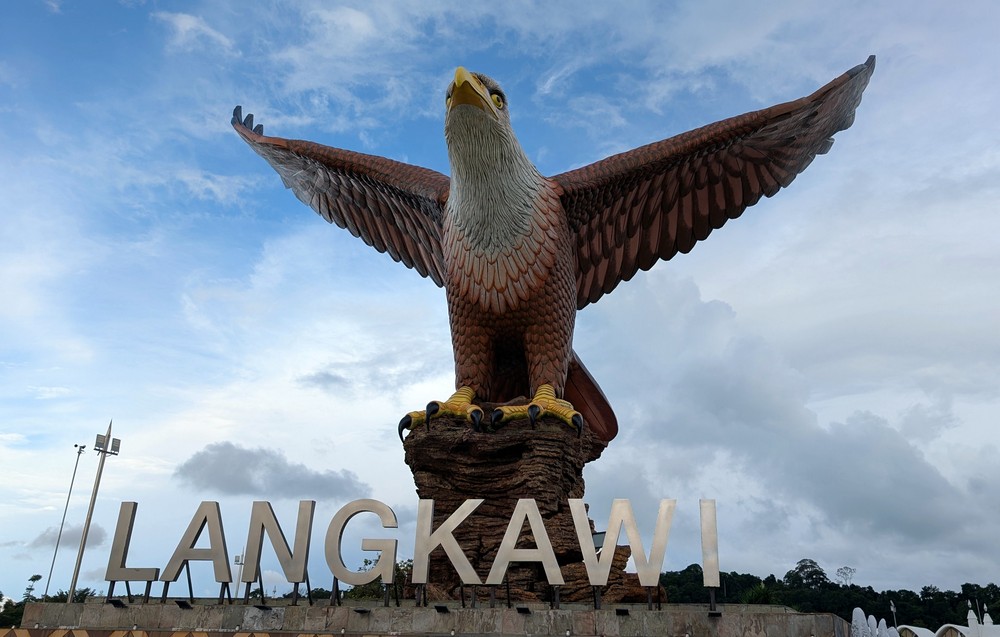
The eagle is a popular symbol of strength, freedom, and identity here. According to one theory, the island’s name comes from two Malay words: helang (eagle) and kawi (reddish-brown). As we took photos here – just like the locals and other visitors – we had no idea that we would soon see these elegant birds in person.
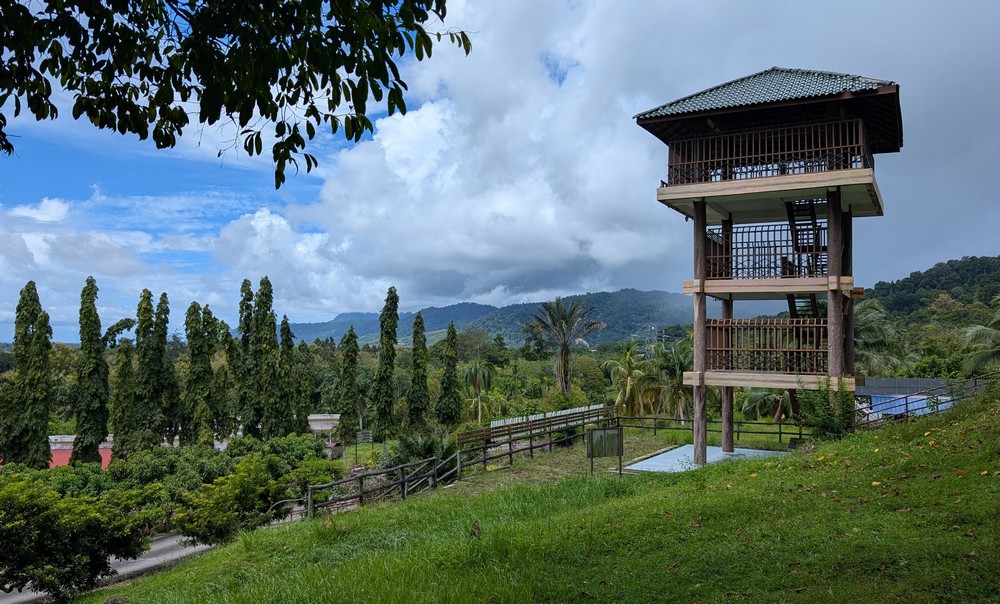
Another landmark of the capital is the local “Eiffel Tower” – the Maha Tower (138 m), built in December 2021. They say the view from the top is beautiful, but the sky had clouded over dramatically, and rain was threatening again, so we decided to skip the tower.

In the Middle of a Rice Farm
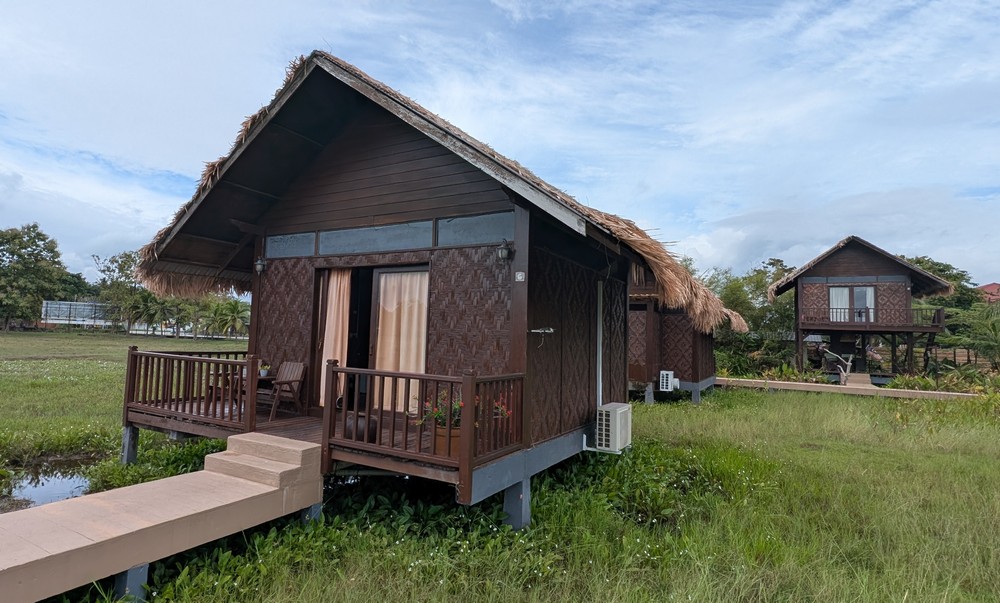
We spent our first night on the island in the tourist village of Gemalai. If you’re now picturing a place crowded with tourists, you’re mistaken. This “village” consists of just six wooden huts with palm-leaf roofs built in the middle of paddies.
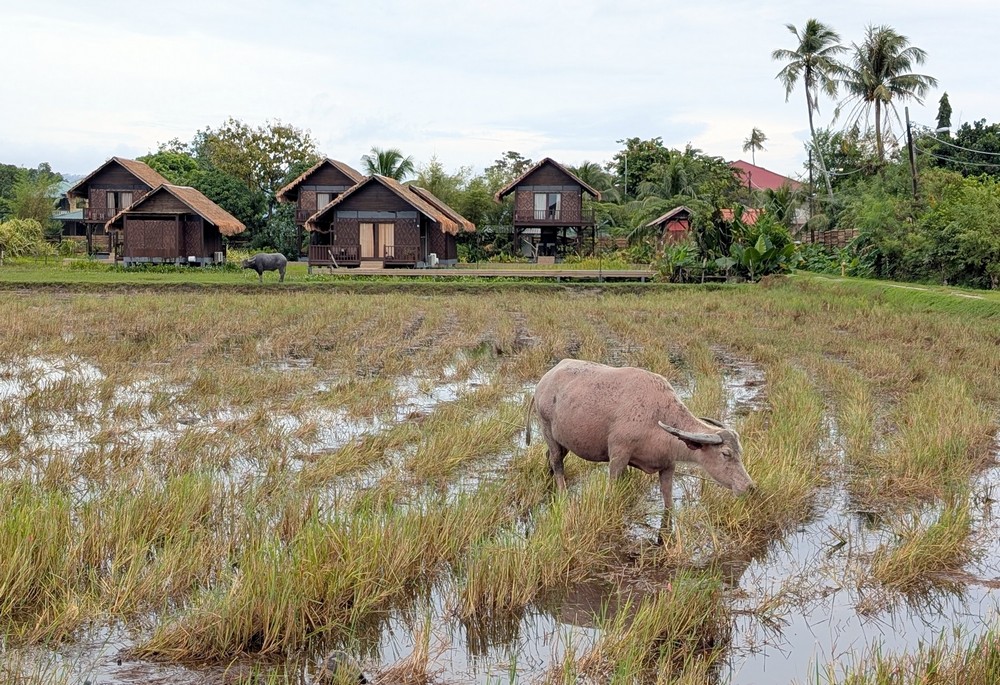
The cottages stand on wooden stilts, protecting them from flooding and wild animals. Instead of paths, we walked along wooden boardwalks above the water. Now, before the tourist season, we were the only guests here. All around us stretched marshes where rice grew and large water buffalo grazed. Occasionally, a bird would land on the back of one of the buffalo and let itself be carried along on this living “taxi.”
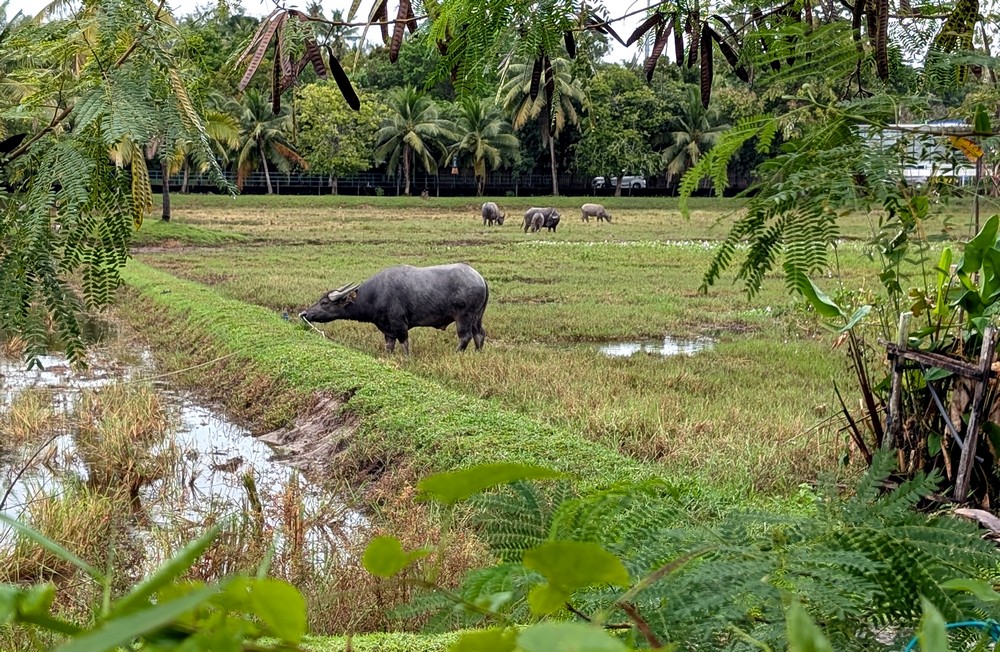
We arrived here at the turn of October and November – the rainy season was nearing its final phase, which means it is planting time. The soft soil makes the preparatory work easier. After 30–50 days, the healthy seedlings are transplanted into the rice fields. The locals use cows and water buffalo to plough and level the paddies.

The rice harvest takes place during the dry season, when the rice grains turn golden yellow. This work is mostly done by women. The men then beat the bundles of stalks against a small ladder placed in a large bucket lined with a protective mat. This separates the grains from the stalks, and they fall directly into the bucket.
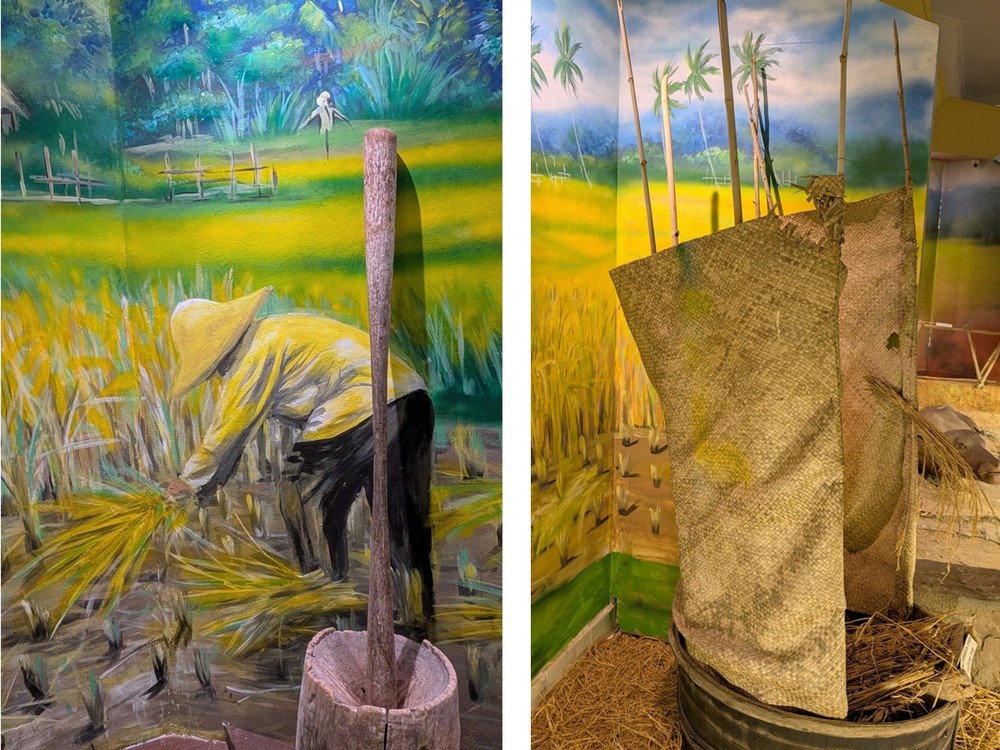
Why do I know all this? In our neighborhood, we discovered a small museum called Laman Padi, where all the activities related to rice farming were explained, and both traditional and modern tools used in the process were on display.
I was fascinated by the rattan and bamboo bird traps. Larger traps were designed for foxes and other wildlife that damage crops and threaten farm animals. I was glad our little house was built on stilts…
How Does a Pomelo Grow?
In exotic countries, I’m always fascinated by the local flowers and fruits. My photo archive is already full of pictures of flowers and other plants that I often can’t even name. I added a few more of such photos during my time in Langkawi.
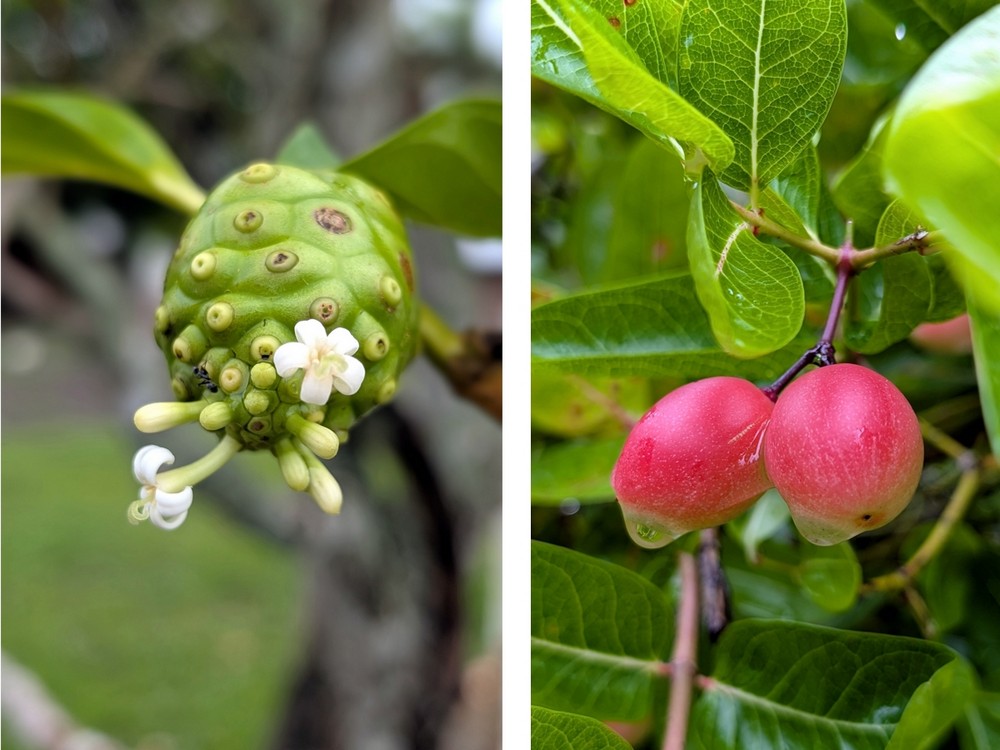
I didn’t just settle for random discoveries of tropical trees and plants. On the island, we visited Mardi Agrotechnology Park – a fruit garden where, thanks to our witty guide, we learned all sorts of things about growing exotic fruits. What I didn’t know until now:
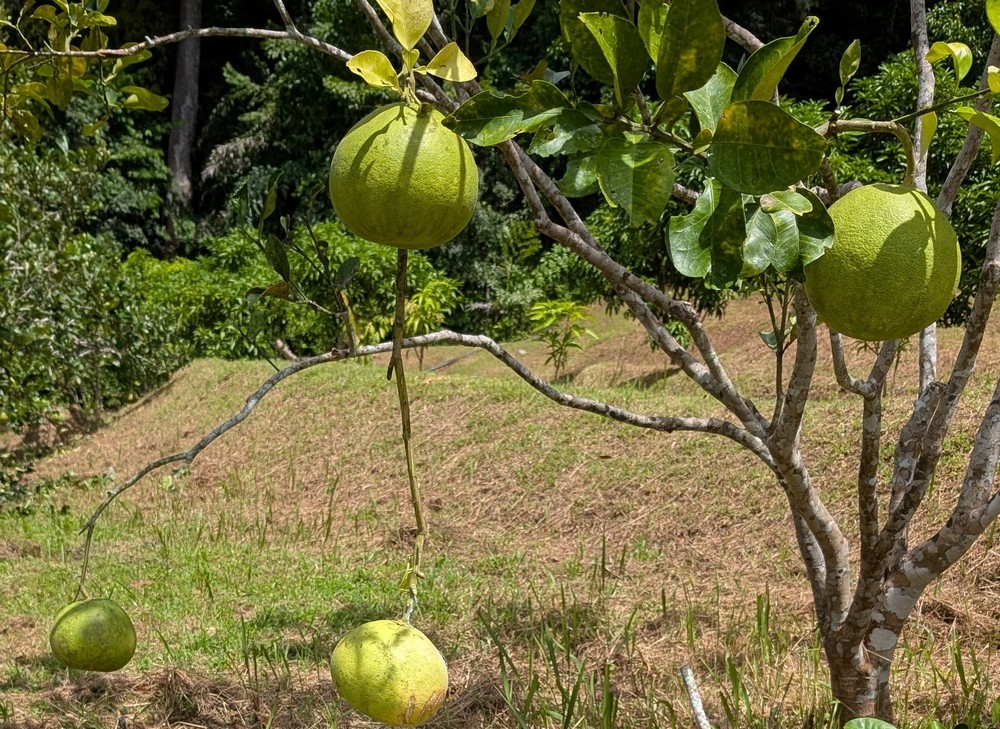
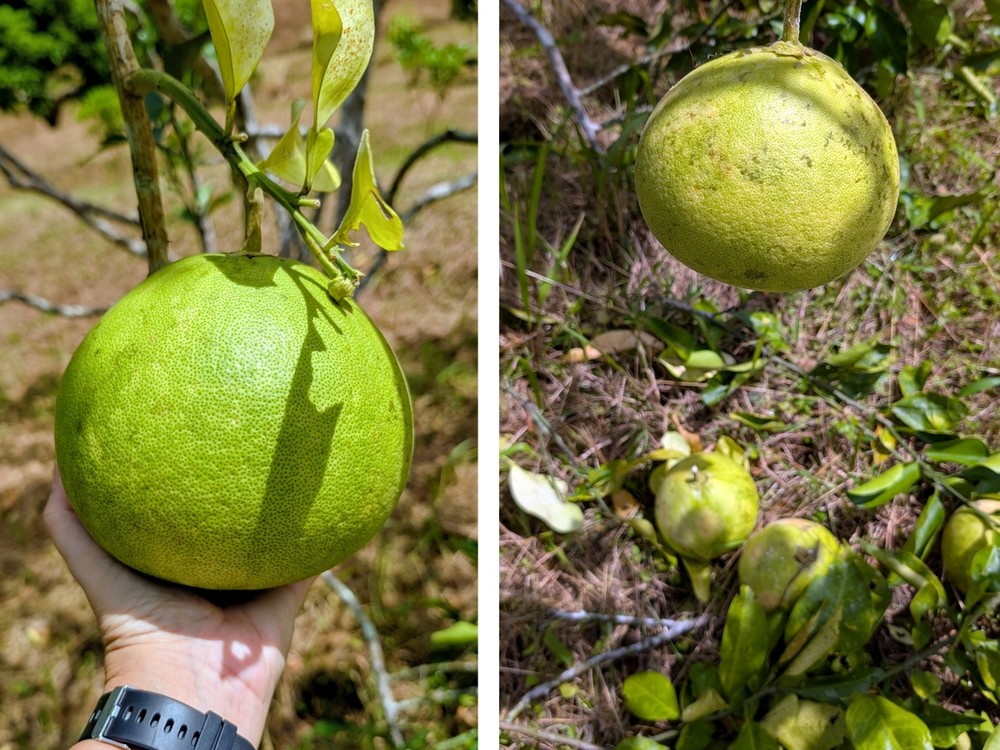
– How a pomelo grows: I was surprised that such a small tree could support such large green balls. However, when I picked up a pomelo, it was surprisingly light. As the fruit ripens, it turns yellow and becomes heavier (the second fruit).
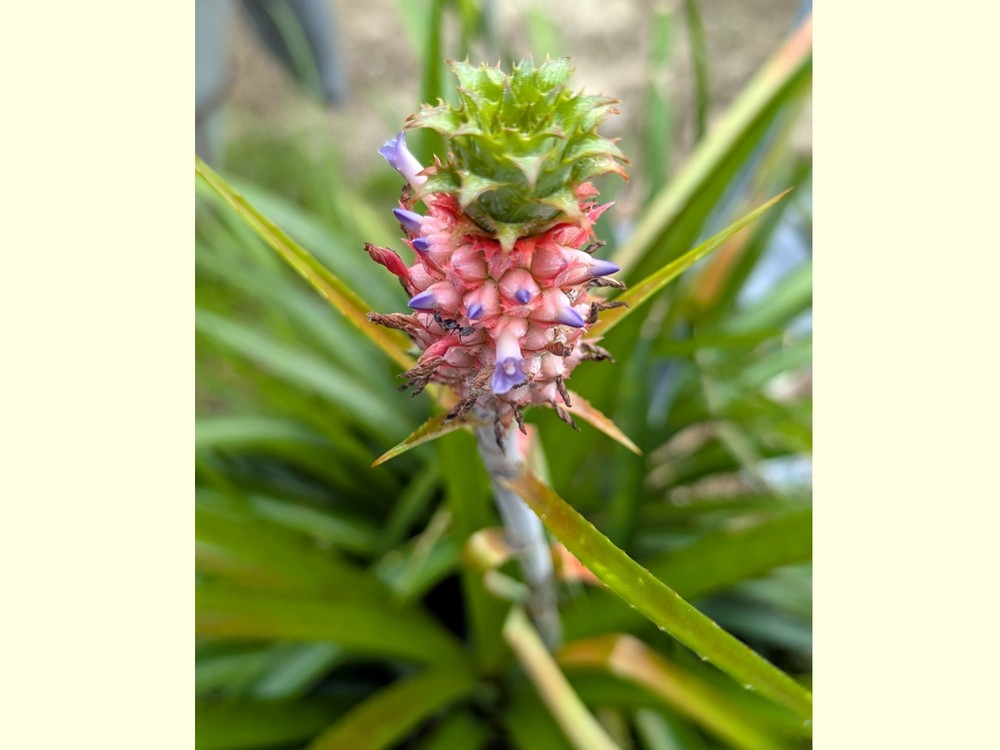
– How a pineapple blooms – I’d already seen a pineapple plantation in India; as it wasn’t pineapple season in Langkawi, I was able to see the pineapple flowers
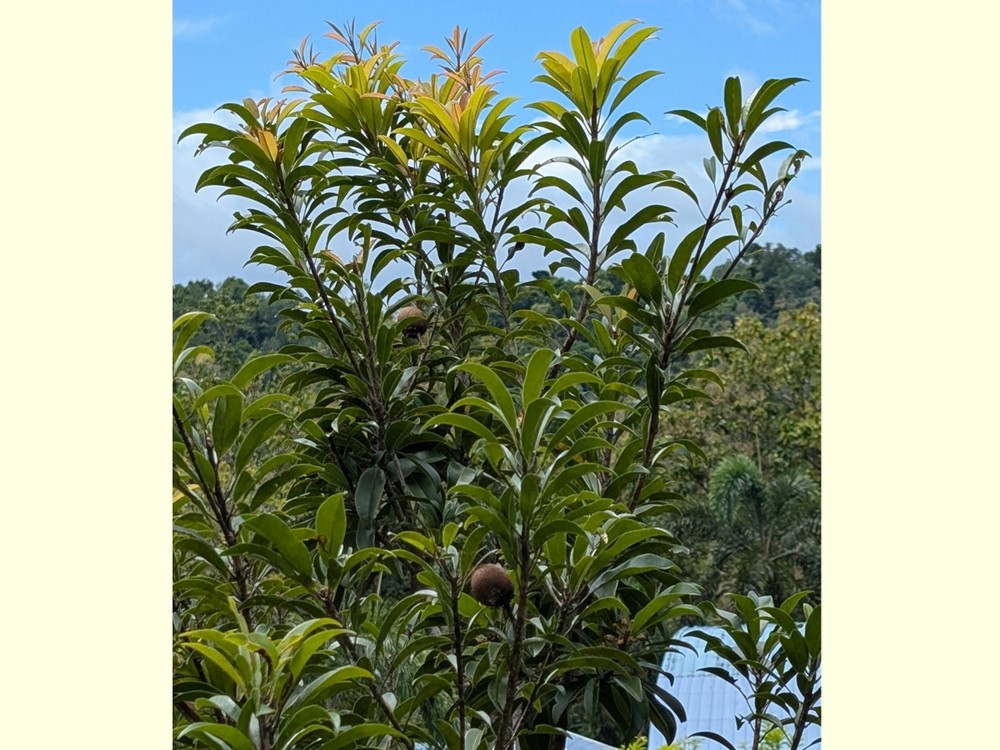
– What manilkara zapota is – both the stem and the unripe fruit contain white latex – a natural chewing gum
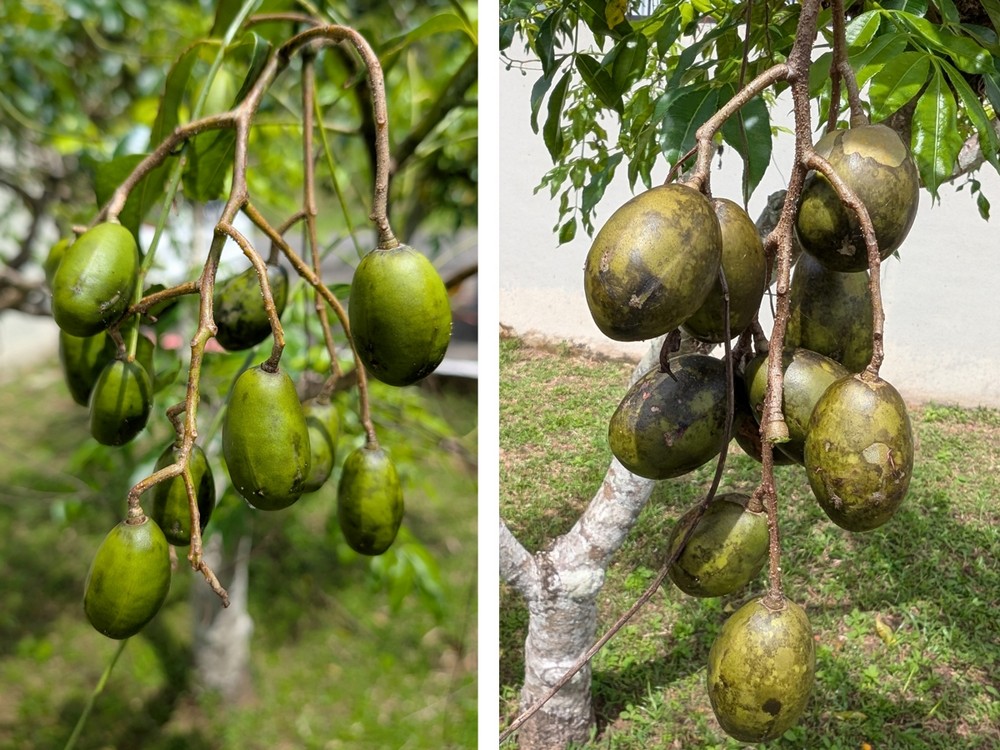
– What Ambarella is – also called the golden apple. However, the fruits (very rich in vitamin C) were still green, not golden-yellow, so we couldn’t taste them. They’re said to taste like a mix of apple and mango.
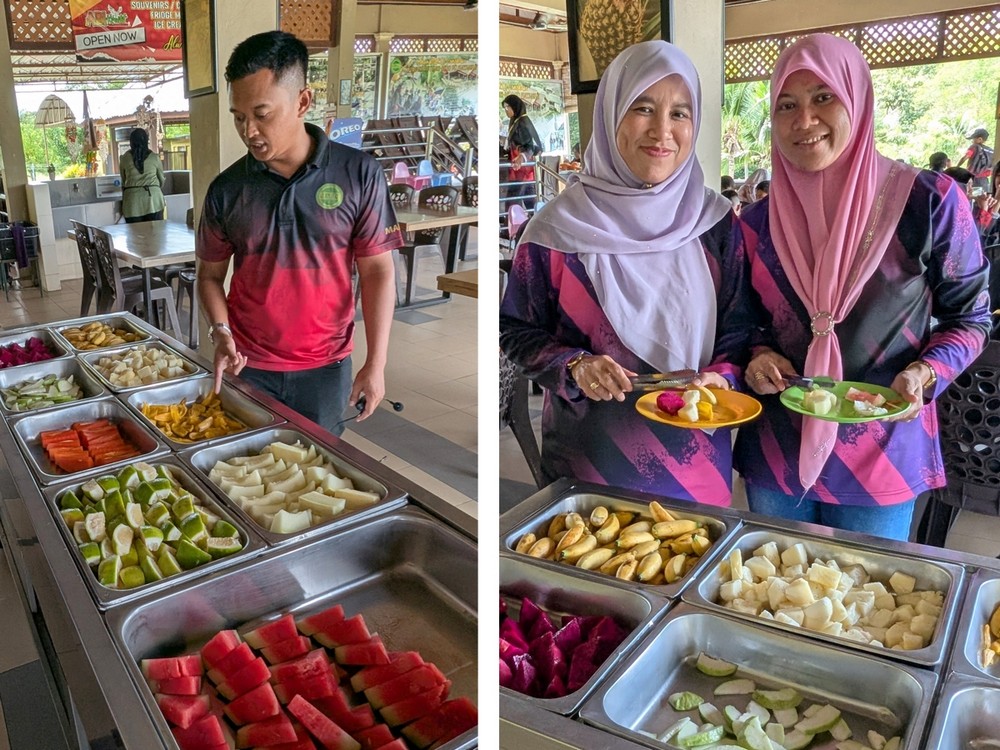
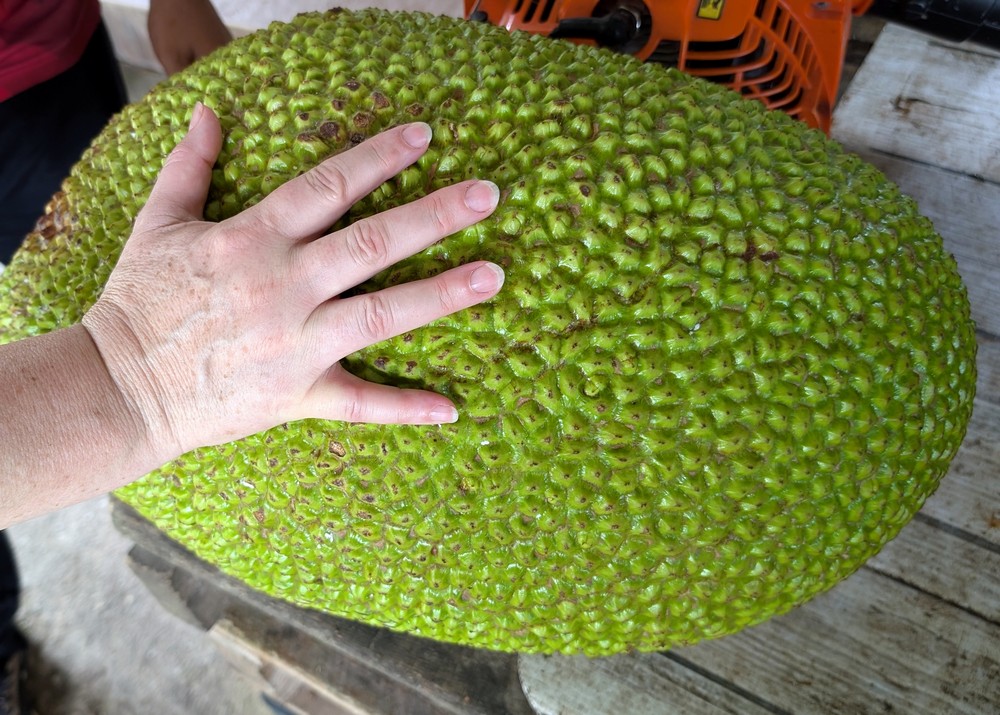
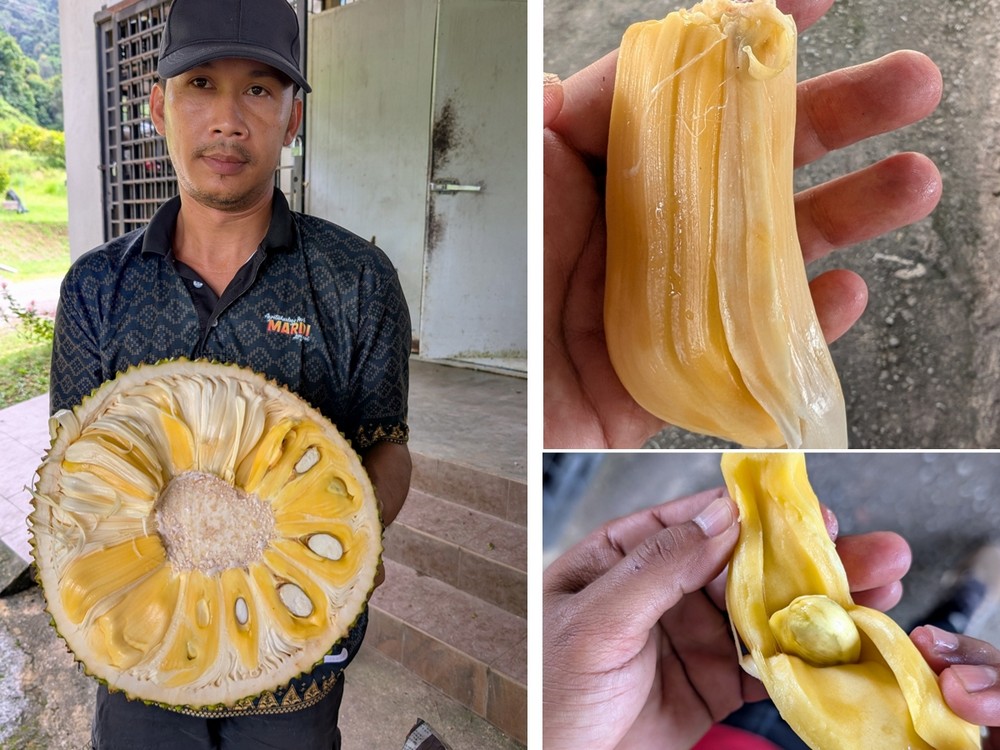
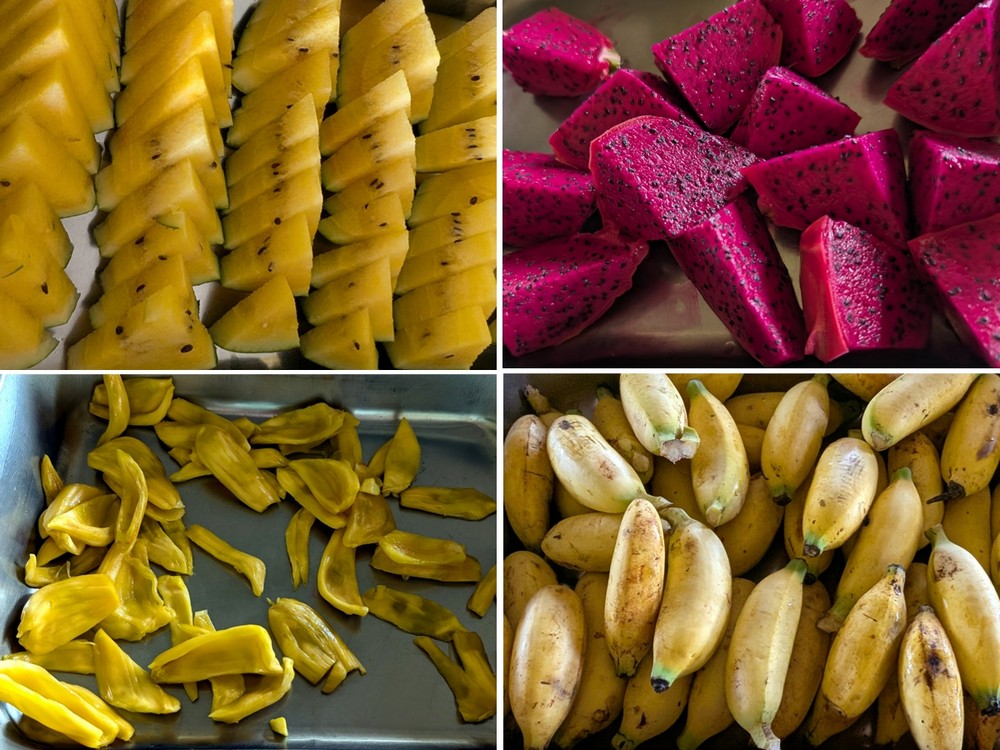
And what did I like best? Pitahaya or dragon fruit (the “roja” variety with red-violet skin and flesh) was delicious; however, the yellow melon became my favorite. On the outside, it looked like an ordinary melon with green skin, but inside it was completely yellow. And it was very sweet!
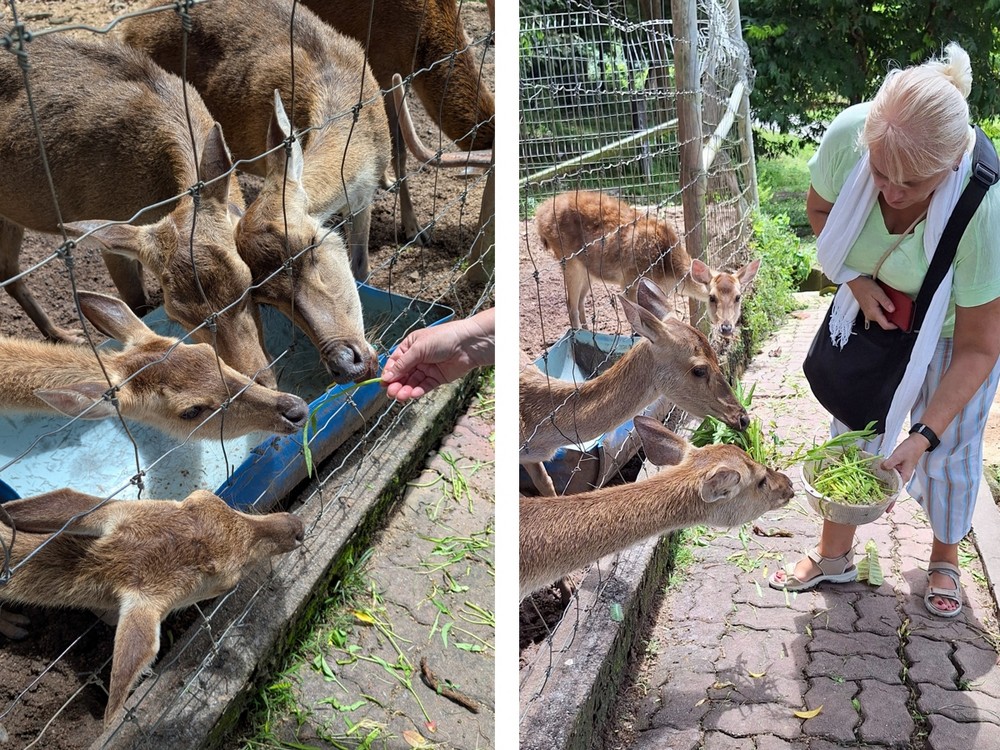
Finally, we fed a herd of deer behind the fence in the garden with peels and stems. One doe, however, grabbed a tassel from my cotton scarf with her mouth instead of some green leaves. She must have really liked it, because we had to yank the scarf out of her mouth with all our strength. Not only did I lose a few tassels, but there’s now a bite mark on my scarf.
Where to Eat?
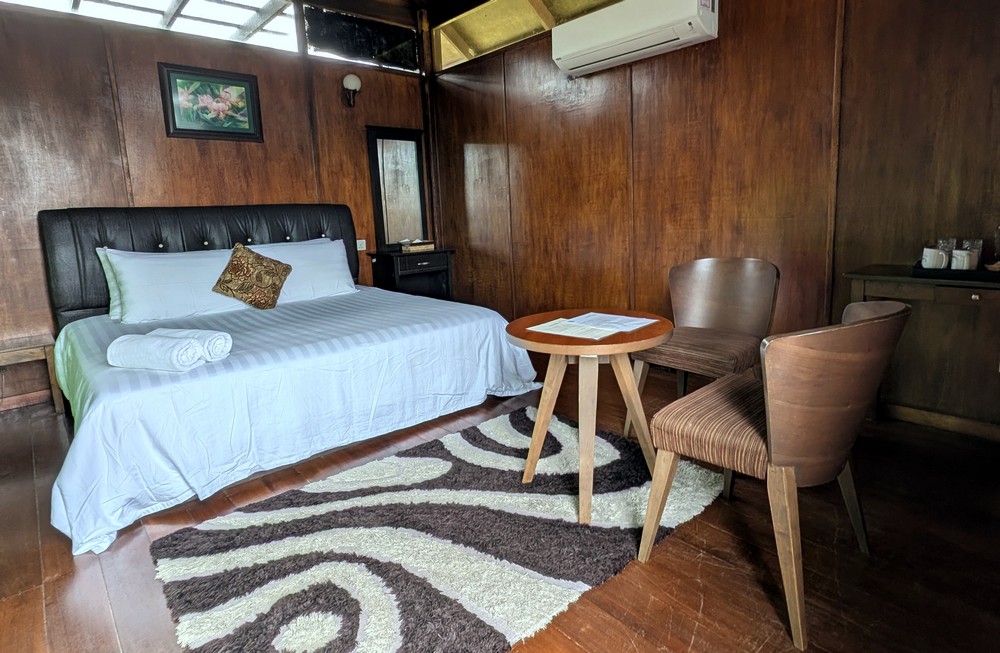
Our lodging in the middle of the rice fields was comfortable, though the furnishings were a bit old-fashioned. The bathroom, with its bamboo walls, was an addition built on the outside.
In the evening, geckos scurried along the walls (on the outside!), and we watched their tiny, nimble bodies on the glass panes as they chased insects.
We ordered breakfast with our accommodation, which was a mistake as the breakfast was truly modest and didn’t justify the price we paid for it at all. It was a much better value to eat at the local buffet restaurant across the street.
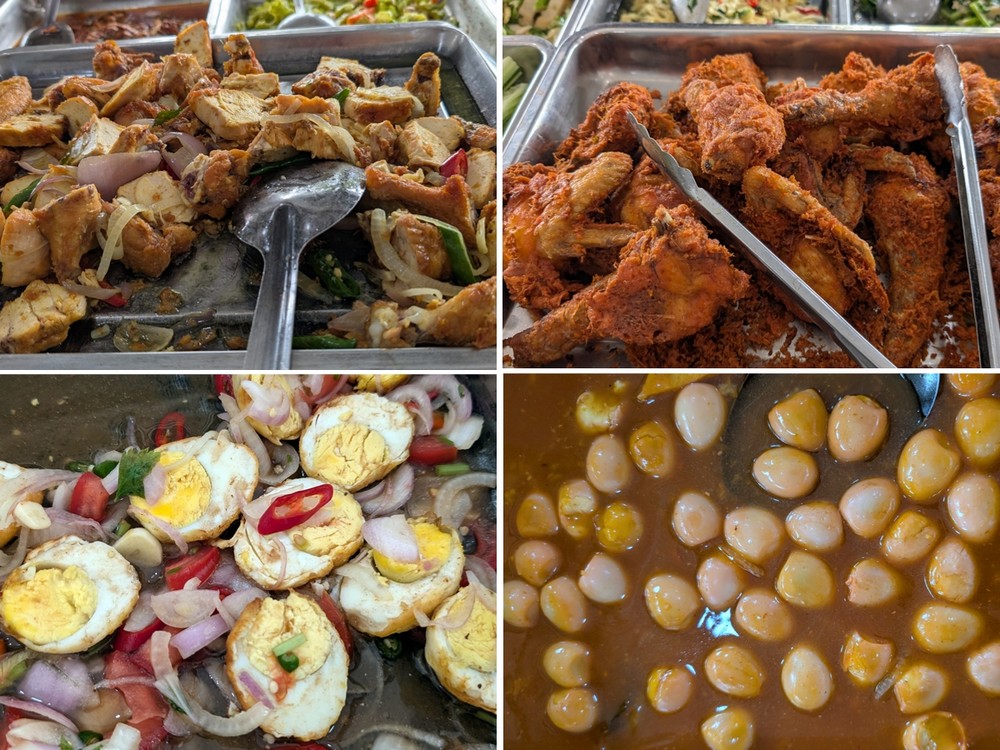
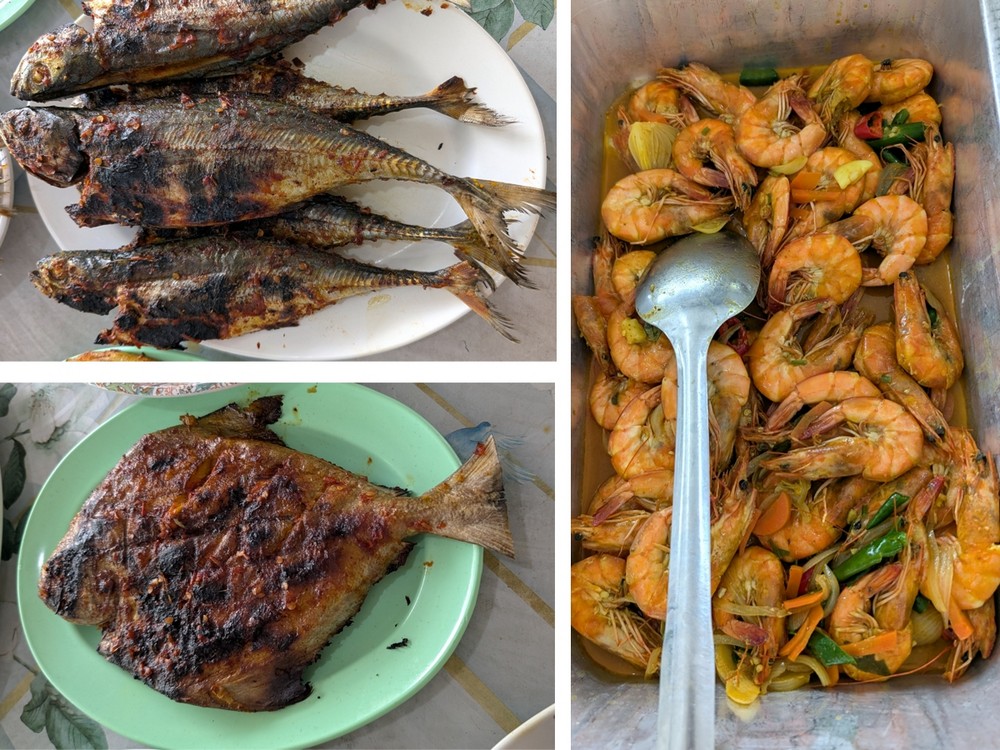
So we could choose whatever and however much we wanted, and then the cashier added it all up for us. The staff didn’t speak English; I don’t know what system she used to calculate the bill, but the food wasn’t expensive and was delicious. Hygiene was satisfactory. If you visit this island, be sure to check out this type of restaurant (Nasi Campur).
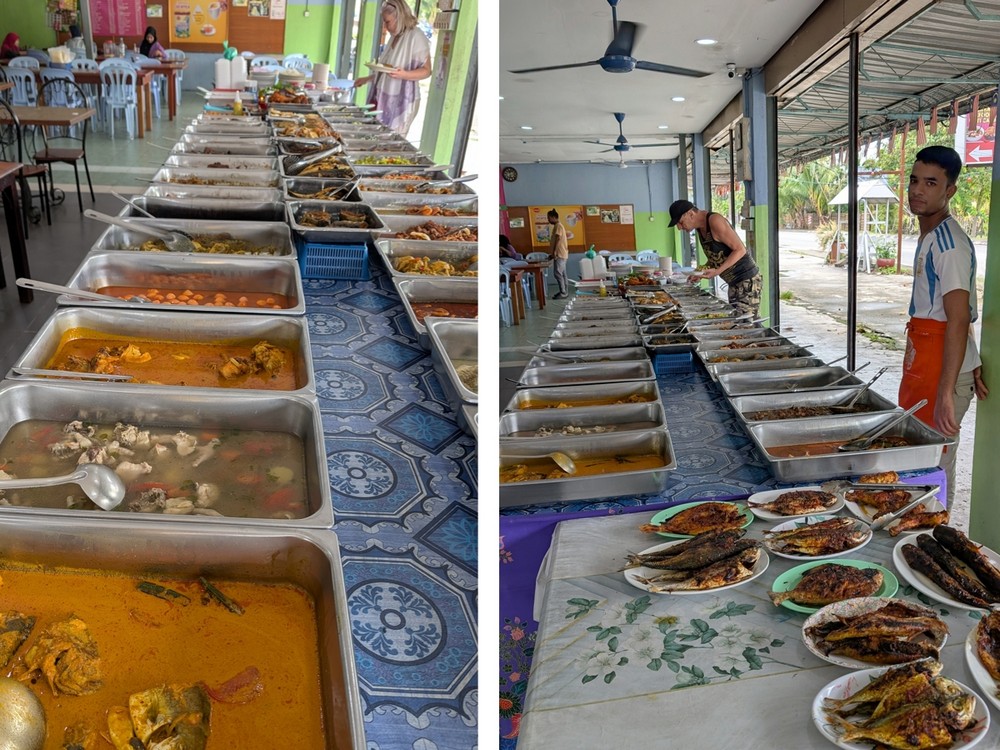
To be continued in the following articles.
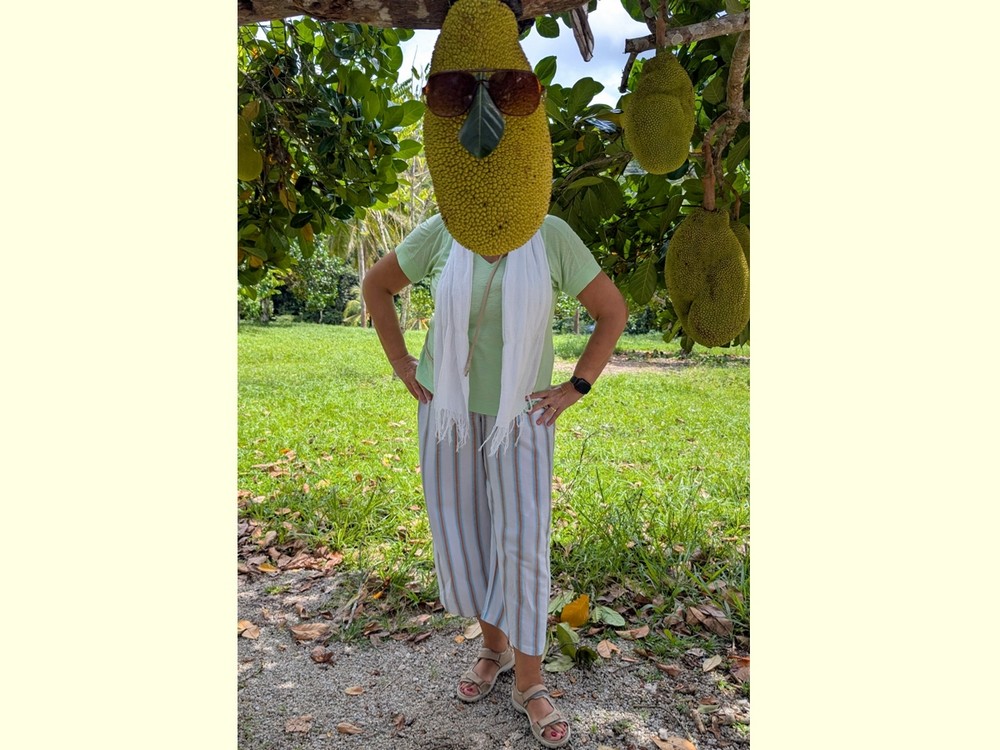
I hope you never lose your head! It happened to me in the fruit garden, thanks to our funny guide. 🙂
Text: © Copyright Ingrid, Travelpotpourri
Fotos: © Copyright Ingrid, Travelpotpourri