
 TRAVEL



 RECIPES WITH A STORY







 AUSTRIA-VIENNA



 SLOVAKIA-BRATISLAVA


 EVENTS



 INTERVIEWS


In 2019, Plovdiv became the European Capital of Culture, and in 2022, it was ranked among the top 5 European travel destinations. The incredibly long history, amazing monuments, delicious cuisine and excellent wines – these are the best attractions for visitors from all over the world. I have visited Plovdiv many times, but it fascinates me that it can always surprise me with something new. Among the latest (although in fact very old) attractions are the wonderful renovated Roman mosaics.

Plovdiv is one of the oldest continuously inhabited cities in the world. During its at least 8,000 years of existence, various nations brought here their customs, deities and culture; the city had changed its name several times.
In 45 AD, Plovdiv – then called Philippopolis – became part of the Roman Empire. This started an unprecedented boom in the city. The inhabitants – their numbers reached up to 100,000 – walked along the cobbled streets, enjoyed a bath in the public baths, enthusiastically watched sports games in the local stadium as well as gladiator fights in the amphitheater. There were experienced workshops in the city, which were covering the floors in the houses of noble residents, but also in important public buildings with sumptuous mosaics. Some mosaics have survived to the present day, thus proving the mastery of these unknown artists and craftsmen.

1. TRAKART CULTURAL CENTER
Address: archaeological underpass at the intersection of Tsar Boris III Boulevard and Patriarch Evtimil Street
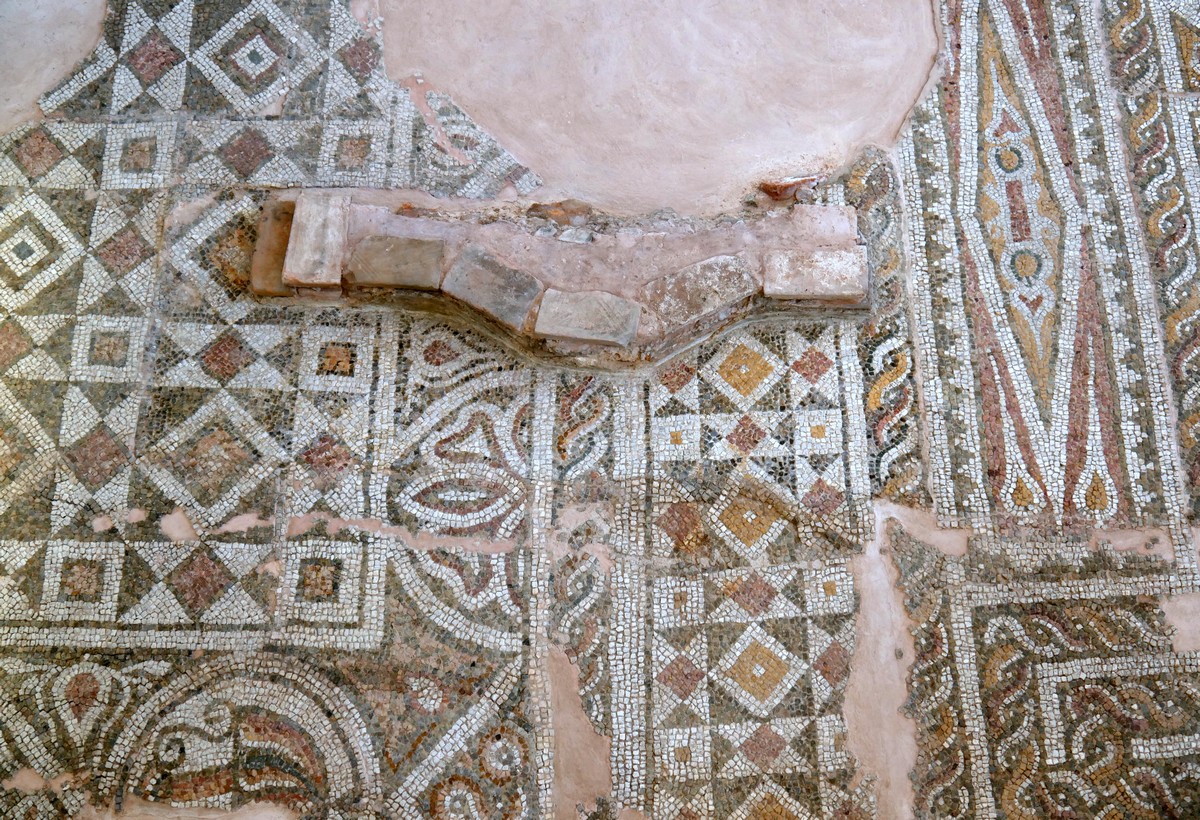
In the 3rd century, these mosaics adorned the floor of a representative house in Philippopolis, which was the capital of the Roman province of Thrace at the time. The house is called Eirene (= Peace) after the Greek goddess whose portrait is depicted on the central mosaic, surrounded by various geometric patterns. It was placed in the center of the main room. The house also included an open courtyard surrounded by columns. A marble tank served as a fountain.
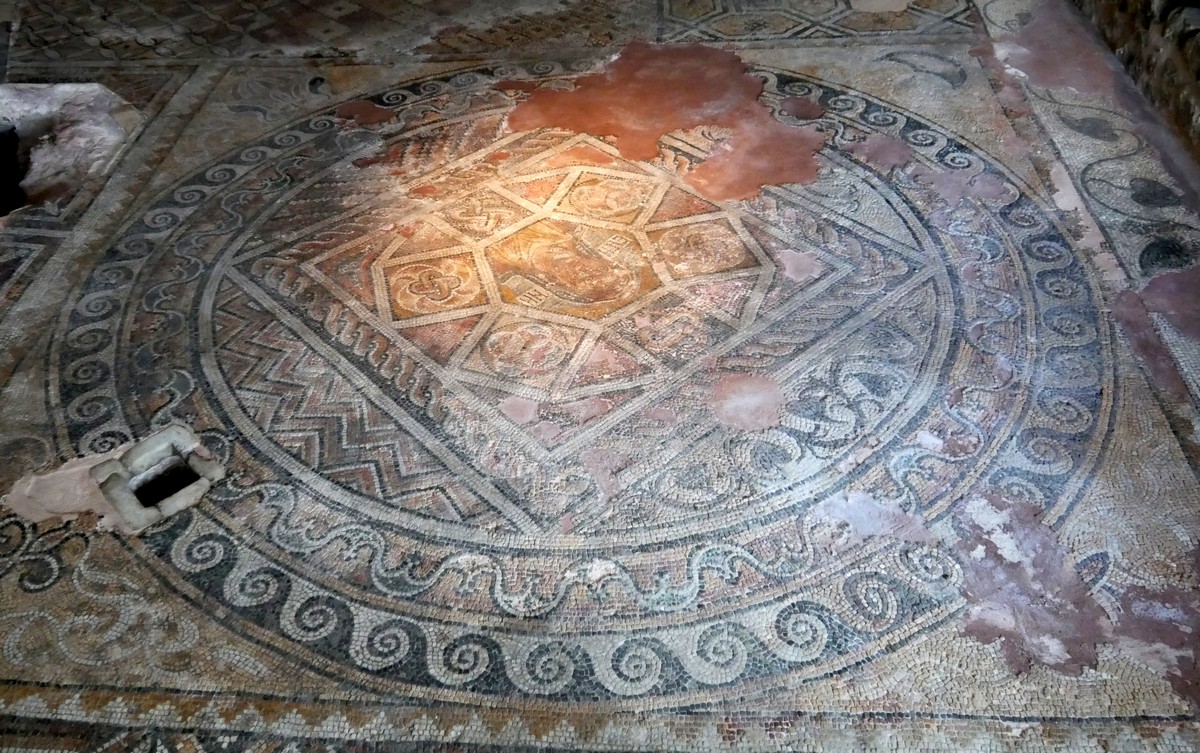
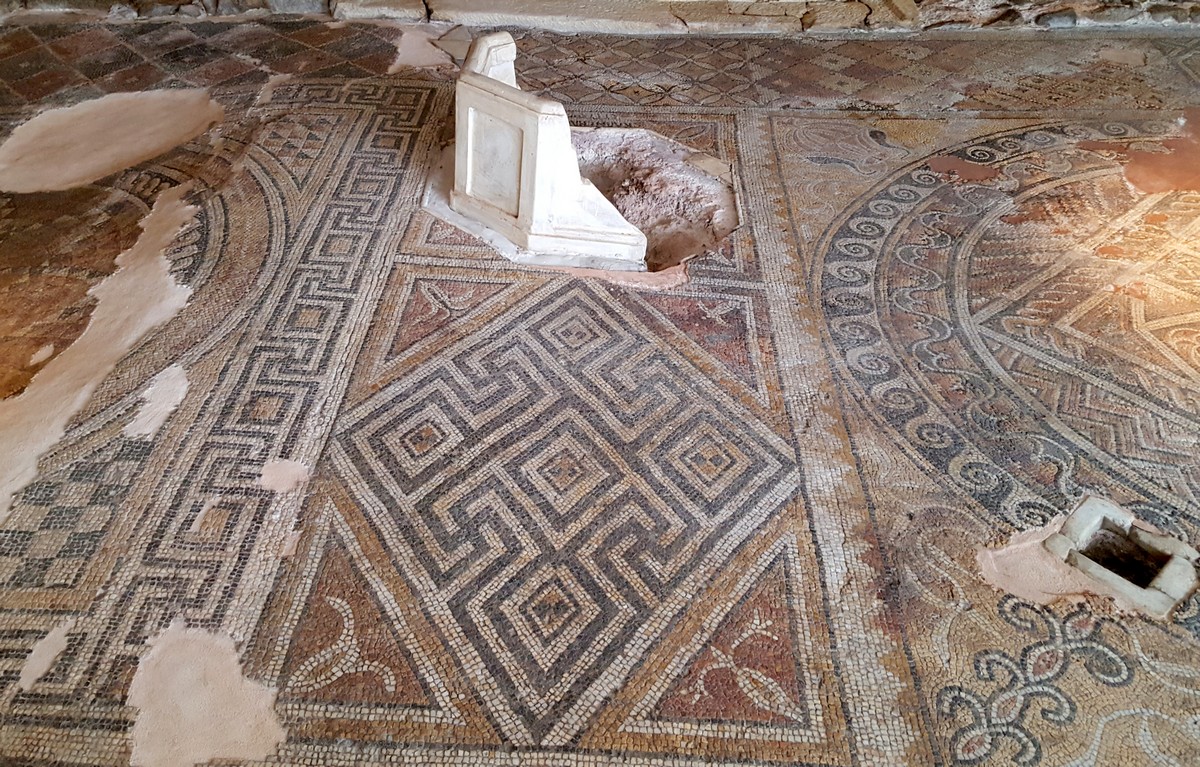
Even after so many centuries, one is amazed at the colors of such small stones that create various meanders, symbolic knots, leaves or flowers.


Beautiful ritual phiales, vessels and other utilitarian or artistic glass vessels from the 3rd century BC- 4th century AD are just as interesting. They are displayed as part of the permanent exhibition Glass in Ancient Art.

The house was discovered in the 80s of the last century during the construction of the boulevard underpass, the mosaics were cleaned and reconstructed and in 2003 they were opened to the public as part of the TrakArt cultural complex. You can see part of a cobbled Roman street in the underpass as well.
During my visit, I was lucky that we also met the Bulgarian artist Georges Trak and saw his jubilee retrospective exhibition with beautiful glass mosaics.

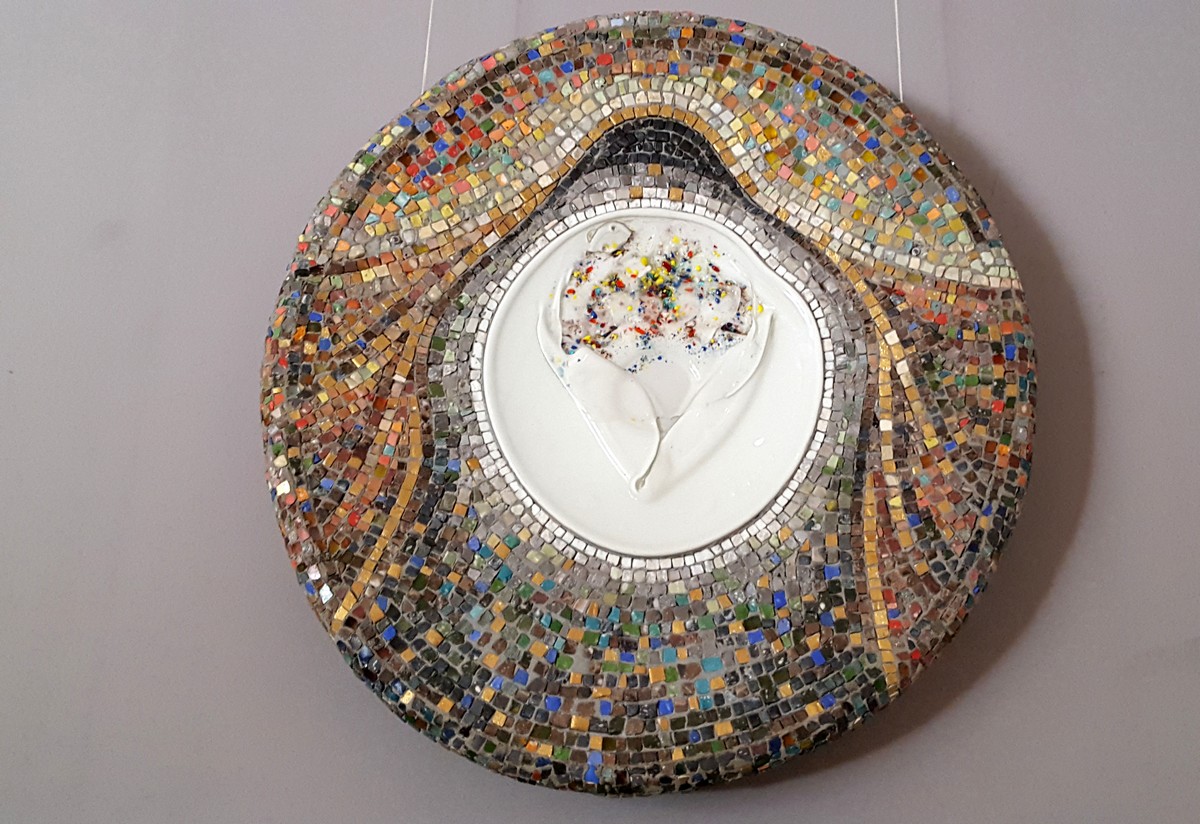
Various cultural events are regularly held in the TrakArt cultural center, more information: https://trakart.org/trakart/
The center is open every day from 10:00 a.m. to 6:00 p.m. (except Easter, Christmas and New Year holidays), opening hours: HERE

2. THE SMALL EARLY CHRISTIAN BASILICA
Address: Boulevard Knyaginya Maria Luiza 31A

In its long history, Plovdiv often had to defend itself against the attacks of various enemies. In 471, the military commander and emperor Basiliscus managed to suppress the revolt of the Goths. In honour of this event, a church was built in the eastern part of the city and Basiliscus himself provided the funds for the mosaic in front of the altar which immortalized this victory.

However, as often happens in human history, a few years later, Zeno became emperor, assassinating his predecessor and having all traces of him removed, including the first two lines on the mosaic that contained Basiliscus’ name.
Fortunately, Zeno did not destroy everything, so even today we can admire the rich decoration on the mosaics – various geometric shapes (circles, rhombuses, meanders…) and symbols – many of them come from the pagan period and were later appropriated by the early Christians: rosettes, vases, swastikas…

A small chapel was later built in the southern part of the basilica and a baptistery was attached to the northern nave. The baptismal pool has the shape of a cross, 5-6 people can be baptized here at the same time.
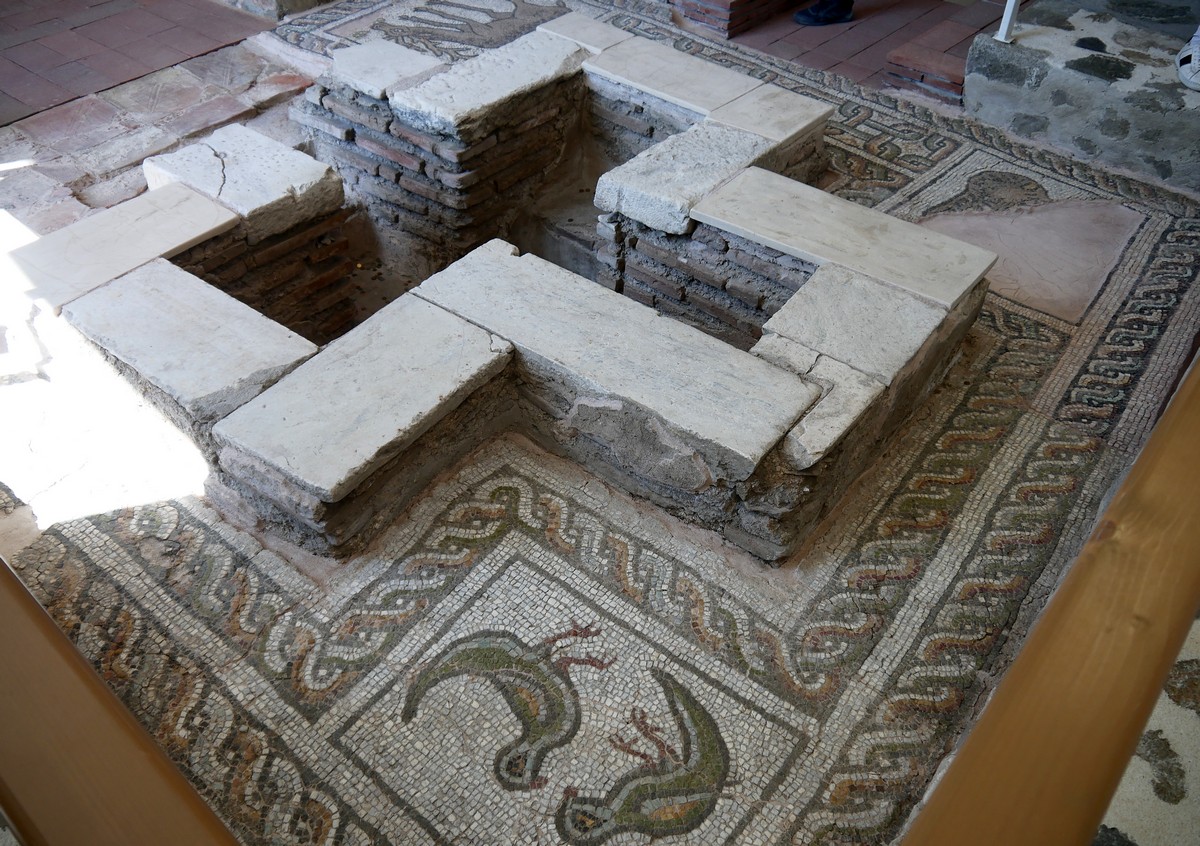
Pigeons and deer are depicted on the most beautiful mosaics. The dove is a symbol of the Holy Spirit; it appeared in the sky when John baptized Jesus in the Jordan River.
A deer is often depicted drinking water near a cross or a place of baptism. It is a metaphor for Christians who draw their faith and truth from the Holy Scriptures.

In the museum, you can watch a short video in English about the history of the basilica. The church burned down at the end of the 5th or the beginning of the 6th century, and although it was rebuilt, it was destroyed again later. In 1988, when new residential blocks were being built in these places, the basilica with mosaics was discovered accidentally. However, the reconstruction had to wait until 2010.

Today, the museum is open every day:
from 9:00 a.m. to 5:30 p.m. – November – March
from 9:00 a.m. to 6:00 p.m. – April – October
More information: http://www.visitplovdiv.com/en/node/675

3. THE BISHOP’S BASILICA OF PHILIPPOPOLIS
Address: Boulevard Knyaginya Maria Luiza 2
If you go to Plovdiv and don’t have enough time to see all three places mentioned in this article, definitely visit at least the Bishop’s Basilica, which is located just a few minutes from the southern end of the main pedestrian street.
In 313, Christianity became the official religion of the Roman Empire. During the archaeological excavations, a coin was found near the basilica, dated to the reign of Emperor Licinius (308-324). This led to the hypothesis that this basilica was one of the first built in the Roman Empire after the adoption of Christianity.
In modern history, the remains of the basilica were only discovered in 1982 during the construction of a road. Since its restoration was not possible at that time, the place had been covered with sand. The cleaning and conservation of mosaics only started in 2015.


I consider it a great privilege that I had the opportunity to visit this place at the beginning of 2019 when the restoration work was still in full swing. Not only experts worked here, but also almost 500 volunteers. In some parts, it looked like a real construction site: wheelbarrows, buckets, rubble, stones, dust…
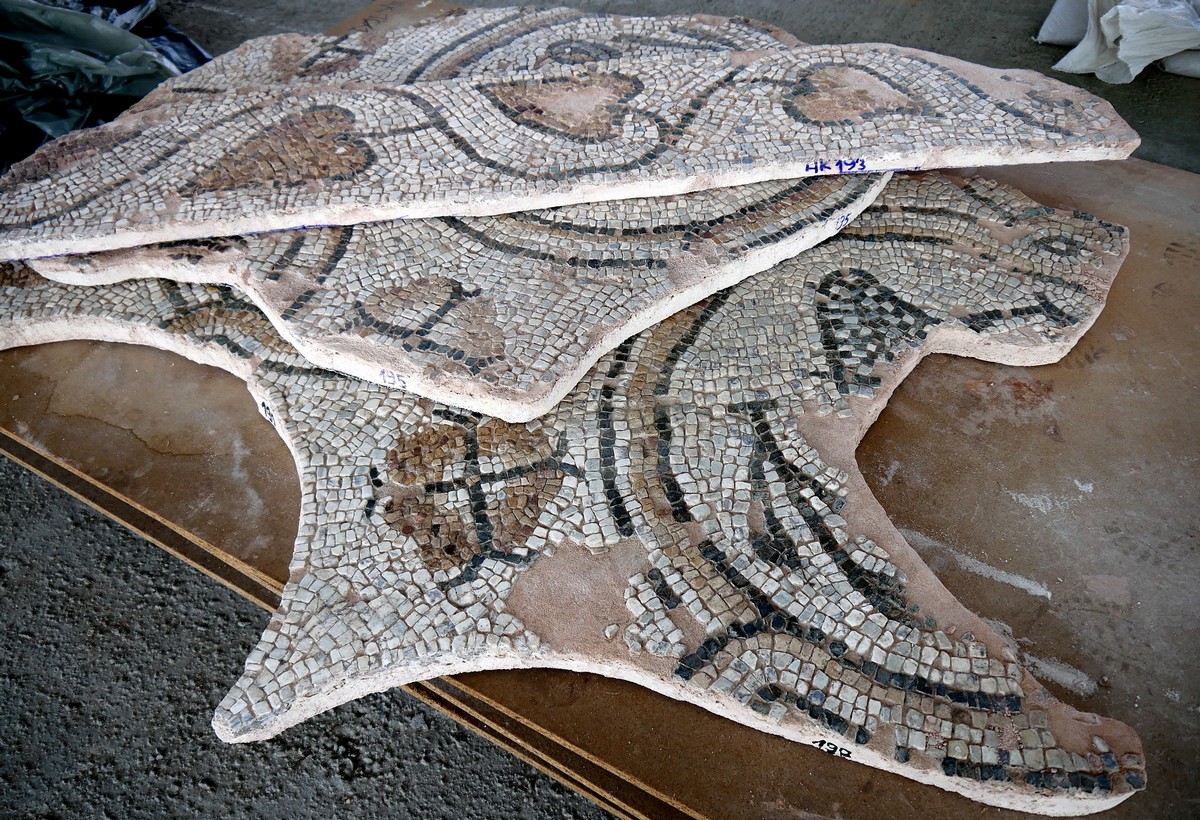
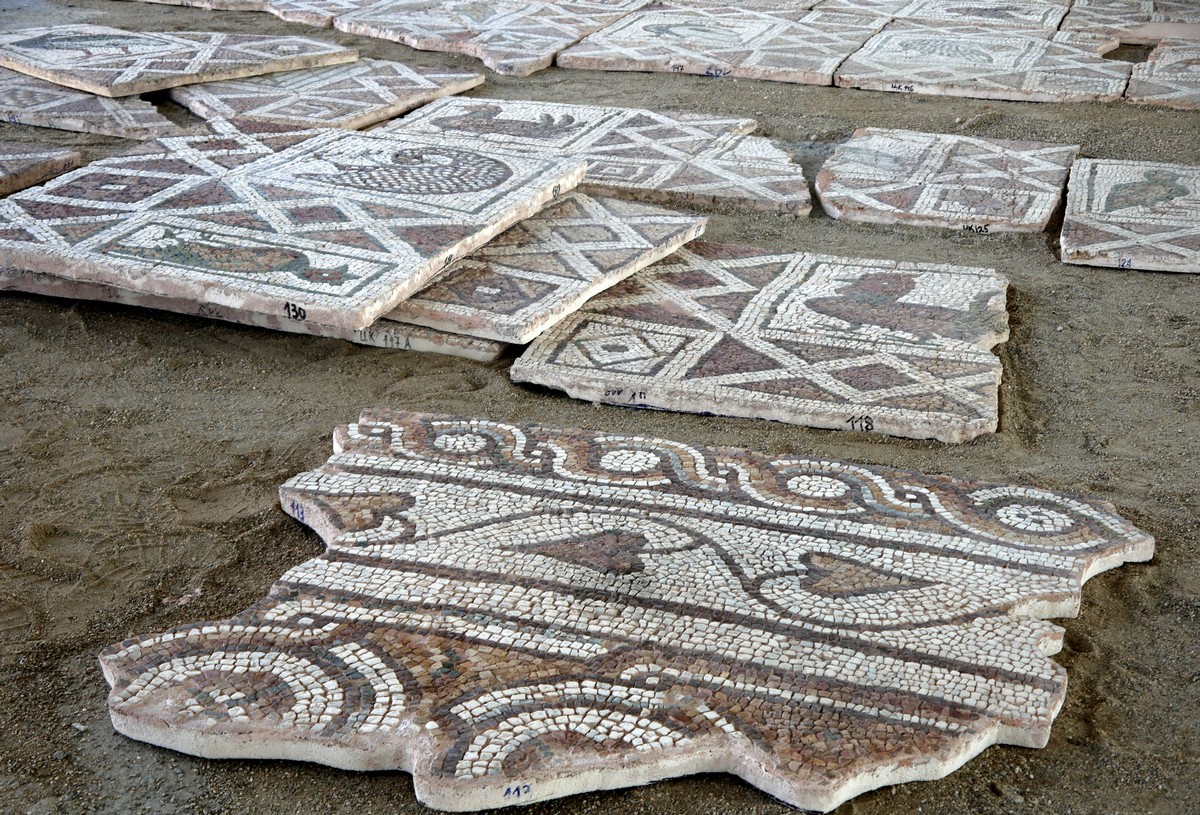
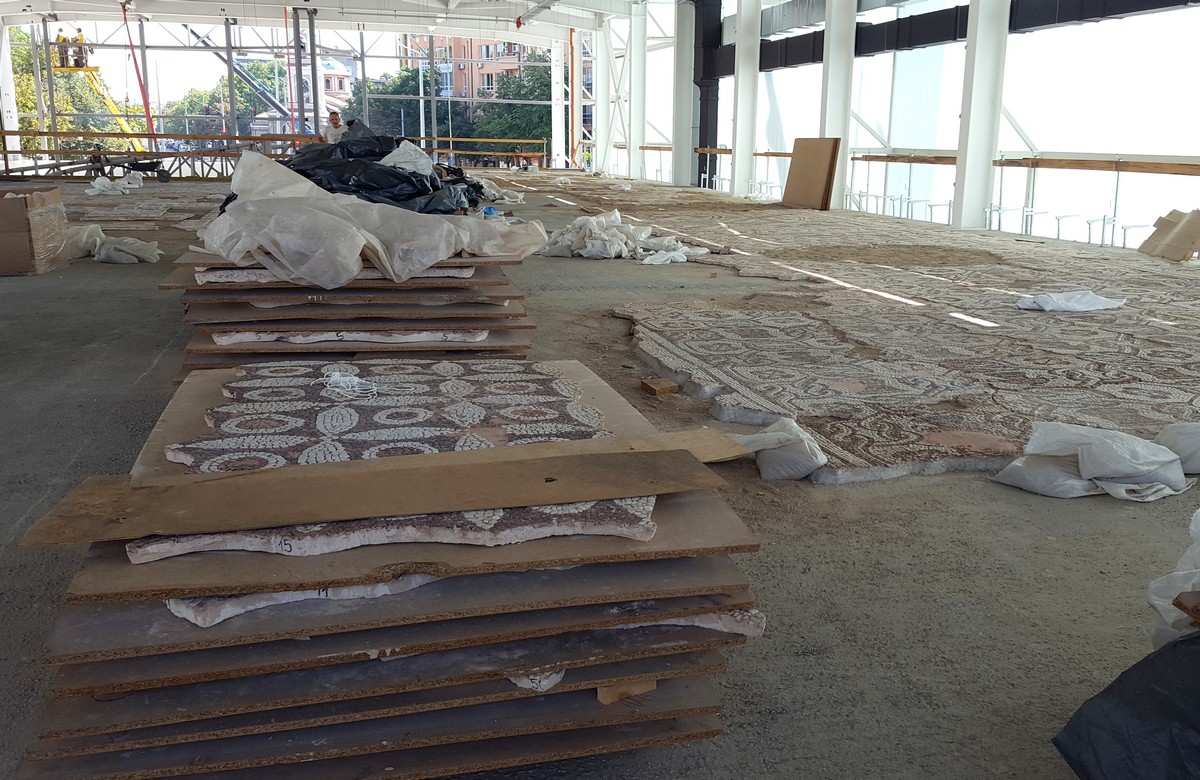
The restored mosaics were cut into large blocks. The beauty of the whole could only be guessed rather than truly seen. The most beautiful mosaic with a peacock (which is the logo of the museum today) remained covered as a surprise for future visitors. However, the surprise for me during my visit to the basilica after its opening was the entire exhibition.


I was also impressed by the size of the museum building, it is not for nothing that sometimes, the basilica is also called “Great”. Several sculptures and information panels are displayed in front of the entrance. Behind the basilica, there is a children’s playground with motifs of mosaic ornaments and birds.
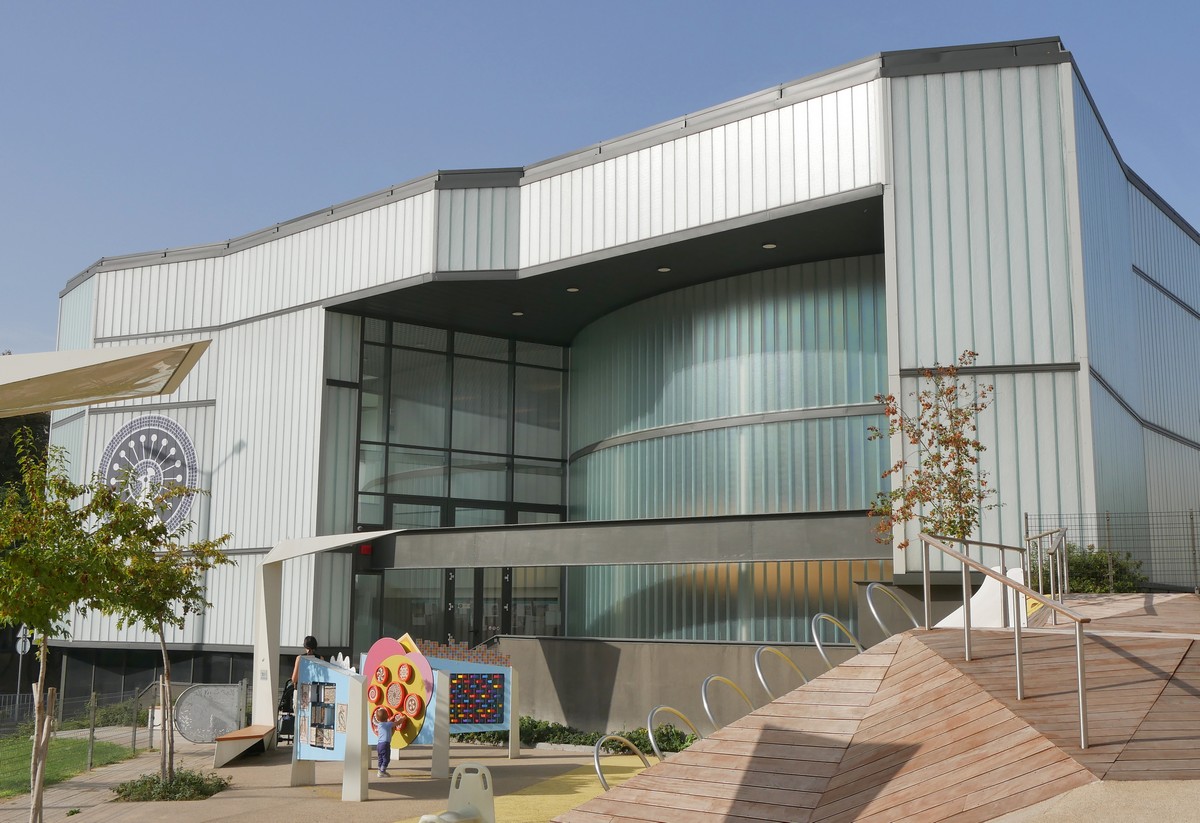

Inside, you have to put plastic covers on your shoes. This already gives the impression that we will walk on something unique and rare. The interior also amazes me with its size. The basilica had three naves, with a length of 82.8 m and a width of 36 m.

Everywhere one looks, endless “carpets” of mosaics spread out (totalling 2,000 m²). You can stand here for hours and you will keep discovering new and new patterns. Although the ornaments are mostly geometric, their variety is fascinating.

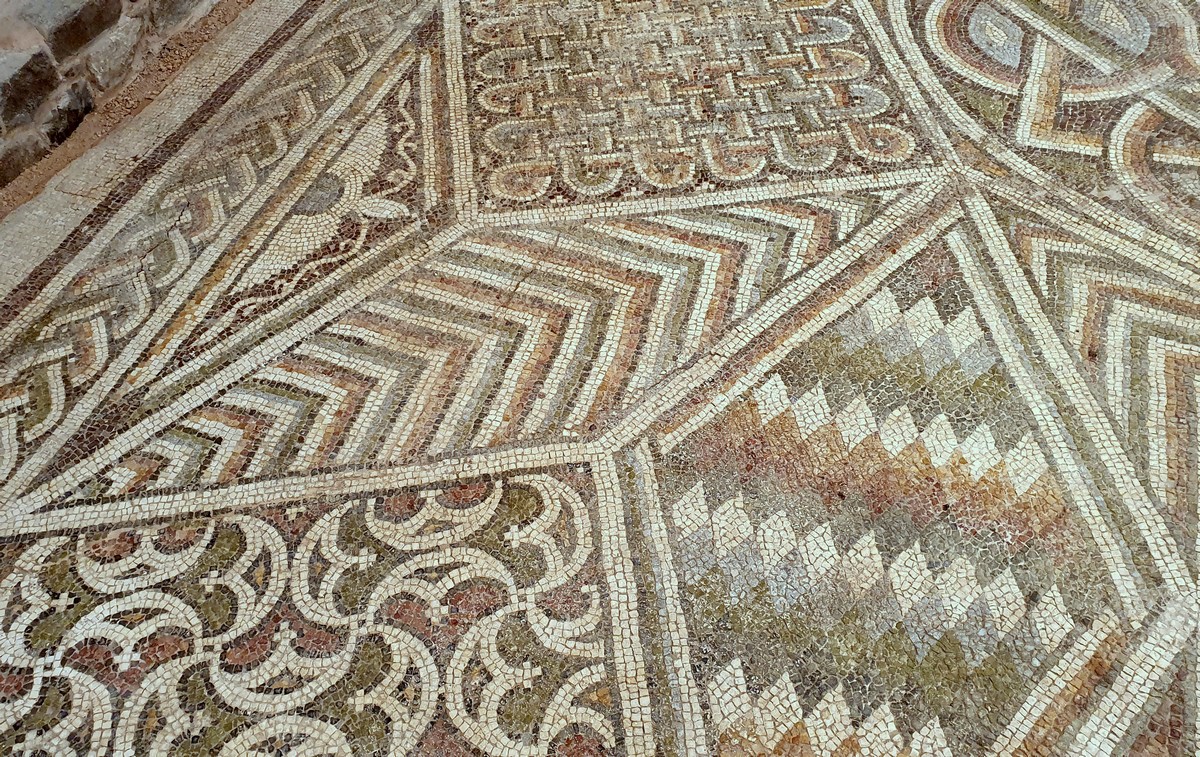
The mosaic on the ground floor (4th century AD) is in two layers. The lower layer is more colorful. This floor collapsed in the past, probably as a result of an earthquake, so it was covered with a new mosaic. Today, both layers are visible in several places – like in the following photo.

Also note the special ornaments: Solomon’s knot in the lower layer is formed by two intertwined loops (a symbol of immortality and eternity). The upper mosaic is decorated with Hercules knots that symbolize fertility.
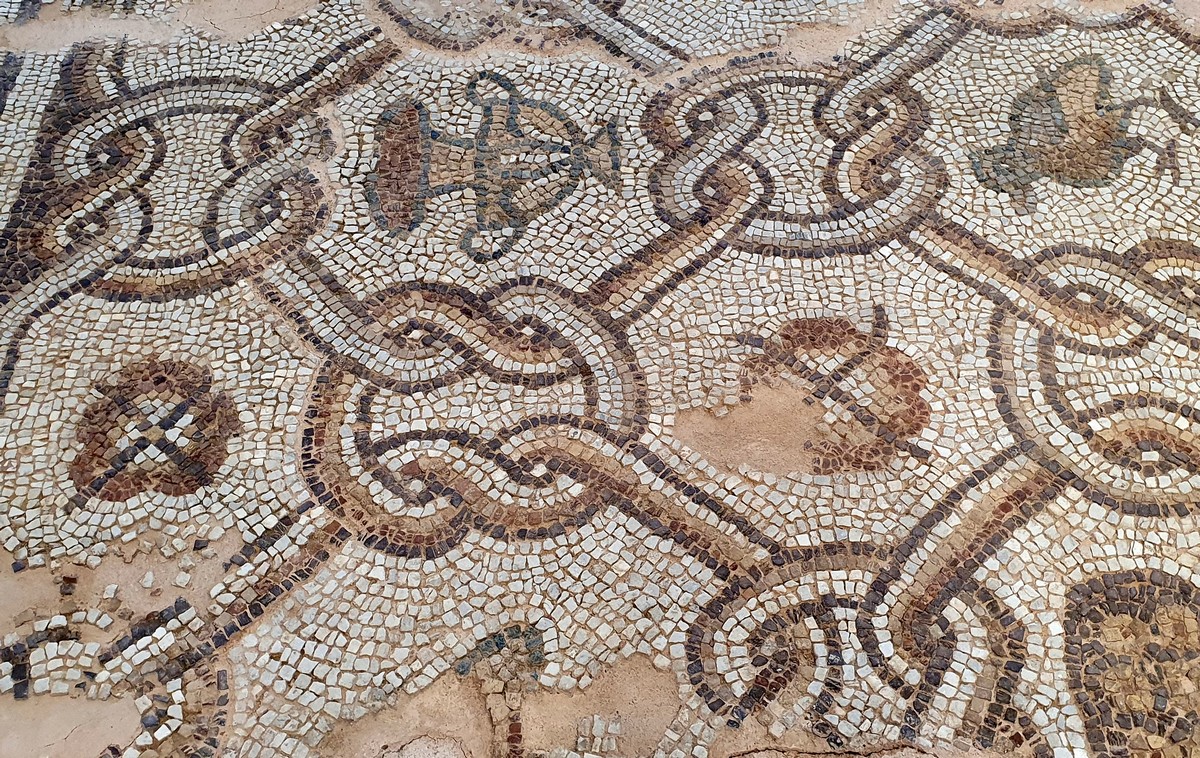
When walking along the glass walkways and observing the mosaic decoration, you should further notice, for example, the depicted pomegranate (fertility), a bird feeding its young or a bird escaping from an open cage, but also three strange green fruits that have not yet been identified. Are they cucumbers, pumpkins or something else?
Originally, a Roman pagan temple had stood at the site of this basilica. Several of its architectural elements (architraves, capitals of columns…) were also incorporated into the new Christian church. However, the basilica was abandoned in the 7th century; among its ruins, residents began to build their homes and bury their dead. Thus, a large necropolis had been created here, which was used until the 14th century. During the excavations, the remains of over 300 people were found, as well as a fragment of the saint’s face from a wall painting from a small church that had stood near the cemetery. When Plovdiv came under Turkish rule, the center moved to the northern part of the city and the area around the former basilica fell into oblivion…
Today, the ancient inhabitants of the city are reburied in the part under the rounded passage that leads you upstairs. Here is the “Garden of Eden”: bunches of grapes, ivy leaves, vases with flowers and baskets with fruit…


…and especially birds!

More than 100 birds belonging to twelve species, arranged diagonally. Birds that the people of Philippopolis kept as pets, birds that were on their menu, exotic birds for pleasure… Ducks, hens, roosters, pigeons, parrots, peacocks, guinea fowls…
Why birds as a mosaic decoration in the basilica? Is the bird a symbol of the soul? Take a good look at the mosaics – someplace the bird is alone, someplace it finds a soulmate, someplace it is locked in a cage like we are often trapped in our own fear and someplace it spreads its wings and prepares to fly like a freed soul…
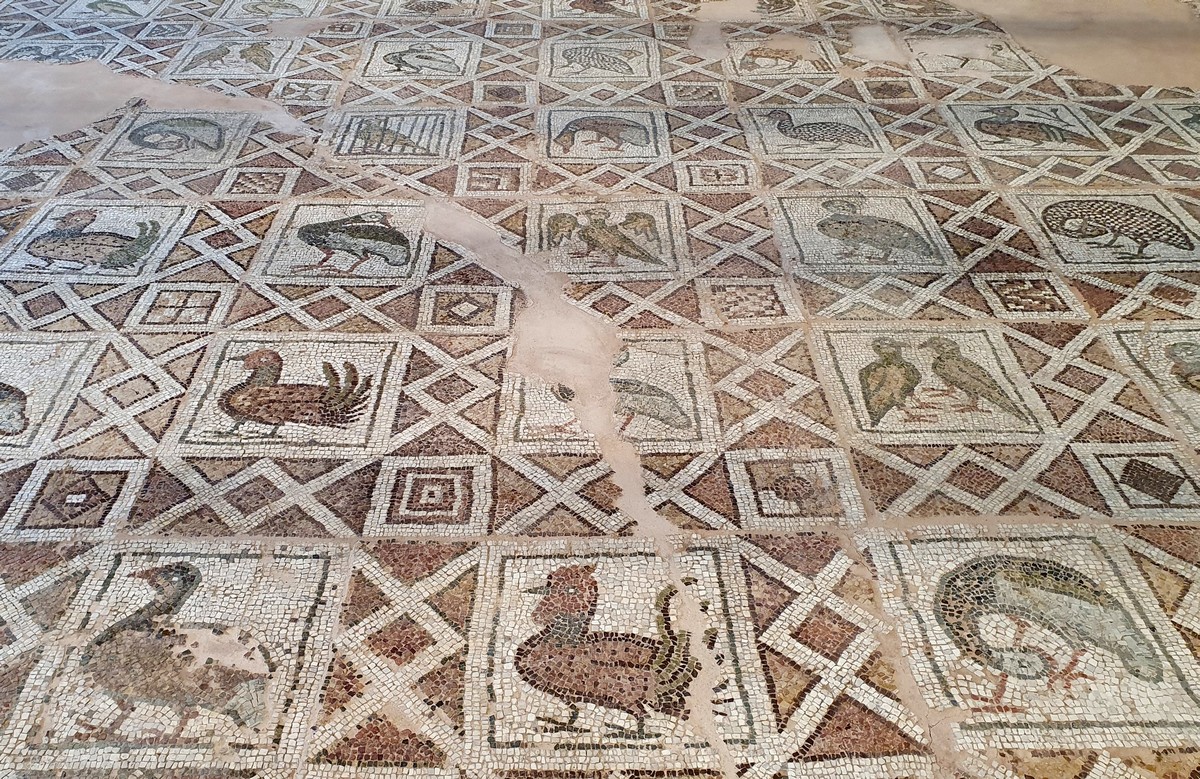
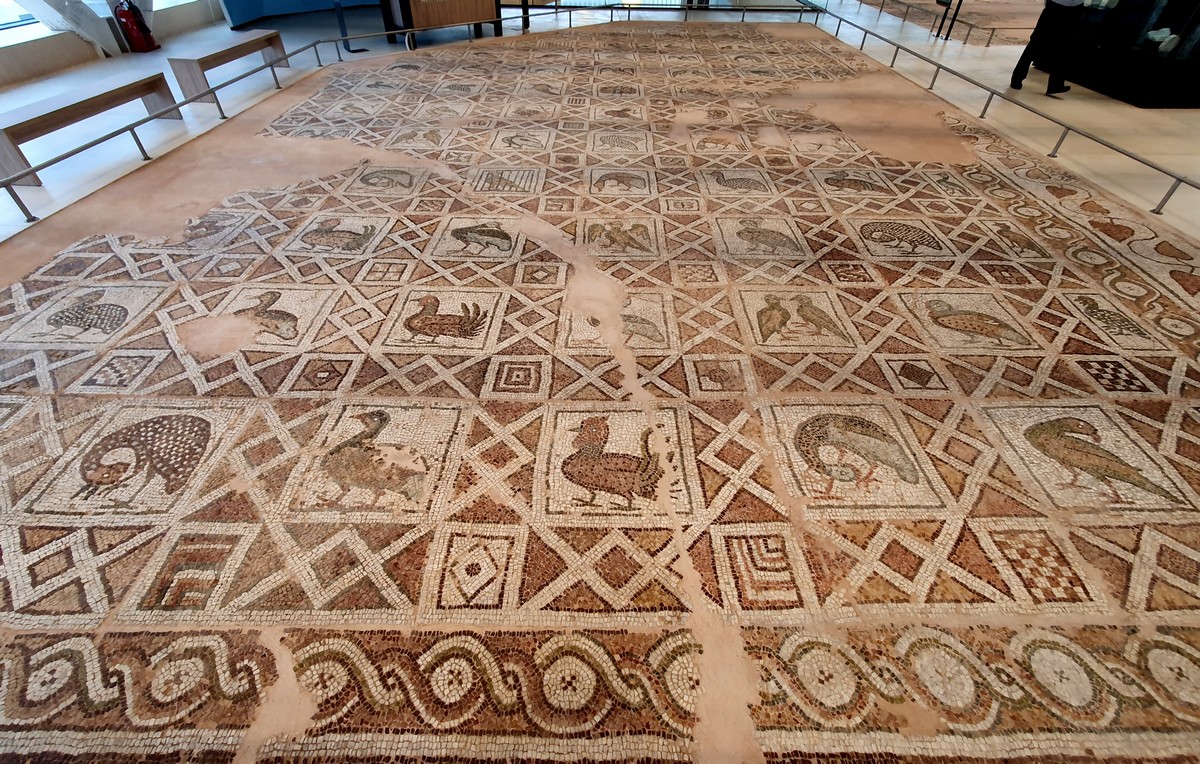
Suddenly you think you can hear the birds. And really, your hearing is not deceiving you. Bird sounds come from the device behind the mosaic. Definitely go and see it. There is a funny interactive project. The big screen shows you and a part of the mosaic, from which every now and then a bird flies out, walks around you and makes its typical sounds.
In this part of the museum, there is also an interesting children’s corner where child visitors can design their own mosaics and turn themselves into ornithologists, historians, archaeologists or even forensic anthropologists.

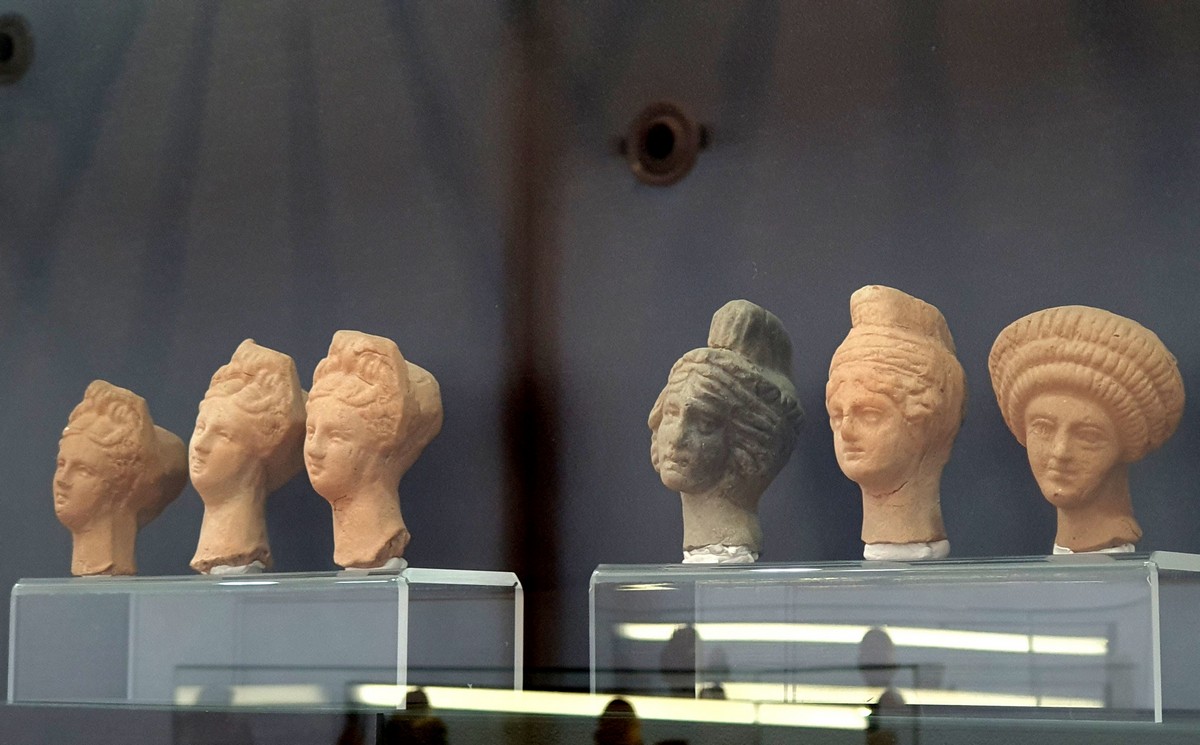
Adults will probably prefer the archaeological objects on display, among which is the aforementioned coin of Emperor Licinius. I liked the miniature female heads, which served as models for choosing women’s hairstyles.
The most beautiful mosaic is without a doubt the Spring of Life (a symbol of knowledge of God’s word) with two peacocks (immortality) standing on both sides. Better said, there should be two peacocks. It was still like that in the photo from the 80s, today one peacock is missing and no one knows what happened to it…

The second most beautiful mosaic is actually the main figure and logo of the basilica – a beautiful peacock with an open tail. You can find it on the mosaic on the ground floor, near the entrance to the basilica.

The Bishop’s Basilica is open every day:
from 9:00 a.m. to 5:30 p.m. – November – March
from 9:00 a.m. to 6:00 p.m. – April – October
More information: http://www.visitplovdiv.com/en/node/9437
Various combined tickets are also available, more information: HERE

EXTRA TIP:
If this offer of mosaic art is not enough for you, visit the Archaeological Museum in Plovdiv, where this mosaic from the first half of the 3rd century is also located. In its center, there is the image of the River Deity.
More info: Archaeological Museum

PRACTICAL INFORMATION
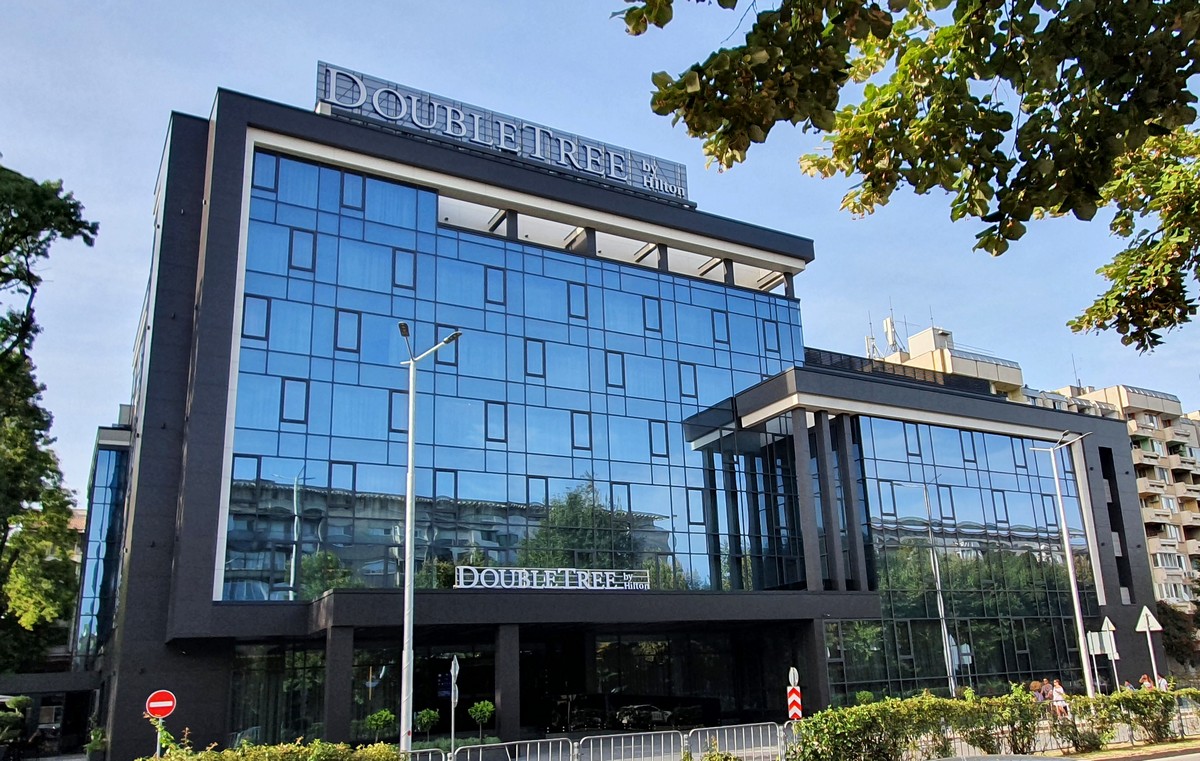
Where to stay: during my visit, I stayed at the Doubletree by Hilton Hotel. It is a new, modern hotel, that opened in 2022. It is located near the Bishop’s Basilica – less than 10 minutes on foot.
More information: Doubletree

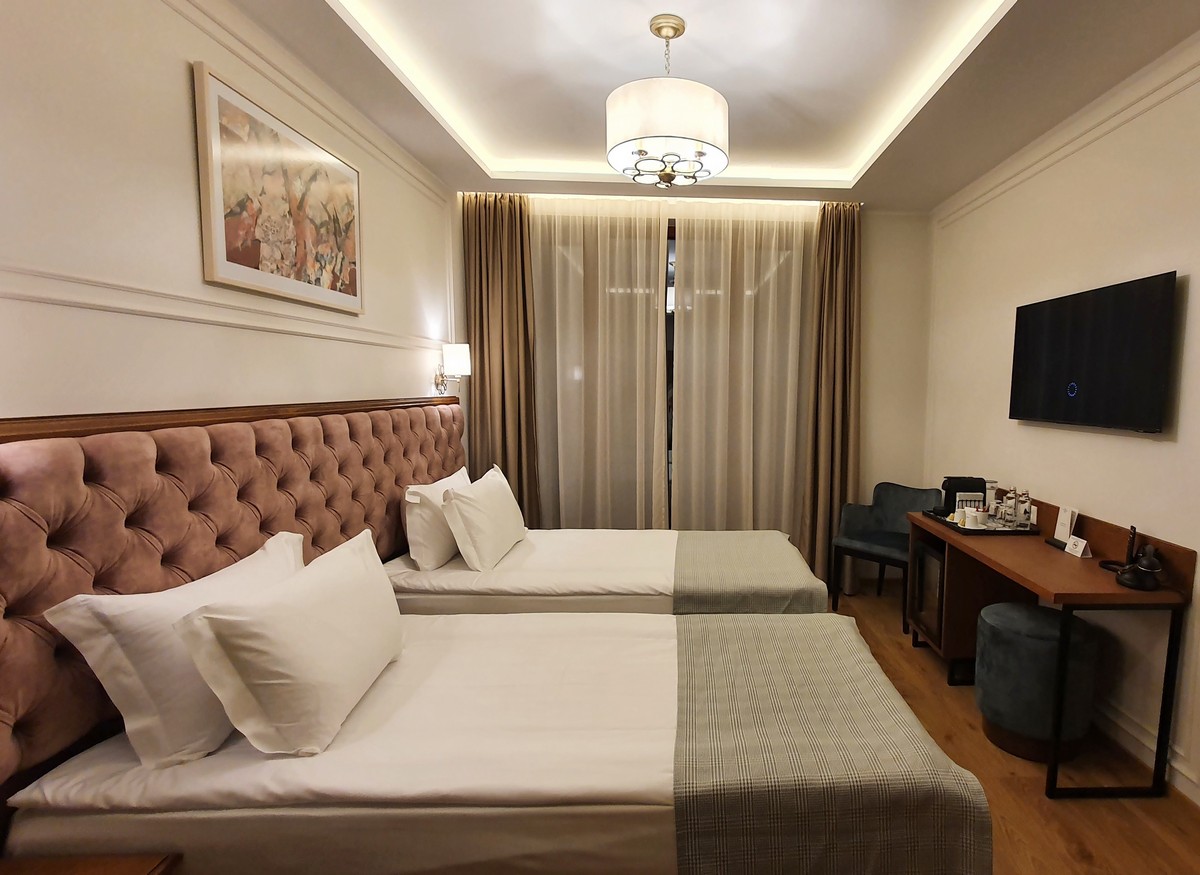
If you prefer smaller boutique hotels, then I recommend Hotel Villa Flavia.
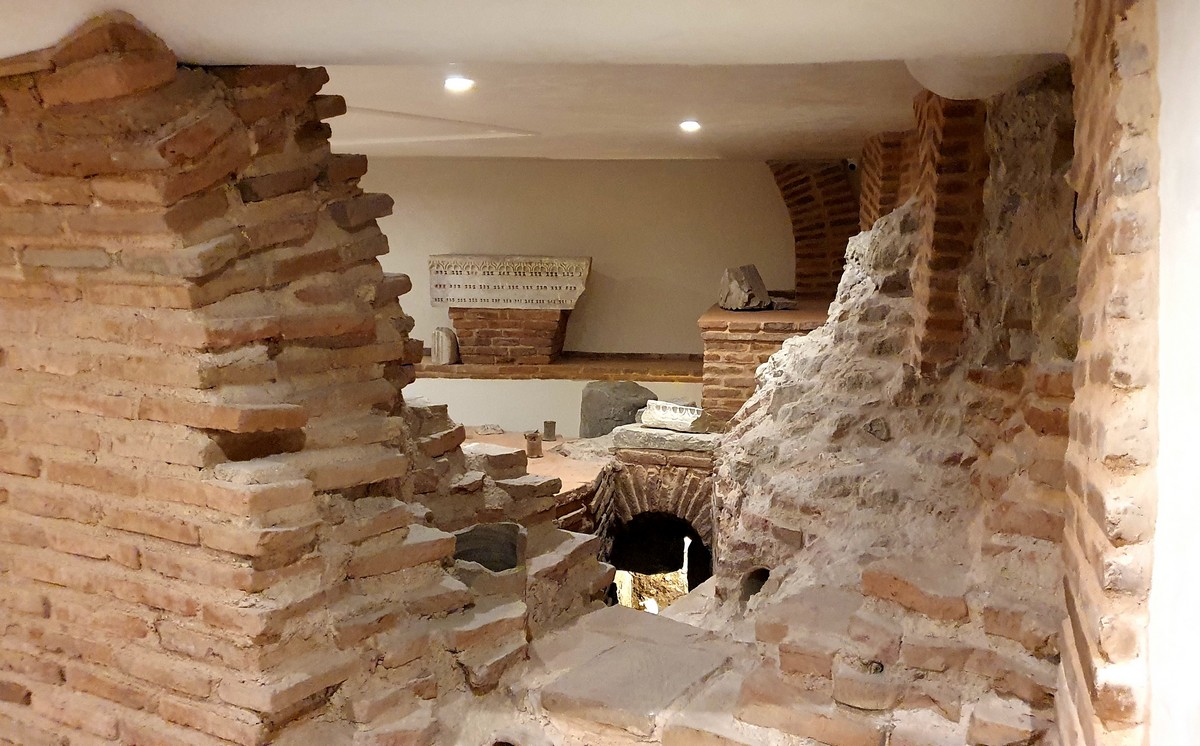
This hotel is also related to the theme of the Roman period of the city, which is sure to be appreciated especially by admirers of ancient history. During the reconstruction of the hotel, a part of the public bath was discovered underground, which was in operation from the 2nd to the 5th century AD. There is a pool with a marble wall, but also various architectural elements as part of the luxury equipment and also the entire underfloor heating system. This space has been adapted for special events.

For me, a unique experience was the dinner with wine tasting, organized in cooperation with Bulgaria Wine Tours. Bulgarian wines are excellent; my favorite of that evening was the Mavrud Sarva red wine from the Dragomir Winery Estate.


All the dishes served were delicious and beautifully arranged.

They even offered us balls made of dates, pine nuts and honey according to an old Roman recipe!
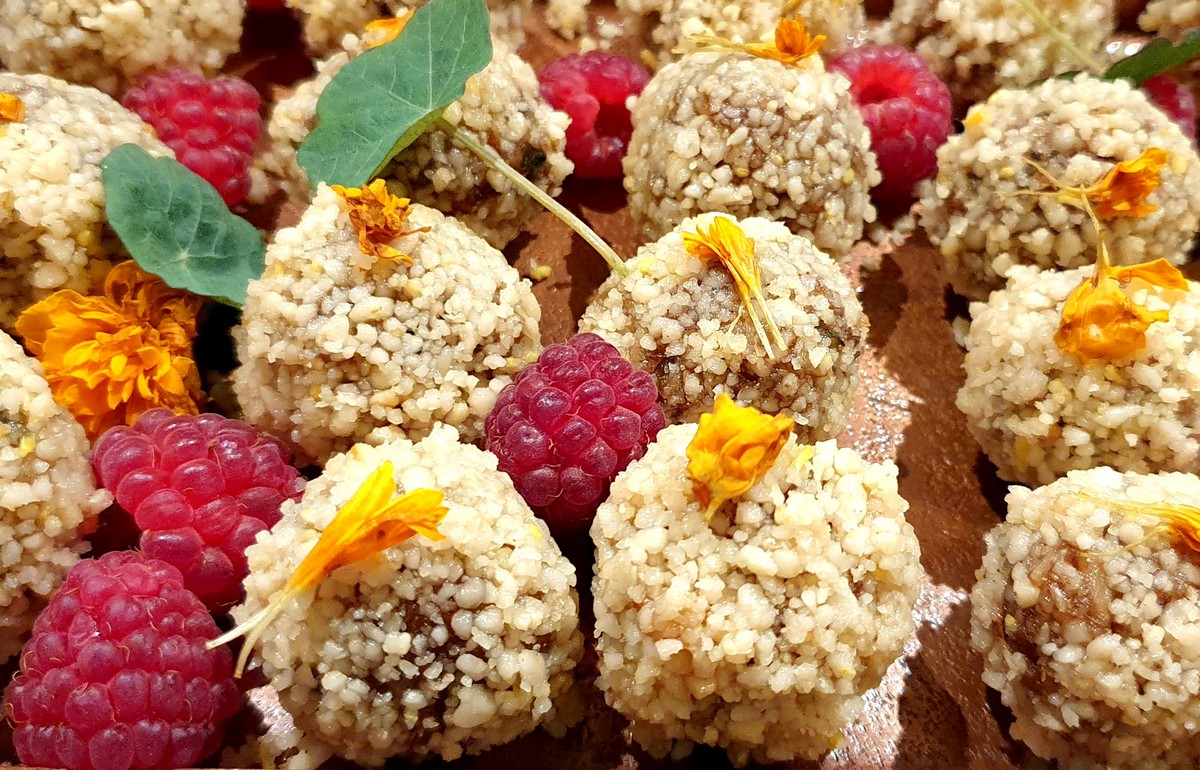
So all we had to do was close our eyes, imagine that we had just come out of the hot pool where we had debated the latest political events in Philippopolis, and now – maybe even lying on one side – we were enjoying selected dishes… 🙂
More information about the hotel: Heritage Boutique Hotel Villa Flavia
More information about wine tours around Plovdiv: Bulgaria Wine Tours

READ ALSO:
Text: © Copyright Ingrid, Travelpotpourri
Fotos: © Copyright Ingrid, Travelpotpourri
Plovdiv, Пловдив, 4000, Bulharsko