
 TRAVEL


 RECIPES WITH A STORY












 AUSTRIA-VIENNA




 SLOVAKIA-BRATISLAVA


 EVENTS






 INTERVIEWS


Santander, the capital of Cantabria, can be found on the map of Spain in the north of the country. It is located along a bay which belongs to the Club of the most beautiful bays in the world. So one would say that a day in this city would be ideal for lounging at the beach and swimming in the sea. But what if the sky is cloudy and it’s raining? Fortunately, Santander offers much more than just sandy beaches!

1. A Colourful Range of Fish
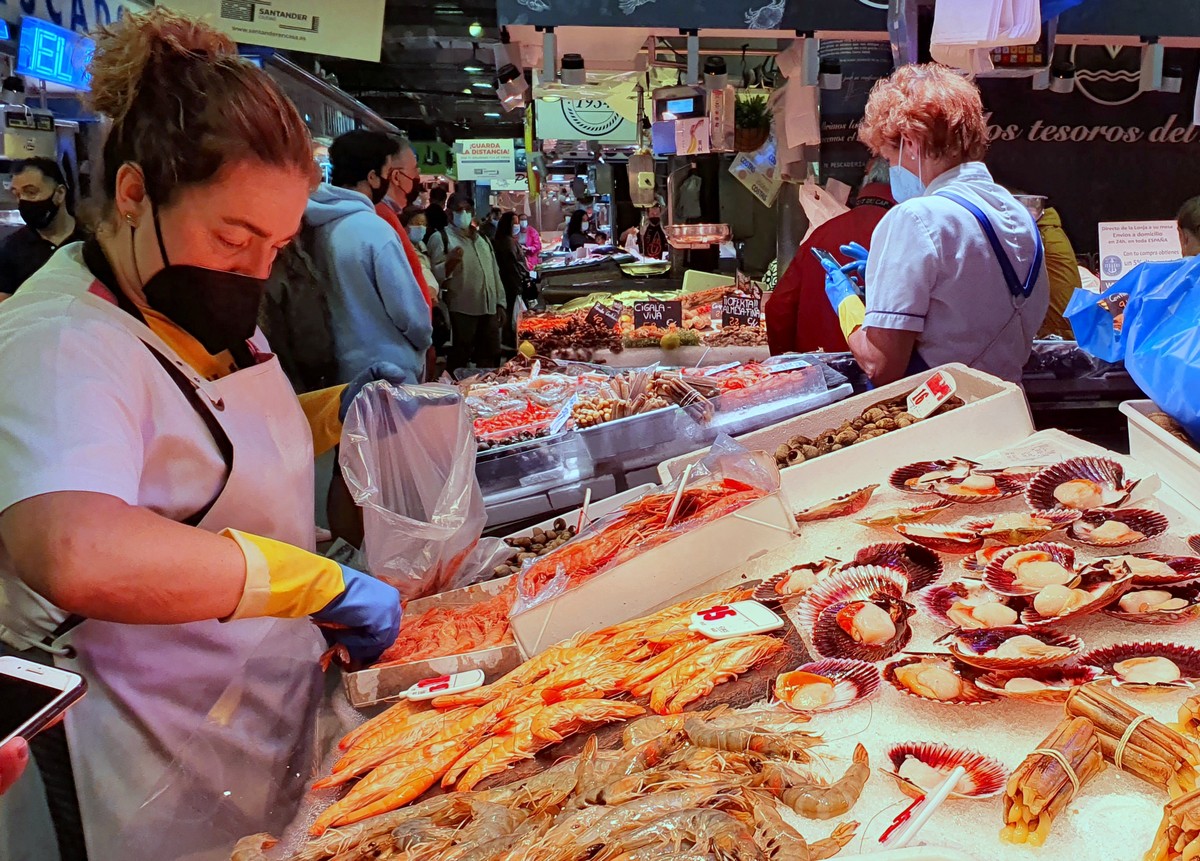
For starters, it was necessary to go somewhere under a roof. For me – coming from a land-locked country – it was tempting to visit the local fish market. The market building with its interesting name Mercado de la Esperanza (Market of Hope) was designed in 1897, the facade is decorated with elements of Art Nouveau. I don’t know what hopes other visitors have for visiting this market, but my expectations have been met 100%. While meat, vegetables and fruit are sold upstairs, the entire ground floor is reserved for fish sales.

Despite the fact that the tuna season was over, they still offered a few good pieces here – the stout fish were resting on the ice, some of which were already sliced. Other species of fish, shells, crabs, crayfish and all sorts of other sea animals whose names I don’t even know. Some even moved or just lazily pulled on their claws.
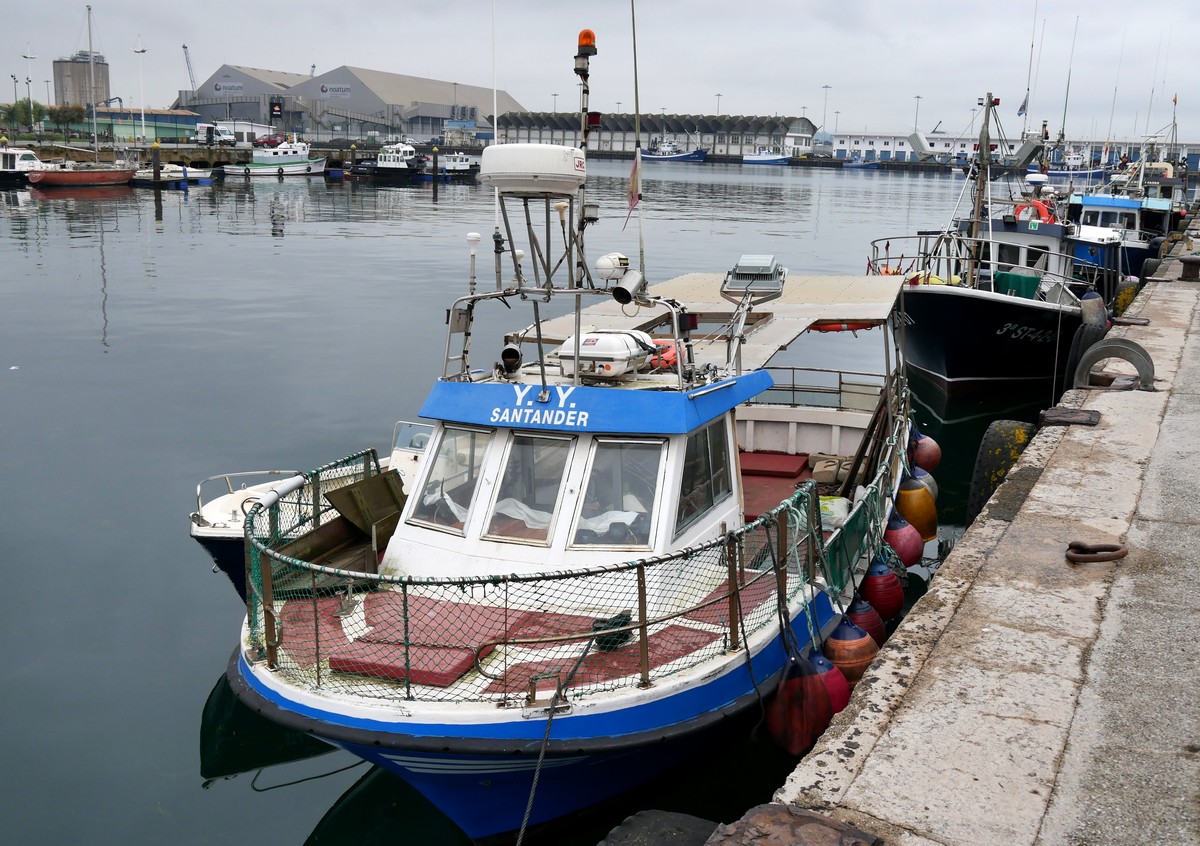
In the past, the majority of the population was engaged in sea shipping or fishing, which means that the town was inhabited mainly by sailors and fishermen, with fishermen forming a specific social class with certain cultural, social and economic peculiarities.
2. In front of the City Hall
The market is located close to the City Hall, which stands on the site of a former Franciscan monastery. Only half of the building is original, dating back to 1907. In the 1960s, the City Hall was expanded to its current form. It is located at Plaza del Ayuntamiento, where a statue of dictator Franco stood for 44 years. They removed it in 2008, it was actually the last statue of the dictator removed from the general public space. At the time of my visit, it was busy in front of the City Hall, locals were mixing with tourists and looking at the photo exhibition.

3. The Big Fire
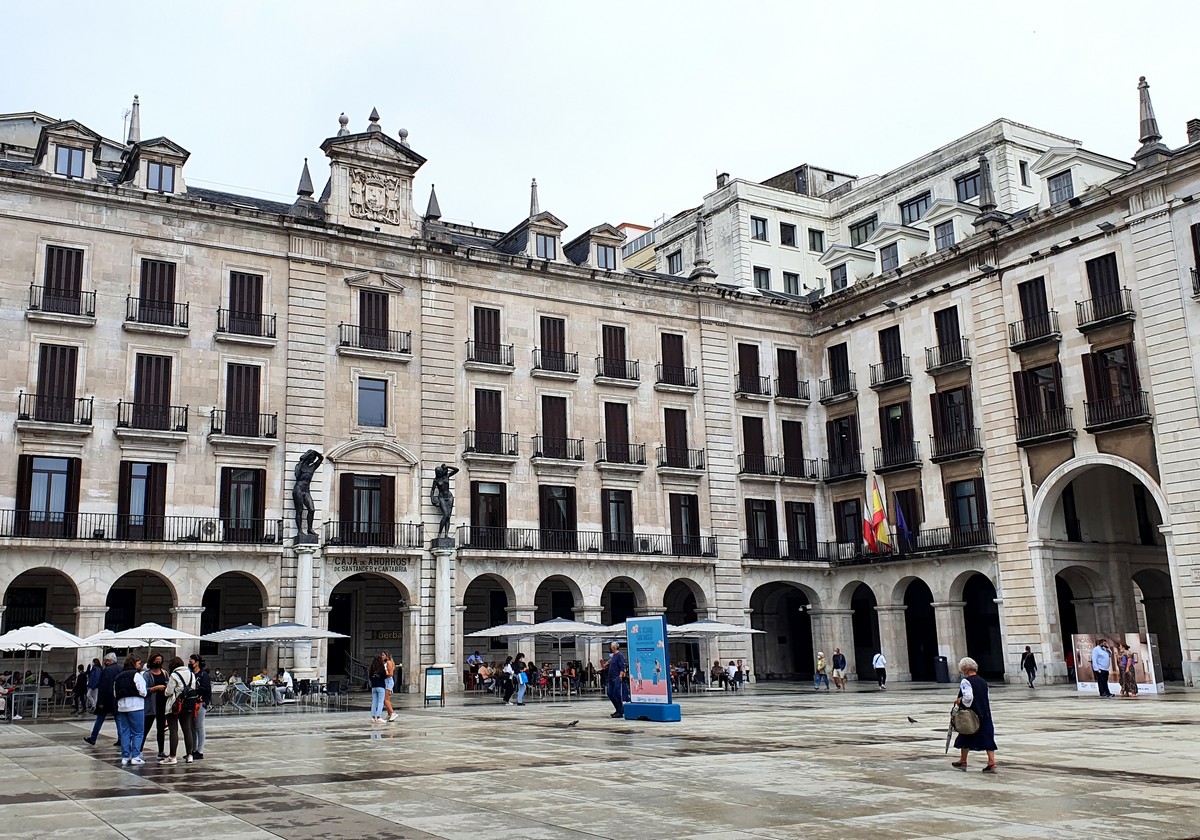
The rain slowly ceased, the paving on the elegant neoclassical Plaza Porticada was wet. The arcade buildings were originally supposed to house the main state, provincial and local authorities, but the central building was acquired by the savings bank.
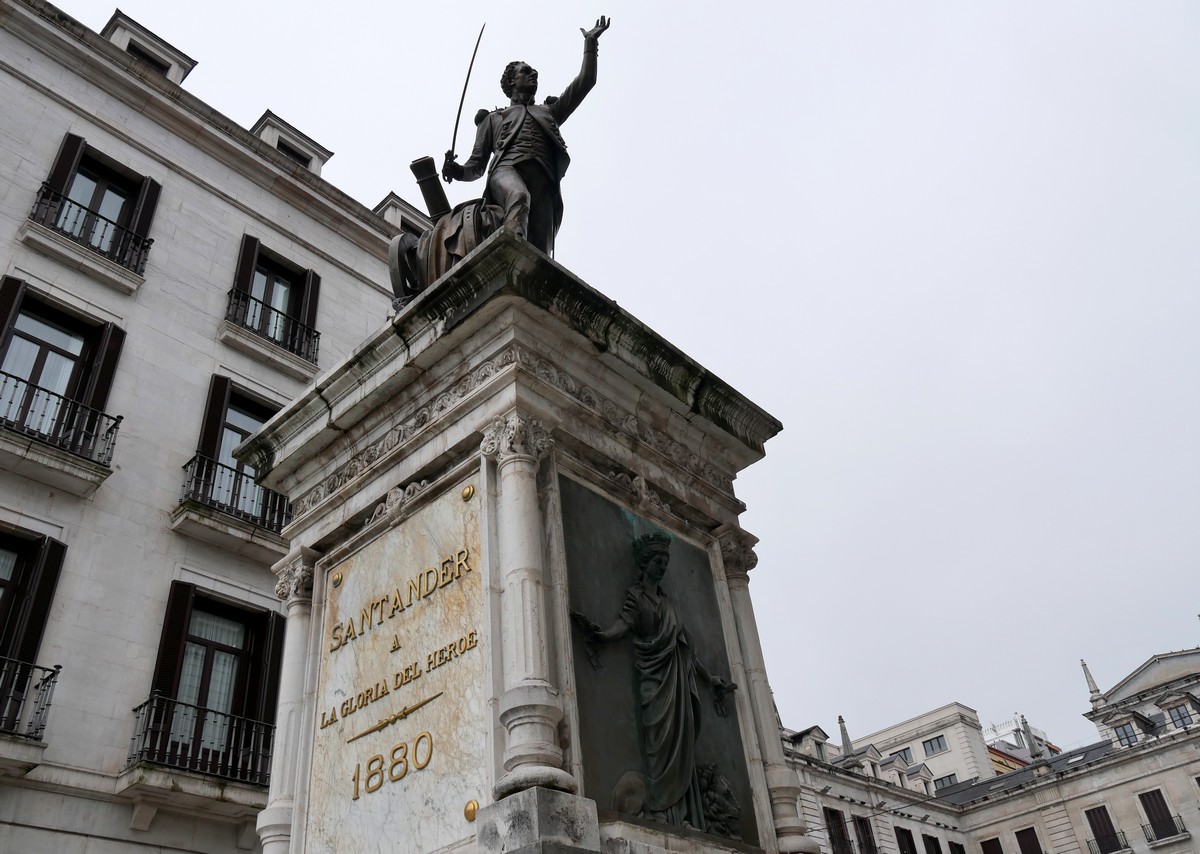

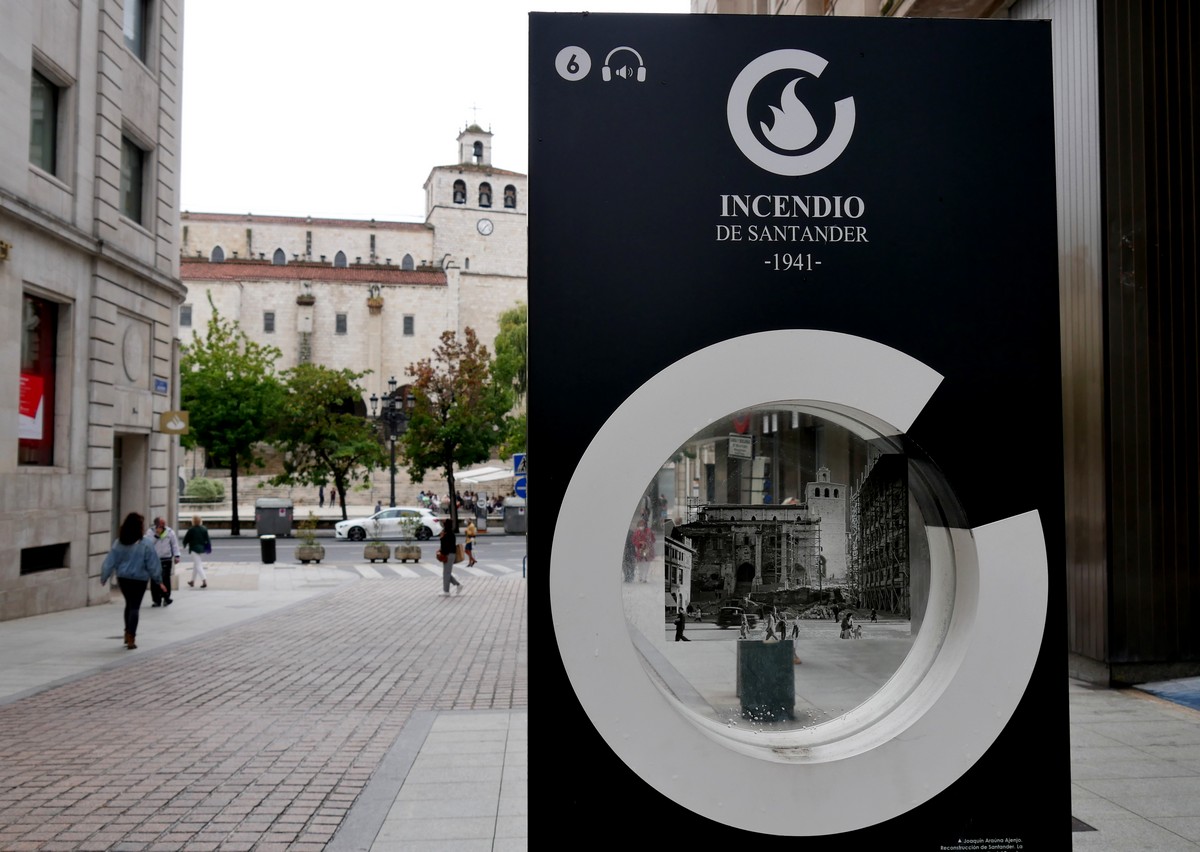
Not much of the original historic city center has been preserved. In 1893, much of it was destroyed by the explosion of the steamship Cabo Machichaco which was loaded with dynamite. Another catastrophe was a big fire in February 1941. The fire started on Calle Cádiz near the port and strong wind with speeds of up to 190 km/h easily spread it to another 30, at that time narrow streets. Unfavourable weather conditions also made communication with the rest of the region impossible. In 40 hours, the fire engulfed almost 400 buildings. Ten thousand people – 10% of the city’s population lost their homes. The form of the city had changed forever.
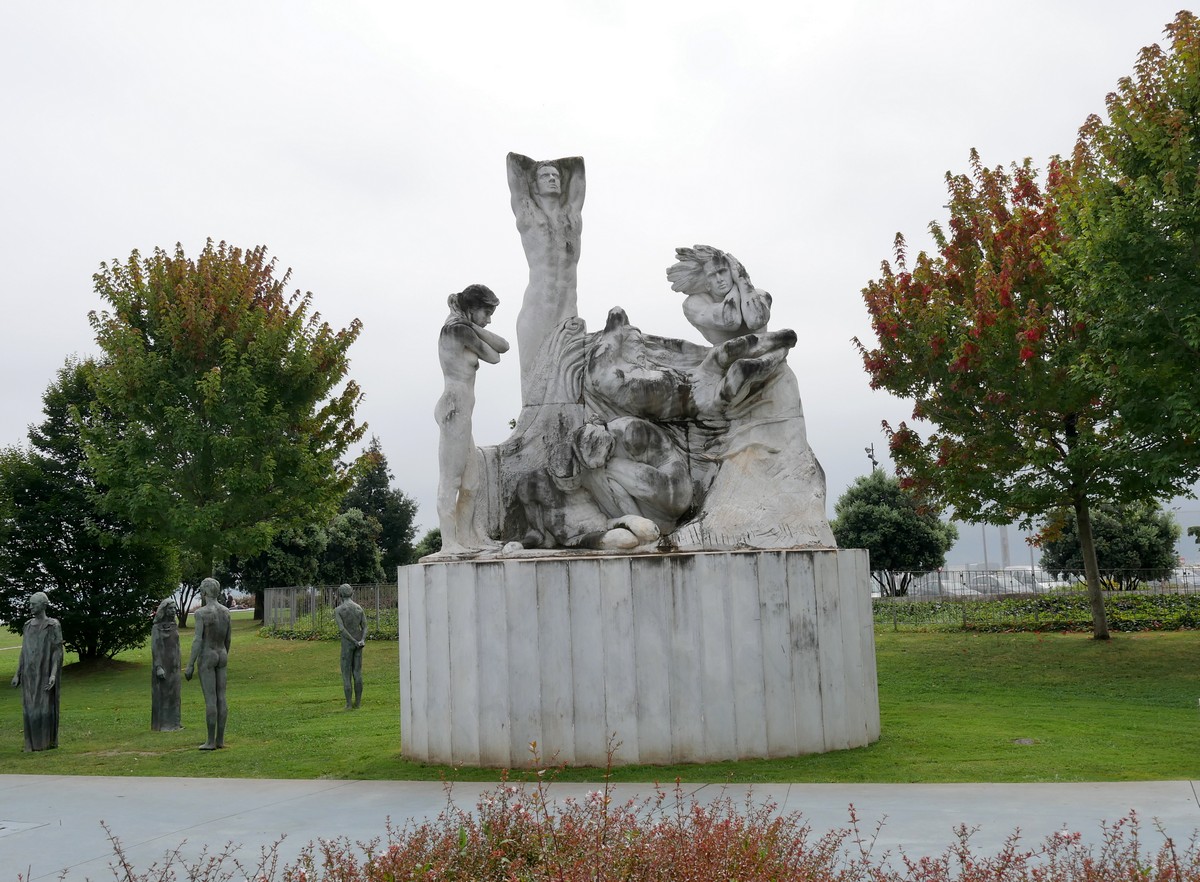
The monument also includes a group of statues of naked people with despair on their faces – people who lost everything in the Fire
4. Santander Cathedral
One of the buildings that partially survived the devastating fire is the Cathedral of the Assumption of the Virgin Mary, a symbol of the city right in its heart. Its history dates back to 1187 when Santander received the status of a city.

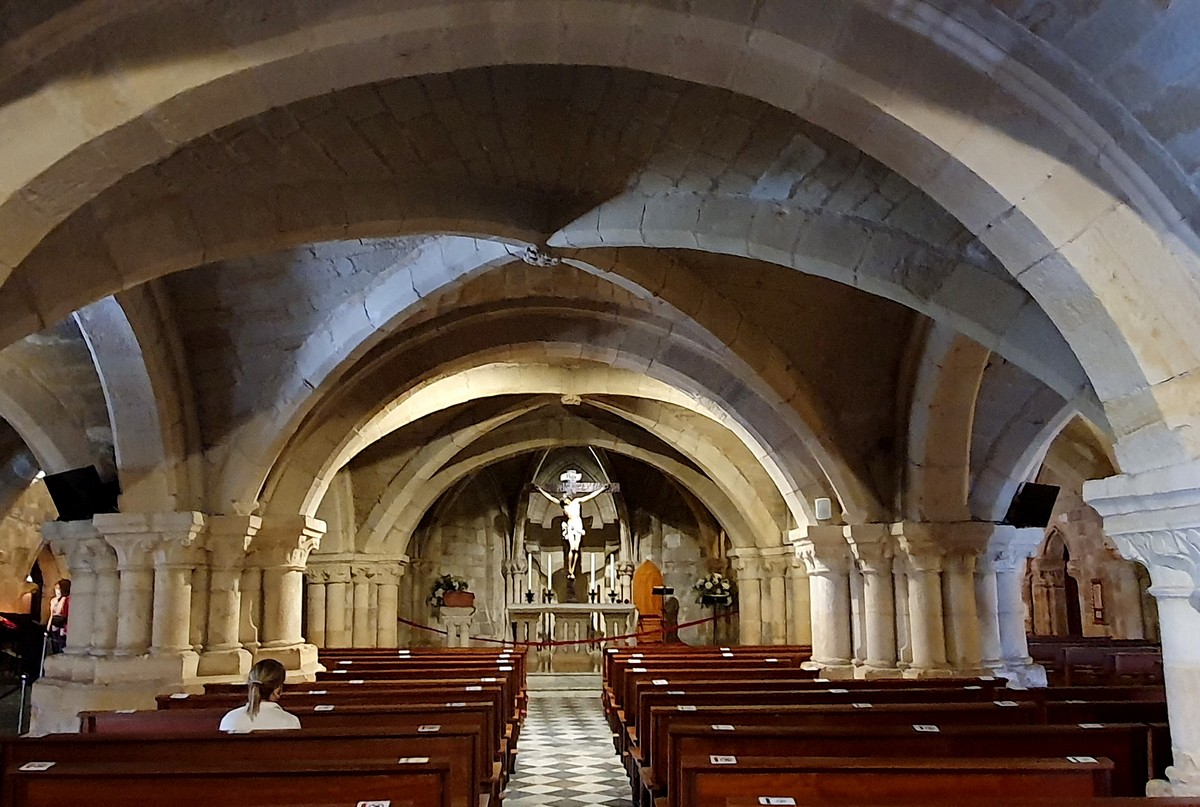
Walking under the vaults of the cathedral, one returns to the Middle Ages. This is actually a construction of two floors with two churches in the Gothic style. The lower, older one is the Church of Christ from the beginning of the 13th century. The low, robust pilasters support the upper church, their capitals are mostly decorated with plant motifs. Archaeological excavations have revealed the remains of a Roman settlement.
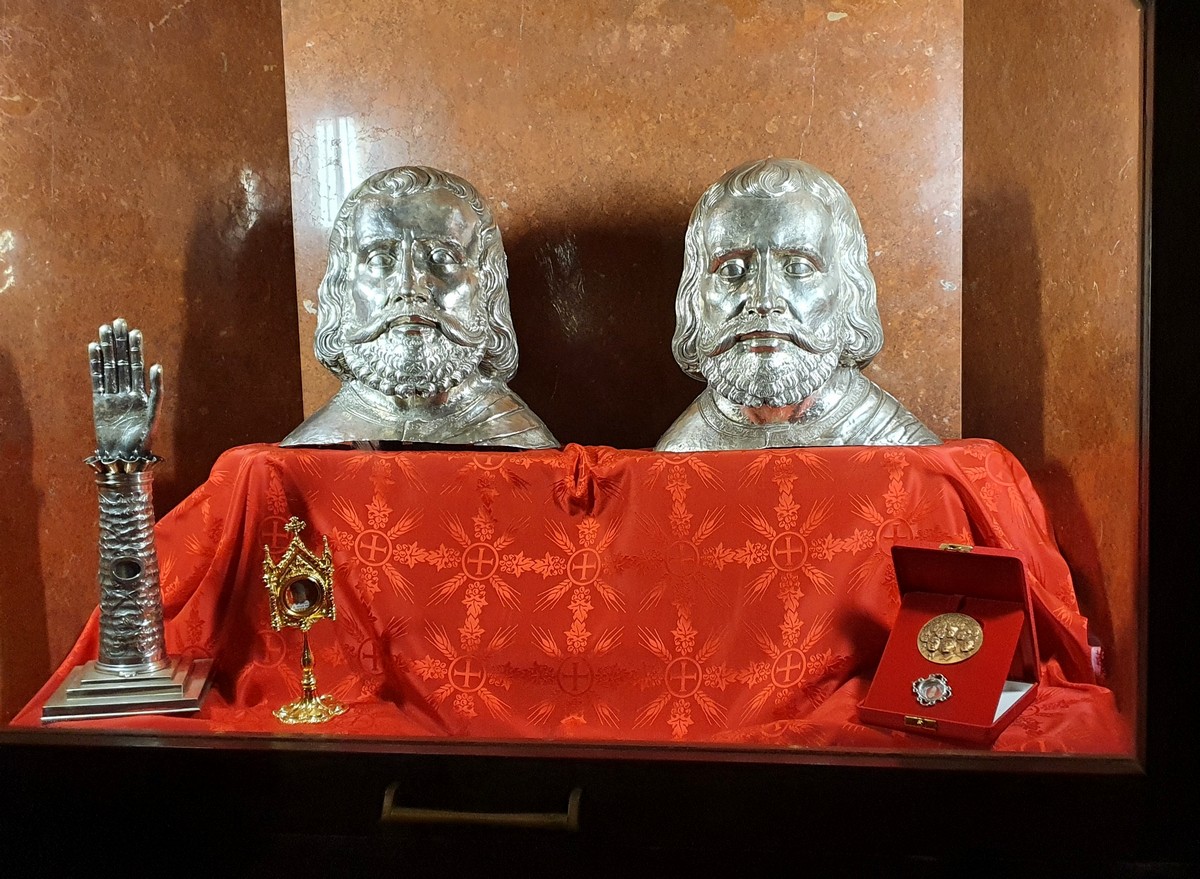
The upper church was partially destroyed by fire, but the columns and most of the decorations on the vaults are original. The most important relics are the skulls of two martyrs – St. Emeterius and St. Celedonius, patron saints of the city. They are displayed under silver masks.
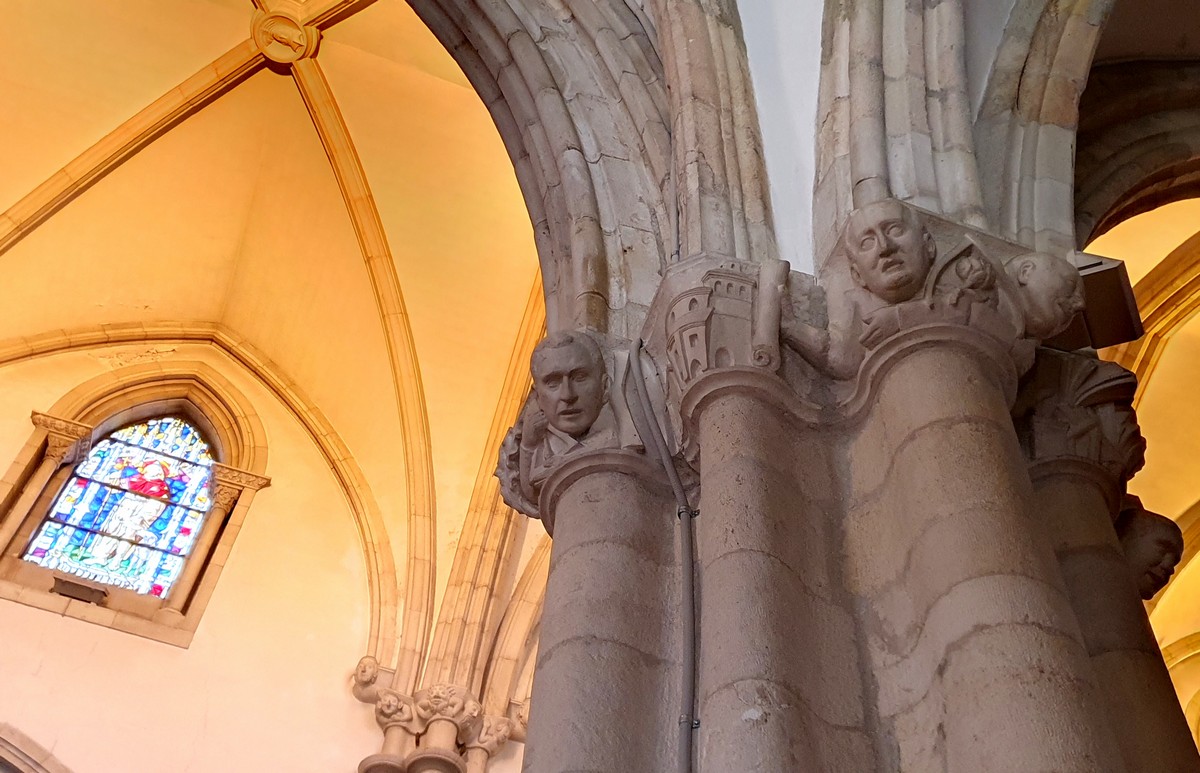
However, other heads struck me more strange – those modern ones on the pillars inside the cathedral… The church also houses the tomb of local writer and historian Marcellino Menéndez Pelay.
The inner courtyard once surrounded an orange garden. Today, you can admire the old cloister and the original walls of the cathedral in the sober Gothic style. On the main portal (from around 1230), among the decoration, do not forget to notice the coat of arms with a lion and castle, which symbolizes the union of Castile and León during the reign of Ferdinand III.

The renovation of the cathedral was completed in 1953. After the fatal fire, the entire street leading to the cathedral had to be reconstructed as well. The first building completed on the new street was La Polar, which you will see in front of you as you leave the cathedral. It has a 5-pointed star at the top. Also, look down on the ground, you will see this sign there.
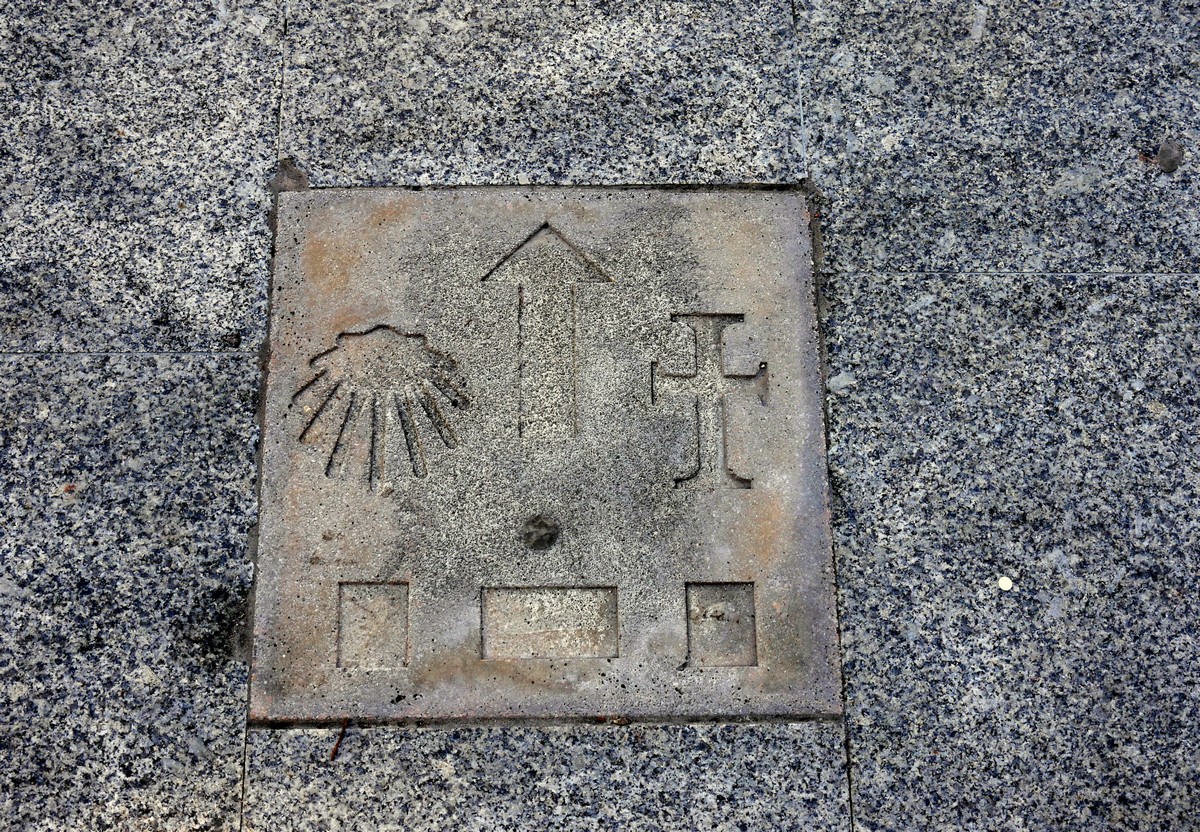
The sign shows the direction to Santiago de Compostella. Santander is an important stop along the northern route of the St. Jacob’s Pilgrimage Route – Camino del Norte. Therefore, it is no wonder that, in addition to traditional tourists, you will also meet pilgrims in simple clothes, with one or two sticks in hand and a large backpack on the back with at least one shell of St. Jacob hanging from it.
5. Lunch Time
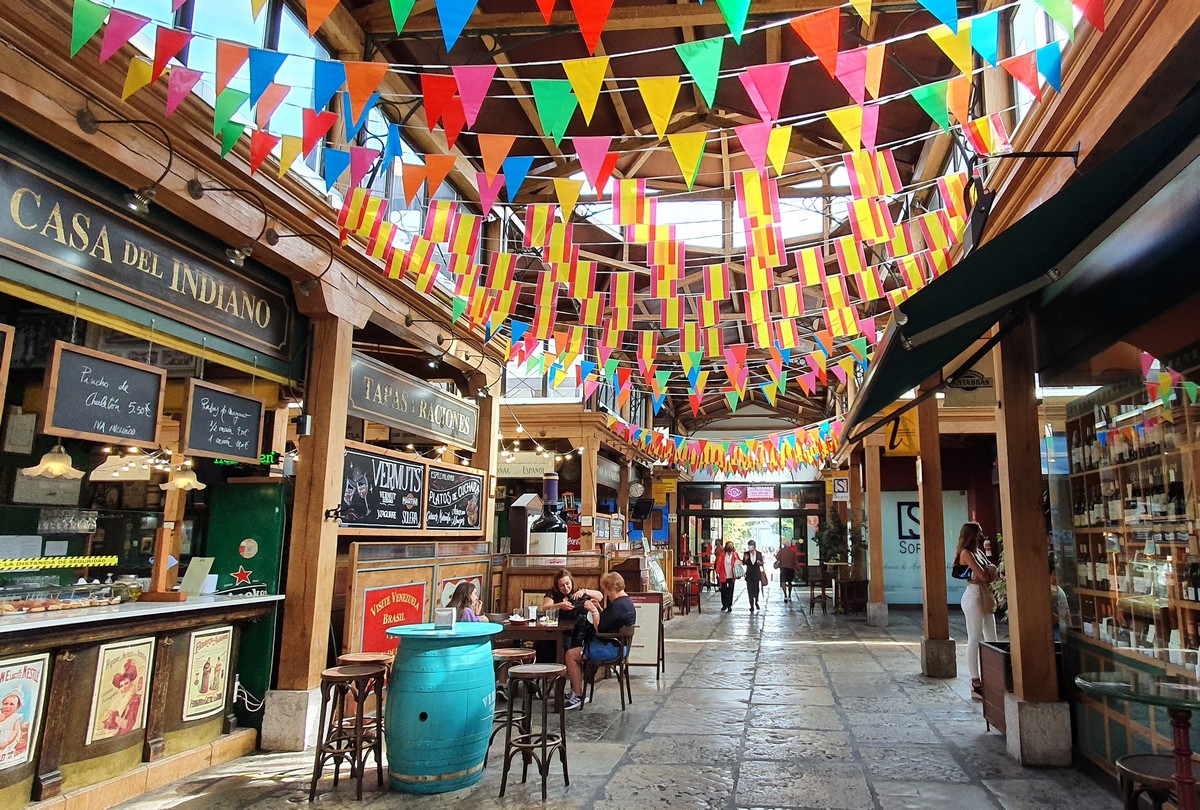
Since we would like to do a lot more in this city, it will be convenient to go to the Mercado del Este (Eastern Market) for a quick lunch. In the old building from 1842, there are a number of small shops and bars which mainly offer pinchos – small sandwiches pierced on a cocktail stick. A piece of ham, chorizo salami or fish topped on a slice of bread and a glass of quality wine is an ideal choice to satisfy hunger. Afterwards, we can continue our paseo – a walk around the city.

6. Botín – an Avant-garde Symbol of the City
I have to admit, it wasn’t love at first sight. We were coming from the side on the gray wet paving, the blue-gray bay was murmuring on the right side and to the background of the gray sky, a modern building appeared in front of us in a kind of triangular form. It reminded me of a giant gray shark or whale before they sink into the water. After a few steps, the shape changed – a gray “airship” landed on the waterfront…
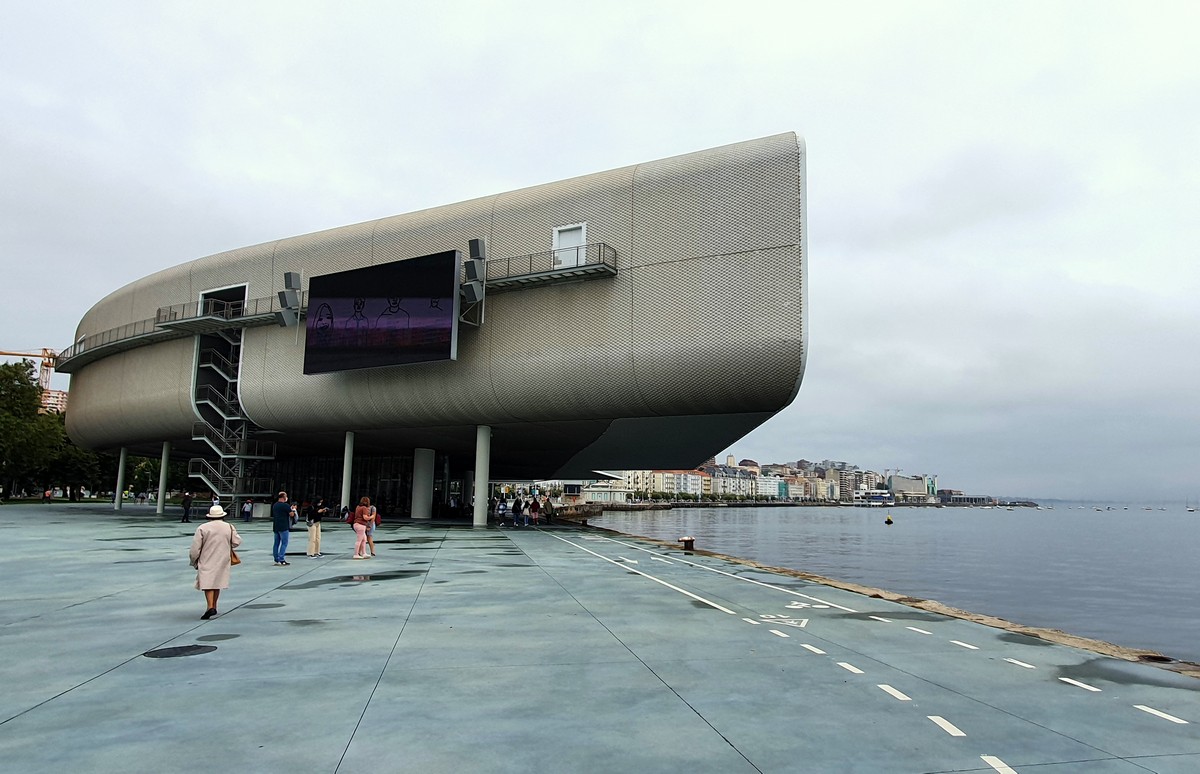

The Botín family is the most influential banking family in Spain (Banco Santander). In 1964, they founded the Foundation for the Promotion of Arts, Culture, Education and Science, which in 2012 commissioned the Italian star architect Renzo Piano (winner of the Pritzker Prize for Architecture) to build a new cultural center and museum of modern art. At first, the local population did not like the idea, they were afraid that the modern construction would prevent them from looking over their beloved bay. Piano left nothing to chance, he came to look at this place and then designed the building according to the motto “light and lightness”.

I understood the architects’ intention when I saw Botín from another angle. The building, floating on pillars, looked like a huge dragonfly about to take off over the bay, one of the most beautiful in the world!
Centro Botín was opened in 2017. It consists of two interconnected parts, which have a similar shape, but different size and function. The smaller one has a lecture hall and classrooms, where lectures and seminars are held, the larger one is used for exhibitions and on the ground floor, there is a pleasant restaurant. Part of the building hangs over the water and the structure of the pillars does not obscure the view of the bay.
I was lucky to be here at the time of the excellent exhibition Picasso Ibero, which was focused on explaining the influence of ancient Iberian art on Picasso’s work.
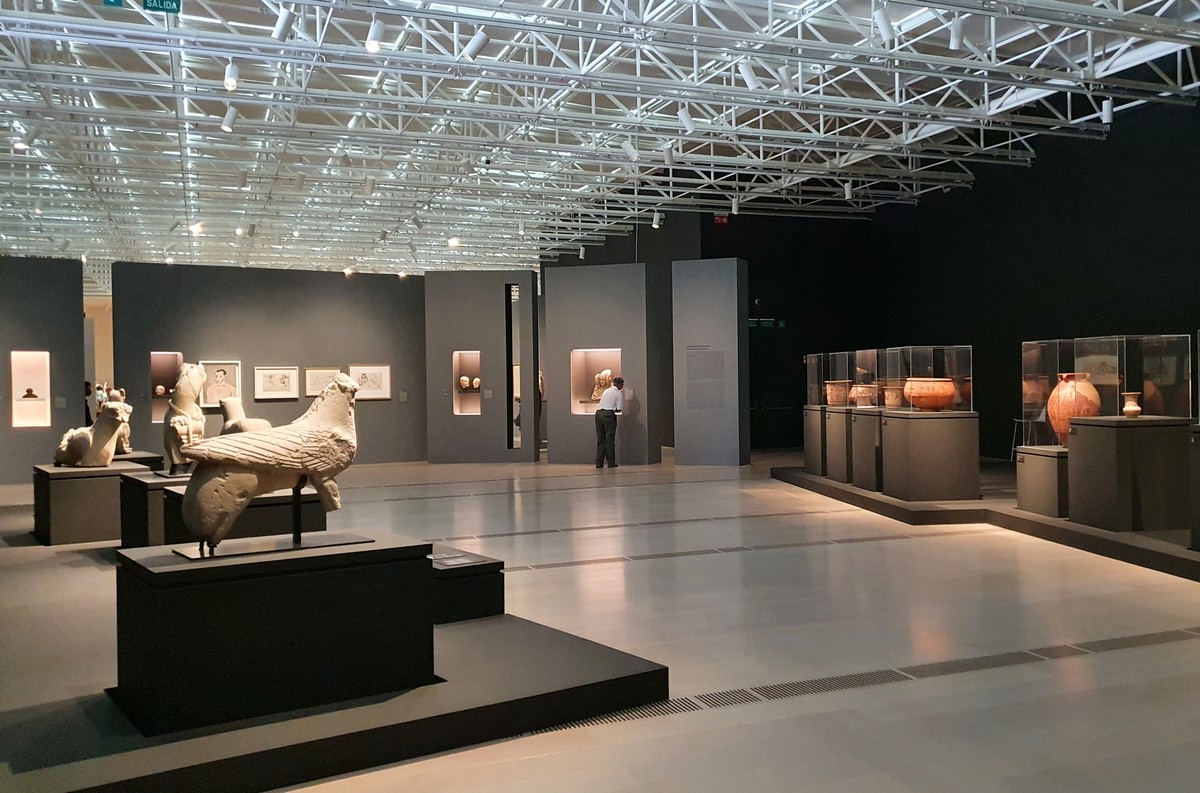
With each step on the glass and steel sidewalks, my admirable relationship with this building intensified. And I must not forget to mention the elevator – singing “si, sí, sí” as the lift takes you up, and the beautiful view from the observation deck. My impressions were multiplied by the pleasant change of weather when the sun began to give off its warm rays again and the sky and water competed for a prettier blue color.
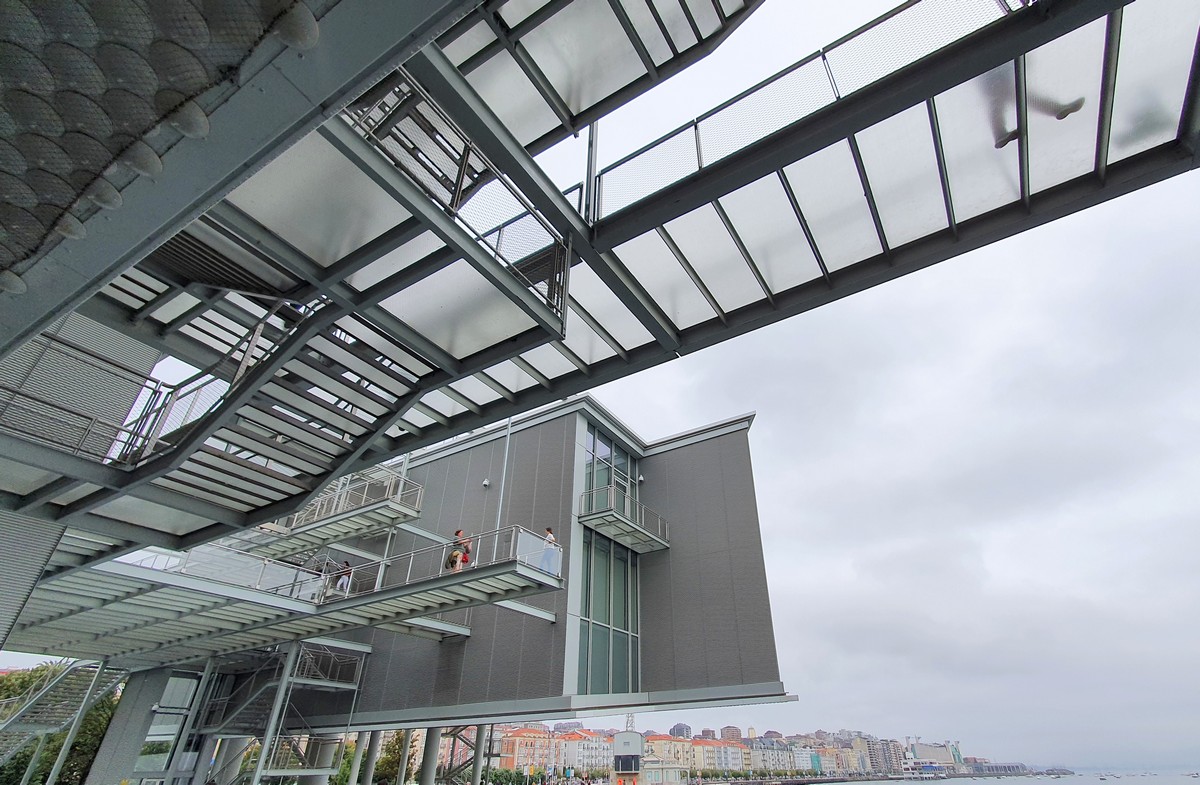
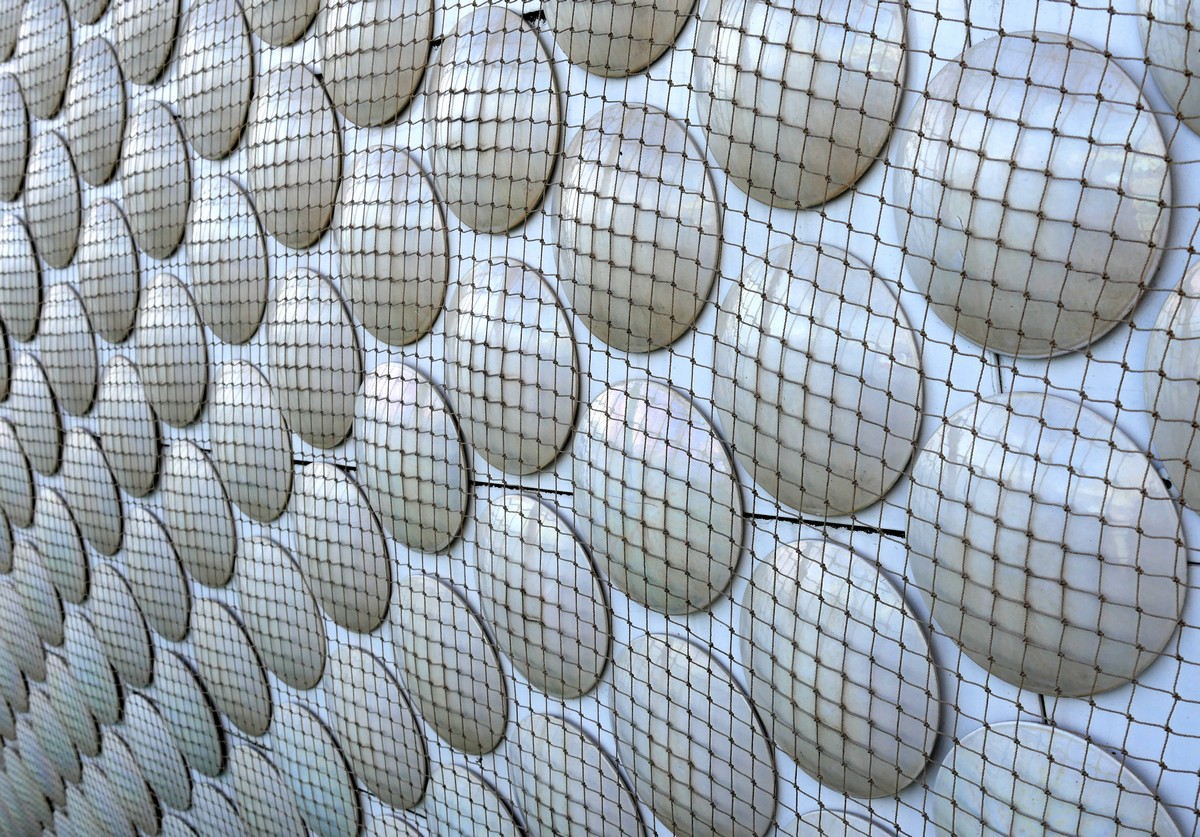
The façade is covered with light round ceramic tiles – Renzo followed the tradition of ceramic cladding in Spain. During the day, 270,000 tiles reflect light in various shades – from pearly, ivory to pink – just like the colors of the sky and water change.

Today, Botín is an integral part of the city’s skyline, and even the most ardent opponents, who previously threatened not to enter it, are now taking all their guests here.
Opening hours and entrance fees: Centro Botín – closed on Mondays!

7. On the Waterfront
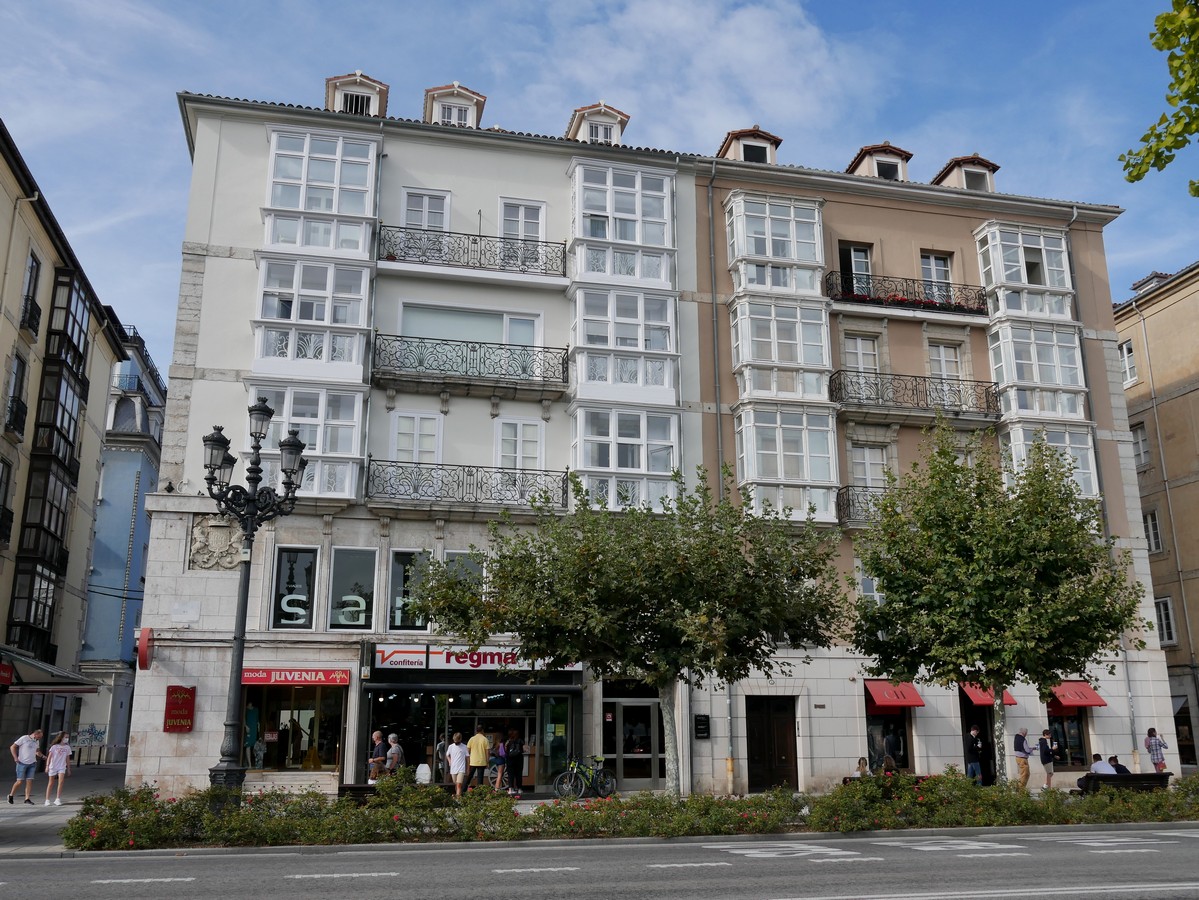
The view from the upper terrace of Botín invites you to take a walk along the bay. We started the promenade near the stone crane from 1900, which was used here for decades to load and unload ships. On the left side, there are elegant houses with glazed balconies (miradors in Spanish). There is also the main administrative building of the largest Spanish bank Banco de Santander (it was under reconstruction during my visit) and a tourist information office.
A pleasant seaside breeze blew from the right side. The large ship of Brittany Ferries left the port and set out for Portsmouth or Plymouth or even for Cork in Ireland.
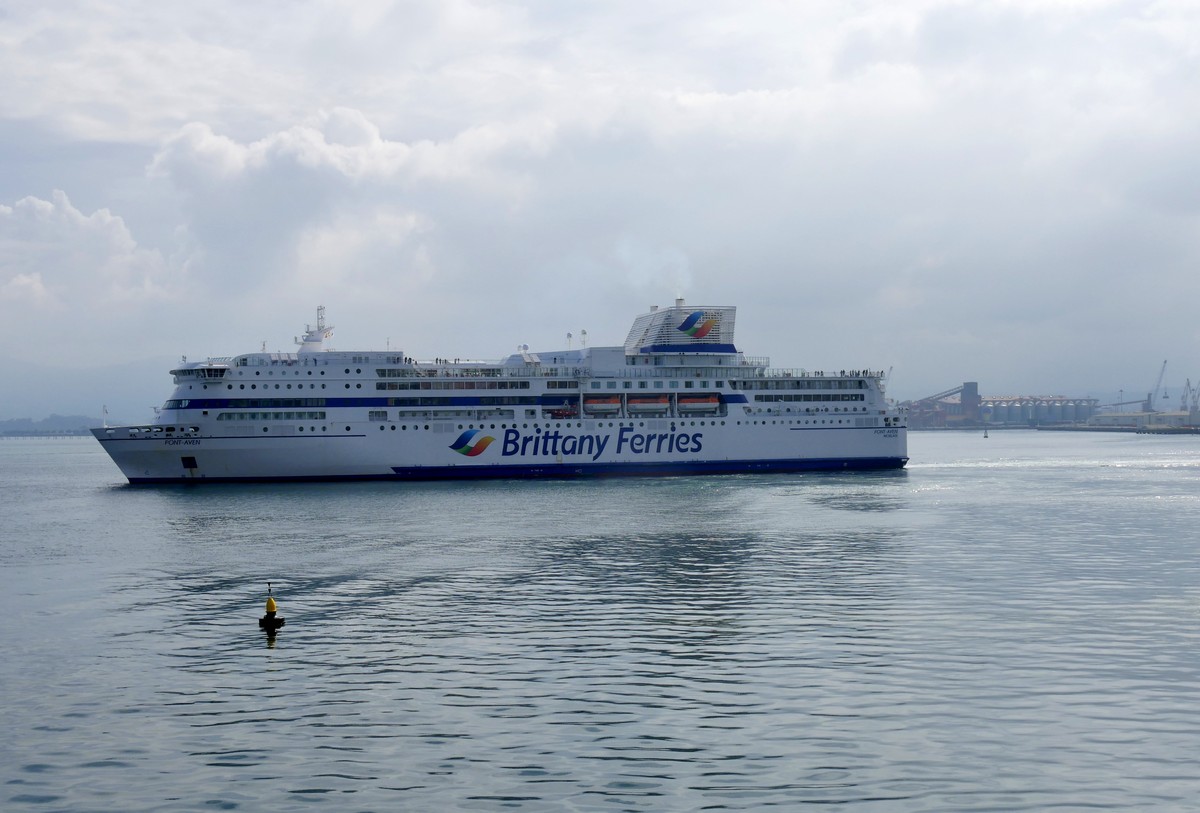
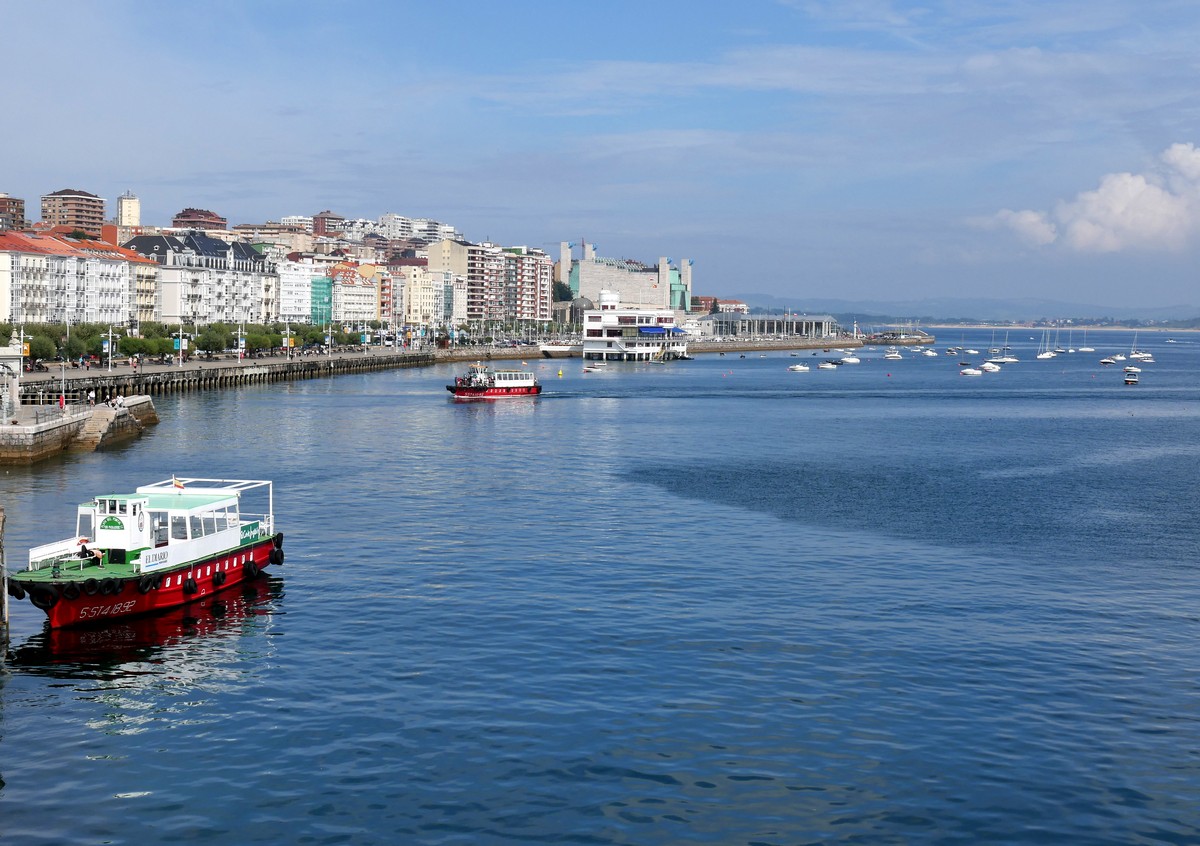
The view of the bay is never truly boring. The bay is constantly changing and still beautiful. It was gray in the morning and blue and calm in the afternoon. There were various ships, yachts, sports and fishing boats, as well as red boats – pedreñera, which criss-cross the bay and transport locals and tourists to other parts (Somo, Pedreña) of the beaches, for yachting or surfing or a visit to a fish restaurant.
The most famous attraction on the waterfront is another group of sculptures by Santander sculptor José Cobo Calderón with the hard-to-translate name Los Raqueros from 1999. The verb racore comes from the Latin word rapio: to take something that does not belong to me. However, a group of four life-sized children cannot simply be identified as thieves, but a deeper context must be sought.
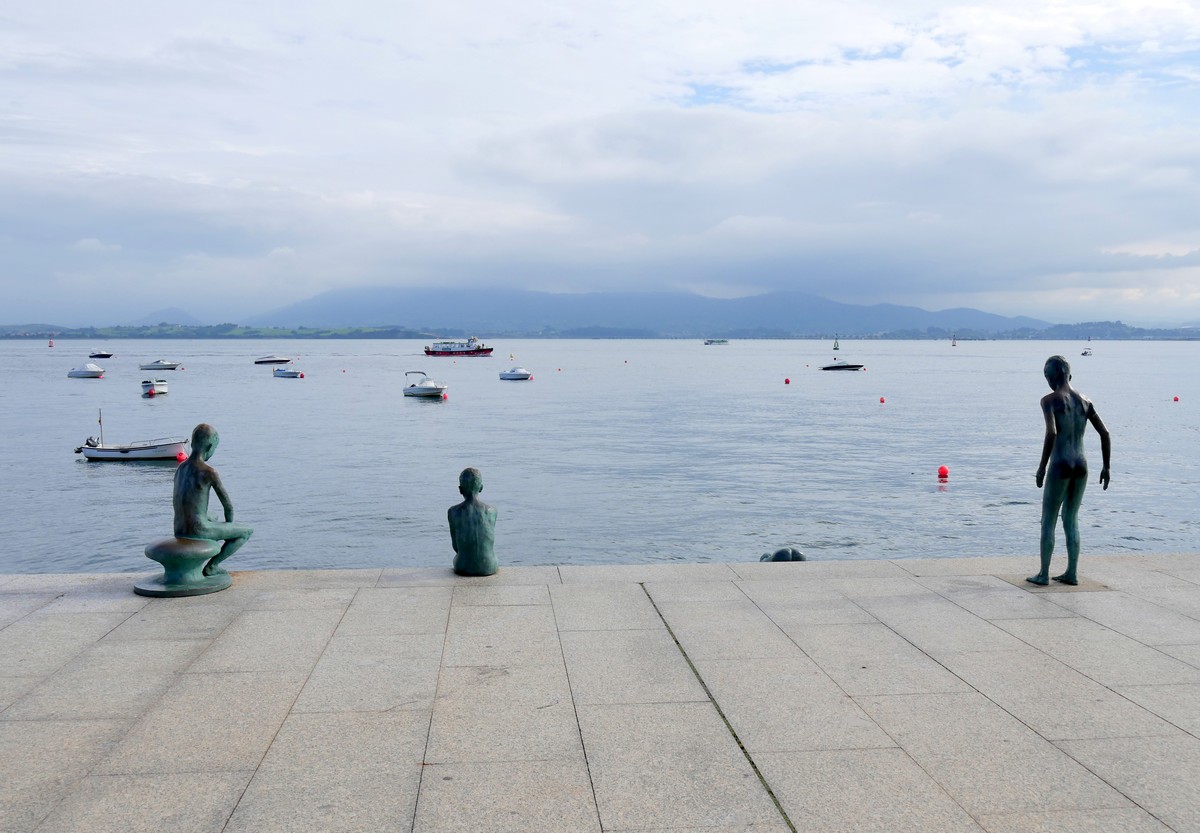
At the turn of the 19th and 20th centuries, poor children, mostly orphans, often roamed around the port. They survived from small thefts and coins they received as a reward when they fished for fallen things – hats, keys, etc. (today, it would probably be mainly mobile phones and sunglasses). Gradually, these children became an attraction of the port, wealthy tourists and crew members deliberately threw coins from the boats and had fun observing the children jumping into the water to catch the money. If you go to Santander and – like many other visitors – take a selfie with these statues, think about it. They are a symbol of child poverty – the sad reality of the past.
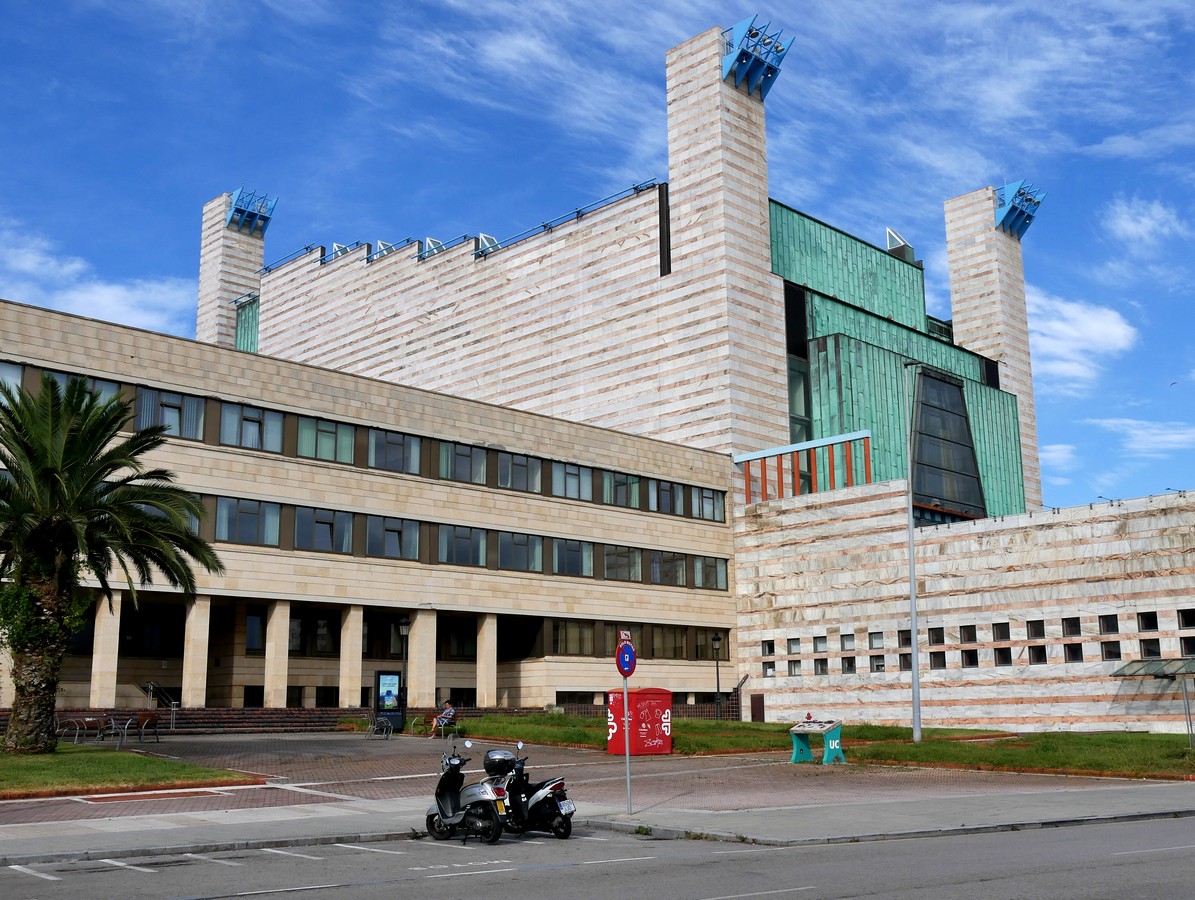
We will end the walk at the Festival Palace. The unusual postmodernist marble building is the work of Spanish architect Francisco Javier Sáenz de Oiza. It is the site of the prestigious International Santander Festival of classical music, dance and theater.
8. A Trip to the Peninsula
It is good if you have a car in Santander. You could walk along the bay for a long time, but the distances are quite large and you would not manage to see everything you have planned. And you should definitely not miss a visit to the Magdalena Peninsula – even within a one-day trip to Santander.

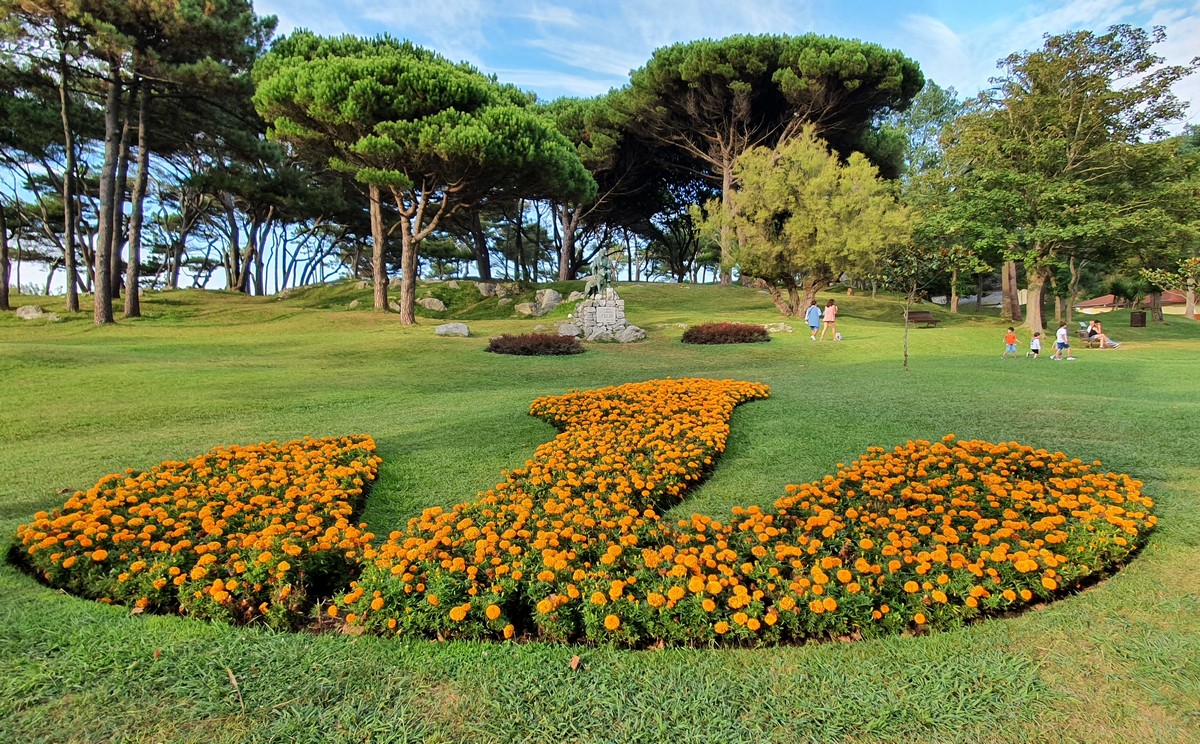
Tall pines with crowns like huge umbrellas mixed with palm trees, the tangle of paths in the park (25 hectares) was used by a tourist train, joggers, groups of young people and couples with strollers. There was a stunning view from almost every corner.
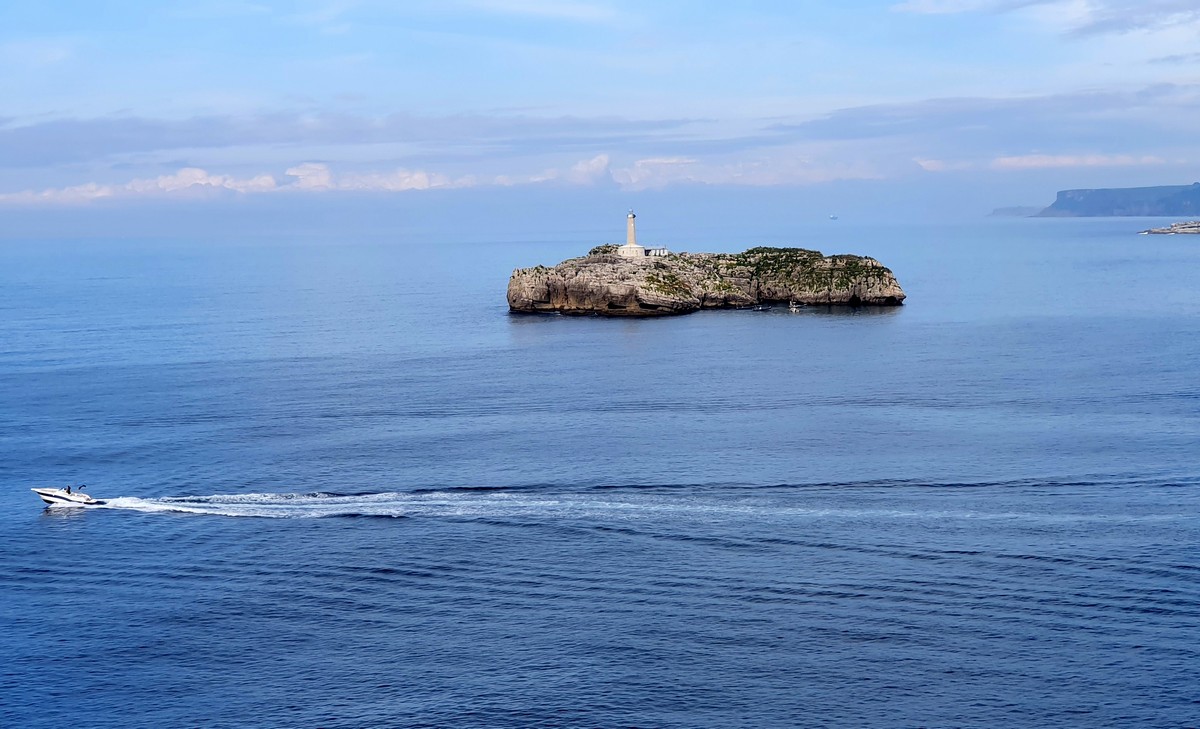
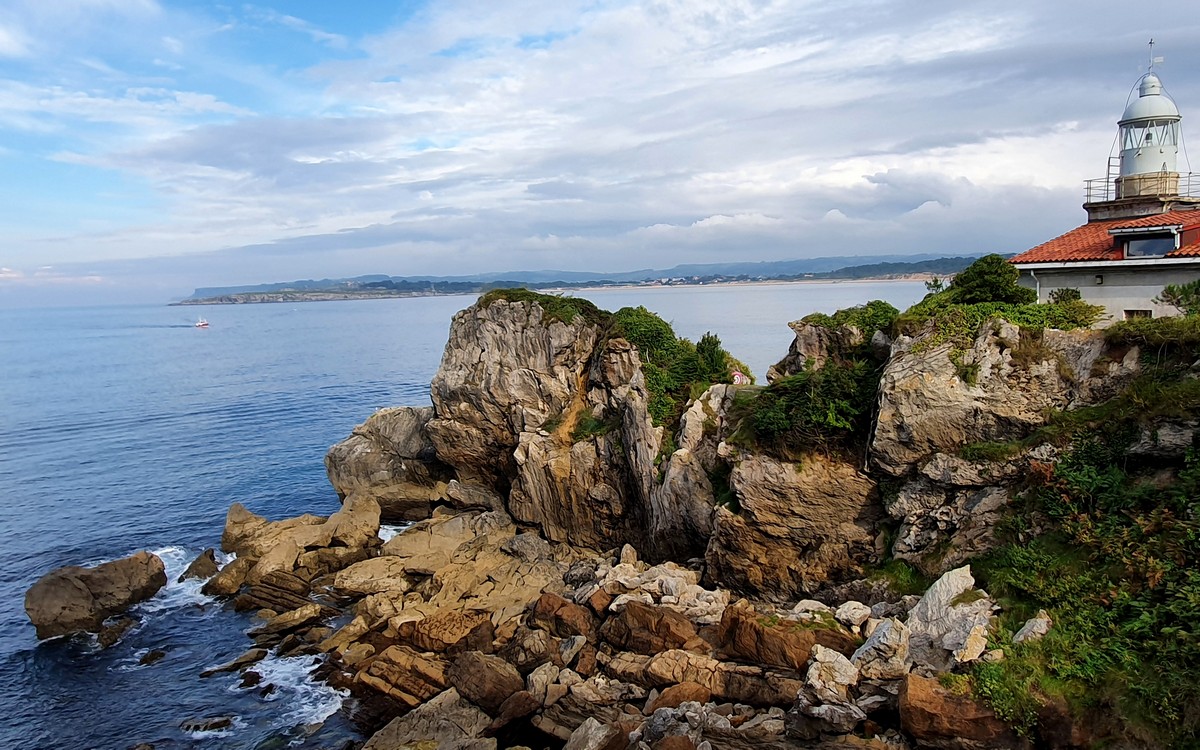
We arrived at the elegant palace on a hill in the middle of the park. Its construction was initiated in 1908 by the city council, which decided to donate it to King Alfonso XIII. and his wife Victoria Eugenia. It was a good marketing move, the nobility and higher society also came to spend summers here and the city experienced its greatest expansion at that time. The royal family used the palace as their summer residence until 1931.

Thanks to the many projections and elevated parts, the palace is a bit like a building set made up of several asymmetrical parts. The castle is built in an eclectic style with English and French elements, as well as elements of local Baroque mountain architecture. It hosts congresses and summer courses of the Menendez Pelayo International University. It was closed during my visit (anti-pandemic measures), I could only admire it from the outside and count the windows and chimneys…

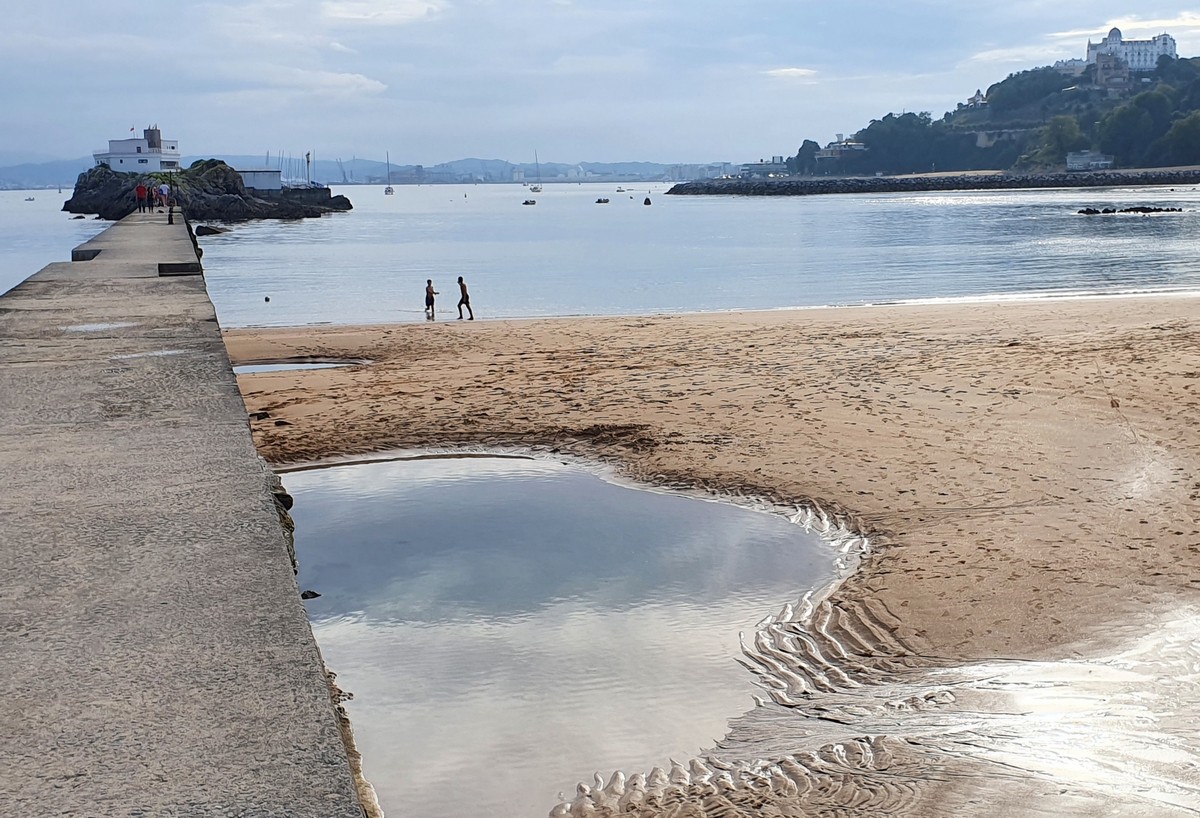
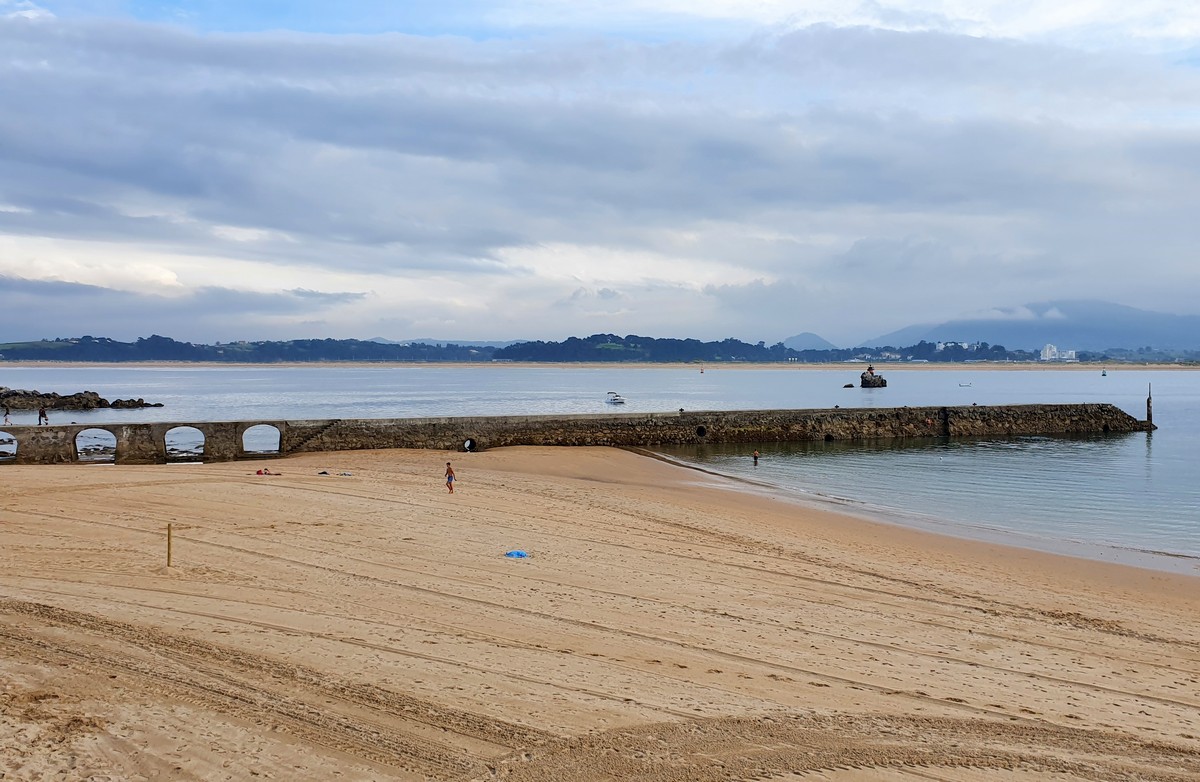
Just as people in my country pack a towel and a swimsuit after work or on a weekend in the summer and go to the nearest lake or swimming pool, the inhabitants of Santander go to the beach. One of the beaches on the peninsula is called Bikinis. It was the first beach where a two-piece swimsuit first appeared in Spain during the last century. However, it was not the Spanish girls who had worn it. The new fashion was brought by female French and Swedish students who came here to learn Spanish. It is obvious that the local young men visited the beach a lot more and offered private language lessons…
Although the sun was slowly ending its daily journey through the sky, it was still quite crowded here. Families with small children occupied another castle – a climbing frame. Others walked along the pier or threw pebbles into the water.
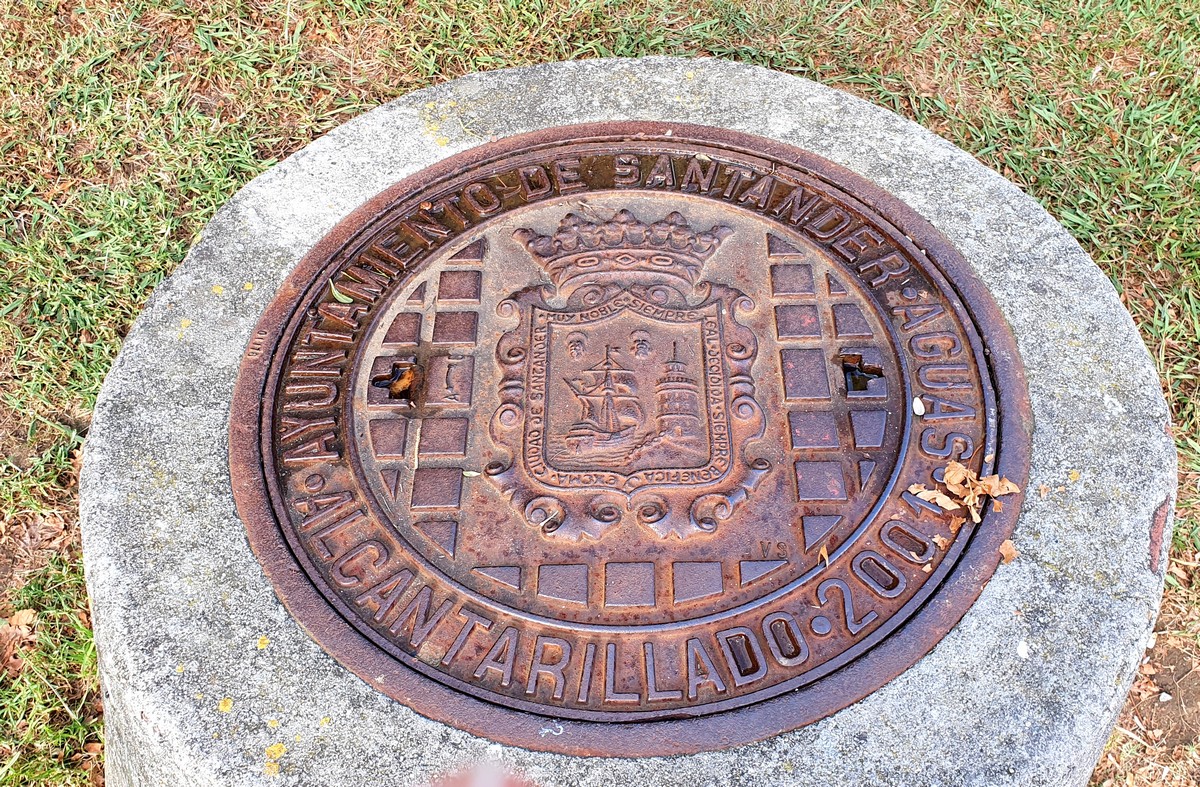
Whenever I visit a city, I am also interested in its coat of arms. The coats of arms are mostly located on important buildings and canal lids. I found one nice piece near the playground. You can see the Golden Tower in Seville. It is about the significant battle in the 13th century when the army of Castile tried to reconquer Seville. Muslims had laid strong chains across the Guadalquivir River. These were broken and the Santander ships passed first. The heads of the two saints we saw in the cathedral are also on the coat of arms.
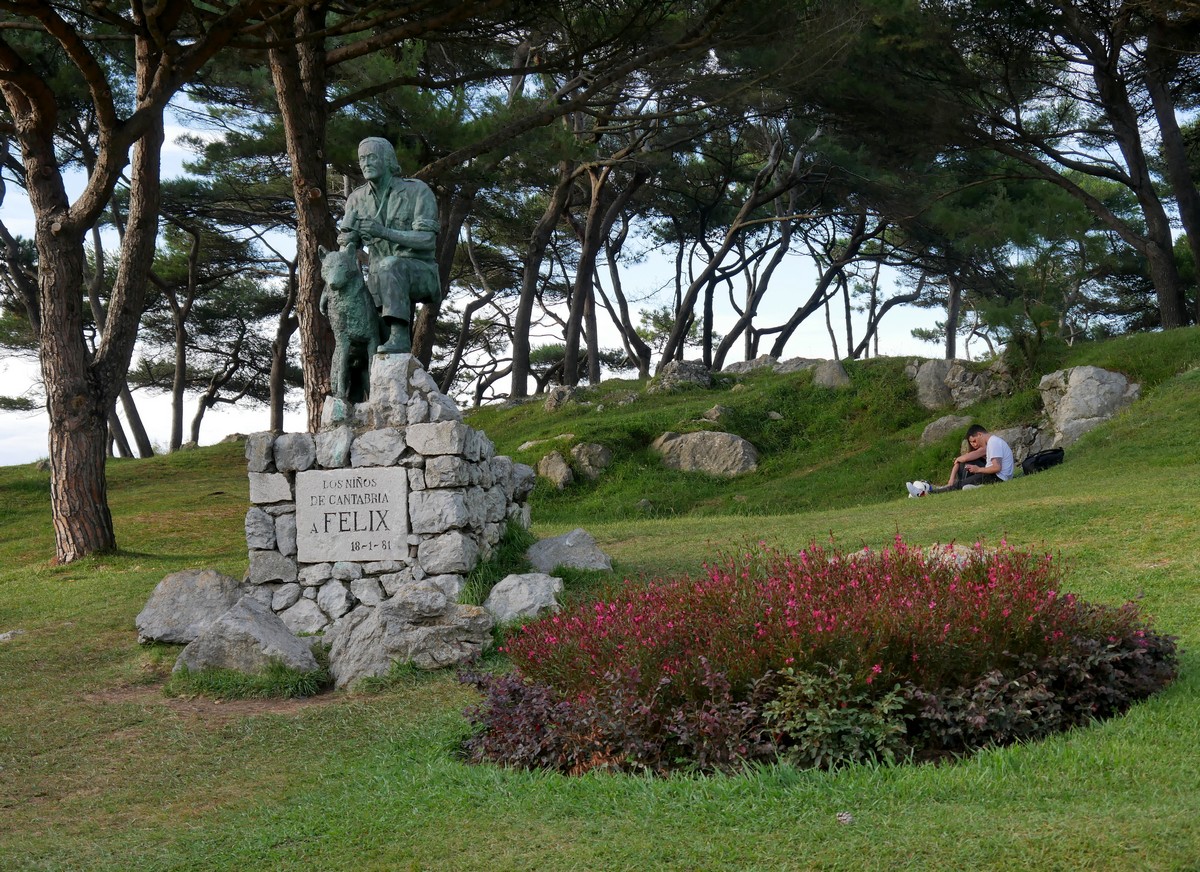
Leaving the peninsula, I also noticed a statue of the popular naturalist and environmentalist Félix Rodriguez de la Fuente with a wolf. Several generations grew up in Spain with his documentary series Man and Earth.
9. Let’s go to the beach!
Only few places boast as many beaches as Santander. The beaches are not only on the Magdalena Peninsula but also elsewhere in the city – clean, wide, with yellow sand. One of them – Segunda Playa (Second Beach) of El Sardinero was located near my hotel. The paradox is that although I was so close to the sea, due to the busy all-day program, I did not have time to go for a swim there…


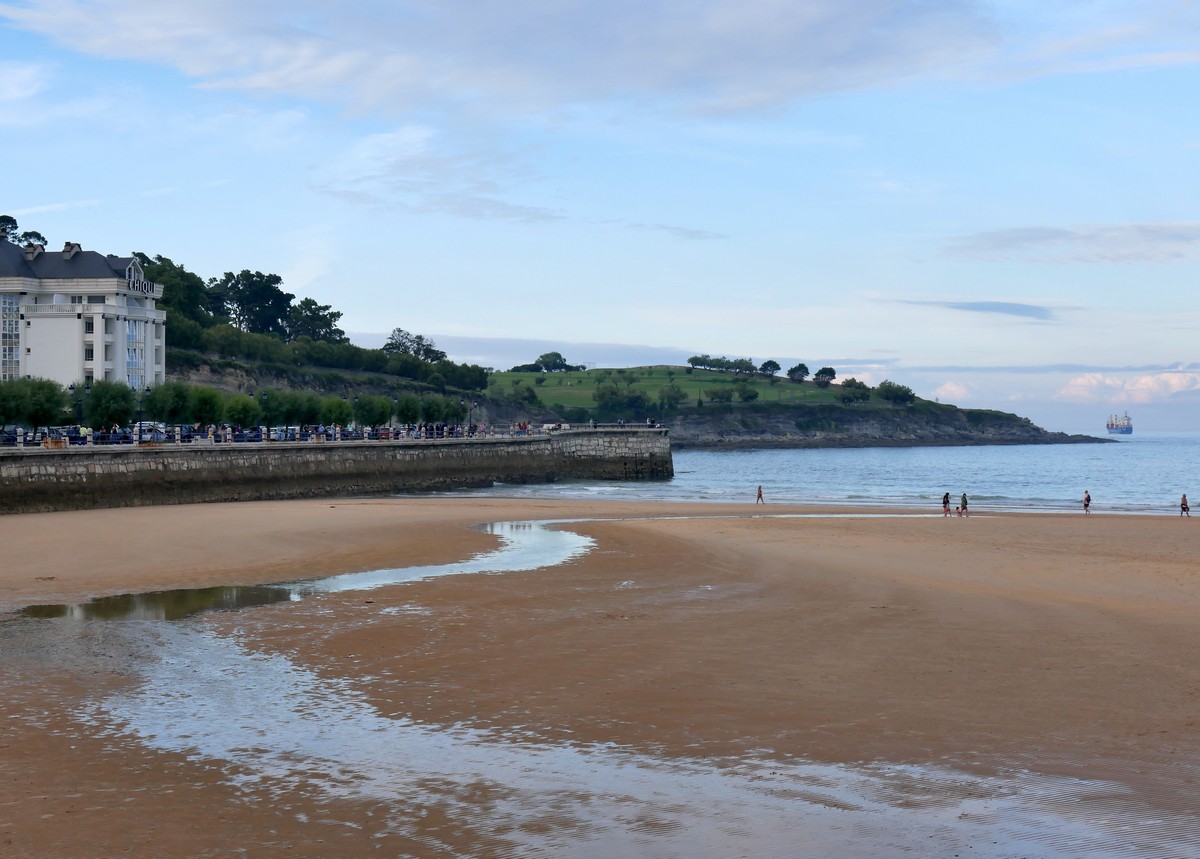
At least, I managed to go for a walk towards the evening. I was surprised by the huge ebb as I had never seen before. As if the sea wanted to suck all the water into its bowels. I took off my shoes and counted the steps from the last waves to where the wet sand ended. It was over 70 steps, at least 35 meters! It is said that locals are always amused by the people from Madrid who are constantly moving their towels across the sandy beach. Unlike the locals, they do not know that there are two large tides and two small tides every day. The cyclic movement of the water alternates every six hours and special apps have been created for its prediction.
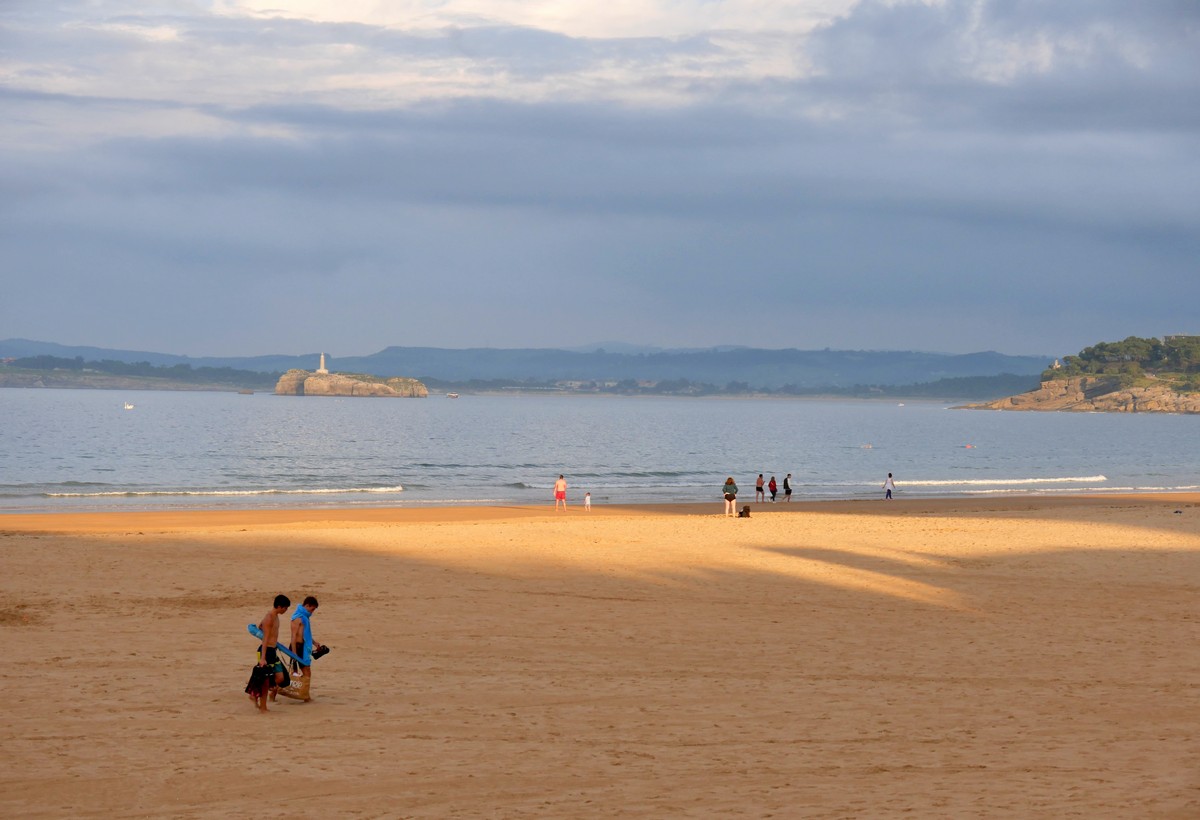
The last endurance vacationers were leaving the beach, a pigeon or a seagull flew down in search of forgotten crumbs among the grains of sand. Someone built miniature Egyptian pyramids with a sphinx from sand here… Clouds appeared in the sky, through which the fading sun was still penetrating, thus creating an interesting shadow play on the golden sand. The clouds were getting thicker, it was clear that the rain would come again…

Practical information:
How to get here: I took a direct flight from Vienna to Santander
Where to stay: my hotel Chiqui was right next to the mentioned beach, so I would recommend it especially to those who come here for a typical summer stay. Excellent service. I was also very positively surprised by how detailed the anti-pandemic measures were in the hotel. However, you will need a car or local bus to reach the historic center.
I made the city tour in English with the excellent guide Eugenia Faces – you can contact her: E-mail: info@guiaencantabria.com Tel .: +34 630201044
More information about Santander and Cantabria can be found at: TURESPANA and Fundación Camino Lebaniego
Text: © Copyright Ingrid, Travelpotpourri
Photos: © Copyright Ingrid, Travelpotpourri
Santander, Kantábria, Španielsko