
 TRAVEL


 RECIPES WITH A STORY




 AUSTRIA-VIENNA



 SLOVAKIA-BRATISLAVA

 EVENTS



 INTERVIEWS


The island of Krk is one of the most popular summer destinations in Croatia. Of course, most people come here to swim in the blue Adriatic and catch the sunny bronze.
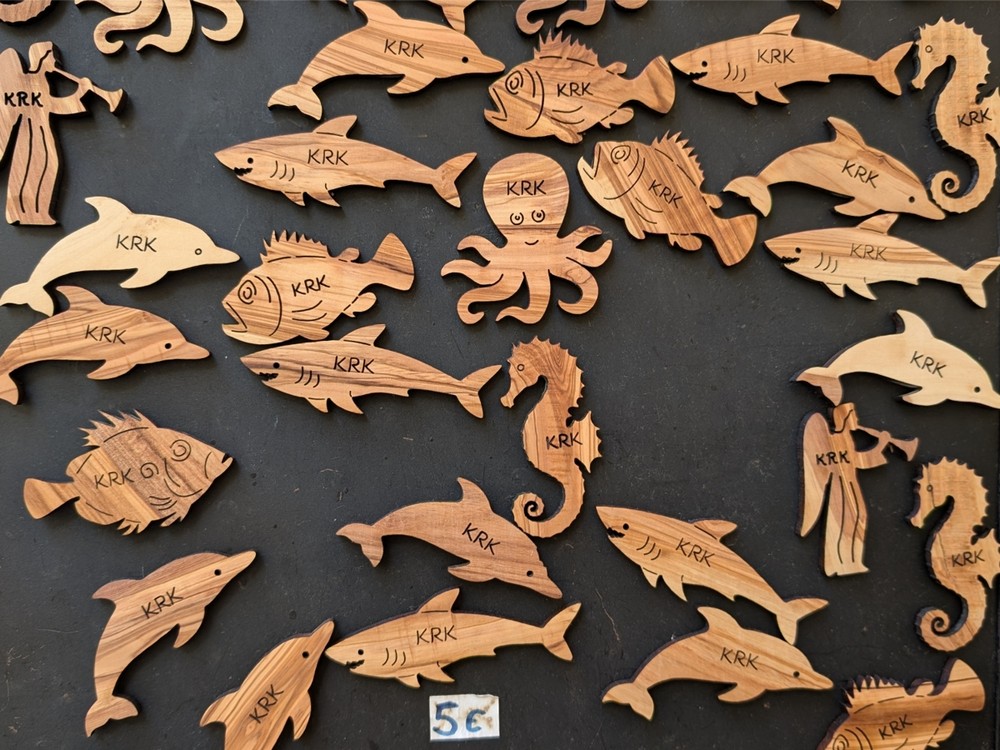
Krk is one of the Kvarner islands, supposedly the largest – just don’t say that to the people of Cres, because according to them, Cres is the biggest. Indeed, it is interesting that several sources give exactly the same area for both of these islands – 405.78 km². Unlike other Croatian islands, we reached Krk by land. The island – its northeastern corner – is connected to the mainland by the bridge Krčki Most – an impressive work with arches. The bridge was built in 1976-1980 at a height of 67 m and, with its length of 1,450 m, was for a long time considered the largest reinforced concrete bridge of its type in the world, until it was surpassed by a bridge in China.
The first thing we saw, still from the bridge, were the grey sandy rocks smoothed by the northerly bura wind. This wind, though cold, is said to purify the air and the head. As we travelled further around the island, there were oak and pine forests, olive groves, vineyards and picturesque towns. And so, after just a few kilometres, the island convinced us that it had so much more to offer. That’s why, if you don’t want to spend your days lounging on the beach, here are a few tips on where to go for trips around the island.
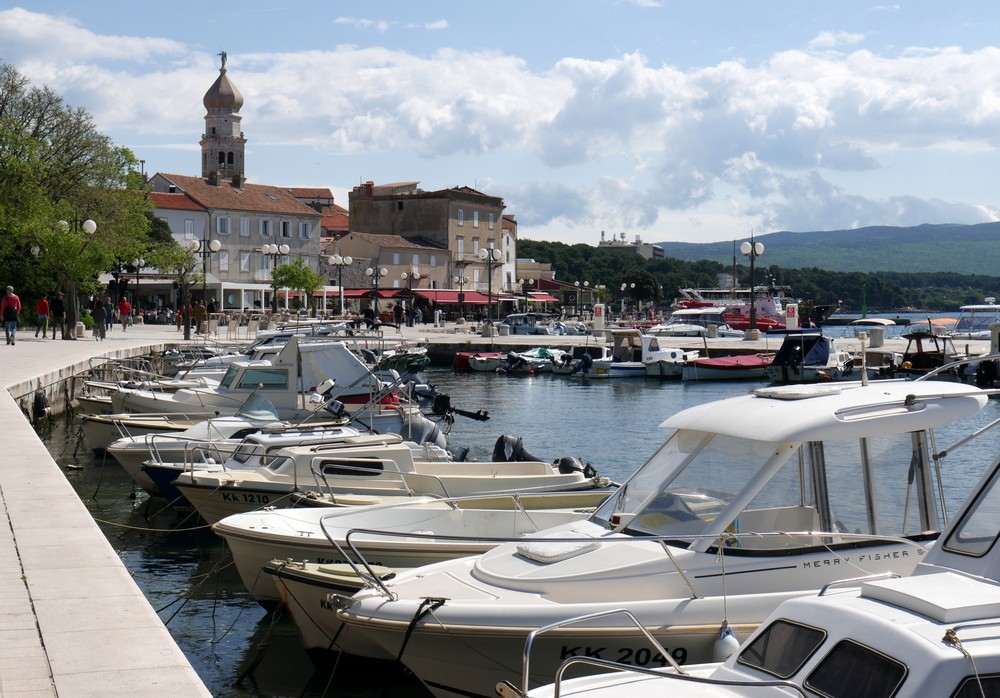
1. Krk – the Capital of the Island
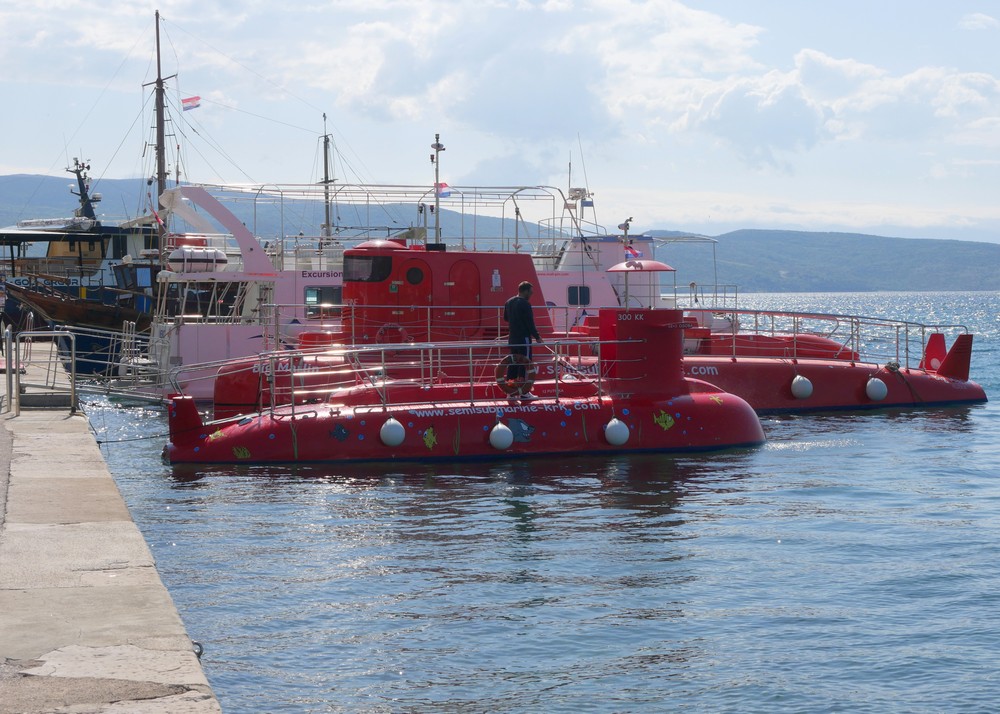
We parked the car near the harbour and walked along the promenade to the historical center. It was the end of April, few tourists, but the weather was almost summer, and the sea was beautifully blue. The harbour was full of boats and sailboats, we even saw a submarine, although not the yellow one of the Beatles. An elderly man was applying a fresh coat of paint on his boat.
We entered the historic center through the Small City Gate. There used to be only a small pier here, which served as an entrance to the town for fishermen. The gate was moved here in the 14th century.
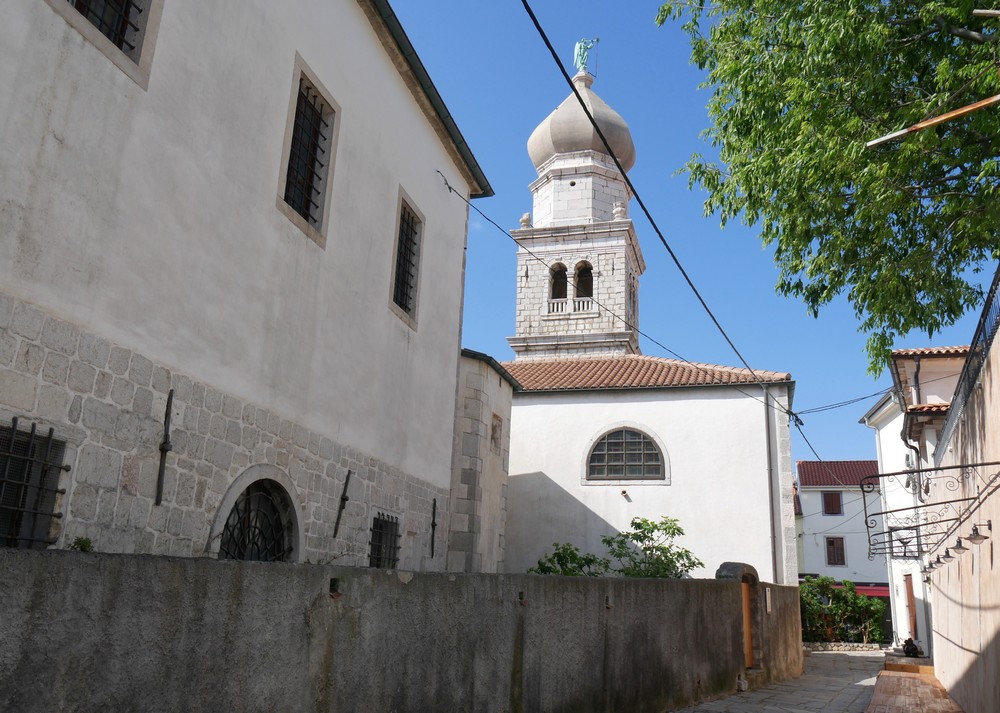
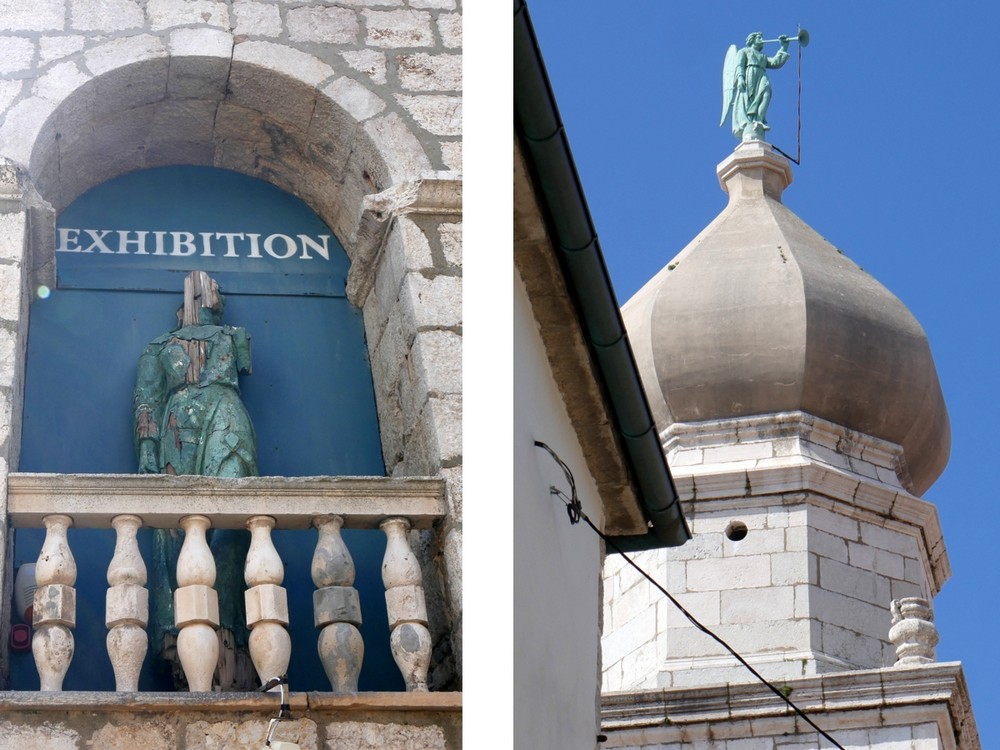
The bell tower accompanied us on our walk as an excellent landmark. Up close, we saw that there was a statue of an angel on top of it.
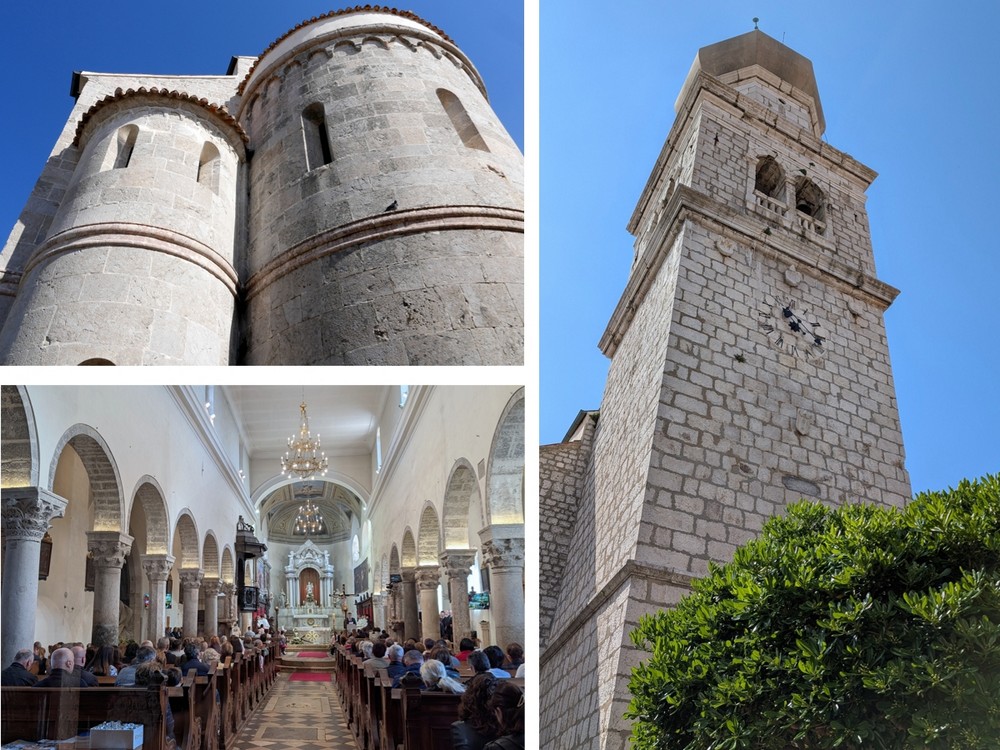 The Cathedral of the Assumption was built on the ruins of an ancient Roman thermal bath from the 1st century AD. Around the 4th century, an early Christian baptistery was built here, and over the following centuries, a representative basilica. In addition to the cathedral, the complex includes the Church of St. Quirinus (= patron saint of the town), made of local white stone, the only early Christian two-storey church in Croatia, and other sacred buildings.
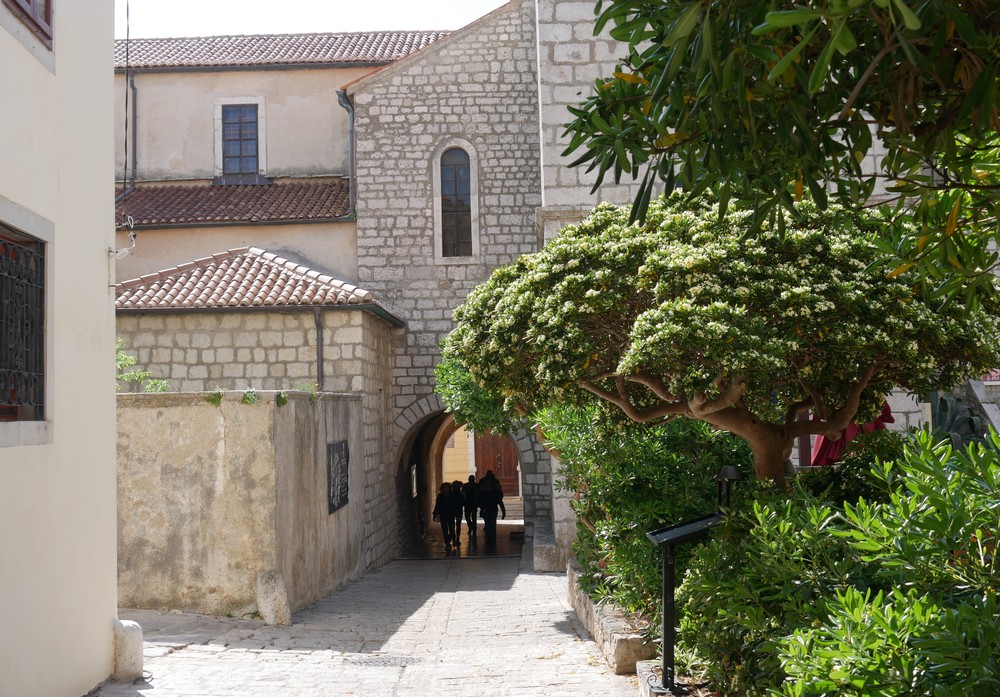 The bell tower is located on the northern facade of the Church of St. Quirinus. The original angel (now displayed on the outer wall) was wooden, covered with copper sheets. In 1973, a new one made of plastic was made according to the cast of this old, worn-out angel.
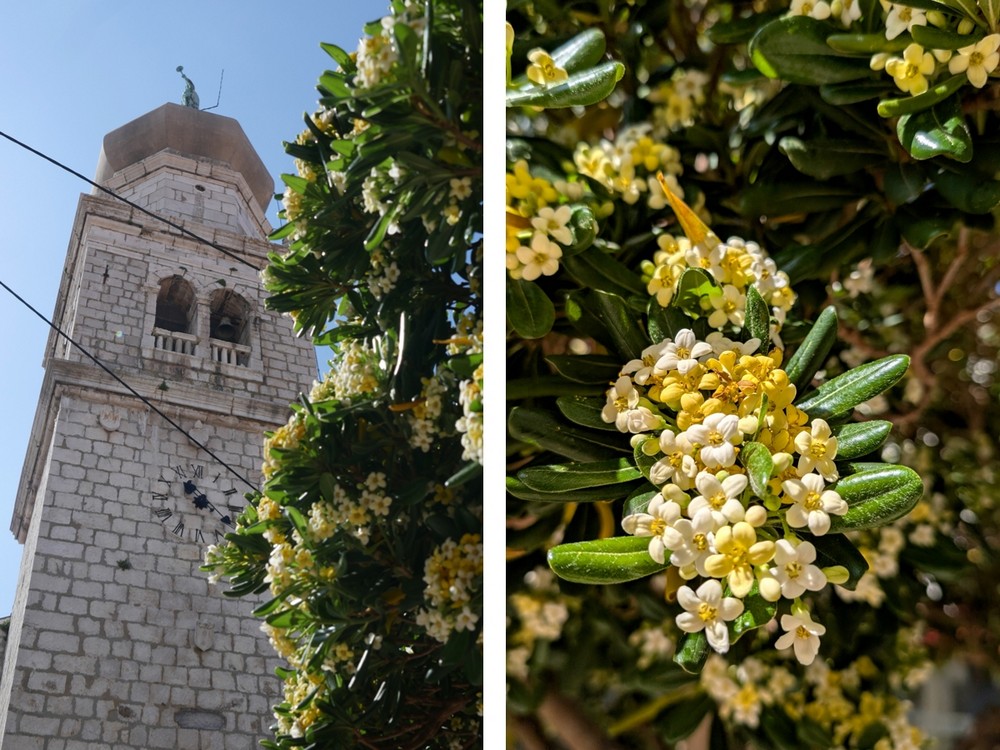
At the time of our visit, the pittosporum tobira sweet-smelling bushes were just blooming in the streets.
The atmosphere in the town was calm, nobody was in a hurry, only swallows were hyperactively flying over our heads to feed their chicks in their nests under the roofs of old houses.
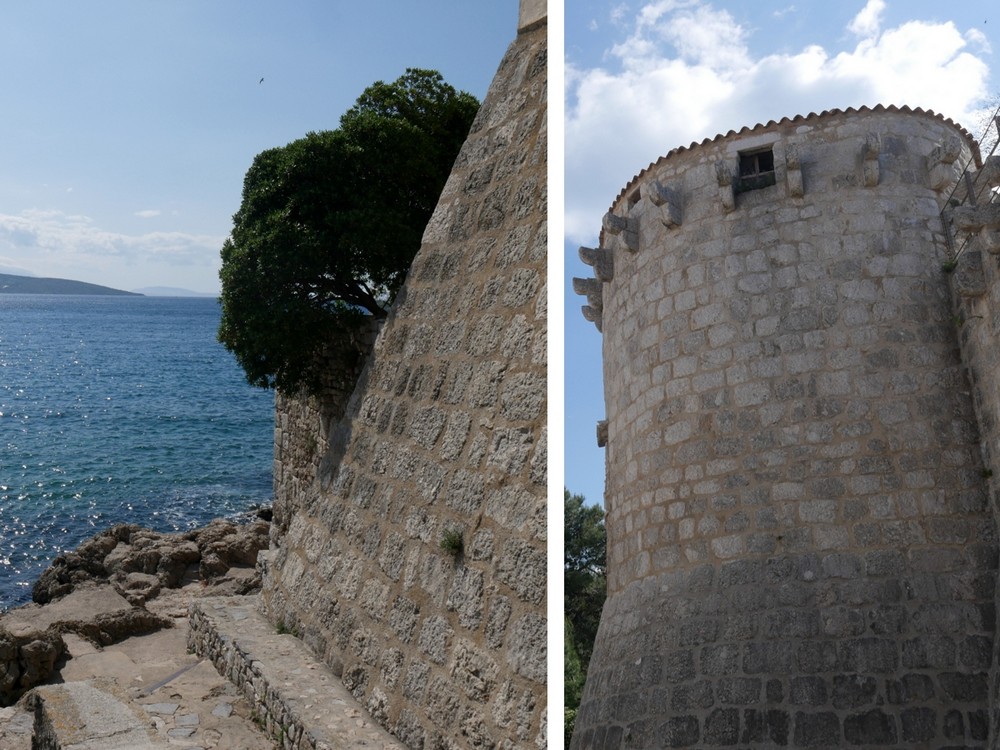
In the island’s capital, there is also a castle (kaštel) – a medieval monumental castle, built between the 12th and 18th centuries, cleverly incorporated into the old Roman walls. The castle belonged to the noble Croatian family Frankopan. This family came to power with the help of Venice when Venice conquered Krk in 1118 and appointed Prince Dujam I as governor. This marked the beginning of a period of great prosperity for the island. Dujam’s sons Bartol and Vid later left the family seat in Gradec, settled in the town of Krk and expanded the cathedral and the castle.
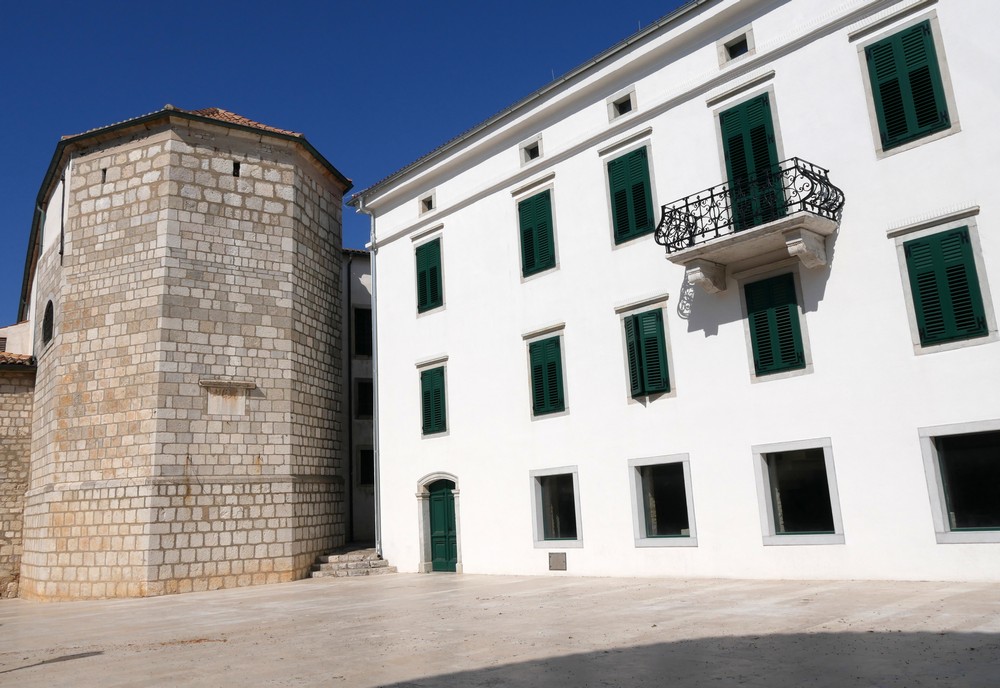
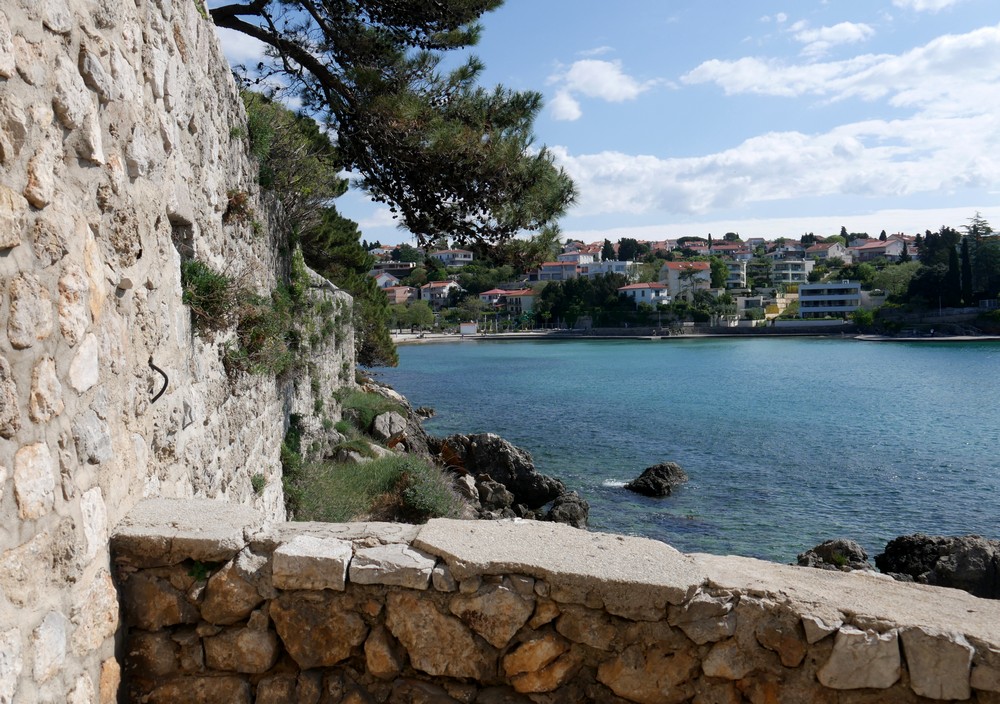
The ramparts, 9 m high, are imposing, especially around Trg Kamplin Square. The south-west wing is guarded by a pentagonal fortress tower, on which a five-pointed star, the coat of arms of the Frankopan family, can also be seen. Too bad the castle was closed (on Sundays, otherwise open every day from 09:00 to 22:00). We at least enjoyed the beautiful views.
 More information: Frankopan Castle Krk
The current representative center of the town is Vela placa, dominated by the 15th-century “tower”. It is the town hall. Its eastern wall is decorated with a clock and the coat of arms of the Venetian Doge Agostino Barbarigo.
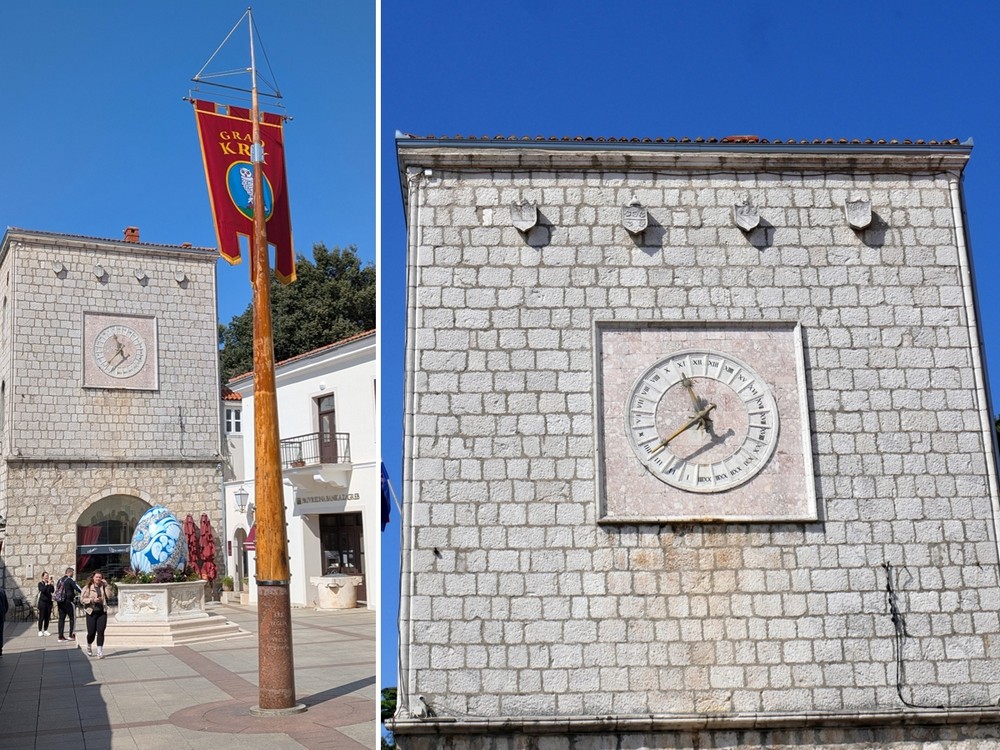
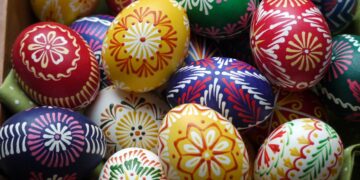
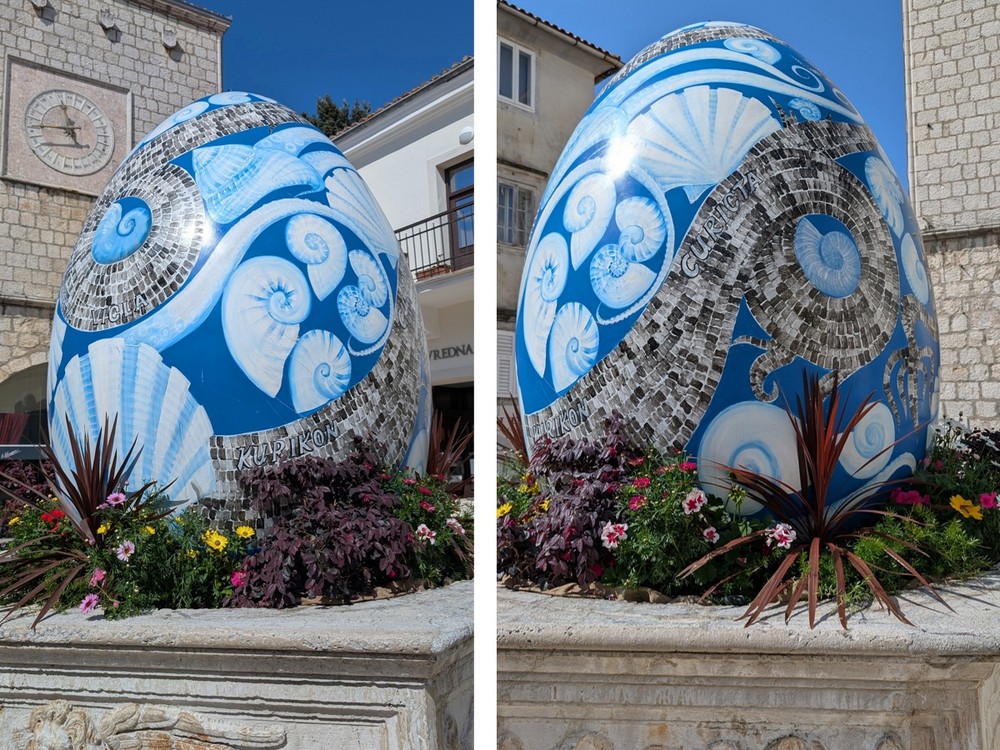
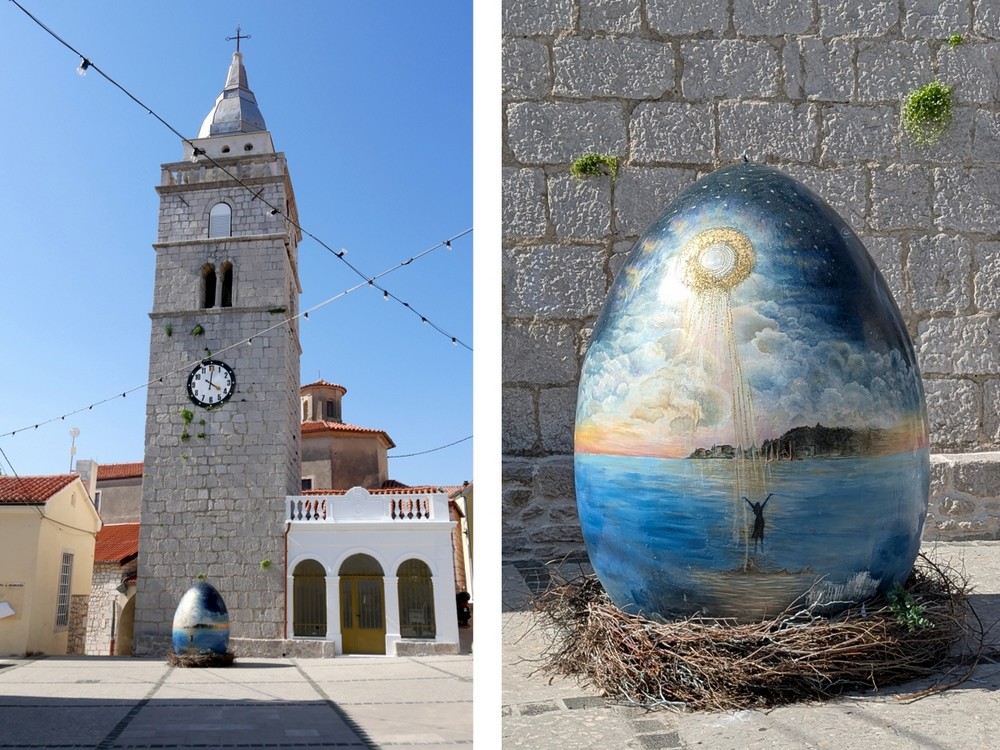
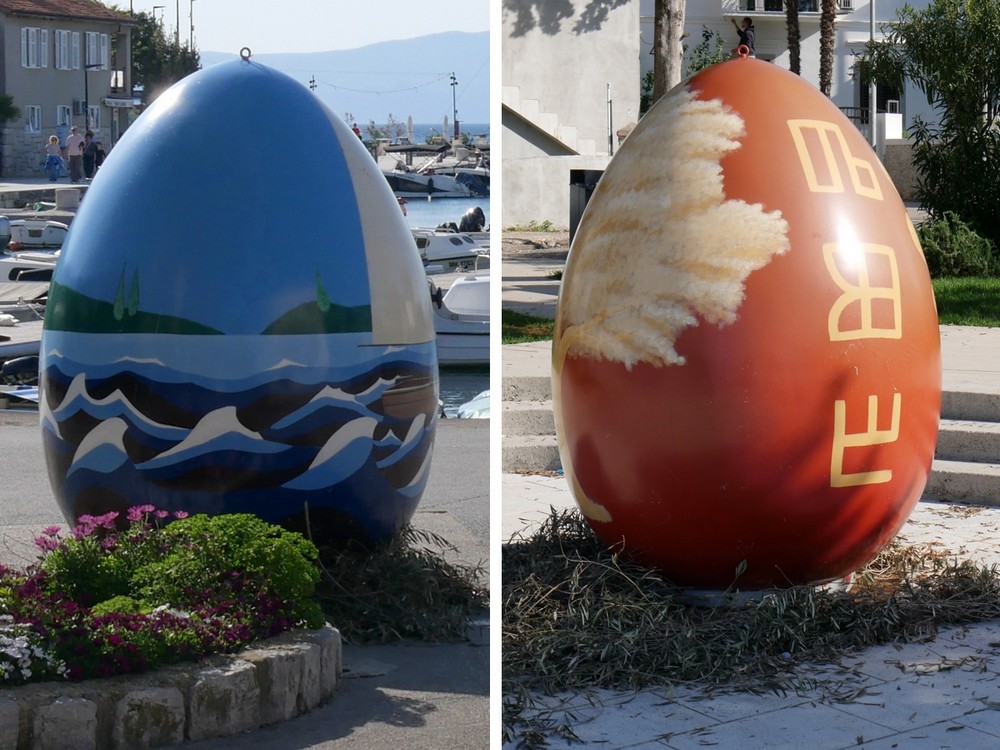
The former cistern took the form of an elegant fountain during the Renaissance, on which you will find reliefs depicting St Quirinus. As we arrived here after Easter, we could still admire the large, beautiful painted egg in the square, made by local painter Alma Dujmović, who combined sea blue with marine motifs and Roman mosaics.
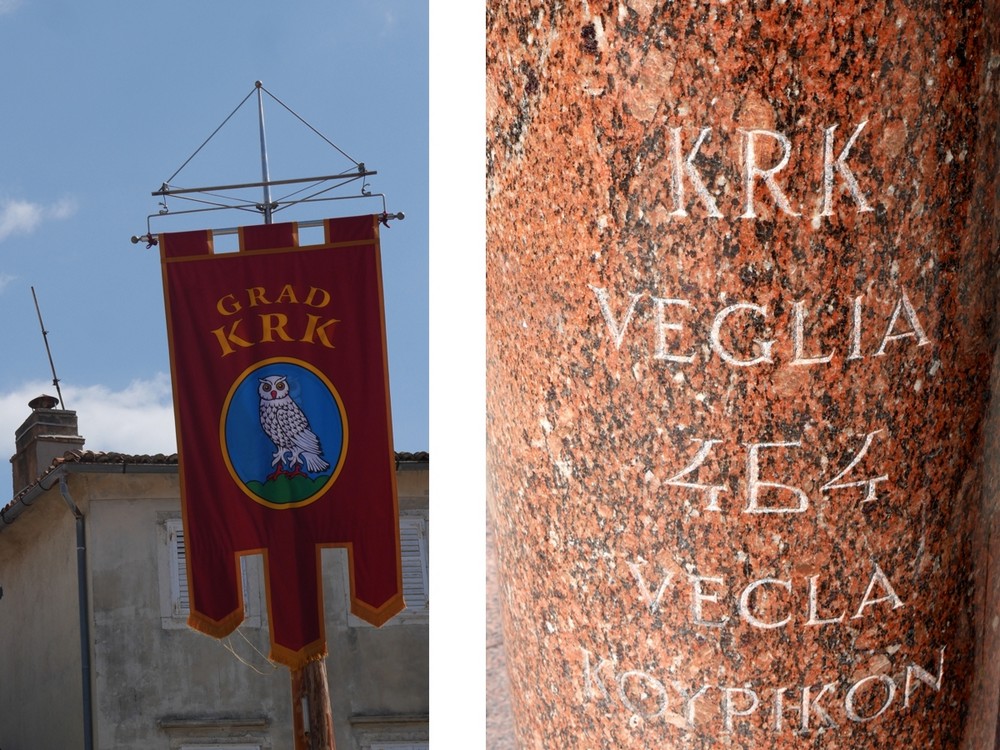
On a pole in the middle of the square flew the flag with the coat of arms of the city, adopted during the Venetian rule. On a green triple hill stands a white owl with a red beak, which guards the city as a symbol of vigilance. The column bears the names of the city in various scripts, including Glagolitic (more on this script later).
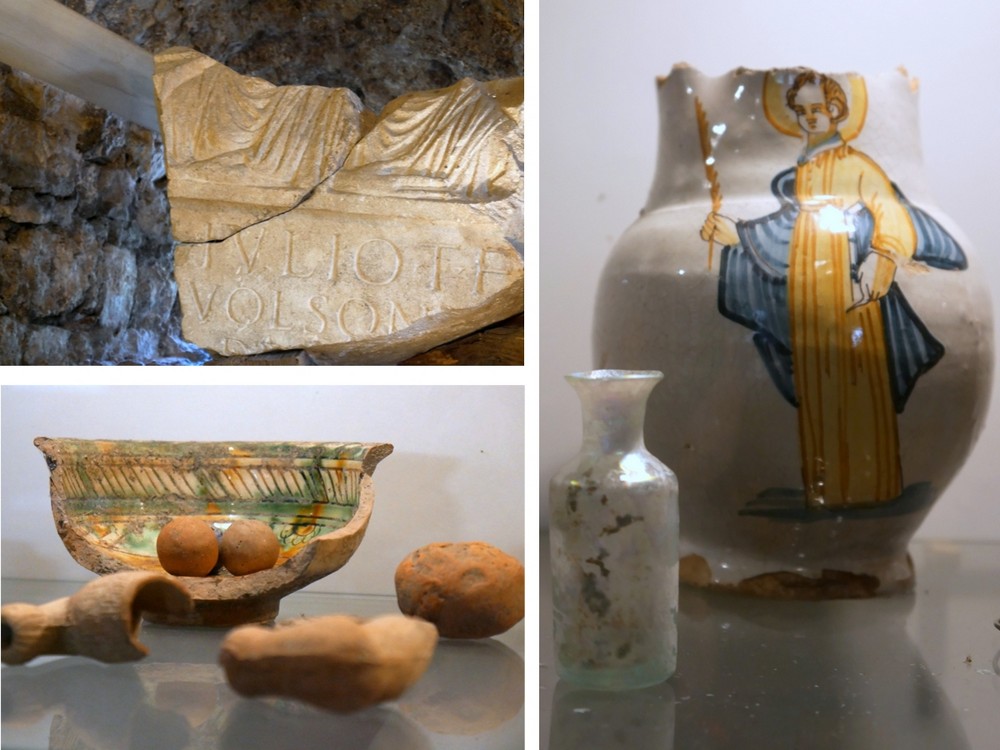
The old Roman city walls from the 4th century would be able to tell a lot about the history of this city. I definitely recommend a visit to the Volsonis restaurant. Not only can you have a cup of espresso or a tasty pizza here, but you will also discover ancient tombstones and other archaeological finds from this place in the underground.
 2. Punat and the Island of Košljun
Punat is located just 5 km east of Krk. I have to admit that I have only seen the harbour from this town (there is one of the biggest harbours in Croatia in the cove Puntarska draga).
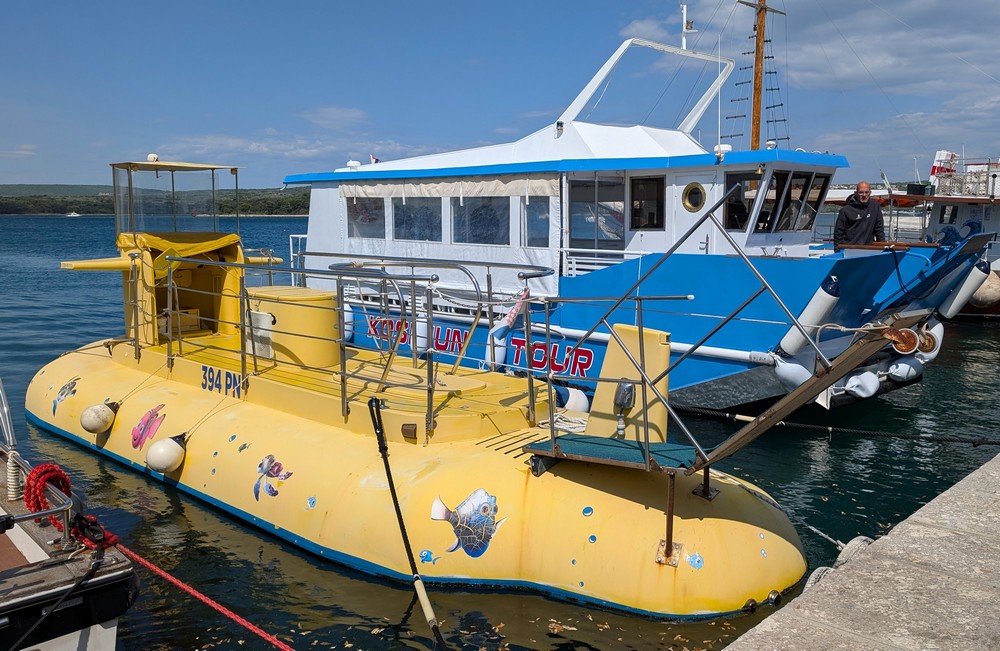
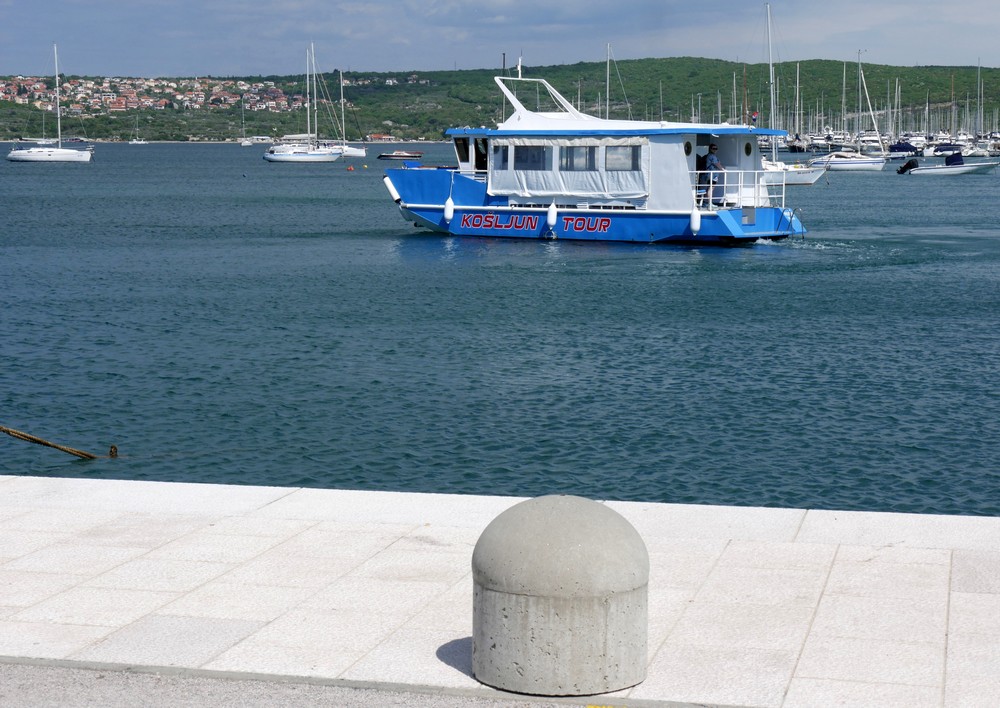
Boats, small and large, simple boats and expensive yachts are anchored here, as well as a submarine (yellow!) and also boat taxis that, once enough passengers (6-20) have gathered, will take you to the small island of Košljun nearby. You can book your taxi tickets online HERE or directly on the boat.
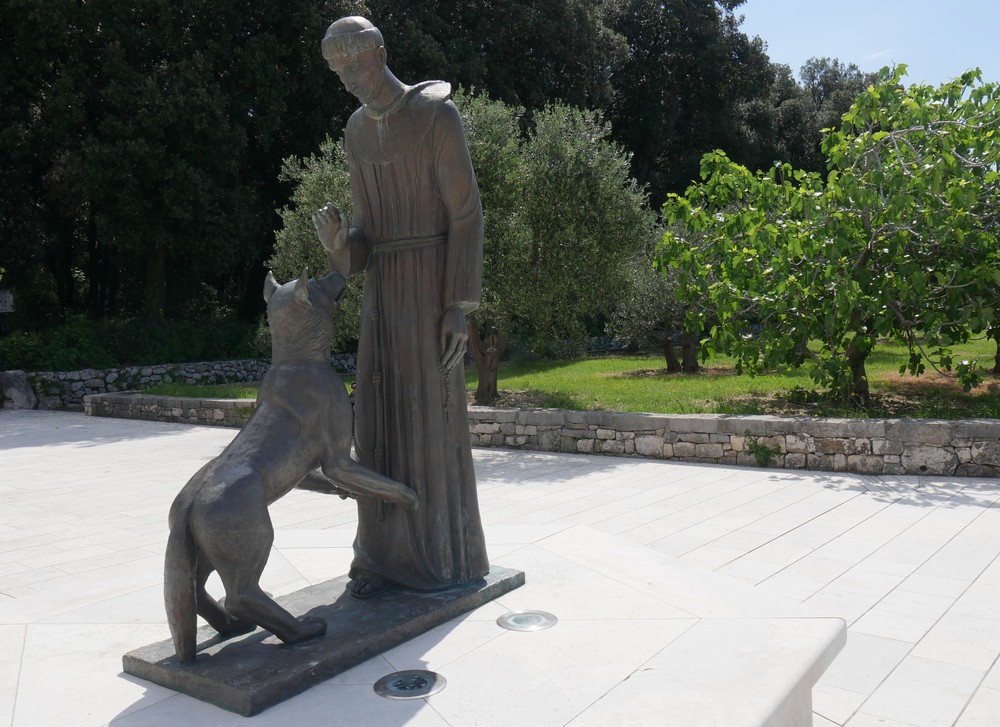
On the island, we were greeted by a statue of St. Francis with a “brother wolf”…
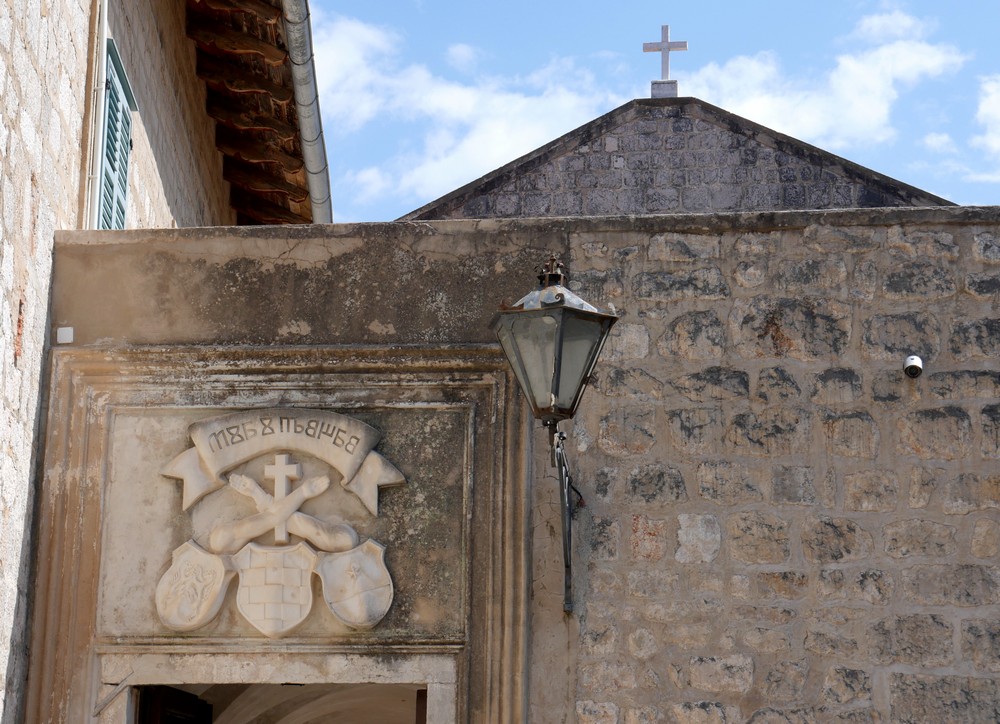
…and the old Franciscan greeting Mir i dobro (Peace and good will!) in Glagolitic above the entrance, as a call to be good to all beings.
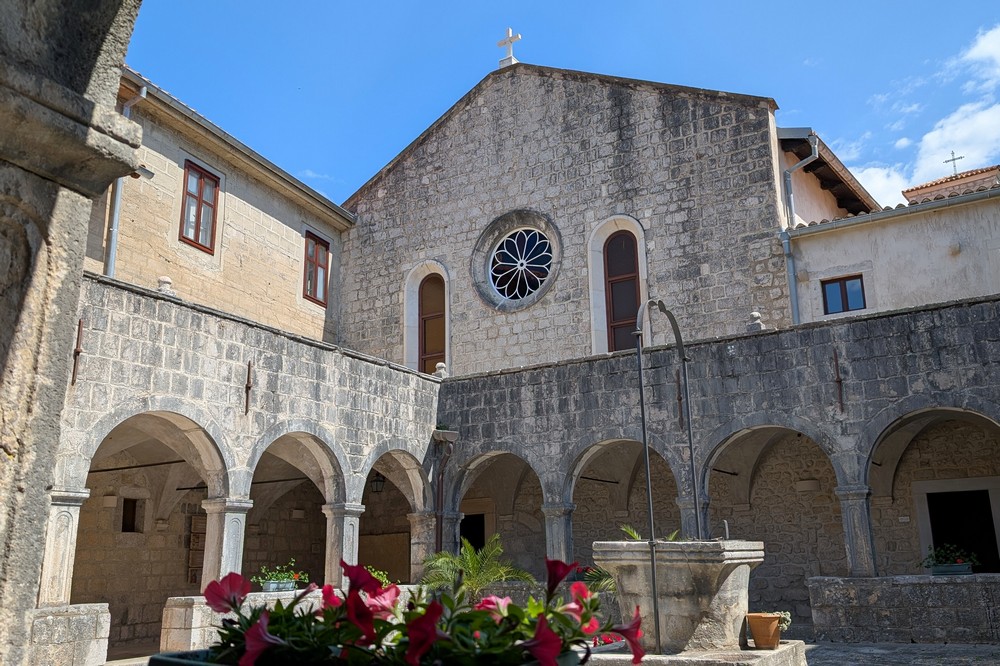
Before the arrival of the Franciscan monks, the Glagolitic Benedictine Abbey of St. Mary had existed here since the 9th century. The Benedictines built the first church here in the 11th century, but later abandoned the island. The Frankopan family, which we have already mentioned in the capital, was a great supporter of the church. In the 15th century, they asked Pope Nicholas V for the right and blessing to allow the Franciscans to settle in the abandoned monastery on this small island. While the Benedictines lived secluded and mainly devoted to transcribing manuscripts, the Franciscans opened a school and even a kind of bank for the locals.
Marija Katarina Frankopan is buried in the Church of the Annunciation. Although she had died in Venice, according to her last will, her remains were taken to the island 9 years later. Katarina was the daughter of Ivan VII, the last Frankopan, who died in an unknown place in Hungary during his travels in Europe. Many believe that he is also buried in this church, as there is another tombstone here, but without a name.
We were also intrigued by the magnificent carved and painted ceiling. Above the high altar is a polyptych by the Renaissance painter Girolama de Santacroce, showing Ivan VII as John the Baptist on the left and his daughter Katarina on the other side.
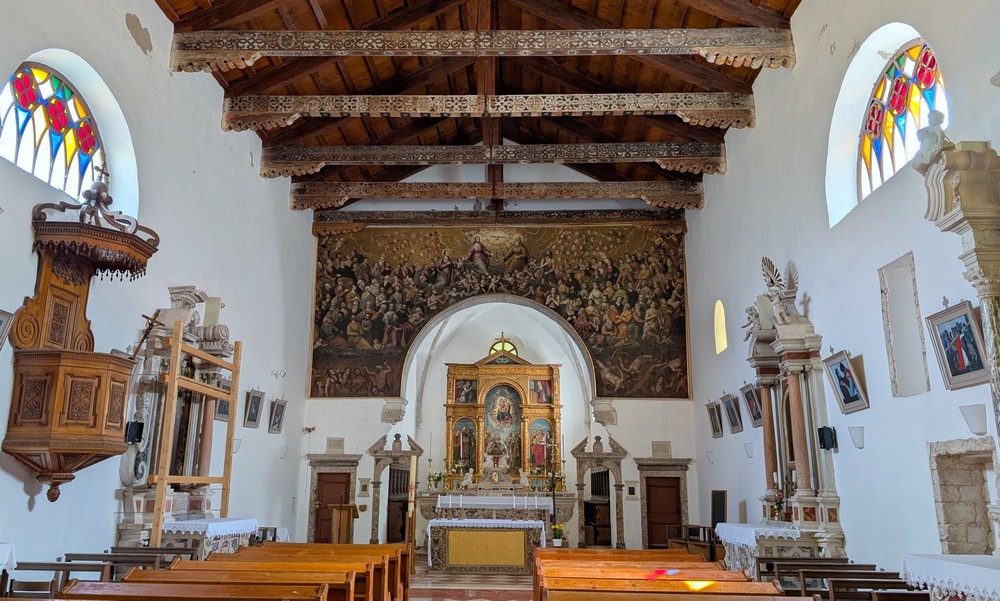
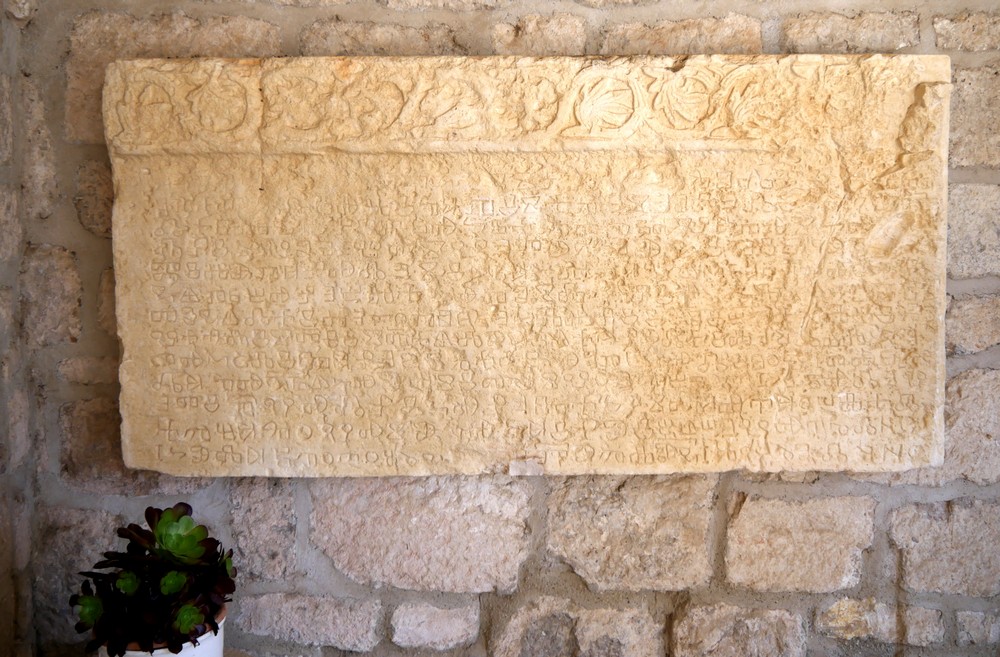
Not only was the old greeting in Glagolitic, but we also found a replica of a plaque (the original in the Church of St. Lucia in Baška) with a text in Glagolitic as well (about the donation of land to the church by King Zvonimir). Here, for the first time, the word “king” (and his name) is written in Croatian and Croatian Glagolitic script. The basis of this Old Croatian church script was developed by the Slavic apostle Cyril in the 9th century from the Greek alphabet to translate the Old and New Testaments into the Slavic languages. Under his disciples, this script was divided into Cyrillic (which is still in use today) and Glagolitic.
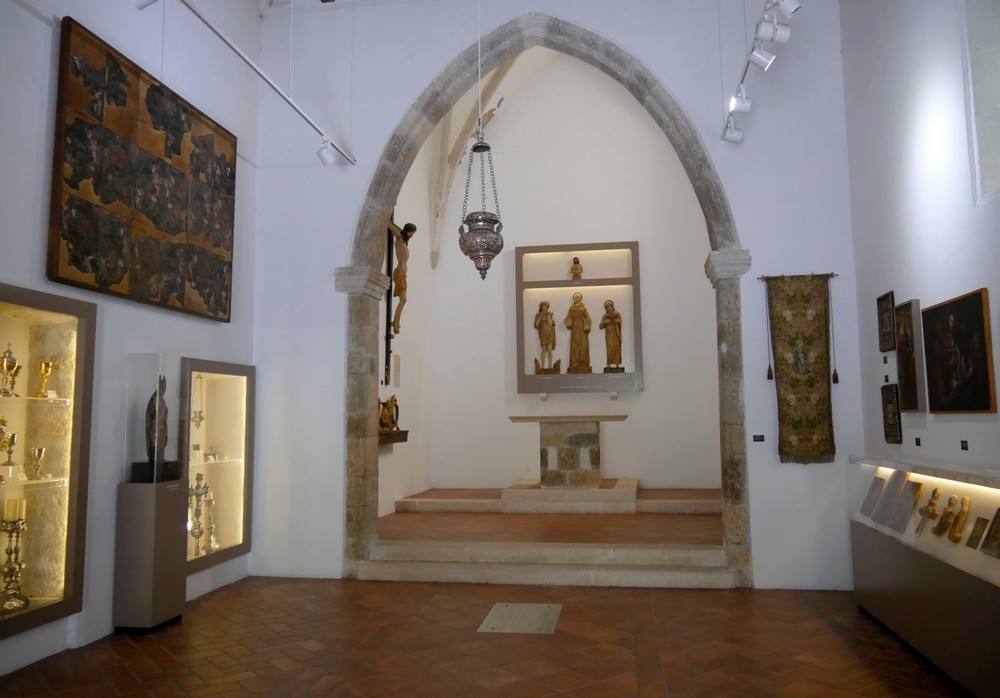
In addition to the church, the UNESCO-listed complex includes a monastery building, a cloister, medieval fortifications, a cemetery, gardens and parks, and four museums.
The Sacral Museum – statues, paintings, crucifixes and other liturgical objects from different periods and styles, replicas of religious books from the monastery library, which holds over 30,000 books and manuscripts.
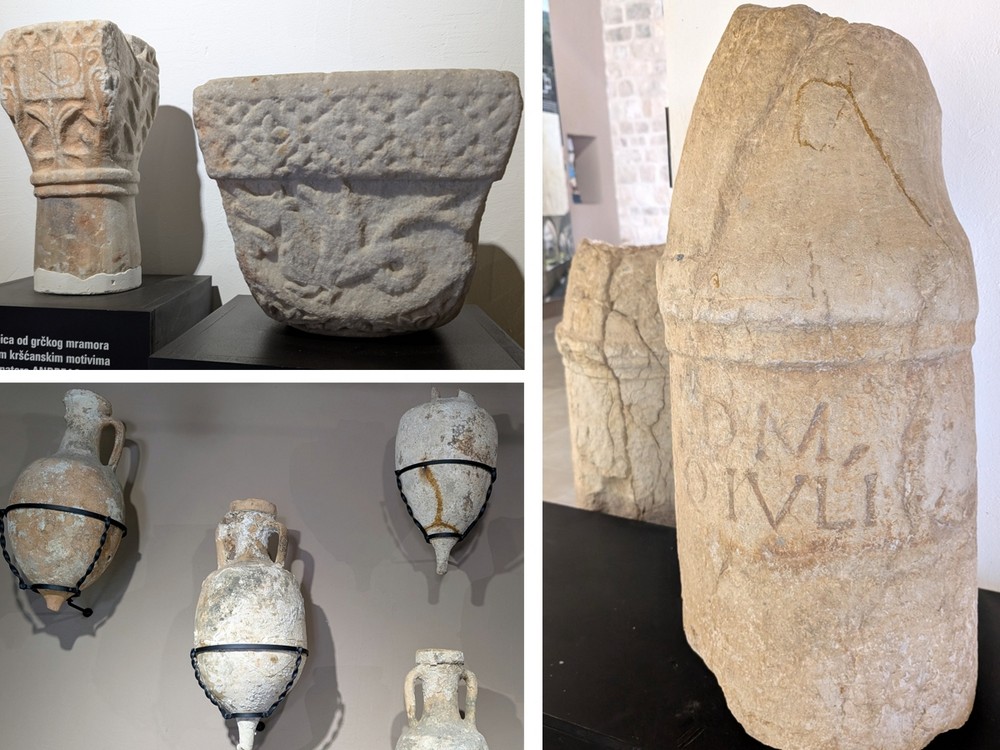
 The Archaeological Museum in the premises of St. Bernardine Church – archaeological finds from the island of Krk, such as decorated 12th-century capitals with Christian motifs
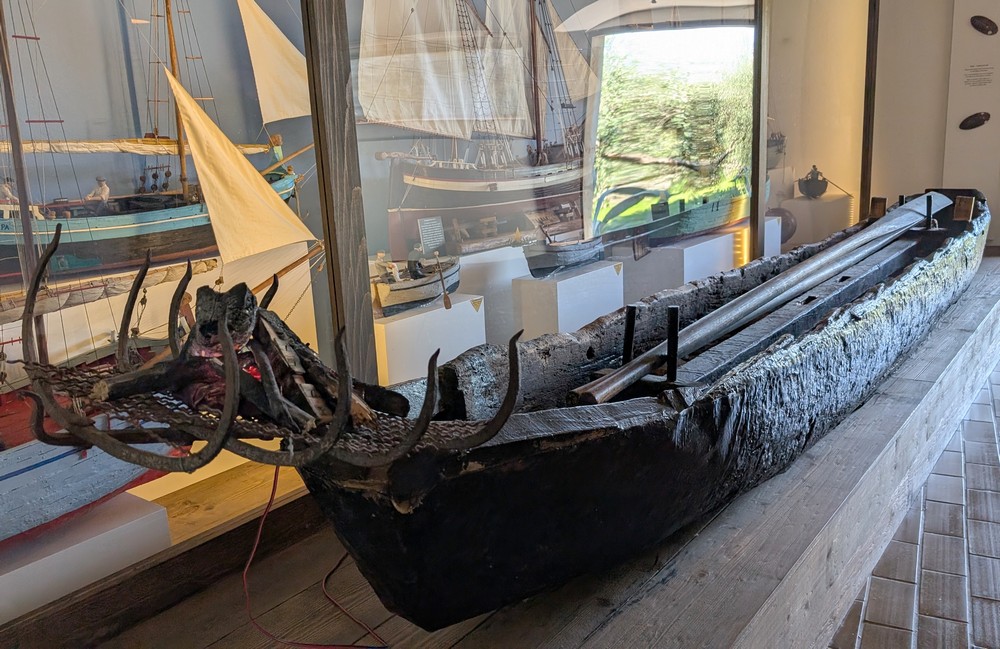
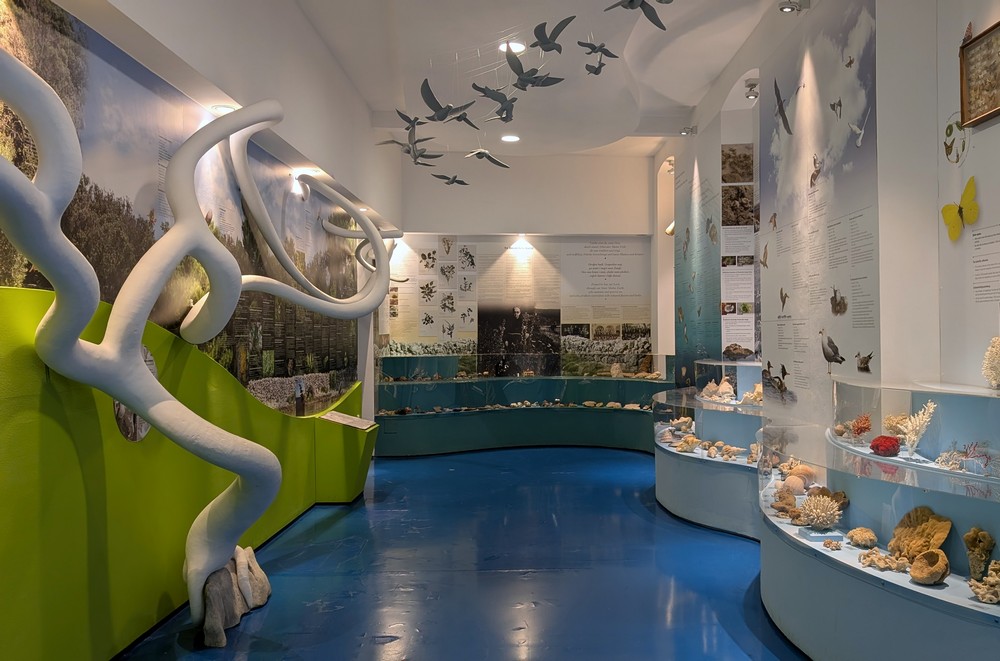
 The Natural History Museum – presentation of the island using the three elements – air, water and land. Also interesting are models of old ships from the Kvarner region, as well as a wooden bait for catching cuttlefish in the shape of this cephalopod. Cuttlefish are caught by moonlight.
The Ethnographic Museum – folklore costumes from the island of Krk, numismatic collection, tools, ceramics and also various curiosities (especially unusual animals) donated to the monks by locals or sailors.
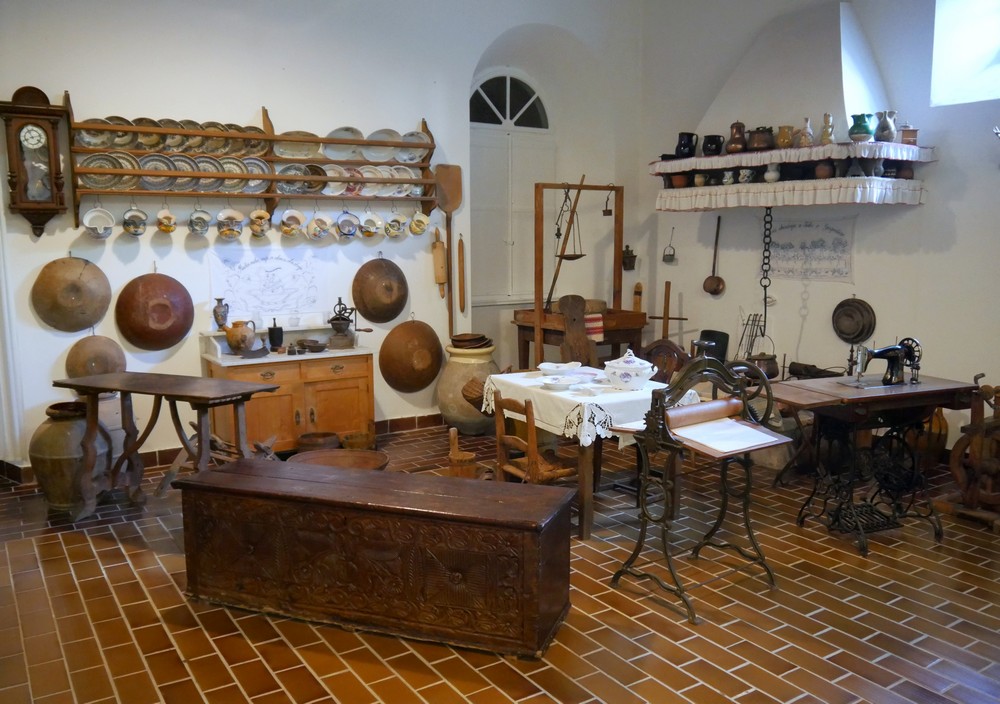
The museums are open every day from 9.30 a.m. to 5 p.m., on Sundays from 10.30 a.m. to 12.30 p.m. Mass in the monastery church is held on Sundays at 9.30 am.
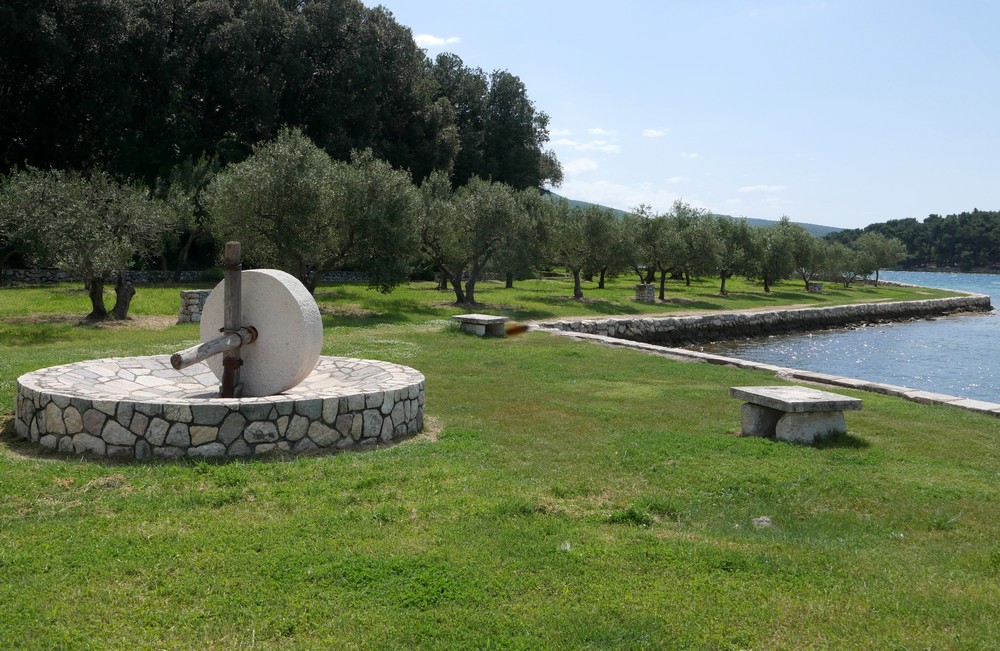
If you are more interested in nature, take a walk around the island. There are not only holm oaks and olive trees, but also other plants and fungi – over 500 species. Hiking trails lead you to several chapels and viewpoints.
 3. Vrbnik
When travelling around the island of Krk by car, you’ll often feel like stopping to take a picture of the pretty scenery, the beautiful bay or the picturesque panorama of the town. We couldn’t resist stopping at a place where we could enjoy the view of the old town of Vrbnik, resembling a fortress on a rocky outcrop.
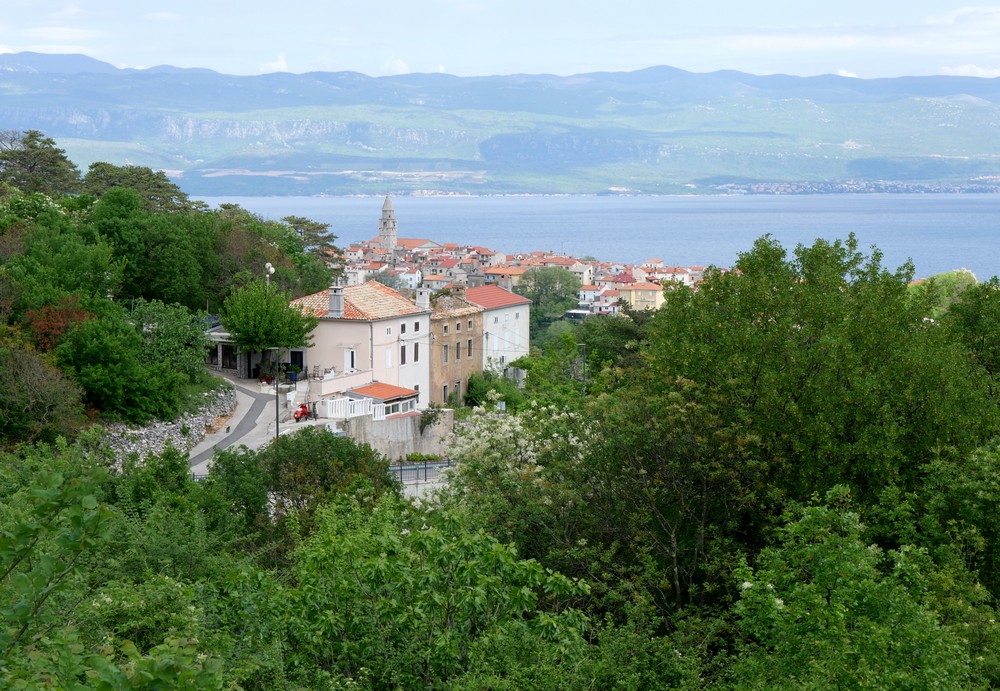
This site, on a 50 m high cliff, was inhabited in the Stone Age, later provided a home for the Illyrians and became the center of Glagolitic script during the reign of the Frankopan dynasty. The town charter from 1388 was written in this script as well.
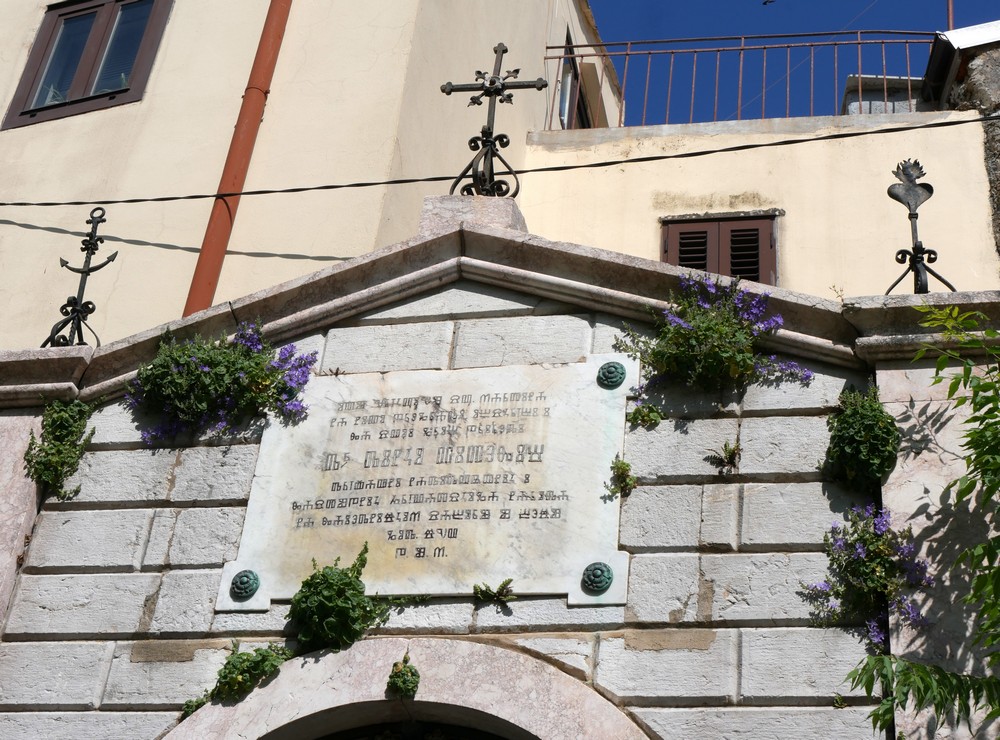
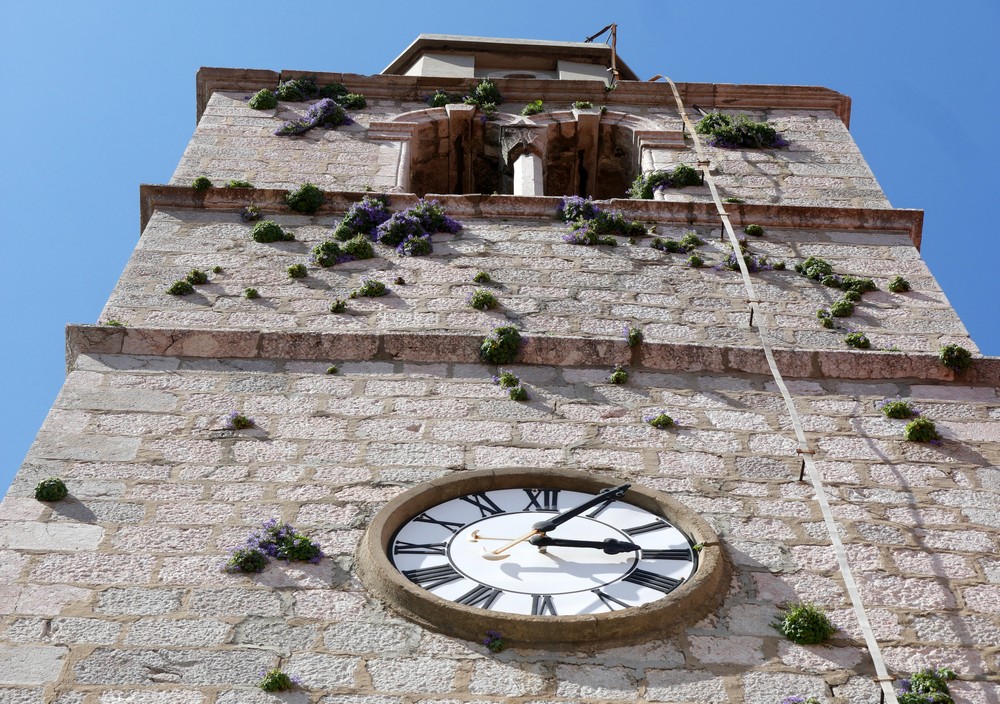
We walked past St Martin’s Chapel along the cobbled street into the center, passing the Big Gate (the town used to be entered through it on the south side) and one of the former Frankopan palaces. We arrived here at a time when the Istrian bluebells are in bloom. Tiny blue flowers adorned the old grey walls, in some places they fell from the wall like blue waterfalls, and we found them also high up on the bell tower.
In some places, blue bluebells competed with blue irises, and branches with green figs hung from the gardens into the streets.
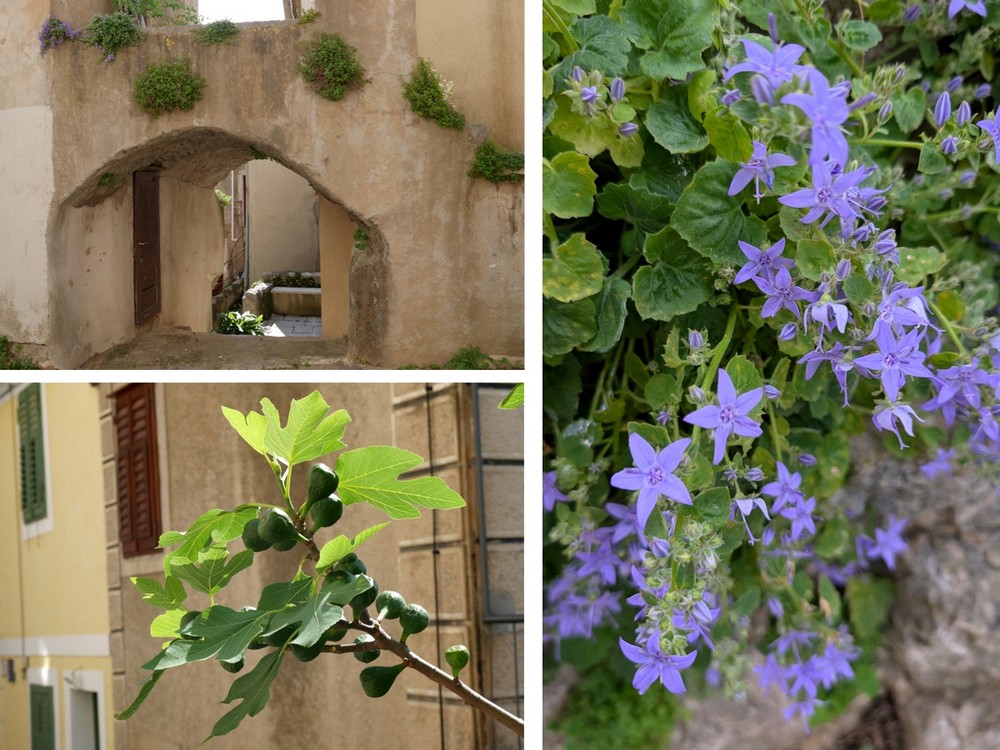
The center of the town is a maze of streets, some of them narrow, bumpy or steep; sometimes you would suddenly find yourself by a garden overlooking the sea or a chapel, other times the passage was so low that you had to duck or even bend down.
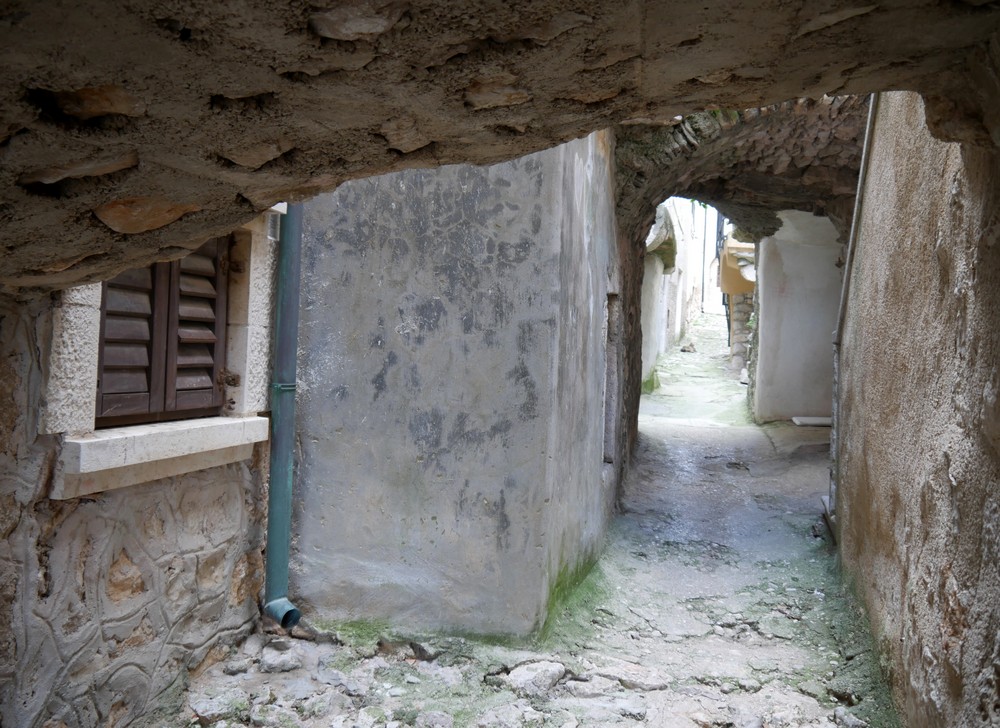
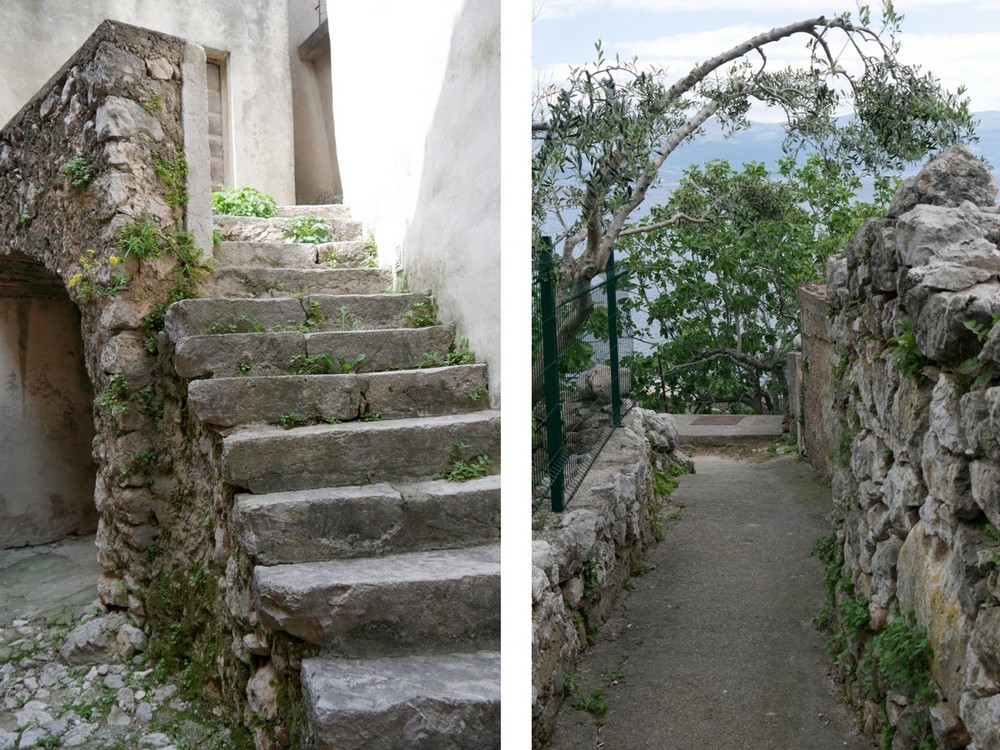
There is even the supposedly narrowest street in the world (Klančić). It’s only 43 cm wide, but don’t worry, you should definitely try to pass it. I made it! 🙂
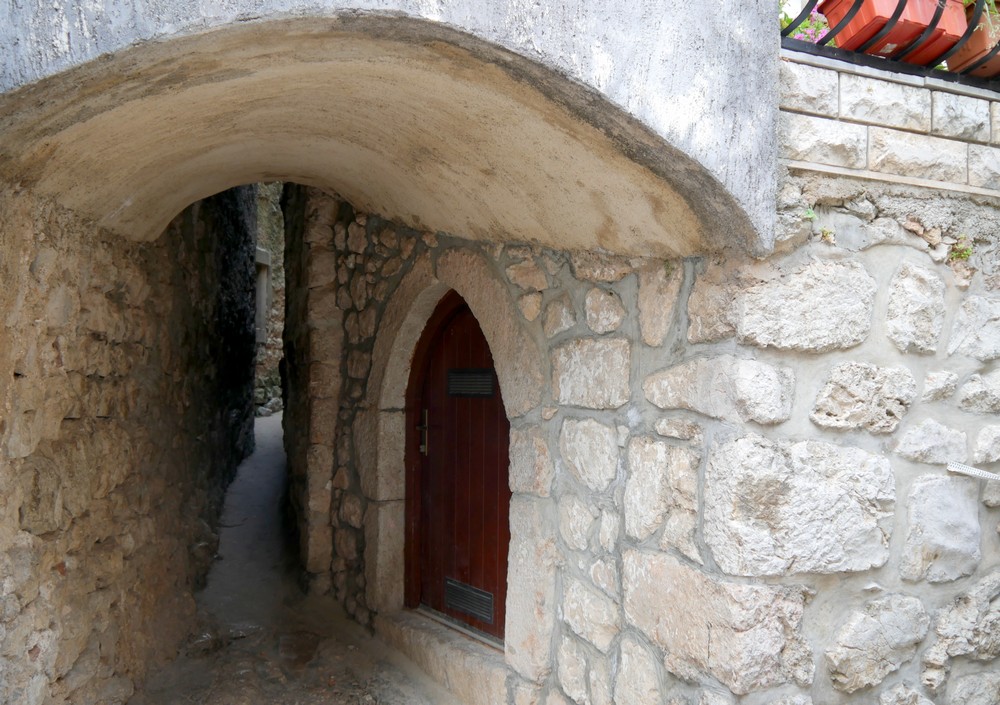
After the walk, a glass of chilled white wine Žlahtina, which is grown in the local Vrbnik field, will certainly do you good.
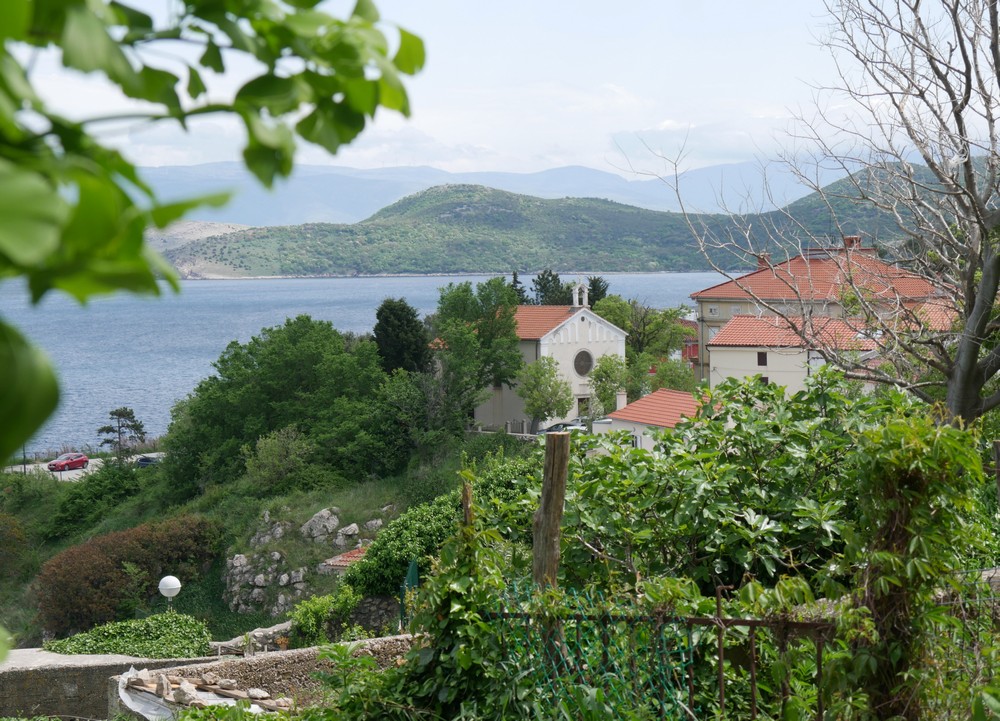
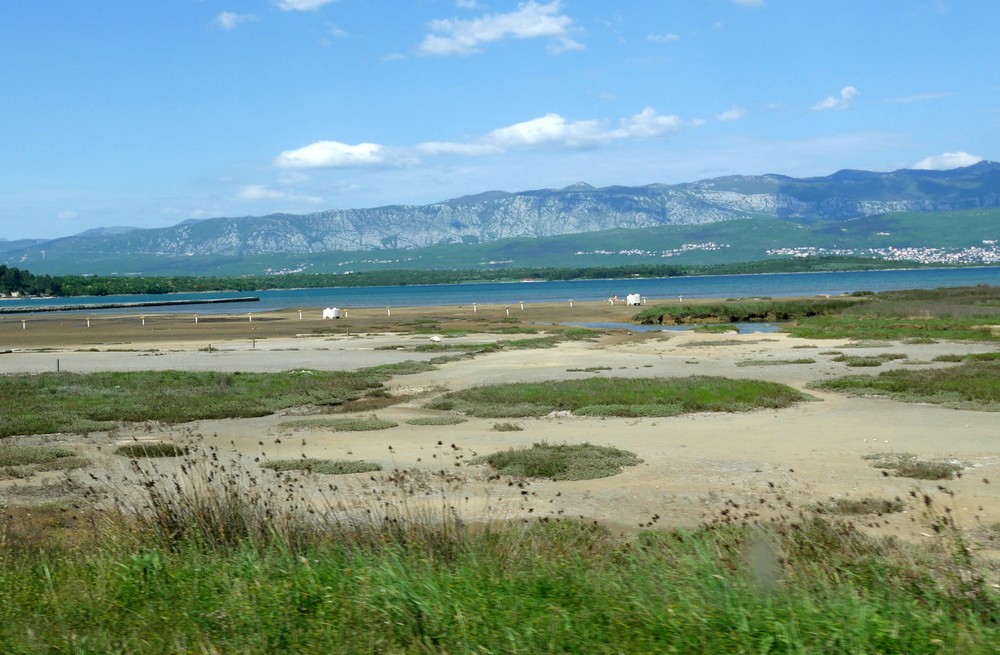
Afterwards, our journey continued along the bay of Soline. It is a flat bay with a shallow shore, suitable for salt production. Salt had been extracted here already in Roman times and gave the name to the bay. Today, mussels are farmed in shallow water. The black mud is said to have healing properties, so don’t be surprised if you see people rubbing the mud on their bodies.
 4. Omišalj
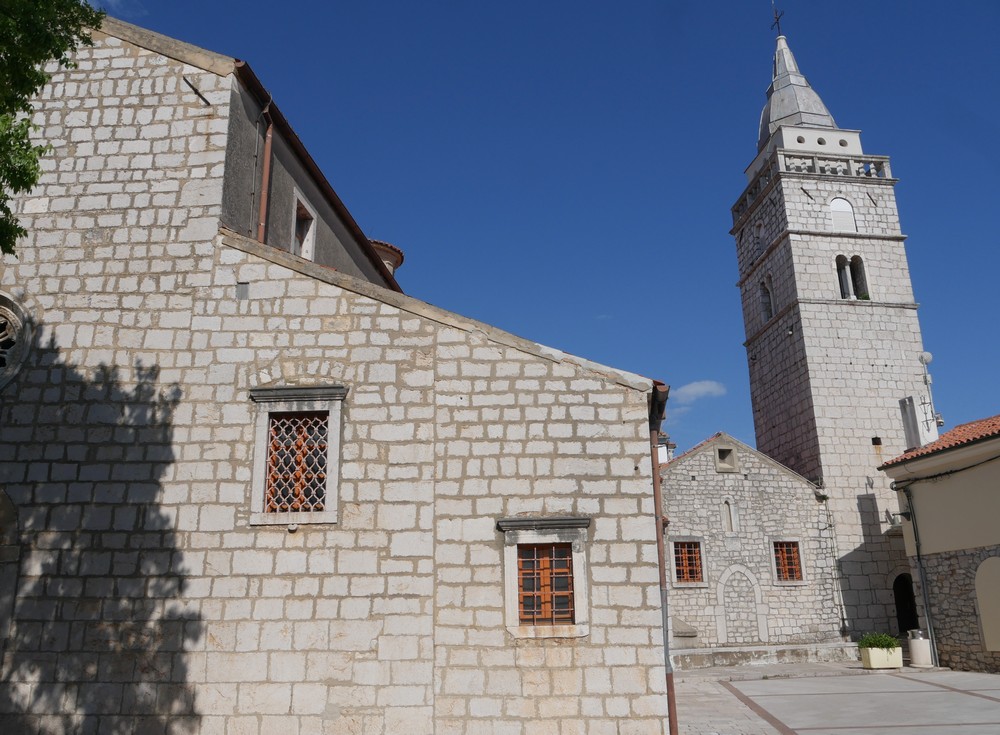
The historic center of this old town was almost deserted, although it is one of the few towns on the island that is inhabited all year round. In the main square stands the Church of St Helena, dating from the turn of the 14th and 15th centuries, built of dressed stone in regular layers. Next to the church is a Renaissance bell tower from the 16th century. Even here, the Easter decoration has not yet been removed.
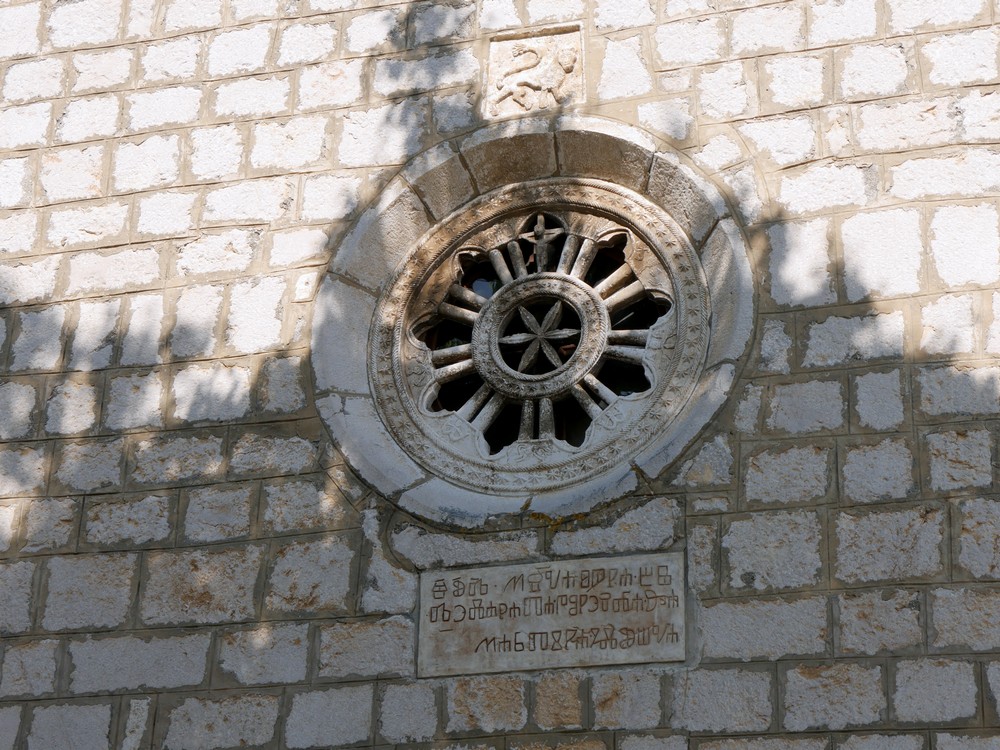
At the parish church of the Assumption of the Blessed Virgin Mary, we did not forget to notice the beautiful rosette window, which is often used as a symbol of this small town. Below the window, there is an inscription in Glagolitic from 1405.
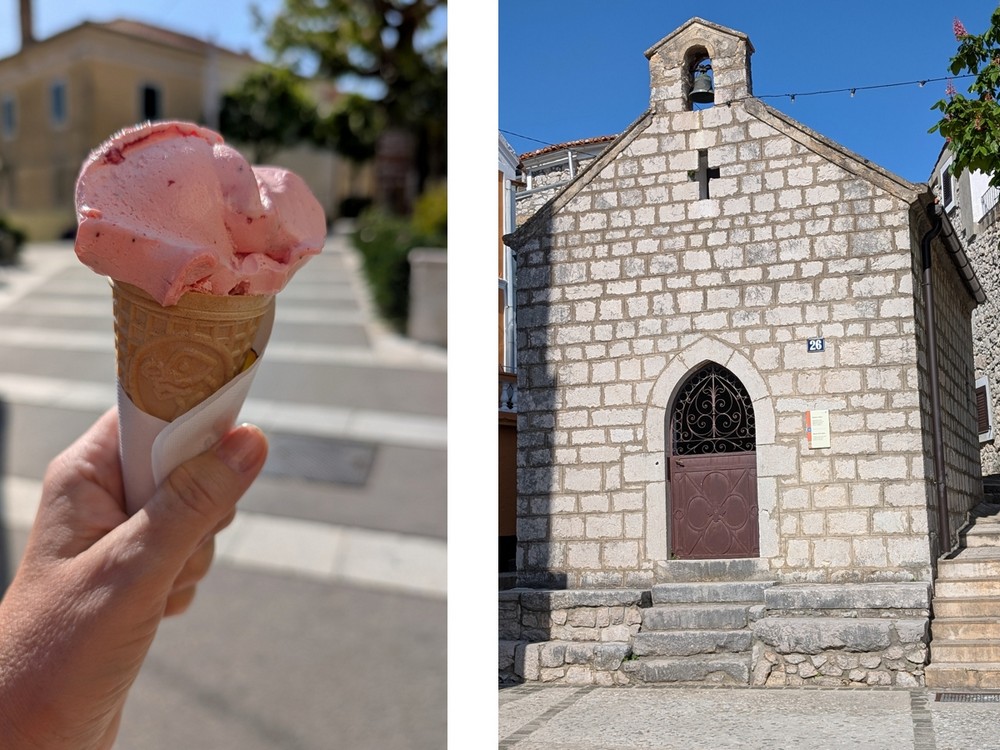
Afterwards, we tasted the local ice cream (delicious!) and walked to the Dubec viewpoint.
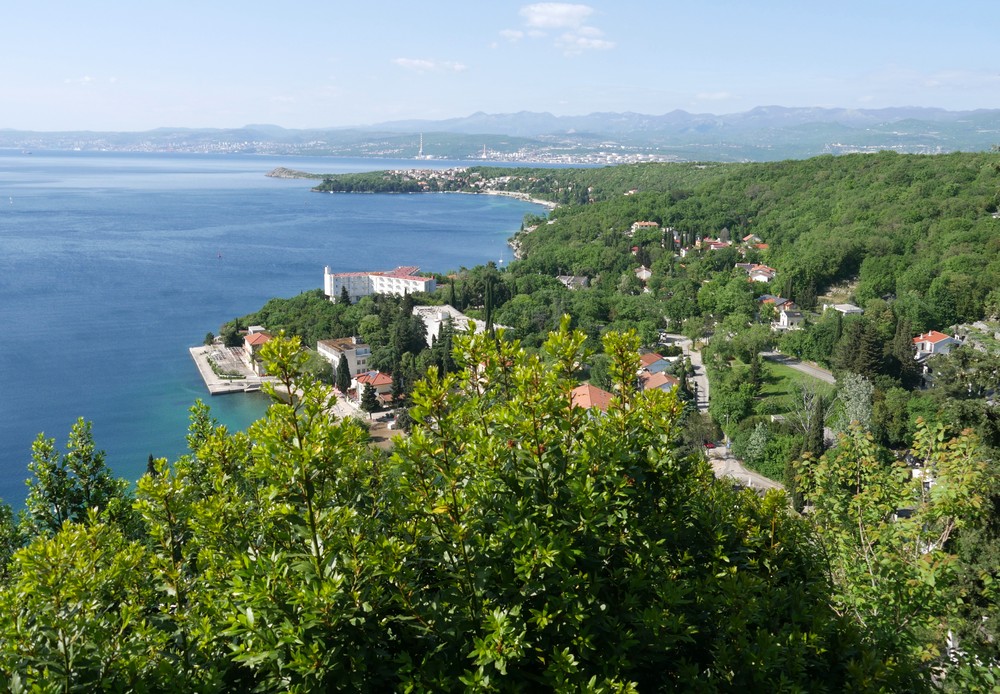
Below us was Kvarner, the Omišalj bay with its hotels and holiday resorts.
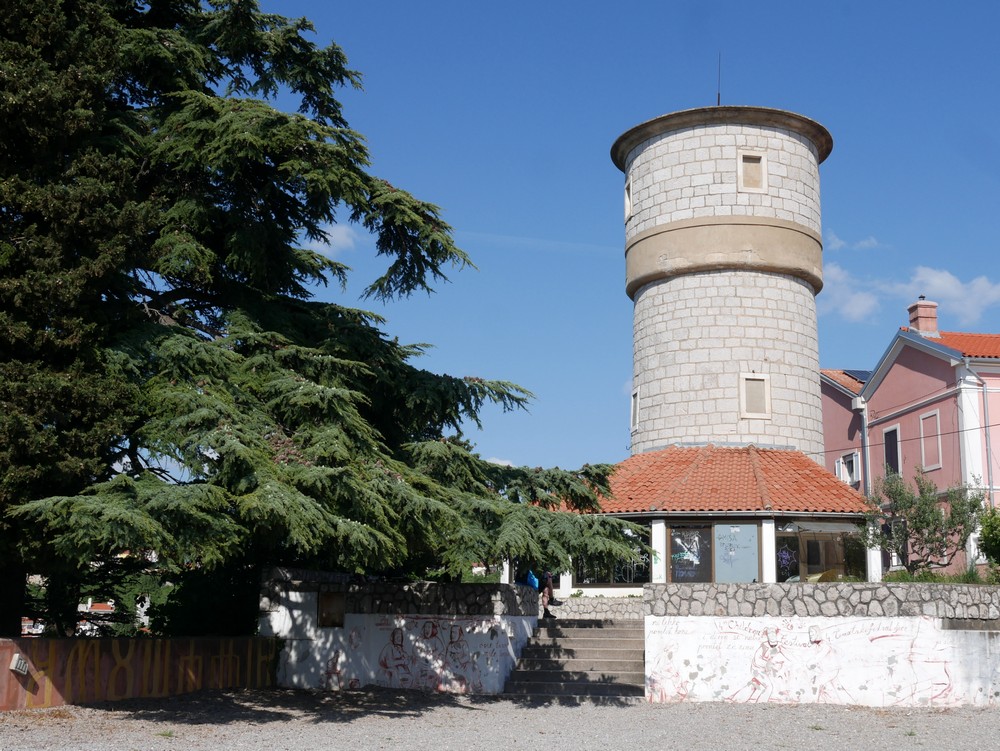
Near the viewpoint, there is also an industrial architecture landmark – the water tower, which was part of the power plant that supplied Omišalj with drinking water a hundred years ago.
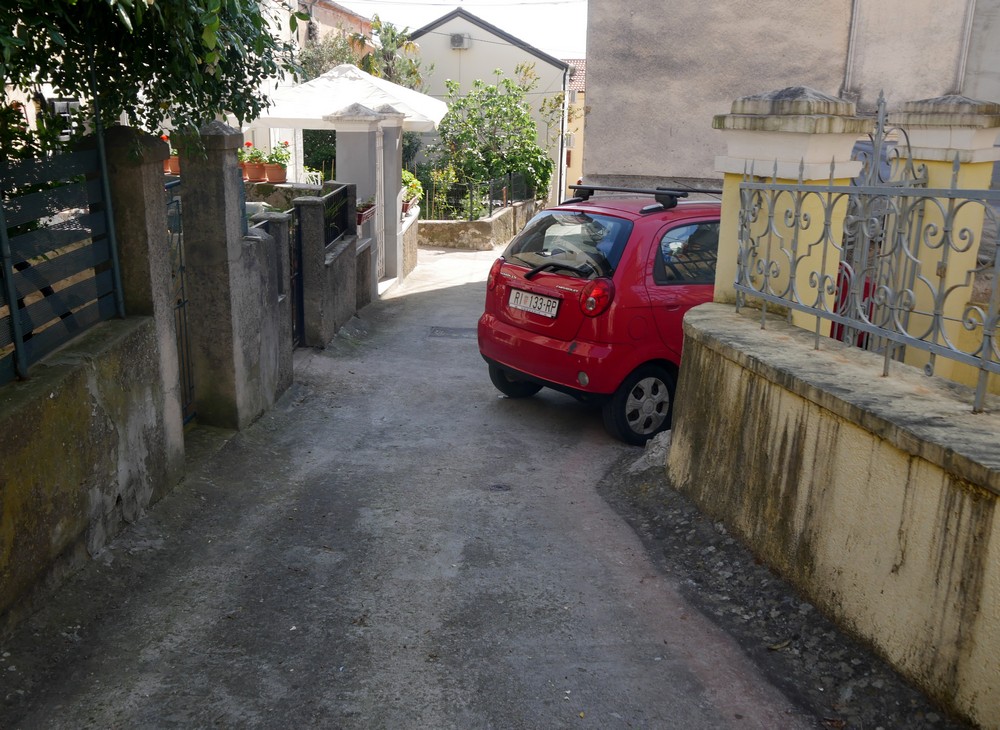
We stopped by the pine trees, which were laden with numerous pine cones, and walked back through the narrow streets, a few times actually wondering how a car had managed to get here (although all the cars were small).
 5. Malinska
At the end of the day, we returned to the town of Malinska, where we had booked a hotel. The port, built in the 18th century, used to export olive oil and grain. We wanted to visit the local maritime heritage center DUBoak. The permanent exhibition focuses on two main elements: the forest (oak) and traditional boats. Unfortunately, it was closed. If you are interested in visiting this modern exhibition, you can find more information on DUBoak
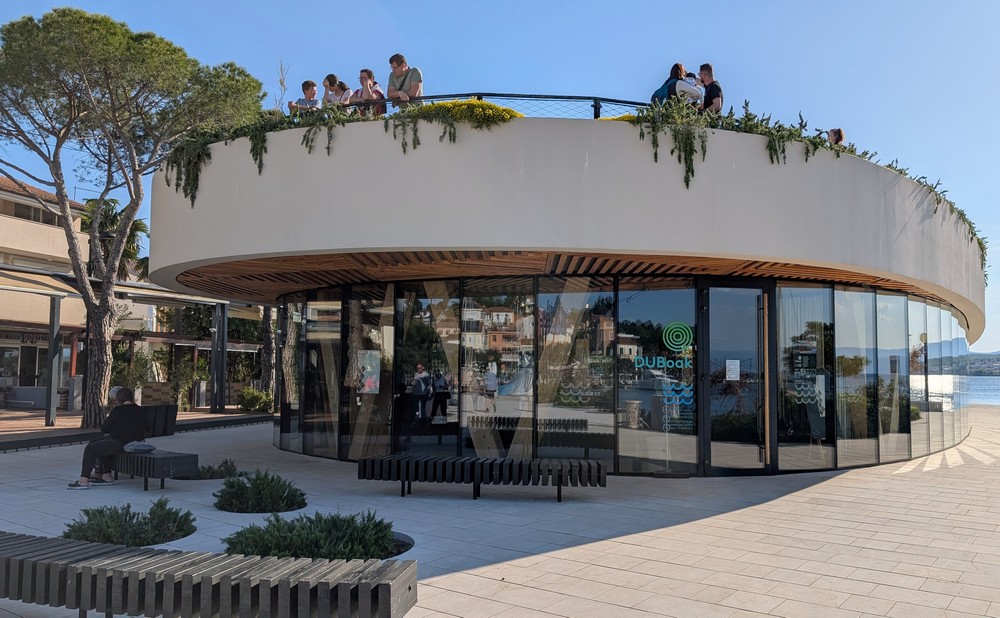
In the past, Crown Prince Rudolf of Habsburg was one of Malinska’s prominent guests, brought here by his passion for hunting. He hunted a large number of birds and wild game in the surrounding forests, and the hunting opportunities here then led to an increased interest in spa stays.
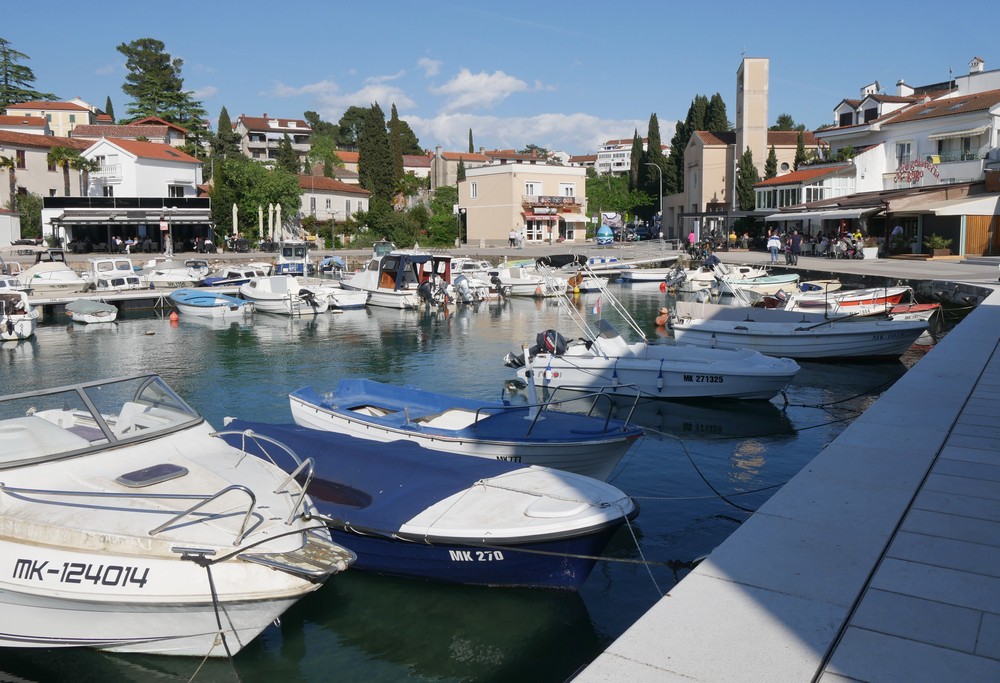
We also found two painted Easter eggs here, one even with Glagolitic letters.
Of course, we also had to eat somewhere during our day trip. More about that in the next article: https://travelpotpourri.net/2025/06/17/krk-2-tips-for-tasting-local-specialties-of-the-island/
My big thanks to Visit Krk and Gastronaut.hr for organizing this trip.
Text: © Copyright Ingrid, Travelpotpourri
Fotos: © Copyright Ingrid, Travelpotpourri