
travelpotpourri
No Result
View All Result
  • Slovenčina
Tuesday, November 10, 2026
  • TRAVEL
    • All
    • Belgium
    • Bosna and Herzegovina
    • Bulgaria
    • Croatia
    • Czech Republic
    • Finland
    • France
    • Germany
    • Iceland
    • India
    • Iran
    • Italy
    • Kyrgyzstan
    • Malaysia
    • Malta
    • Moldova
    • Netherlands
    • Norway
    • Oman
    • Poland
    • Portugal
    • Romania
    • Spain
    • Sri Lanka
    • Uzbekistan

    What to See and Eat in Schweinfurt?

    6 Unforgettable Experiences at Lake Chiemsee

    Tradičné jedlá Kerala

    21 Traditional Kerala Foods You Must Try

    Birthplace of Levi Strauss in Germany

    The Levi Strauss Museum in Buttenheim – The Story Behind the World’s Most Famous Jeans

    Langkawi – The Island That Took Me by Surprise

    Langkawi and Its Natural Beauty

    Langkawi – Batik and Other Crafts

    Langkawi – An Island Where You’ll Never Be Bored

    Fuggerei

    13 Surprising Facts About the Fuggerei in Augsburg

    Tasting Local Specialties in the Village of Medveja in Kvarner Bay

    (c) Villa Ariston

    Villa Ariston – A Hidden Gem on the Lungomare Promenade

    Opatija – the Pearl of the “Austrian Riviera”

  • RECIPES WITH A STORY

    Sweet Rails
    Christmas Baking

    Plum Cake with Hazelnuts and Chocolate

    Summer Pasta Salad with Salmon

    Cholent – A Traditional Slow Cooked Dish

    Dumplings with Wild Garlic

    Meat Pâté with Mushrooms

    Original Ischler Törtchen from Zauner
    Christmas Baking

    The Ayurvedic Wellness Cookbook – Recipes for Regaining Your Inner Balance

    Cinnamon Stars
    Christmas baking

    Green Asparagus Quiche

    Christmas Carp Soup

    Hussars’ Buttons
    Christmas Baking

  • AUSTRIA-VIENNA
    • All
    • Austria
    • Vienna

    Amalienbad in Vienna: A Hidden Gem of Art Nouveau Architecture

    One Mosaic – Many Stories – Interesting Bits about Vienna 16

    Marchegg – A Place where Storks Return Every Year

    My Top 9 Objects in the Imperial Treasury in Vienna

    Berggasse 19 – One of the Most Famous Addresses in Vienna

    The Spa Town of Baden near Vienna – a UNESCO World Heritage Site

    At the Lettering Workshop

    3 Ways to Visit the Austrian Parliament

    11 Beautiful Nativity Scenes in the Most Beautiful Churches in the Historic Center of Vienna

    Asparagus – “White Gold” from Marchfeld

    Sisi´s Mystery Dress

    Heidi Horten Collection – A Museum that Always Surprises You!

  • SLOVAKIA-BRATISLAVA
    • All
    • Bratislava
    • Slovakia

    Mini Slovakia – An Inspiration for Your Next Trips

    Vivat Rex! – Coronation Festivities in Bratislava Then and Now

    Banská Štiavnica – Rush of Romance and Nostalgia

    Pečená hus

    Roasted Goose
    An Honour or a Punishment?

    In the Kingdom of Geese

    Čunovo

    Čunovo – Oasis of Art and White Water

    Veselú Veľkú noc

    Happy Easter!
    Traditional Art of Decorating Eggs in Slovakia

    Hrad v Trenčíne

    A Winter Day in Trenčín

  • EVENTS

    At the Festival of Waiters, Baristas, Bartenders and Restaurants in Split

    Plovdiv – European Capital of Culture 2019

    Baden bei Wien – A Walk between Roses and Photographs

    PF 2018

    PF 2018

    Pokojné vianoce

    Merry Christmas!

    Večný cisár František Jozef I.

    The Eternal Emperor Was a Romantic

    batika

    How to Make Indonesian Batik

    Happy New Year

    Happy New Year!

    Veselé Vianoce

    Merry Christmas!

  • INTERVIEWS
    Kláštor sv. Kataríny na Sinaji

    Saint Catherine’s Monastery
    Interview with the Librarian Father Justin

    So spisovateľkou Adrianou Macháčovou

    Adriana Macháčová – Interview

  • TRAVEL
    • All
    • Belgium
    • Bosna and Herzegovina
    • Bulgaria
    • Croatia
    • Czech Republic
    • Finland
    • France
    • Germany
    • Iceland
    • India
    • Iran
    • Italy
    • Kyrgyzstan
    • Malaysia
    • Malta
    • Moldova
    • Netherlands
    • Norway
    • Oman
    • Poland
    • Portugal
    • Romania
    • Spain
    • Sri Lanka
    • Uzbekistan

    What to See and Eat in Schweinfurt?

    6 Unforgettable Experiences at Lake Chiemsee

    Tradičné jedlá Kerala

    21 Traditional Kerala Foods You Must Try

    Birthplace of Levi Strauss in Germany

    The Levi Strauss Museum in Buttenheim – The Story Behind the World’s Most Famous Jeans

    Langkawi – The Island That Took Me by Surprise

    Langkawi and Its Natural Beauty

    Langkawi – Batik and Other Crafts

    Langkawi – An Island Where You’ll Never Be Bored

    Fuggerei

    13 Surprising Facts About the Fuggerei in Augsburg

    Tasting Local Specialties in the Village of Medveja in Kvarner Bay

    (c) Villa Ariston

    Villa Ariston – A Hidden Gem on the Lungomare Promenade

    Opatija – the Pearl of the “Austrian Riviera”

  • RECIPES WITH A STORY
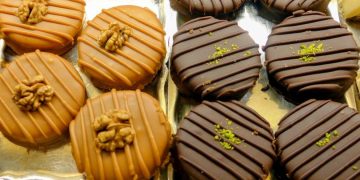
    Sweet Rails
    Christmas Baking

    Plum Cake with Hazelnuts and Chocolate

    Summer Pasta Salad with Salmon

    Cholent – A Traditional Slow Cooked Dish

    Dumplings with Wild Garlic

    Meat Pâté with Mushrooms

    Original Ischler Törtchen from Zauner
    Christmas Baking

    The Ayurvedic Wellness Cookbook – Recipes for Regaining Your Inner Balance

    Cinnamon Stars
    Christmas baking

    Green Asparagus Quiche

    Christmas Carp Soup

    Hussars’ Buttons
    Christmas Baking

  • AUSTRIA-VIENNA
    • All
    • Austria
    • Vienna

    Amalienbad in Vienna: A Hidden Gem of Art Nouveau Architecture

    One Mosaic – Many Stories – Interesting Bits about Vienna 16

    Marchegg – A Place where Storks Return Every Year

    My Top 9 Objects in the Imperial Treasury in Vienna

    Berggasse 19 – One of the Most Famous Addresses in Vienna

    The Spa Town of Baden near Vienna – a UNESCO World Heritage Site

    At the Lettering Workshop

    3 Ways to Visit the Austrian Parliament

    11 Beautiful Nativity Scenes in the Most Beautiful Churches in the Historic Center of Vienna

    Asparagus – “White Gold” from Marchfeld

    Sisi´s Mystery Dress

    Heidi Horten Collection – A Museum that Always Surprises You!

  • SLOVAKIA-BRATISLAVA
    • All
    • Bratislava
    • Slovakia

    Mini Slovakia – An Inspiration for Your Next Trips

    Vivat Rex! – Coronation Festivities in Bratislava Then and Now

    Banská Štiavnica – Rush of Romance and Nostalgia

    Pečená hus

    Roasted Goose
    An Honour or a Punishment?

    In the Kingdom of Geese

    Čunovo

    Čunovo – Oasis of Art and White Water

    Veselú Veľkú noc

    Happy Easter!
    Traditional Art of Decorating Eggs in Slovakia

    Hrad v Trenčíne

    A Winter Day in Trenčín

  • EVENTS

    At the Festival of Waiters, Baristas, Bartenders and Restaurants in Split

    Plovdiv – European Capital of Culture 2019

    Baden bei Wien – A Walk between Roses and Photographs

    PF 2018

    PF 2018

    Pokojné vianoce

    Merry Christmas!

    Večný cisár František Jozef I.

    The Eternal Emperor Was a Romantic

    batika

    How to Make Indonesian Batik

    Happy New Year

    Happy New Year!

    Veselé Vianoce

    Merry Christmas!

  • INTERVIEWS
    Kláštor sv. Kataríny na Sinaji

    Saint Catherine’s Monastery
    Interview with the Librarian Father Justin

    So spisovateľkou Adrianou Macháčovou

    Adriana Macháčová – Interview

travelpotpourri
No Result
View All Result
Home TRAVEL Portugal

Coimbra – The City with Academic Tradition

by Ingrid
09.03.2016
in Portugal, TRAVEL
0
Coimbra
0
SHARES
FacebookTwitterPinterestLinkedinEmail

The answer to the question – what is the capital of Portugal? – is very easy. But do you know what was the first capital of the Portuguese Kingdom? It was Coimbra. The first kings made their residence here in 1144, six kings were born and the first two ones are buried here. About one hundred years later the capital was moved to Lisbon.

Coimbra is located on a hill by the river Mondego, about half the distance between Lisbon and Porto. The main sight on the hill can be seen from far away. However, it is neither a fortress nor a castle. It is a university which is the same symbol for Coimbra like the port for Lisbon or the wine for Porto. At the same time when the royal residence was moved to Lisbon, the university was moved as well, but the aristocracy did not like the progressive spirit, the way of thinking and the opinions of its intellectual society. So the university was moved back to Coimbra. Thanks to that the best heads are still born here and the impressive complex of this educational institution dominates the city.


There used to be a military camp in Roman times, later a royal residence. The university was established in 1290 by King Dinis after Nicholas IV’s Papal bull. It is one of the oldest universities in the world. It was first established in Lisbon, but after many changes between the two cities, it permanently settled near the Mondego River in 1537, at a palace granted by King John III. His majestic statue stands in the courtyard. With his clothes he reminds me of Henry VIII, even then the aristocracy was dressed according to the dictate of fashion. Well, padded shoulders, puffed sleeves, a huge cloak over the dress, short trousers, stockings, a flat cap, a chain on the chest, even the beards remind of the Tudor dynasty. The king has a small dagger hanging on his belt, he is nonchalantly holding gloves in his right hand and observing the movement on the square – students in black cloaks guiding visiting tourists.

We arrived in Coimbra on Saturday. When the bells on the baroque tower started to toll nobody was hurrying up to lectures. There were more tourists than students in the square at that moment. I am sure most of the students were still sleeping after a long night because the nightlife in Coimbra is much more vivid than in other Portuguese cities. But according to an old tradition, students who are in their first year of university should not be on the street after the last bell tolls. By the way, one of the three bells is called “cabra” – goat because its sound reminds of bleating.

Cheerful student‘s life

Over twenty thousand students (from more than 70 countries) study here. If you add ten thousand more from the technical university then they make up one-fifth of the total number of city inhabitants. Students here wear black cloaks (with frays on the hem, it is said that every single fray stands for one love adventure but I did not dare to ask our guide 🙂 ). This uniform was later moved to Porto and you might not guess that from there it also got into the books about Harry Potter (but more about it later in the article about Porto). Each of the faculties has its own colour (red is for law, yellow for medicine etc.) which appear in the seats in the auditoriums and as ribbons worn by the students. At the end of the second semester they burn those ribbons – the ceremony is called “Queima das Fitas“. It is one of the biggest student parties in Europe which lasts for eight days, one for each University faculty. The second traditional ceremony is even noisier. The elder students are “baptizing” new ones at the beginning of the academic year, it is called “Festa das Latas” which means a feast of tin cans. Young students have to dress in motley fancy dresses made by their elder colleagues and pull along a bunch of tin cans bound to their legs. After a noisy march through the streets of the city, the new students are baptized with the Mondego River water.

Unfortunately, there was no student ceremony during our stay in Coimbra. At least we were enjoying the beautiful view from the balcony of the university over the river. In the past, washing girls were bleaching and spreading the laundry on the riverside. We could also see the Santa Clara-a-Velha Monastery which reminds us of a ship sunk into the river sand. A sad view – a sad story. Pedro, the son of the king of Portugal Afonso IV, fell in love with Inês de Castro but because of monarchy interests, he was forced to marry Constanza Navarra. Even when his wife died he was not allowed to marry Inês. They had secret meetings in the gardens of Quinta das Lágrimas but the king did not like it and ordered the murder of Inês. Two years later, when Pedro took the crown, he ordered the body of Inês to be exhumed and demanded from court people to recognize her as queen by bowing and kissing her hand. Yuck! After that, he caught the people who killed his beloved one, ripped out their hearts and ate them for dinner. Even more yuck! We prefered to go back into the rooms of the university.


Walking through the university rooms

Students in Coimbra had the right to vote and to choose their teachers already in the 14th century. It sounds very modern but walking through these rooms we could look at portraits of some of the rectors – there were only strict and austere faces. At the very beginning, there were only lessons in canon law, grammar, theology and logic given. Later, when the time of voyages of explorations needed other specialists, other more exciting topics were added: geometry, arithmetic and astrology. We peeped into a lecture room with wooden benches and blue-and-white tiles azulejos. But a small window in the upper corner of the room caught our attention. From this window, the rector can observe his subordinates – the lecturers.


Through open windows on the corridor, we could also see the ceremonial room “Sala Grande dos Actos” which is still used for graduation and other academic ceremonies. It must be a very nice experience in such a nice hall which was the ancient throne room. There is a beautiful wooden ceiling and portraits of the kings of Portugal.

St. Michael’s Chapel with a beautiful portal in Manueline style belongs also to the university complex. Inside, there are walls covered with azulejos, an altar with no saints but with symbolic steppes to the heaven and a ceiling painted with fine leaves and flowers garlands. Nevertheless, the baroque organ was the most interesting object for me. Not all of its pipes are standing parallel to the wall, some of them stick out from the wall like open fans. I think the organ did not want to be overlooked as it was attracting our attention and clearly manifesting that it is the king of musical instruments.

The baroque library – Biblioteca Joanina – in the left side wing is the greatest pride of the University of Coimbra. It was ordered to be built by King John V in 1720. His inspiration was the emperor‘s library in Vienna. We entered it as if we were entering a sacred temple as it really looks like one: baroque furniture, splendid paintings and gold, gold everywhere! No wonder, that the library belongs to the ten most beautiful libraries in the world! There are three great rooms with gorgeous tables made from exotic woods and walls completely covered with bookshelves. The library contains more than 40.000 books in different languages, bound in leather, and 3.000 medieval manuscripts. Among them are rare volumes such as the first edition of Os Lusíadas – a Portuguese national epic poem from the 16th century or a Hebrew Bible from the second half of the 15th century of which there are only 20 copies around the world.

A bat colony lives in the library. They are welcome as they help to maintain the books by eating insects. Every evening the people from the library have to cover the precious wooden tables with furs to protect them from bats‘ excrement after the night banquet. But there is something else which is much more interesting. A medieval prison! Just beneath these sumptuous rooms! If a student had broken the home order or damaged a borrowed book he was punished by sending him to prison. However, it did not mean that he skipped lessons. Not at all! He went to lectures in the morning and after that returned to his cell. Though I have to say that it was really an academic prison! Because there was a toilet! Who knows, maybe this is the place where the habit of sitting with an open book on knees for a long time was invented…

In the city

We had our lunch in a restaurant with a view of the university, of its long balcony from where we had been watching the river before. We were enjoying not only the delicious food – the traditional soup caldo verde (the recipe: here), fish and panna cotta with ice cream served on a lava plate as dessert – but also the typical relaxed Portuguese atmosphere. The midday sun was strong, it made the skylight grey.

After lunch, we made a short stop at the city’s centre the Square of 8th Mai. I did not manage to find out why this is the name of the square, nevertheless, it got my sympathy at first sight because my name day is on May, 8. 🙂 The most interesting sight on the square is the church of Santa Cruz.

There is the Manueline style again, a carved pulpit, the altar with steppes, the walls with tiles, the striking organ and a box for lightening candles for our beloved ones. For the first time, I saw electric candles for that purpose in a church. Clink! – a coin into the money box, blink! – a small lamp on a candle. There are also two graves in the church: the grave of King Afonso Henriques – the first king, founder of the kingdom and conqueror, and the grave of his son Sancho. The tombstones are very richly decorated.

We went out. There is a café stuck to the church on one side. A waiter in a uniform, reminding of a figure from an old movie, ran around the tables. He made a bow in front of a guest, put a small cup of coffee on the table and then entered the café balancing a tray on his strained fingers. Small streets lead to the square. There are no entry signs but I think they are unnecessary because the streets are so narrow that a car could hardly drive there. You can find cosy restaurants, cocktail bars, intellectuals’ cafés etc. on these narrow streets. What a pity that we could not stay for the evening and enjoy the nightlife in Coimbra where you can learn how to say Cheers! in many languages. Or to listen to music and singing. Fado is the echo of the Portuguese soul. Coimbrão Fado is sung exclusively by men and demands a strict dress code. And according to tradition, to applaud fado in Lisbon you clap your hands while in Coimbra you cough. Fado is considered the song of sorrow, desire and pain of the soul. According to a Portuguese saying “a Portuguese sings there where the craving for crying is…”

Portugal

Tags: CoimbradestinationsfadohistorylibraryPortugaltraveluniversity
ShareTweetPinShareSend
Previous Post

Martenitsa – Welcoming of spring

Next Post

Someone likes it green…
Caldo verde (Portugal)

Ingrid

Next Post

Someone likes it green…
Caldo verde (Portugal)

Leave a Comment Cancel reply

Your email address will not be published. Required fields are marked *

This site uses Akismet to reduce spam. Learn how your comment data is processed.

About me

onas
It was a spontaneous idea to create this blog. I named it “potpourri” because it is a mixture into which – instead of dried blossoms, leaves, spices and wood chops – I have mixed my impressions from my trips, adding the aroma of exotic places and the recipes with interesting stories. I also consider travelling to be the spice of life and hope that this blend of travelpotpourri will inspire you too to travel and discover the world…

Follow us on Facebook

Loading...

Follow us on Instagram

travelpotpourri

Vienna preparing for Christmas #vienna #viennanow Vienna preparing for Christmas 
#vienna #viennanow #travelpotpourri #christmas #christmasspirit
This was a really nice surprise during our dinner This was a really nice surprise during our dinner in Tokyo/Toto bolo naozaj milé prekvapenie počas našej večere v Tokiu.
#sushi #travelpotpourri #fuji #japan #dinner
Shibuya Crossing in Tokyo - the world's busiest pe Shibuya Crossing in Tokyo - the world's busiest pedestrian intersection 
#japan #travelpotpourri #shibuya #tokyo
Floating Flower Garden, teamLab Planets, Tokyo - c Floating Flower Garden, teamLab Planets, Tokyo
- created from hundreds of beautiful flowers. As you approach them, they gently begin to float upwards.
- záhrada zo stoviek nádherných kvetov. Keď sa k nim priblížite, nežne sa začnú vznášať nahor.
#tokyo #teamlab #travelpotpourri #garden #orchid
One more memory of the amazing fish market #tokyo One more memory of the amazing fish market
#tokyo #travelpotpourri #fishmarket #tsukiji #seafood
A wide selection at the Tsukiji Fish Market in Tok A wide selection at the Tsukiji Fish Market in Tokyo 
#fishmarket #travelpotpourri #tokyo #tsukiji
Straw-grilled bonito - the most famous bonito dish Straw-grilled bonito - the most famous bonito dish in Japan
@sushidokoro_isaribi_ueno 
#japan #travelpotpourri #sushi #tokyo
#shinkansen #travelpotpourri #train #japantravelph #shinkansen #travelpotpourri #train #japantravelphoto
#keralatravelmart #travelpotpourri #keralagodsownc #keralatravelmart #travelpotpourri #keralagodsowncountry #incredibleindia
Follow on Instagram

Tags

architecture art Austria baking Bulgaria cake Cantabria castle Christmas Christmas baking church city holiday city tour city walk cooking cuisine culture Czechia Czech Republic emperor food history holiday in Austria holiday in Czechia homemade India interesting Kerala museum nature recipe recipes Salzburg sights sightseeing soup tips for trips tips for visit tradition travel UNESCO vegetarian Vienna visit Austria wine

Most popular

  • Jatayu Earth's Center – The Largest Bird Sculpture in the World
  • What to See and Eat in Schweinfurt?
  • 21 Traditional Kerala Foods You Must Try
  • Bohemia Sekt - Elegant Czech Sparkling Wine with French Charm
  • Langkawi – An Island Where You’ll Never Be Bored
  • Kathakali - Great Stories with Fascinating Costumes
  • Original Ischler Törtchen from Zauner Christmas Baking
  • Plovdiv – On the Longest Pedestrian Street in Europe

Subscribe to our Newsletter

This way you will receive emails with our latest posts. We do not spam.

Contact

Any questions or suggestions?
Contact us: info@travelpotpourri.net

Partnership

Our Partners

Reddy Book
Official Lotus365 Platform
  • TRAVEL
  • RECIPES WITH A STORY
  • AUSTRIA-VIENNA
  • SLOVAKIA-BRATISLAVA
  • EVENTS
  • INTERVIEWS

COPYRIGHTS © 2026 ALL RIGHTS RESERVED BY TRAVELPOTPOURRI | Ochrana osobných údajov | Privacy Policy

No Result
View All Result
  • Slovenčina
  • TRAVEL
    • Belgium
    • Bosna and Herzegovina
    • Bulgaria
    • Croatia
    • Czech Republic
    • Finland
    • France
    • Germany
    • India
    • Iran
    • Iceland
    • Italy
    • Kyrgyzstan
    • Malta
    • Moldova
    • Netherlands
    • Norway
    • Oman
    • Poland
    • Portugal
    • Romania
    • Spain
    • Sri Lanka
    • Uzbekistan
  • AUSTRIA-VIENNA
    • Austria
    • Vienna
  • SLOVAKIA-BRATISLAVA
    • Slovakia
    • Bratislava
  • RECIPES WITH A STORY
  • INTERVIEWS
  • EVENTS

COPYRIGHTS © 2026 ALL RIGHTS RESERVED BY TRAVELPOTPOURRI | Ochrana osobných údajov | Privacy Policy

Loading Comments...

Our website uses cookies. Do you agree with this? / Naša stránka používa cookie. Súhlasíte s tým? Info

The cookie settings on this website are set to "allow cookies" to give you the best browsing experience possible. If you continue to use this website without changing your cookie settings or you click "Accept" below then you are consenting to this.

Close